Camping with Your Dog in the UK: The Complete Guide
· Updated
A dog is the best camping companion there is, and Britain is set up for it: thousands of sites take dogs, most keep them free or charge a pound or two a night, and the open countryside is yours to walk together. The trip goes well when three things are sorted before you leave, which are the right kit, a site that genuinely welcomes dogs, and a clear grip on the rules for dogs in the countryside.
This is the full guide to camping with your dog in the UK. It covers what to pack, how to pick a pitch, keeping a dog cool, calm and tick-free, and exactly what the Countryside Code asks of you near livestock and ground-nesting birds. Get those right and your dog has the weekend of its life, and so do you.
It is the dogs and camping guide from Camping Sites in Britain, where you can find and compare campsites, caravan parks and glamping across the UK.
What to pack for a dog: the checklist
Pack for your dog the way you pack for yourself, which means food, water, shelter, ID and a small first aid kit. This table is the at-a-glance version, and the sections below explain the ones that matter most.
| Item | Why it matters |
|---|---|
| Corkscrew ground stake and long line | Lets a dog move around the pitch safely without wandering off |
| Familiar bed or crate, plus a favourite toy | A dog settles far faster with its own smell and sleeping spot |
| Food, bowls and a sealed food box | Enough for the trip, stored hard-sided so it does not draw ants, mice or foxes |
| Water and a collapsible bowl | Dogs overheat fast; carry water on every walk |
| Spare lead, a short lead and a collar tag | The short lead is for livestock and busy sites; the tag is a legal requirement |
| Poo bags, more than you think | Bag and bin every time, on site and on the trail |
| Tick remover and a small first aid kit | Ticks are the main health risk; a remover costs a couple of pounds |
| Towel and a warm layer | Wet dogs get cold overnight, especially short-coated breeds |
For the walking and hiking side of the kit, from harnesses and boots to packable coats, read the full guide: the best dog hiking gear.
Set up the pitch for your dog
Give a dog its own defined space and it relaxes for the whole trip. The single most useful item is a metal corkscrew stake screwed into the ground near the tent, clipped to a long line, which lets the dog wander, sniff and lie in the sun without any chance of bolting. A couple of windbreaks turn the area outside your porch into a fenced-off spot that a dog quickly treats as home.
Bring the bed or crate the dog already sleeps in, because familiar smell does more to settle a nervous dog than anything else. If your tent has no room for a bed alongside your own, a small dog tent that pitches next to yours solves it. Feed at the usual times, keep the routine as close to home as you can, and a dog that is anxious on the first night is usually fine by the second.
Follow the Countryside Code with a dog
The law is clear and the rules are not hard: keep your dog under effective control, keep it on a lead near farm animals, and clear up after it every single time. Under effective control means the dog stays close, comes back on command, and does not run off after wildlife, walkers or livestock. If you cannot rely on that, keep it on the lead.
Two rules catch people out on open countryside. On Open Access land (the mapped moor, heath, down and common) a dog must be on a lead of no more than 2 metres from 1 March to 31 July to protect ground-nesting birds such as curlew, lapwing and skylark, and it must be on a lead near livestock at any time of year. Some Access land also bans dogs entirely near grouse moors and lambing fields, so check the signs at the access point.
Near livestock the guidance changes in one important way. Keep the dog on a short lead as you pass, give the animals a wide berth, but if cattle start to chase you, let the dog off the lead. A loose dog will outrun the herd and you both stand a far better chance apart than tangled together on a lead. Cattle are the most dangerous animal in the British countryside and almost every serious incident involves a dog, so this one rule matters more than any other on this page.
Always bag and bin the mess, on the campsite and on the trail, including in woodland and on moorland where it is easy to think it does not matter. It does, both for other people and for grazing animals. The full official guidance is on the Countryside Code on gov.uk, and Scotland has its own version in the Scottish Outdoor Access Code.
Keep your dog safe: heat, ticks and adders
Three risks account for most trouble on a UK camping trip with a dog, and all three are avoidable. Heat is the fast one. Dogs cannot sweat, a parked car or a zipped-up tent in sun becomes an oven within minutes, and flat-faced breeds struggle worse than most. Pitch where the tent gets afternoon shade, never leave a dog in a hot car or closed tent, walk at the cool ends of the day in summer, and carry water on every outing.
Ticks are the main health risk and they are everywhere there is long grass, bracken or woodland edge, with hotspots in the Highlands, the Lake District, the New Forest and Exmoor. Check the dog every evening, paying attention to the ears, armpits, groin and between the toes, and remove any tick promptly with a proper tick tool, gripping close to the skin and pulling straight out. A tick removed within a day rarely passes anything on.
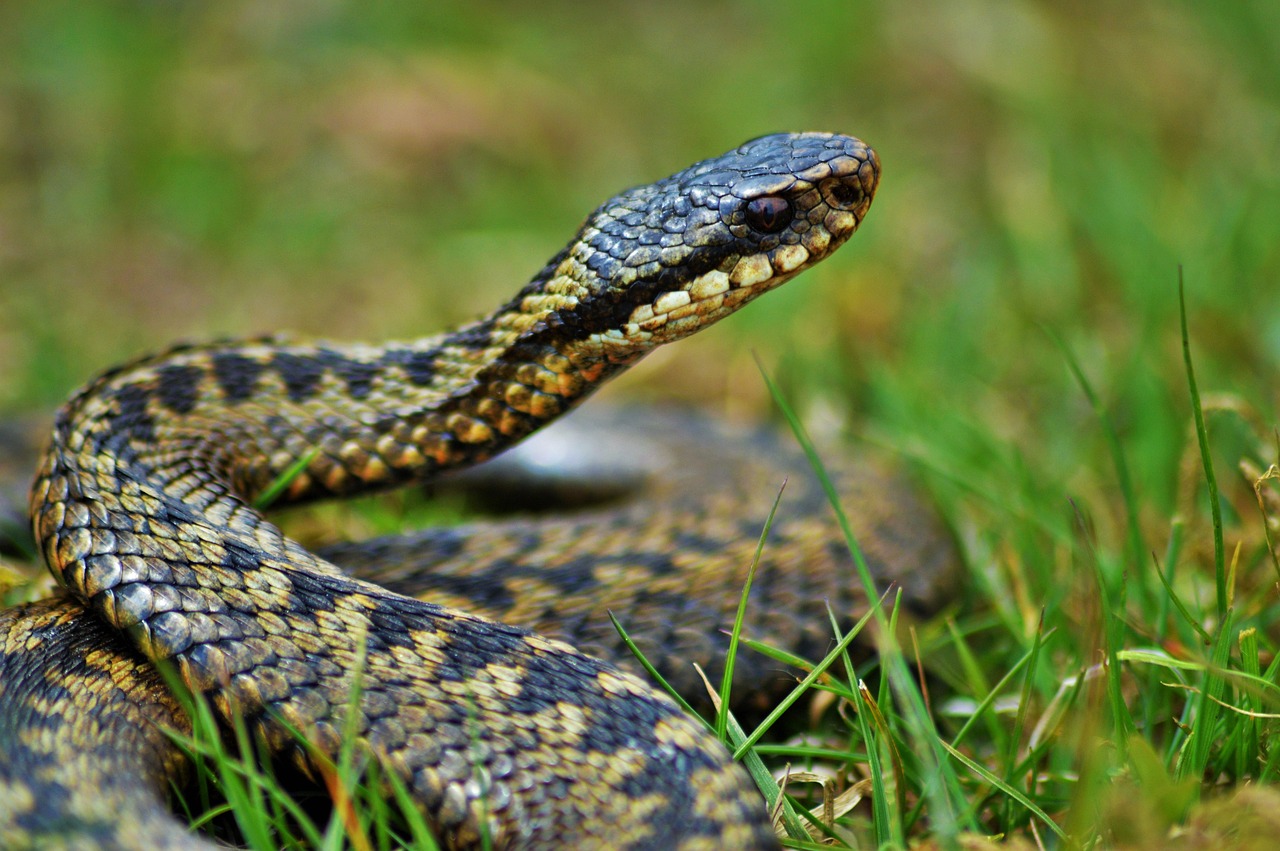
Adders are Britain's only venomous snake, found basking on heath, dunes and moorland on warm spring mornings, and dogs are bitten far more often than people because they investigate with their nose. A bitten dog needs an emergency vet straight away; keep it still and carry it if you can. Nobody in the UK has died of an adder bite since 1975, but a dog can react badly, so treat it as urgent.
Hiking and biking with your dog
A camping trip is really an excuse for long days out together, and a fit dog will happily walk further than most people expect. Build up distance over a few trips rather than asking for 15 miles on day one, carry water and a collapsible bowl, watch for sore or split pads on rock and shingle, and keep the dog on a lead near cliff edges, livestock and open water. Our full guide to tips for hiking with your dog covers pacing, paw care and what to do when a walk turns out longer than planned.
If you ride, a dog can make a brilliant trail companion on the right routes, though it takes training and honesty about your dog's fitness. Start on quiet bridleways, never on roads or busy trails, and never push a dog to keep up with a bike downhill. Read the full guide: mountain biking with your dog.
Where to camp with a dog in the UK
Pick a site that genuinely wants dogs rather than one that merely tolerates them, because the difference shows in dog showers, secure boundaries, on-site walks and nearby dog-friendly beaches. Read a site's dog policy before booking, since many limit the number of dogs per pitch, some ban certain breeds, and most ask that dogs are on a lead across the site and never left alone on the pitch.
Scotland is a standout for dogs thanks to the open access rights and huge quiet spaces, from the Highlands to the islands. See our roundup of dog-friendly camping sites in Scotland for specific recommendations. Elsewhere, the coast and countryside of the Lake District, Devon and Pembrokeshire are full of dog-friendly pitches within reach of open walking. Browse and filter the full directory of UK campsites to find one that suits you both.
One thing to check before you travel is beach access. Many popular UK beaches ban dogs between May and September, or restrict them to certain hours or ends of the beach, so confirm the local rules rather than turning up and being turned away.
Which dogs take to camping, and which need more thought
Most dogs love camping, but a few need extra planning. A confident, sociable dog that recalls reliably will settle in an afternoon. A nervous or reactive dog on a busy family site surrounded by strangers, other dogs and children can have a miserable time, so a quiet adults-only or back-to-nature site suits it far better. Puppies and older dogs feel the cold and tire faster, so pack an extra layer and keep the days shorter.
Whatever the dog, do not leave it alone on the pitch. A dog tied up outside a tent while you nip to the shop will bark, stress and can slip its lead, and most sites forbid it anyway. If you cannot take the dog with you, that is the trip to leave it with a sitter instead.
Frequently asked questions
Do I have to keep my dog on a lead when camping?
On the campsite, almost always yes, as most UK sites require dogs on a lead across the grounds. In the countryside you must keep a dog on a lead near livestock, and on Open Access land on a lead of up to 2 metres from 1 March to 31 July for ground-nesting birds.
What does the Countryside Code say about dogs?
Keep your dog under effective control, on a lead near farm animals, and always bag and bin its waste. On Open Access land it must be on a short lead in spring and summer. If cattle chase you, let the dog off the lead so you can both reach safety.
Is my dog safe around cattle?
Only if you manage it. Keep the dog on a short lead and give cattle a wide berth, but if a herd starts to chase you, let the dog off the lead immediately. The dog will outrun the cattle, and most serious cattle incidents involve a dog held on a lead.
How do I keep my dog cool while camping?
Pitch where the tent gets afternoon shade, never leave a dog in a hot car or a closed tent, walk in the cool of morning and evening in summer, and carry water and a collapsible bowl on every outing. Dogs cannot sweat and overheat within minutes.
Do I need to worry about ticks on my dog?
Yes. Ticks are common in long grass, bracken and woodland across the UK, with hotspots in the Highlands, Lake District, New Forest and Exmoor. Check your dog every evening and remove any tick promptly with a tick tool. Ask your vet about tick prevention before you go.
Are UK campsites dog-friendly?
Thousands are, and most charge little or nothing for a dog. Policies vary, so check each site: many limit dogs per pitch, ask that dogs stay on a lead on site, and require that they are never left alone on the pitch. Use our directory to filter for dog-friendly sites.
The short version
Camping with your dog comes down to good kit, a site that welcomes them, and respect for the Countryside Code: dog under effective control, on a lead near livestock and on Open Access land in spring and summer, waste always bagged and binned, and off the lead only if cattle chase you. Watch for heat and ticks, and the rest takes care of itself.
Sort the pitch, pack the bed, and pick your spot from the full directory at Camping Sites in Britain. Your dog is about to have the best weekend of its year.