The best campsites in Cornwall
The best campsite in Cornwall is the one in the right place for your trip, and Cornwall is big enough that "the right place" changes completely depending on what you want. A surf-mad family wants the north coast near Newquay or Bude. A couple after quiet and scenery wants the far west or the Roseland. Someone chasing cheap and central wants Bodmin Moor. Get the area right first, then pick the site, and the holiday mostly sorts itself.
This guide walks through Cornwall's four camping regions and what each one suits, then the types of site (big holiday parks with pools, quiet farm and adults-only sites, back-to-basics fields, and glamping), and the seasonal timing that decides how much you pay and how busy it gets. Rather than push you at a handful of named sites, we point you at the full picture so you can compare Cornwall campsites yourself and book the one that fits.
It comes from Camping Sites in Britain, where you can search, filter and compare campsites, caravan parks and glamping across the UK. For what to actually do once you have pitched, start with things to do in Cornwall.
Where to camp in Cornwall, by area
Cornwall splits neatly into four camping areas, and each has a distinct vibe, price and crowd. Here is the quick version before we go through them one by one.
| Area | Good for | Vibe |
|---|---|---|
| North coast (Newquay, Perranporth, Bude, St Agnes) | Surf, big beaches, family holiday parks, teenagers | Lively, busy, buckets of things to do |
| Far west and Penwith (St Ives, Penzance, the Lizard) | Scenery, walking, quieter beaches, couples | Wild, pretty, slower paced |
| South coast (Falmouth, the Roseland, Looe, Fowey) | Sheltered swimming, boats, pretty harbours | Gentle, green, family-friendly |
| Bodmin Moor and inland | Budget, quiet, a central base for touring | Peaceful, back-to-basics, cheaper |
The north coast: surf, big beaches and holiday parks
The north coast is Cornwall's holiday engine and where most first-time campers head. Newquay sits at the middle of it, with Fistral for surf, Watergate Bay for space and Crantock for family swimming, and it is ringed by large holiday parks with pools, entertainment and direct beach access. Perranporth has three miles of flat sand and a pub on the beach, St Agnes is prettier and more low-key, and Bude to the north is a proper surf town with two tidal sea pools.
This is the area for teenagers, surf lessons and rainy-day backup, because there is always something on. It is also the busiest and priciest stretch in July and August, and the clifftop sites near the best beaches book out first. If you want the buzz, browse the north-coast campsites in Cornwall early. For an itinerary built around this coast, see a weekend in Cornwall itinerary.
The far west and Penwith: quieter and more scenic
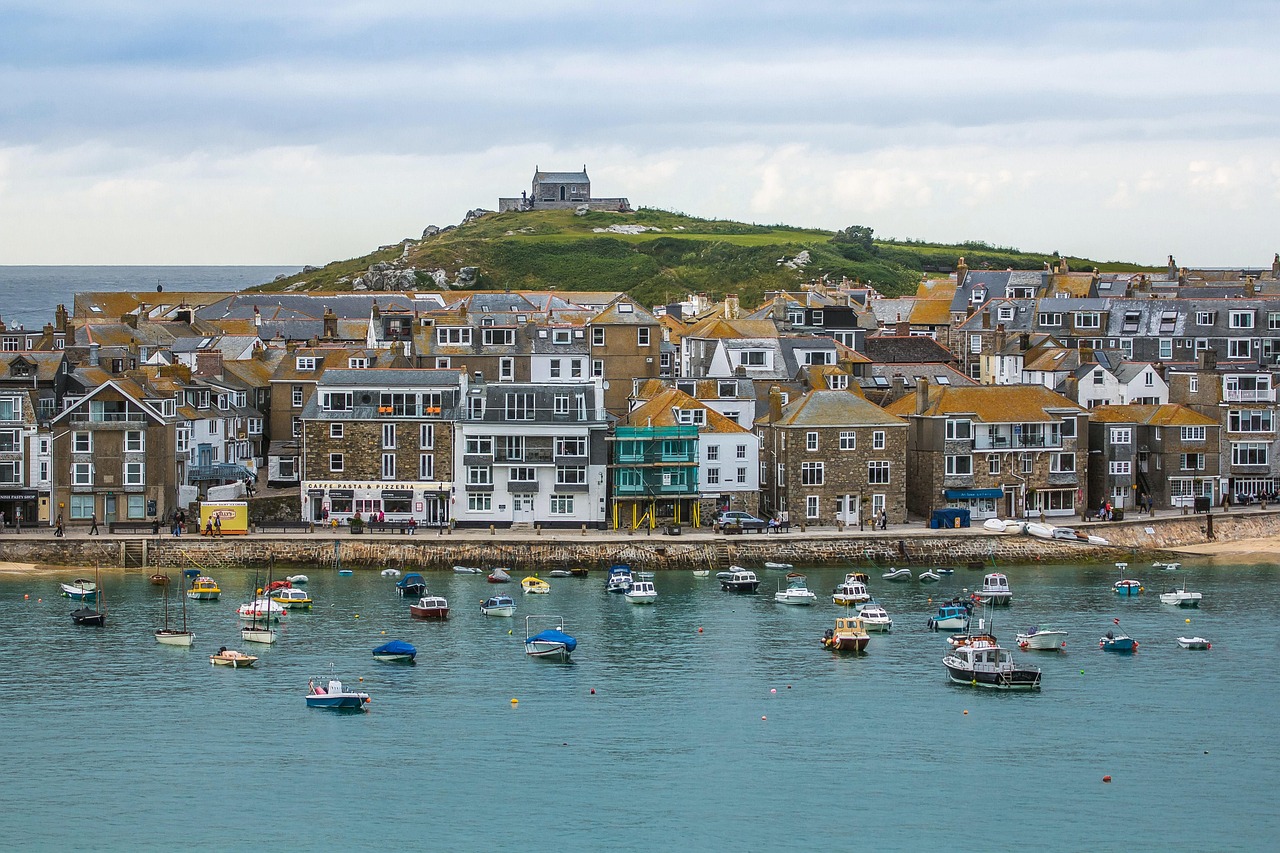
West of St Ives the county narrows and empties out, and this is where you camp for scenery over nightlife. St Ives has the galleries, the harbour and Porthmeor beach; Penzance is the gateway to the Isles of Scilly and Mousehole is postcard Cornwall. Round the corner, the Lizard peninsula gives you Kynance Cove, the most photographed beach in the county, and Britain's most southerly point.
Sites here tend to be smaller farm and clifftop campsites rather than sprawling parks, and pitches with a sea view are the prize. Sennen and Gwithian have surf without the Newquay crowds. It is a longer drive from the motorway, which is exactly why it stays quieter. Filter for the west when you compare Cornwall campsites.
The south coast: sheltered, green and pretty
The south coast is gentler than the north, with sheltered water, wooded creeks and pretty harbours rather than big Atlantic surf. Falmouth has a huge natural harbour, three town beaches and boat trips up the river; the Roseland peninsula opposite is all quiet lanes, St Mawes and the tucked-away church at St Just in Roseland. Further east, Looe and Fowey give you working harbours, gig racing and calm swimming that suits younger children.
This is the best half of Cornwall for families with small children and for anyone who finds the north coast too full-on. The water is calmer, the sites sit in green valleys, and Fowey is close to the Eden Project and the Lost Gardens of Heligan. It pairs well with family things to do in Cornwall.
Bodmin Moor and inland: cheaper, quieter, central
Camp inland and you trade a sea view for a lower price and a central base. Bodmin Moor sits in the middle of the county, so nowhere on either coast is more than about 40 minutes away, and the sites are smaller, quieter and noticeably cheaper than anything near a famous beach. You get big skies, Golitha Falls, Cardinham Woods for biking and the Camel Trail for easy family cycling nearby.
This is the pick for touring campers who want to see all of Cornwall rather than one beach, and for anyone camping on a budget in peak season. You will drive to the coast each day, but you will pay a fraction of the clifftop rate to do it.
The types of Cornwall campsite, and who each suits
Once you have an area, the type of site matters just as much. Cornwall has four broad kinds, from full-service resorts to a farmer's field.
Big family holiday parks with pools
Holiday parks are the all-in-one option: heated pools, on-site shops, bars, evening entertainment, playgrounds and often direct beach access. They cluster on the north coast around Newquay, Perranporth and Padstow, and they are the safe choice if you have children who need entertaining or you want a bad-weather backup that does not involve a car. Expect the highest prices, especially in August, and book months ahead for peak weeks.
Quiet farm and adults-only sites
Farm sites and adults-only sites are the opposite end: a handful of level pitches, a clean shower block, maybe eggs and a view, and no bar or pool. They spread right across the county, are strongest in the far west and inland, and suit couples, older campers and anyone who wants to hear the sea rather than a holiday-park disco. They are usually cheaper and calmer, and many take dogs happily.
Back-to-basics campsites
Back-to-basics sites are simple fields with cold water, a chemical toilet point and little else, often on a farm or clifftop for a fraction of the price of a full site. They come into their own in the far west and on the moor, and they suit self-sufficient tent campers who value the spot over the facilities. Check whether there is any electric hook-up before you rely on one.
Glamping
Glamping covers safari tents, bell tents, shepherd's huts, pods and yurts, with a real bed and no pitching, and Cornwall has plenty across every area. It works for anyone who wants the outdoors without the kit, for a first trip with young children, and for a comfortable off-season break when a tent would be cold. Prices sit well above a pitch but below a cottage. Filter for glamping when you browse the campsites directory.
What to check before you book
A few details decide whether a good-looking site is actually right for you. Run through these before you pay.
- Beach proximity. "Near the coast" can mean a two-minute walk or a 15-minute drive and a paid car park. Check the actual distance to the beach you want, and whether you can walk it.
- Electric hook-up. Essential if you want a fridge, lights or to charge devices, and not offered on every pitch. Book an electric pitch specifically rather than assuming.
- Dog policy. Many Cornish sites are dog-friendly but rules vary, and some Cornwall beaches ban dogs from Easter to October. Check both before you travel with the dog, and see dog-friendly things to do in Cornwall.
- Pitch type and size. Grass, hardstanding or fully serviced, and whether it fits a big family tent or an awning. Sloping fields are common on the coast.
- What is walkable. A pub, a shop or a beach within walking distance saves a lot of driving and parking on a Cornwall trip in August.
All of these are things you can filter and compare in one place when you look at campsites in Cornwall.
When to camp: seasonal timing and price
When you go matters more in Cornwall than almost anywhere in Britain, because it is the country's busiest summer destination. July and August are hot, crowded and expensive, the roads clog on changeover Saturdays, and the best sites sell out months ahead. If you can only travel then, book early, ideally by late winter for the popular parks.
The shoulder seasons are the insider's answer. Late May, June and September give you warm sea, quieter beaches, easier parking and prices well below the August peak, and the weather in June is often better than August anyway. May half term and the summer holidays are the two pinch points; the weeks either side are calmer and cheaper. Out of season, glamping and sites with heated facilities keep Cornwall camping going into spring and autumn.
| When | What to expect |
|---|---|
| April to May | Quiet and cheap, sea still cold, book late half term early |
| June | Warm, long days, beaches not yet packed. The sweet spot |
| July to August | Hot, busiest and dearest, sea warmest. Book months ahead |
| September | Warm sea, thinning crowds, lower prices. Excellent value |
| October to March | Quiet, many sites closed, glamping and hook-ups keep going |
Frequently asked questions
Where is the best area to camp in Cornwall?
It depends on your trip. The north coast around Newquay and Bude is best for surf and family holiday parks, the far west for scenery and quiet, the south coast for sheltered swimming and small children, and Bodmin Moor for cheap, central touring.
When should I book a Cornwall campsite for the summer?
By late winter for July and August, especially the popular holiday parks near beaches, which sell out months ahead. For shoulder-season trips in June or September you have far more flexibility and lower prices.
Are Cornwall campsites dog-friendly?
Many are, particularly the smaller farm and back-to-basics sites, but policies vary and some Cornwall beaches ban dogs from Easter to October. Check the site's dog rules and the nearest beach's seasonal restrictions before you travel.
What is the cheapest way to camp in Cornwall?
Camp inland on or near Bodmin Moor and travel in the shoulder season. Back-to-basics fields and farm sites away from the famous beaches cost a fraction of a clifftop holiday park, and June or September prices are well below August.
Which part of Cornwall is best for families with young children?
The south coast around Falmouth, the Roseland and Looe, where the water is sheltered and calm, or a north-coast holiday park with a pool and entertainment for a rainy-day backup. Both keep small children happy.
The short version
Choose the area first: north coast for surf and family parks, far west for scenery, south coast for calm swimming, Bodmin Moor for cheap and central. Then pick the type of site, check beach distance, hook-up and dog rules, and book early for high summer or aim for June and September to save money and dodge the crowds.
When you are ready to pick a spot, compare real sites side by side in the campsites in Cornwall directory.