Things to do in Cornwall
Cornwall packs more into 300 miles of coastline than anywhere else in Britain. In a single county you get surf beaches and sheltered coves, the Eden Project's rainforest under glass, a castle on a tidal island, a Roman-era sea theatre carved into a cliff, subtropical gardens, one wild granite moor and a scatter of islands 28 miles offshore. This page is the overview: what Cornwall offers, region by region, and the headline sights worth planning a trip around.
Use it as a map. Below you will find the north coast, the south coast, the far west, Bodmin Moor and the Isles of Scilly, then the big attractions with real prices, the best beaches, and links down to our detailed guides for families, walkers, dog owners, rainy days and tight budgets. It is the Cornwall hub from Camping Sites in Britain, where you can find and compare campsites in Cornwall once you know where you want to be.
If you already know your priority, jump straight to family things to do in Cornwall, the best walks in Cornwall, or a weekend in Cornwall itinerary if you are short on time.
Cornwall at a glance
Cornwall splits into five areas, and where you base yourself decides most of your trip. Here is the quick version.
| Area | Best for | Key towns | Don't miss |
|---|---|---|---|
| North coast | Surf, big beaches, drama | Newquay, Padstow, Bude | Fistral Beach, Tintagel Castle |
| South coast | Sheltered water, harbours, sailing | Falmouth, Fowey, Looe, Mevagissey | National Maritime Museum, Heligan |
| Far west (Penwith) | Art, cliffs, wild ends | St Ives, Penzance, Land's End | Minack Theatre, St Michael's Mount, Tate St Ives |
| Bodmin Moor | Walking, tors, dark skies | Bodmin, Camelford | Brown Willy, Golitha Falls |
| Isles of Scilly | White sand, slow pace, wildlife | St Mary's, Tresco | Tresco Abbey Garden |
The north coast: surf and cliffs
The north coast is Cornwall at its most dramatic, with Atlantic swell, high cliffs and the county's best-known beaches. Newquay is the surf capital, and Fistral Beach is where the serious waves break; it is the home of British surfing and busy from Easter to October. Just along the coast, Perranporth gives you three miles of flat sand at low tide and a pub actually on the beach.
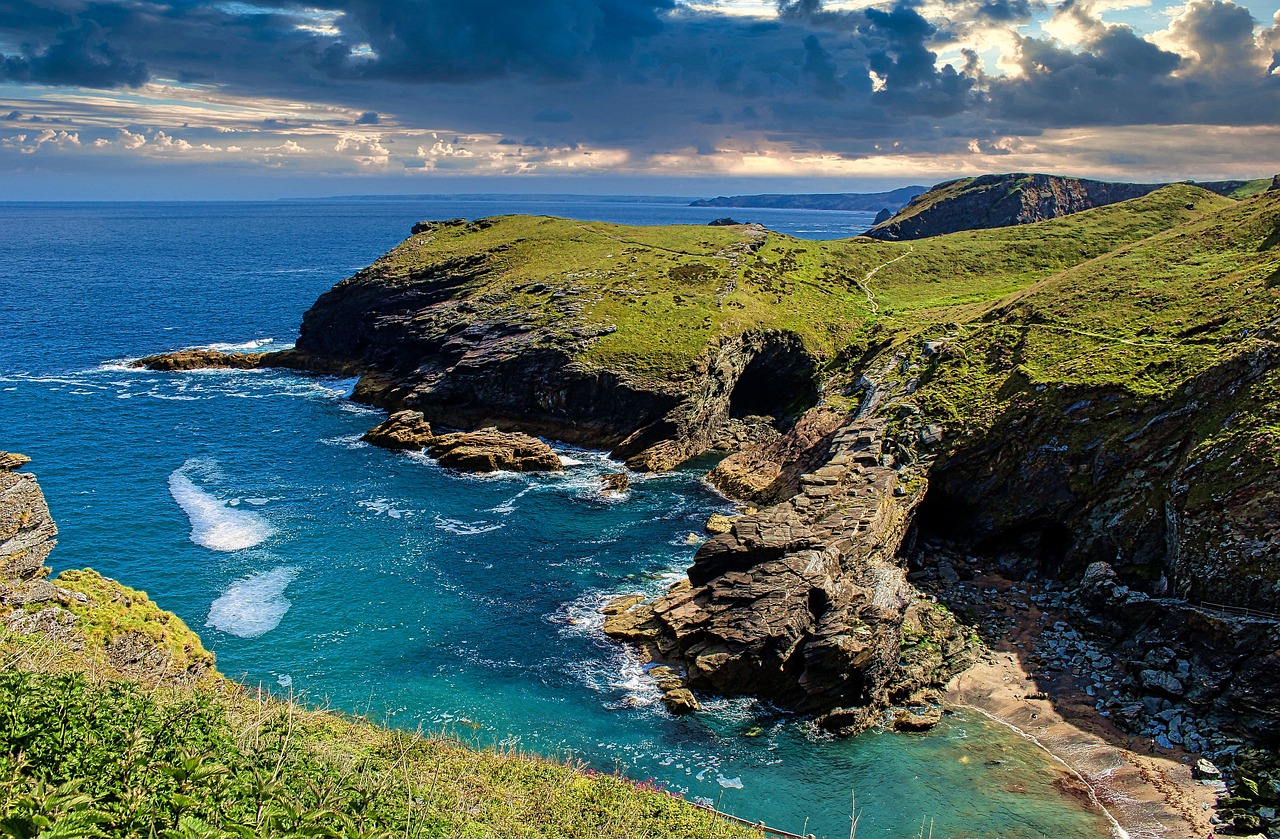
Padstow, further round, is the food town, built around a working harbour and closely tied to Rick Stein. Walk or cycle the Camel Trail from here toward Wadebridge and Bodmin, an 18-mile traffic-free route on an old railway line. Bude sits near the Devon border with sea pools and family beaches at Summerleaze and Widemouth. Inland from Tintagel you reach the north coast's headline history: Tintagel Castle, the ruined clifftop stronghold tied to the legend of King Arthur, now crossed by a footbridge and run by English Heritage, with entry from around £16.30 (english-heritage.org.uk).
The south coast: harbours and sheltered water
The south coast is gentler, greener and more sheltered, which makes it the side for sailing, paddling and pottering about harbours. Falmouth has one of the deepest natural harbours in the world and the excellent National Maritime Museum Cornwall on the waterfront, plus two castles guarding the estuary at Pendennis and St Mawes. Fowey is a pretty sailing town on its own wooded estuary, tied to the writer Daphne du Maurier.
Looe and Mevagissey are classic Cornish fishing harbours, still landing catch, still crammed with narrow streets and pasty shops. Near Mevagissey sits one of Cornwall's great days out, the Lost Gardens of Heligan, 200 acres of restored Victorian gardens, kitchen plots and jungle valley, with adult entry around £25 (heligan.com). The south coast is also home to the biggest single attraction in the county, covered below.
The far west: art, cliffs and land's end
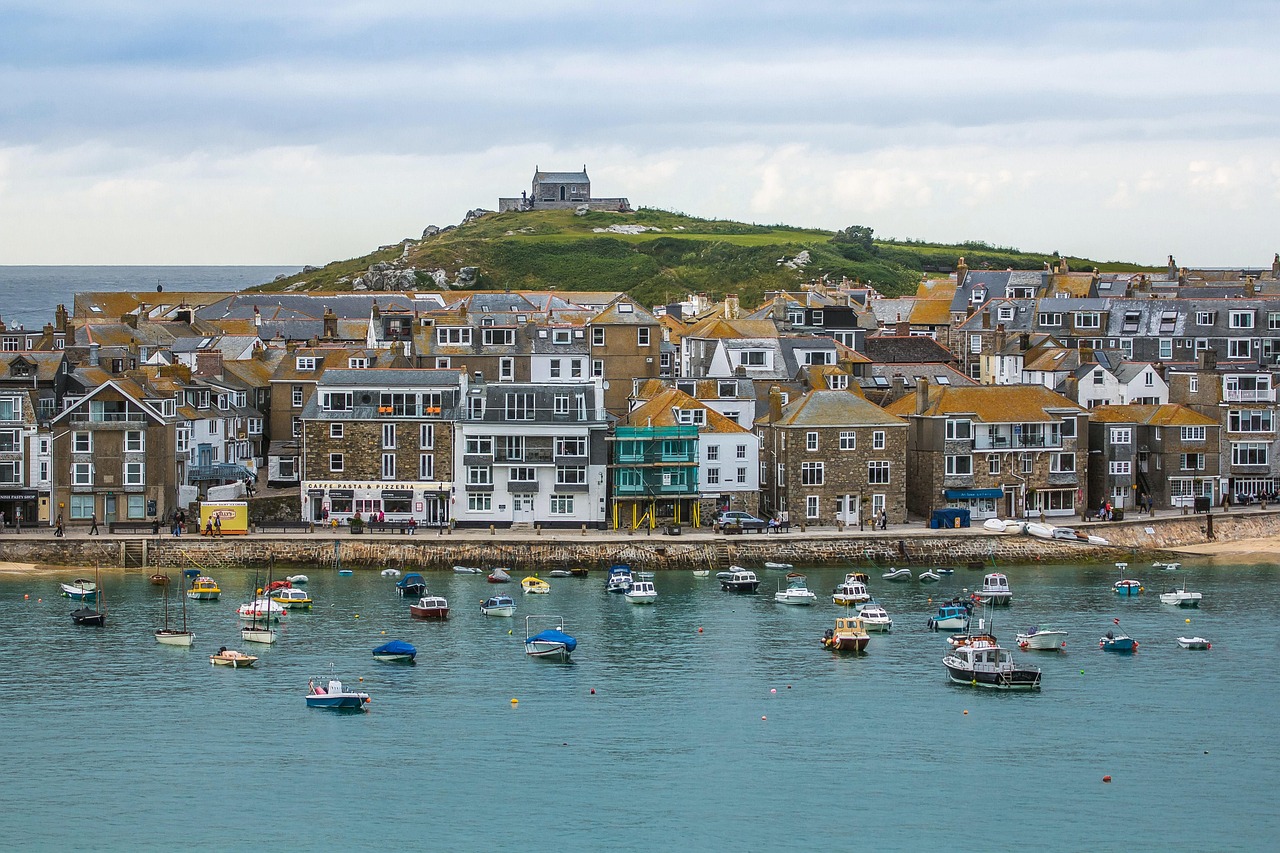
The far west, the Penwith peninsula, is where Cornwall runs out of land and turns spectacular. St Ives is the art town, all light and cobbles and beaches, with Tate St Ives above Porthmeor Beach and the Barbara Hepworth Museum in the streets below. Penzance is the practical hub, with the ferry and helicopter links to the Isles of Scilly and the grand Jubilee Pool lido on the seafront.
Just offshore at Marazion is St Michael's Mount, a castle and garden on a tidal island you can walk to on the cobbled causeway at low tide and reach by boat at high tide, with castle and garden tickets from around £28 (stmichaelsmount.co.uk). At Porthcurno, the Minack Theatre is carved into the cliff above a turquoise sea, and a daytime visit to the theatre and gardens costs £12 in advance (minack.com); an evening performance here is one of the best things you can do in Britain. Beyond that lies Land's End, the most westerly point of mainland England, and the wild, empty Lizard peninsula to the south, England's most southerly point, with Kynance Cove tucked beneath it.
Bodmin Moor and inland Cornwall
Most visitors stick to the coast, which leaves Bodmin Moor gloriously quiet. This is high granite moorland in the middle of the county, with Cornwall's two highest points, Brown Willy and Rough Tor, the stone circle at the Hurlers, and Golitha Falls, a series of woodland cascades on the River Fowey. Jamaica Inn, the moorland pub made famous by Daphne du Maurier, sits beside the A30. The moor is a dark sky area, so on a clear night the stars are extraordinary.
The Isles of Scilly
The Isles of Scilly are a different world, 28 miles off Land's End, reached by ferry or plane from Penzance or by plane from Newquay. Five inhabited islands share white sand, clear water and a pace of life closer to the Caribbean than the mainland. St Mary's is the main island and the arrival point; Tresco is famous for the Abbey Garden, a subtropical paradise of plants that would not survive a mainland winter. It is a proper expedition rather than a day trip, so give it two or three nights at least.
The headline attractions
These are the sights that pull people to Cornwall from across the country. If you do nothing else, do a few of these.
| Attraction | Where | What it is | From |
|---|---|---|---|
| Eden Project | Near St Austell | Giant biome greenhouses, rainforest and Mediterranean under glass | Adult £35.50 advance |
| St Michael's Mount | Marazion | Castle and garden on a tidal island | Adult £28 |
| Minack Theatre | Porthcurno | Open-air theatre cut into a sea cliff | Daytime £12 |
| Tate St Ives | St Ives | Modern art gallery above Porthmeor Beach | Check gallery |
| National Maritime Museum | Falmouth | Boats, sea history and an underwater viewing gallery | Check museum |
| Tintagel Castle | Tintagel | Clifftop ruin tied to King Arthur | Adult £16.30 |
| Lost Gardens of Heligan | Near Mevagissey | Restored Victorian gardens and jungle valley | Adult £25 |
| Land's End | Sennen | Mainland England's most westerly point | Free (parking charged) |
The Eden Project near St Austell is the big one: two vast biomes housing a tropical rainforest and a Mediterranean climate, plus outdoor gardens, built in a former clay pit. Adult tickets are £35.50 in advance and children five to 15 are £12.50, with under-fives free and the ticket working as an annual pass (edenproject.com). Book online to save against the on-the-day price.
Cornwall's best beaches
Cornwall has more than 300 beaches, from surf-battered strands to sheltered coves you climb down to. A few stand out. Fistral in Newquay is the surf beach. Kynance Cove on the Lizard is the postcard: turquoise water, white sand and serpentine rock stacks, though the walk down is steep. Porthcurno in the far west is a wedge of pale sand below the Minack, and Perranporth is the big flat family beach on the north coast.
Tides matter more here than most people expect. Many north coast beaches all but disappear at high water, and a few coves cut off entirely, so check a tide table before you set off. If you are travelling with a dog, note that a lot of popular beaches have summer dog bans between Easter and October; our guide to dog-friendly things to do in Cornwall lists the beaches that welcome dogs all year.
However you are travelling
Cornwall works for every kind of trip, and the right plan depends on who is with you. These guides go deeper than this page can.
- With kids: beaches, farm parks and the big attractions in our guide to family things to do in Cornwall.
- With little ones: the calmer, buggy-friendly picks in things to do in Cornwall with toddlers.
- When it rains: Cornwall gets its share of weather, so keep things to do in Cornwall when it's raining handy.
- On a budget: beaches, coast path and free harbours in free and cheap things to do in Cornwall.
- On foot: the coast path highlights and moor routes in the best walks in Cornwall.
- Eating out: harbour seafood and proper Cornish pubs in the best pubs and restaurants in Cornwall.
- Short on time: a two-day plan that covers the essentials in a weekend in Cornwall itinerary.
Where to stay
Cornwall is one of the great camping counties, with clifftop pitches, farm sites and family parks along both coasts. Where you base yourself is the biggest decision of the trip, because the county is long and the roads are slow in summer. For surf, look around Newquay, Padstow and Bude; for sheltered water and gardens, Falmouth and Fowey; for art and the wild ends, St Ives and Penzance.
Our guide to the best campsites in Cornwall breaks it down by area, or browse and compare every campsite in Cornwall in the directory. If your dates or destination are still open, start from the full campsite directory and work backwards from where you want to be.
Frequently asked questions
What is the number one thing to do in Cornwall?
The Eden Project near St Austell is the single most visited attraction, with its rainforest and Mediterranean biomes. For most visitors, though, the real draw is the coast: a day on Fistral, Kynance or Porthcurno beats any indoor attraction in good weather.
How many days do you need in Cornwall?
A long weekend covers one area properly, and most people wish they had longer. Give yourself five to seven days to combine north and south coasts without spending the trip in the car, and add two to three nights on top if you want the Isles of Scilly.
What is the best area of Cornwall to stay in?
It depends on your trip. Newquay and Padstow suit surf and families, Falmouth and Fowey suit sheltered water and sailing, and St Ives and Penzance suit art, cliffs and Land's End. Cornwall is long, so pick one base rather than trying to cover it all.
Is Cornwall good for a rainy day?
Yes. The Eden Project biomes, Tate St Ives, the National Maritime Museum in Falmouth and the county's many gardens all work in poor weather. Our full list of things to do in Cornwall when it's raining covers the best indoor days out.
When is the best time to visit Cornwall?
Late May to June and September give you warm weather, long days and far smaller crowds than the July and August school holidays. Winter is quiet and dramatic, with many attractions on reduced hours, so always check opening before you travel.
The short version
Cornwall is really five destinations in one: surf and cliffs in the north, harbours and gardens in the south, art and wild ends in the west, quiet moor in the middle, and islands offshore. Pick one base, plan your beaches around the tide, and book the big attractions in advance.
Sort out where you are pitching first and the rest falls into place. Browse and compare campsites in Cornwall to build your trip around the coast you want.