Adders and British Snakes: A Camper's Guide to Spotting Them and Staying Safe
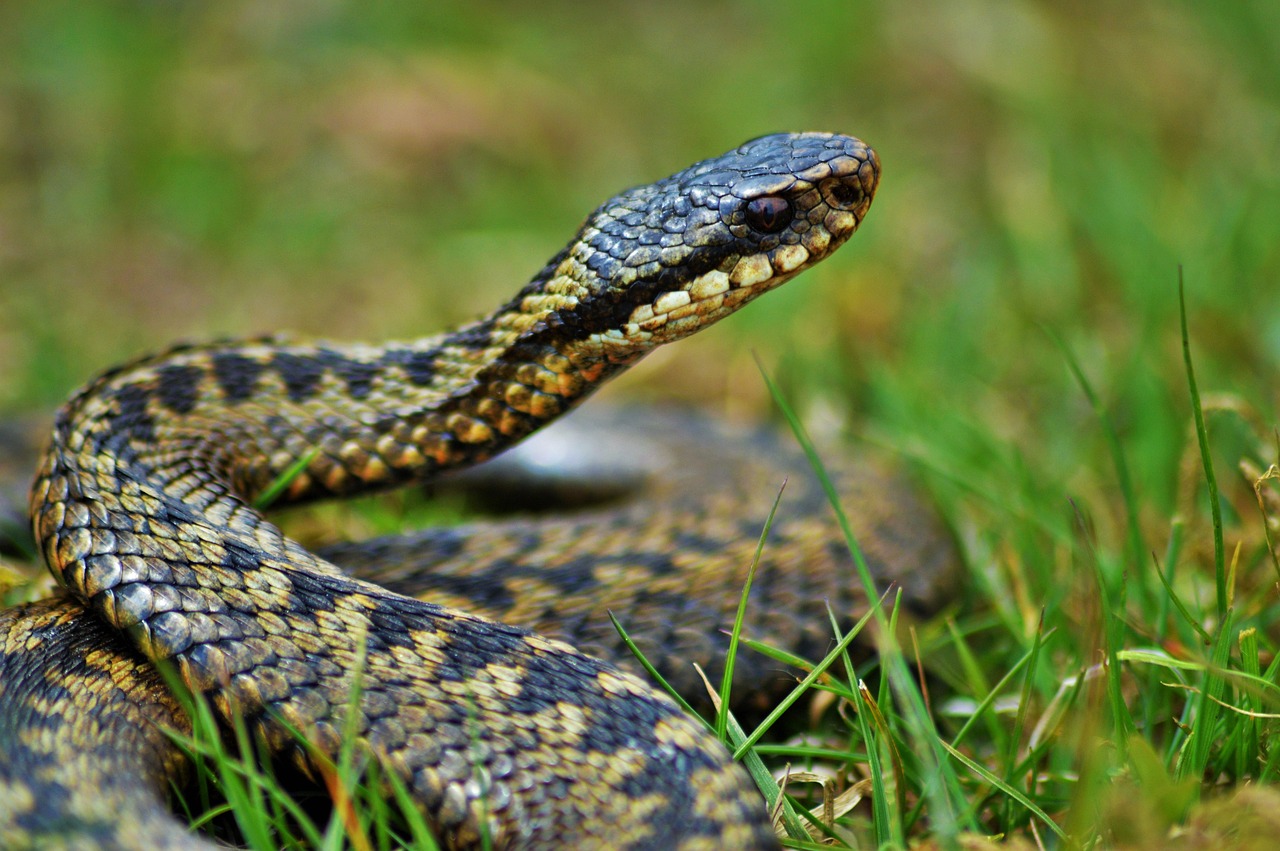
Britain has one venomous snake, the adder, and it has not killed anyone since 1975. It is shy, it would far rather avoid you, and it bites only when trodden on or picked up. The snake you are most likely to actually see, meanwhile, is the completely harmless grass snake.
Knowing which is which, and what to do in the rare event of a bite, turns snakes from a camping worry into a wildlife highlight. This guide covers how to identify Britain's snakes, how to avoid a bite, and exactly what to do if you or your dog is bitten.
It comes from Camping Sites in Britain, where you can find and compare campsites, caravan parks and glamping across the UK, and it is part of our wider guide to insects and wildlife that bother campers in Britain.
The short answer
- The adder is the only venomous snake in Britain. Look for the dark zigzag down the back
- It is not aggressive. It bites only when stepped on, cornered or handled, and will flee if given the chance
- Grass snakes and slow worms are harmless and far more commonly seen
- To avoid a bite: watch where you put your feet and hands on heath, dune and moor, keep dogs on the path, and never try to touch or move a snake
- If bitten: stay calm, keep still, call 999, and get to hospital. Adder bites are treatable and rarely serious in a healthy adult
- Dogs are bitten far more often than people and need an emergency vet straight away
Britain's three native snakes, plus the one that looks like a snake
You can meet four reptiles that might make you jump, and only one is venomous. Learning the difference takes two minutes and removes most of the worry.
| Adder | Grass snake | Smooth snake | Slow worm | |
|---|---|---|---|---|
| Venomous? | Yes, mildly | No | No | No (it is a legless lizard) |
| Length | 40 to 70cm, stocky | 70 to 100cm+, slender | Up to 70cm | 30 to 40cm, small |
| Key marking | Dark zigzag down the back | Yellow-and-black collar behind the head | Faint dark spots, slim | Smooth, shiny, uniform brown or grey |
| Eyes | Red, vertical slit pupil | Round pupil | Round pupil | Has eyelids and can blink |
| Where | Heath, moor, dune, woodland edge | Near water, gardens, compost | Rare, southern heaths only | Gardens, grassland, compost heaps |
| Behaviour | Basks, then flees | Great swimmer, plays dead | Secretive | Slow, often mistaken for a worm or small snake |
The zigzag is the thing to remember. A bold, dark, continuous zigzag stripe running the length of the back means adder. No zigzag means it is one of the harmless species. A black or very dark adder does occur and can hide the pattern, so if in doubt, treat any snake as one to leave well alone and simply keep your distance.
The slow worm is the one that catches people out. It is not a snake at all but a legless lizard, it is small, shiny and slow, and it is utterly harmless. You will most often find it under a groundsheet, a log or a compost heap.
Where and when you might see an adder
Adders are creatures of open, sunny, undisturbed ground, and they are most visible when they need to warm up.
- Habitat: heathland, moorland, sand dunes, chalk downland, open woodland and the edges of paths. Southern and western Britain and much of Scotland. Not in Ireland, which has no snakes
- Basking: they warm themselves in the sun, so a still snake on a sunny path, a log, a south-facing bank or a flat rock on a spring morning is the classic sighting
- Season: March to October. Most encounters are in spring, when adders emerge from hibernation and bask openly before they are fully warmed up and quick to flee
- Time of day: mornings and cooler spells, when they need to sit in the sun. In high summer heat they are more active and harder to spot but also quicker to get out of your way
Adders are a protected species in Britain. It is an offence to kill, injure or deliberately disturb one. Beyond the legal point, they are declining and genuinely worth protecting, so the correct response to seeing one is to stop, admire it from a few feet away, and let it move off.
How to avoid being bitten
Almost every adder bite happens because someone stepped on one without seeing it, or tried to pick one up. Both are easily avoided.
- Watch your feet on heath, dune and moorland paths, especially on warm mornings in spring
- Wear boots and long trousers when walking through heather, bracken or long grass off the mown path
- Do not put hands into gaps you cannot see into: log piles, rock crevices, dense heather, the base of a bank
- Stamp as you go through thick vegetation. Adders feel the vibration and move away before you reach them
- Never try to touch, catch, move or photograph a snake up close. Handling is how a large share of bites happen, and it is also illegal
- Keep to paths where you can see the ground
- If you see one, freeze, then back away slowly. Give it a clear route to escape and it will take it
What to do if you are bitten
An adder bite is a medical emergency to be treated calmly, not a disaster. Deaths are extraordinarily rare, the last in Britain was in 1975, and the great majority of healthy adults recover fully with hospital treatment. But every suspected bite should be assessed in hospital, because reactions vary and antivenom is occasionally needed.
Do this:
- Move away from the snake so it cannot bite again, then stop
- Stay calm and keep still. Keeping the heart rate down slows the spread of venom. Do not walk around if you can avoid it
- Keep the bitten limb still and low, below heart height, and let it rest
- Remove rings, watches, boots and tight clothing near the bite before swelling starts
- Call 999 and ask for an ambulance, or get someone to drive you straight to A&E. Say it is a suspected adder bite
- Note the time of the bite and, if swelling develops, mark its edge with a pen so the hospital can see how fast it is spreading
Do not:
- Do not try to suck out the venom
- Do not cut the wound
- Do not apply a tourniquet or tight bandage
- Do not apply ice
- Do not give alcohol, aspirin or ibuprofen (paracetamol is fine for pain)
- Do not try to catch or kill the snake for identification. A description is enough, and it is protected
Typical symptoms are immediate pain, then swelling and bruising spreading from the bite over the following hours, sometimes with nausea, dizziness or a general feeling of being unwell. Give the campsite name, postcode and pitch number to the ambulance service, and send someone to the entrance to guide them in, since rural sites are hard to find. General guidance is on the NHS snake bites page.
Adder bites in dogs
Dogs are bitten far more often than people, because they investigate with their nose and disturb basking snakes in the undergrowth. A bite is more dangerous to a dog than to an adult human, especially a small dog, and it needs urgent veterinary care.
- Common bite sites are the face, muzzle and front legs, where a curious dog meets the snake
- Signs: sudden yelp, rapid painful swelling around the bite, two small puncture marks, lethargy, drooling, pale gums, wobbliness or collapse
- What to do: keep the dog as calm and still as possible, carry it rather than let it walk if you can, and get to a vet immediately. Phone ahead so they can prepare
- Keep the dog warm and quiet on the way. Do not apply a tourniquet, ice, or try to treat the wound yourself
Most dogs recover well with prompt treatment, which may include antivenom. The key is speed, so know where the nearest emergency vet is before you set off on a heathland or moorland trip, the same way you would check for your own trip. Keeping a dog on the path and out of deep heather is the best prevention there is.
Camping with children
The message for children is calm and simple: British snakes are shy and will not chase you, so if you see one, stand still, tell a grown-up, and never touch it. Turning it into a rule about looking but not touching, the same as with any wildlife, works far better than fear.
Sandals are worth avoiding on heath and dune paths in spring. Trainers or boots and keeping to the path removes essentially all of the already tiny risk. And a calmly pointed-out adder basking on a log is one of the best wildlife moments a child will get on a British camping trip.
When adders are about, month by month
| Month | Activity |
|---|---|
| March to April | Emerging from hibernation. Basking openly and most visible. Males especially |
| May to June | Active and mating. Still frequently seen basking in the morning |
| July to August | Active but harder to spot in the heat, and quick to move away |
| September to October | Feeding up before hibernation, basking again on cooler days |
| November to February | Hibernating. You will not see one |
Spring is both the best time to see an adder and the time to watch your feet most carefully, because a newly emerged, cool snake is slower to get out of your way than a warm summer one.
Frequently asked questions
How do I identify an adder?
Look for the bold dark zigzag stripe running the length of the back, a stocky body 40 to 70cm long, and red eyes with a vertical slit pupil. The zigzag is the giveaway. No zigzag means it is a harmless grass snake or slow worm.
How dangerous is an adder bite?
Rarely serious for a healthy adult. Britain has had no adder-bite death since 1975. A bite causes pain and spreading swelling and should always be assessed in hospital, occasionally needing antivenom, but the great majority of people recover fully.
What is the difference between an adder and a grass snake?
Adders are shorter and stockier with a dark zigzag and red slit-pupil eyes. Grass snakes are longer and more slender, up to a metre or more, with a distinctive yellow-and-black collar behind the head and round pupils, and they are completely harmless.
What should I do if my dog is bitten by an adder?
Keep the dog calm and still, carry it if you can rather than let it walk, and get to a vet immediately, phoning ahead. Do not apply a tourniquet, ice or any home treatment. Bites are more dangerous to dogs than to people, so speed matters.
Are adders protected in the UK?
Yes. It is an offence to kill, injure or deliberately disturb an adder. They are also declining. If you see one, keep your distance, let it move off, and never attempt to handle or move it.
Where in the UK do you find adders?
On heathland, moorland, sand dunes, chalk downland and open woodland across much of England, Wales and Scotland. They are absent from Ireland, which has no native snakes. They like warm, open, undisturbed spots for basking.
Will an adder chase me?
No. Adders are shy and want to avoid you. They bite only in self-defence when stepped on, cornered or handled. Given a clear escape route they will always choose to flee rather than confront you.
The short version
Britain's only venomous snake is shy, protected, and no threat if you leave it alone. Learn the zigzag, watch your feet on heath and dune paths in spring, keep the dog on the path, and never try to touch a snake.
Do that and an adder becomes what it should be: a rare and rather special thing to see basking in the sun, not something to fear.
For everything else that bites, stings or raids your food in Britain, see our complete guide to camping pests in Britain.