Camping Pests in Britain: What Bites, What Stings and What to Do
· Updated
Britain has no dangerous wildlife to speak of, one venomous snake that has killed nobody since 1975, and no insect that will do you lasting harm. What it does have is a handful of species capable of ruining a weekend, and most of them are avoidable if you know when and where they turn up.
This is the full list: what bites, what stings, what raids your food, and what to do about each. Use the identification table to jump to what you are dealing with, or read the seasonal calendar further down if you are still choosing your dates.
It is the pest guide from Camping Sites in Britain, where you can find and compare campsites, caravan parks and glamping across the UK.
Identify it fast
| What happened | Most likely culprit | Where to look |
|---|---|---|
| Sharp sting, insect was glossy with a narrow waist, August | Common wasp | Wasps, below |
| Sharp sting, insect was furry and round, sting left in skin | Honeybee | Bees, below |
| Dozens of tiny itchy bites, Scotland or the north west, dawn or dusk | Midges | Midges, below |
| One very painful bite, large fly, bleeding afterwards | Horsefly or cleg | Horseflies, below |
| Small dark lump attached to skin, not moving | Tick | Ticks, below |
| Itchy bites on ankles and legs overnight | Mosquitoes or midges | Mosquitoes, below |
| Trail of insects into the food crate | Ants | Ants, below |
| Food snatched from your hand at the coast | Herring gull | Gulls, below |
| Bag chewed open overnight, droppings | Field mouse or fox | Rodents and foxes, below |
| Two puncture marks, rapid swelling, heathland | Adder. Call 999 | Adders, below |
If you are not sure what you are looking at, the identification apps in our guide to the best apps for identifying wildlife while camping will usually settle it from a photograph.
Stinging insects
Wasps
The worst pest on any British campsite, and only for about six weeks. In late July the queen stops laying, the grubs that fed the adult workers sugar disappear, and thousands of starving wasps go looking for anything sweet. That is August and September in a nutshell.
The most effective response is a decoy: a saucer of jam or overripe fruit placed 5 to 10 metres from your table, 15 minutes before you eat. Beyond that, keep food covered, clear up immediately, and never drink from an open can, because a sting inside the mouth is the one genuine emergency wasps cause.
Read the full guide: how to keep wasps away when camping.
Bees
Almost never the actual problem. Bees want flowers, not your lunch, and if something is circling your beer it is a wasp. The exception is pitching next to clover, bramble in June, lime trees in July or ivy in autumn, where you will simply be camping in the middle of their food.
Move the tent, skip perfumed toiletries, and stand still if one investigates you. Never set a sugar trap for bees, and never call an exterminator: honeybee swarms are collected free by volunteer beekeepers, and bumblebee nests die out on their own by autumn.
Read the full guide: how to keep bees away when camping.
Hornets
European hornets look terrifying and are the most maligned insect in Britain. Workers reach 25mm and queens 35mm, but away from the nest they are noticeably more placid than common wasps and rarely bother people. Leave them alone.
The one you should act on is the yellow-legged or Asian hornet: smaller at 20 to 24mm, dark thorax, mostly dark abdomen with a single orange band near the tail, and bright yellow leg tips. It is an invasive species under active eradication and public sightings drive the response. Report it through the free Asian Hornet Watch app or the online form run by the UK Centre for Ecology and Hydrology.
Biting flies
Midges
The Highland midge, Culicoides impunctatus, is responsible for roughly nine out of ten midge bites in Scotland and is the single biggest reason people abandon a west coast trip early. The season runs late May to mid September, peaking in June and July on the west coast and in the Highlands.
They are beatable because their limits are so specific. Midges cannot fly in wind above about 6mph, they are inactive below 10°C, they avoid direct sun, and they are at their worst at dawn and dusk on still, humid, overcast days. An exposed, breezy pitch is close to midge free even in peak season, and a sheltered spot by water on a warm damp evening is unbearable.
Pack a head net, which is the only thing that works reliably when they are bad, and use a picaridin or DEET repellent. Check a midge forecast before committing to a west coast site in July.
Read the full guide: midges in Scotland and the rest of the UK.
Horseflies and clegs
A horsefly bite hurts immediately and often bleeds, because the fly cuts rather than pierces. They are active roughly June to September, worst in warm still weather, and are drawn to movement, dark clothing, sweat and water, which is why they find you on the walk back from the shower block.
Bites frequently become inflamed and are more prone to infection than most insect bites, so wash and cover them properly. See a pharmacist if a bite becomes hot, spreading and increasingly painful over the following days.
Light coloured clothing, covering up near livestock and water, and moving rather than standing still all help.
Read the full guide: horsefly bites, why they hurt and what to do.
Mosquitoes
Britain has mosquitoes and they do bite, particularly near still water, marshland and in the south east on warm evenings. They carry no disease here, so this is a comfort problem rather than a health one.
Pitch away from standing water, zip the inner tent before dusk rather than after, and use a repellent containing DEET, picaridin or oil of lemon eucalyptus. Our guide to the best insect repellents for campers covers what actually works and at what concentration.
Read the full guide: how to deal with mosquitoes while camping.
Ticks and Lyme disease
The one genuine health risk on this page, and the one most campers underestimate. UKHSA recorded 1,581 laboratory-confirmed cases of Lyme disease in England in 2024, and the true figure is accepted to be higher because many cases are diagnosed on symptoms alone. Ticks are found in long grass, bracken and woodland edge across Britain, with hotspots in the Highlands, the Lake District, the New Forest and Exmoor. Bites happen year round but peak in June.
Check for ticks every evening. Look at the backs of knees, the groin, the waistband, the armpits, behind the ears and along the hairline, and check children and dogs as well as yourself. A tick that has just attached is the size of a poppy seed.
To remove one: use fine-tipped tweezers or a tick removal tool, grip as close to the skin as possible, and pull slowly straight upwards. Do not squeeze the body, twist, burn it, or smother it in Vaseline. Wash the area afterwards.
Then watch it. A spreading circular or bullseye rash appearing days to weeks later, or flu-like symptoms, means you should contact your GP or call 111. Lyme disease is treated straightforwardly with antibiotics when caught early, and badly when caught late. Carry a tick tool in your first aid kit; ours is listed in essential first aid tips for campers.
Read the full guide: ticks in the UK, what they look like and how to remove one.
Crawling insects
Ants
Ants are a nuisance rather than a threat, and they are almost always a food storage problem. Keep everything sealed in boxes rather than bags, do not leave crumbs or spilled squash on the groundsheet, and avoid pitching directly on an obvious nest or ant trail.
Flying ant day, usually a humid afternoon in July, produces enormous swarms of winged ants for a few hours. It is harmless, it is over by evening, and there is nothing to do except close the tent and wait.
Spiders
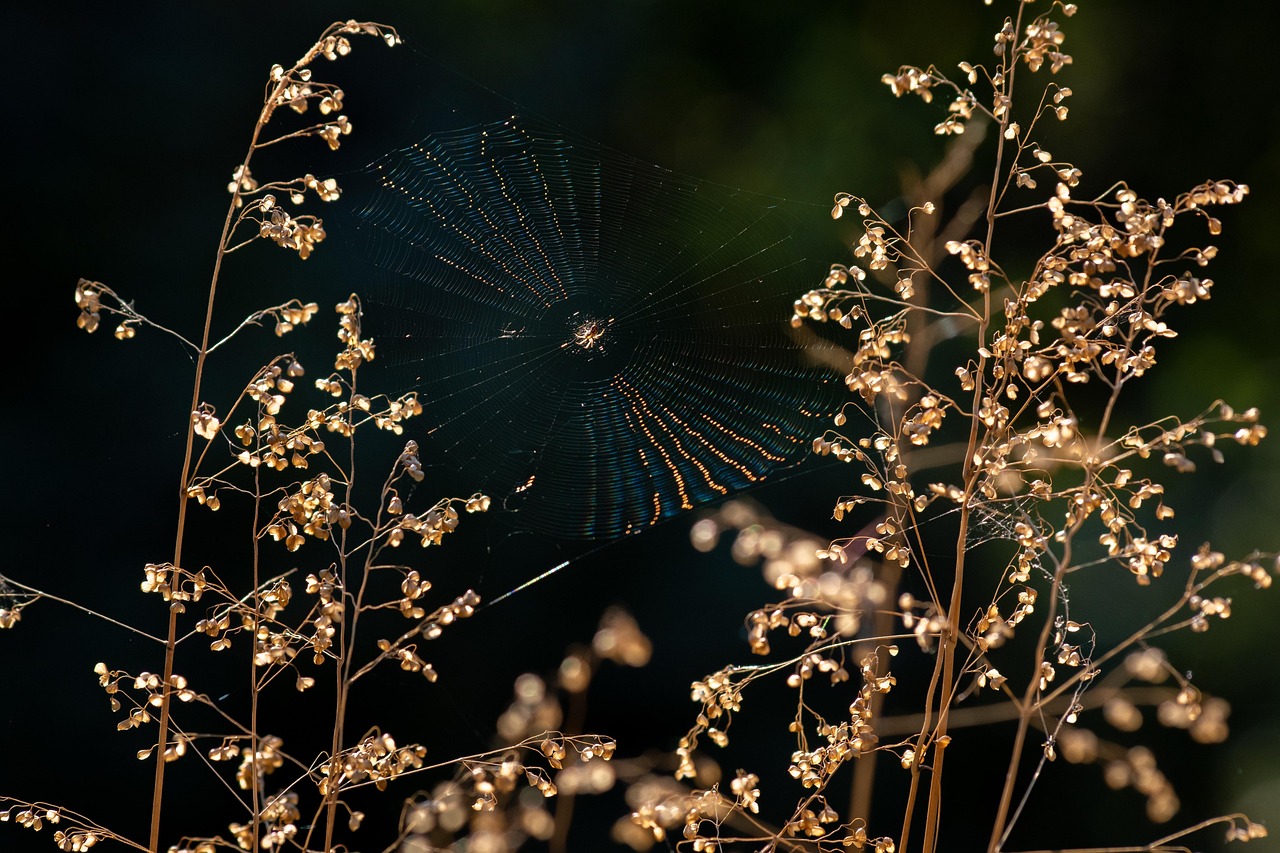
No British spider poses a real danger. The false widow is the only one that bites with any regularity and the result is usually comparable to a wasp sting, occasionally worse, very rarely requiring treatment. Spiders in a tent are there because insects are there.
Shake out boots and clothing left outside overnight, which is sensible practice anyway, and keep the inner zipped.
Read the full guide: spiders in your tent, which UK spiders bite and which are harmless.
Slugs
Not dangerous, just deeply unwelcome in a sleeping bag. Slugs are drawn to damp and to food residue. Keep the groundsheet clear of scraps, avoid pitching in the lowest, wettest corner of a field, and store cooking gear off the ground overnight.
Food raiders
Gulls
Herring gulls at coastal sites will take food directly out of your hand, and they are fast, confident and completely unbothered by shouting. Eat under an awning or windbreak, never leave food unattended on a table, and do not feed them under any circumstances, including once, because they will return for the rest of the week and bring others.
Mice, voles and foxes
Field mice chew through tent fabric and dry bags to reach food, and will do it in a single night. Foxes on established sites are bold and will take anything left out, including a bag of rubbish beside the tent.
Store all food in sealed hard boxes, ideally in the car overnight rather than in the tent, and walk rubbish to the bins before bed rather than leaving it in the porch. Never keep food inside a sleeping compartment.
Larger wildlife
Cattle
Statistically the most dangerous animal in the British countryside, and the risk is almost entirely about dogs. Cattle see a dog as a predator, and between 2000 and 2015 a dog was present in all but one fatal cattle attack on walkers.
- Keep dogs on a short lead near cattle, and give the herd a wide berth even if it means leaving the marked path
- Never walk between a cow and her calf. Spring and early summer are the highest risk
- If cattle threaten you, let the dog off the lead. The dog will outrun them and you both stand a far better chance separately. Take the quickest route out, path or no path
- Do not run if you can walk, and do not turn your back on a herd that is moving towards you
Adders
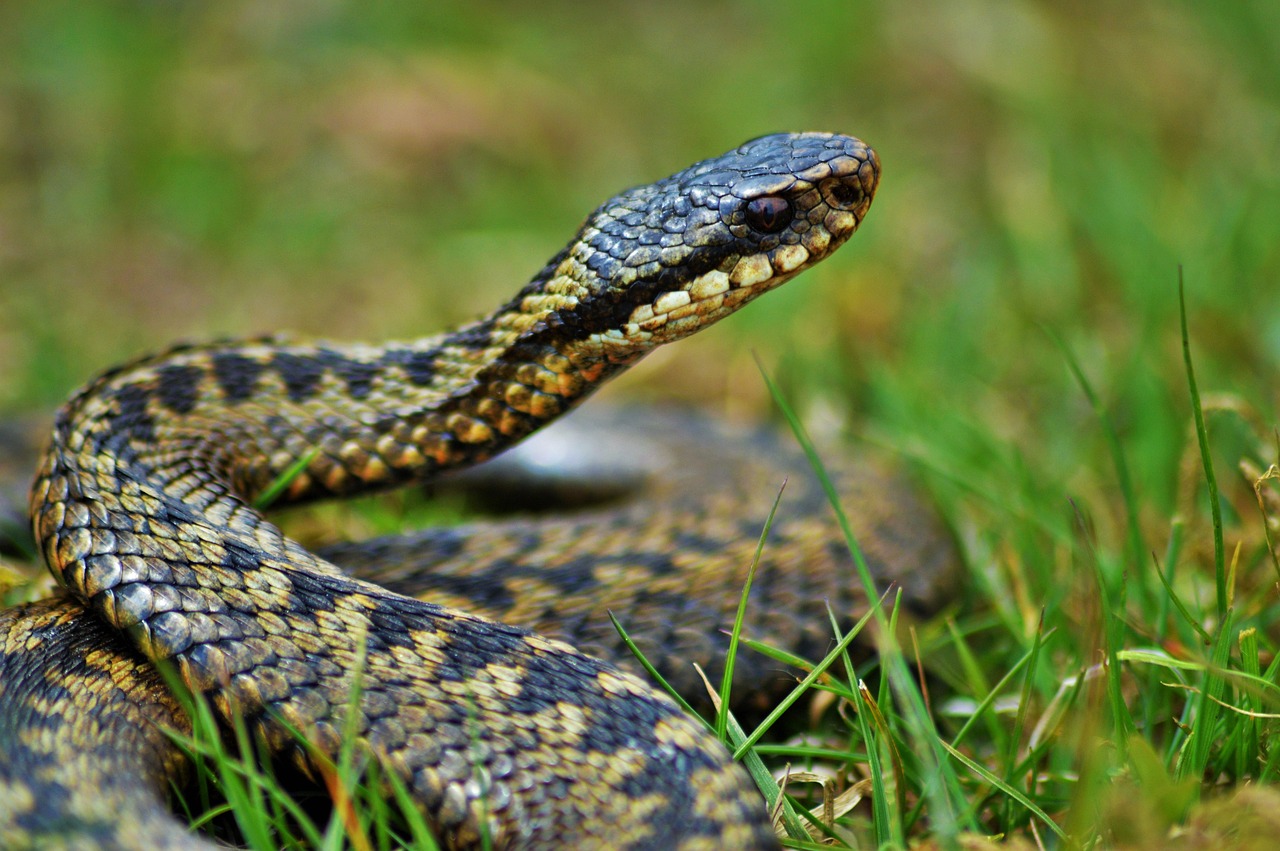
Britain's only venomous snake, found on heathland, dunes, moorland and woodland edge, most often basking on warm mornings in spring. Adders are shy and bite only when trodden on or picked up. Nobody in the UK has died of an adder bite since 1975.
If someone is bitten, treat it as urgent anyway. Call 999 or get to A&E. Keep the person calm and still, keep the bitten limb below heart height, remove rings, watches and tight clothing before swelling starts, and rinse the area with clean water. Do not cut the wound, do not try to suck out venom, do not apply ice and do not use a tourniquet. Dogs are bitten far more often than people and need an emergency vet immediately.
Read the full guide: adders and British snakes, how to spot them and stay safe.
Deer, badgers and everything else
Not a threat. Deer in rut during October can be unpredictable at close range in places like Richmond Park or the Highlands, so keep your distance and keep dogs on leads. Badgers, foxes and hedgehogs are after food, not you.
What is out when: a British camping calendar
| Month | Main problems | Overall |
|---|---|---|
| March to April | Ticks starting, adders basking, cattle with new calves | Quiet. Good camping |
| May | Ticks rising, midges begin late in the month | Good, especially early May |
| June | Tick peak. Midges peak in Scotland. Horseflies start | Excellent away from the west coast |
| July | Midges, horseflies, flying ant day, bees around clover and lime | Mixed. Wasps still tolerable |
| August | Wasp peak. Horseflies, midges continuing | The worst month for pests |
| September | Wasps at their boldest, midges to mid month, deer rut begins | Improving after mid month |
| October | Deer rut, ivy still drawing wasps and bees early on | Very good |
| November to February | Ticks possible in mild spells. Little else | Nothing to worry about |
If pests are your main concern when choosing dates, the two best windows in Britain are late May to mid June away from the Scottish west coast, and the second half of September into October. The late August bank holiday is the single worst weekend of the year.
What to actually pack
- Repellent with DEET or picaridin. Works on midges, mosquitoes, ticks and horseflies. Does nothing at all for bees and wasps
- A head net. Weighs nothing and is the only reliable defence on a bad midge night in Scotland
- A tick removal tool. Fine-tipped tweezers will do, but a proper tool is better and costs a couple of pounds
- Antihistamine tablets and a soothing cream for bites and stings
- A cold pack, or just use the cool box, wrapped in a tea towel
- Sealed hard food boxes rather than bags, which stop ants, mice and wasps in one go
- Light coloured, long sleeved layers for evenings, which handle midges, mosquitoes and horseflies together
- Cans with slider caps or bottles with lids, which is the single cheapest way to avoid the worst wasp injury there is
When to get medical help
Call 999 immediately for:
- Swelling of the face, lips, tongue or throat after any bite or sting
- Wheezing, difficulty breathing, a fast heartbeat, dizziness or fainting. These are signs of anaphylaxis. Help the person use an adrenaline auto-injector if they carry one, and still call 999 even if they improve
- Any sting inside the mouth or throat
- A suspected adder bite
Contact a GP or call 111 for:
- A spreading circular or bullseye rash, or flu-like symptoms, in the weeks after a tick bite
- A bite or sting that becomes hot, increasingly painful and spreading after two or three days, or comes with a fever, which suggests infection
Have the campsite name, postcode and pitch number ready, and send someone to wait at the site entrance. Rural campsites are genuinely hard for an ambulance to find, and that alone can cost several minutes.
Full guidance on treating bites and stings is on the NHS insect bites and stings page.
Frequently asked questions
What is the most dangerous animal to campers in Britain?
Cattle, by a wide margin, and almost always when a dog is present. Ticks carry the only meaningful disease risk through Lyme disease. Adders are Britain's only venomous snake and have caused no deaths since 1975.
What month is worst for insects when camping in the UK?
August. Wasp colonies collapse and thousands of workers go looking for sugar, while horseflies and midges are still active. June is worst specifically for ticks and for midges in Scotland.
Does insect repellent work on wasps and bees?
No. DEET, picaridin and lemon eucalyptus are formulated for biting insects such as midges, mosquitoes, ticks and horseflies. They have no useful effect on stinging insects, which have to be managed by removing food and choosing your pitch.
How do I stop midges ruining a Scottish trip?
Pitch somewhere exposed and breezy, since midges cannot fly in wind above about 6mph. Avoid still, humid, overcast evenings near water, carry a head net, use picaridin repellent, and check a midge forecast before booking a west coast site in June or July.
Should I check for ticks every day?
Yes, every evening. Check behind the knees, the groin, the waistband, the armpits, behind the ears and the hairline, on children and dogs too. Removing a tick promptly with fine-tipped tweezers substantially reduces the Lyme disease risk.
Is it safe to walk through a field of cows?
Usually, if you have no dog and give them space. With a dog, keep it on a short lead, never walk between a cow and calf, and if the herd threatens you, let the dog off the lead and take the quickest route out.
The short version
Pick your pitch with your eyes open, keep food sealed and rubbish walked to the bins, check for ticks every evening, and never drink from an open can in August. That covers most of what this page describes.
Everything else is seasonal and predictable. Britain simply does not have wildlife that will hurt you, only wildlife that will spoil a weekend if you camp in the wrong field in the wrong week.