The best castles to visit in Northumberland
· Updated
Northumberland has more castles than any other county in England. That is not a tourist board boast, it is a straight consequence of geography: for 300 years this was the front line of the wars between England and Scotland, and every landowner who could afford stone built to defend it. The result is a coast and countryside studded with fortresses, from working stately homes to romantic clifftop ruins.
The seven below are the ones worth planning a trip around. Most sit on or near the Northumberland Coast National Landscape, the protected stretch of shoreline formerly known as the Northumberland Coast Area of Outstanding Natural Beauty, so a castle day and a beach day are usually the same day.
This guide is part of our wider guide to camping near Britain's castles, and it comes from Camping Sites in Britain, where you can find and compare campsites, caravan parks and glamping across the UK.
The seven castles at a glance
If you only have a long weekend, base yourself on the coast and pick from this list by mood: grand and family-friendly, dramatic and coastal, or ruined and quiet.
| Castle | Where | Custodian | Known for |
|---|---|---|---|
| Alnwick | Alnwick | Duke of Northumberland (private) | Second-largest inhabited castle in England, Harry Potter filming |
| Bamburgh | Bamburgh | Armstrong family (private) | Coastal fortress on a basalt crag above the beach |
| Warkworth | Warkworth | English Heritage | Hilltop keep above the River Coquet |
| Dunstanburgh | near Craster | English Heritage and National Trust | Romantic clifftop ruin reached on foot |
| Lindisfarne | Holy Island | National Trust | Tidal island, cross only at low water |
| Chillingham | near Wooler | Private | Famously haunted, wild cattle nearby |
| Prudhoe | Prudhoe | English Heritage | Norman castle above the Tyne valley |
Alnwick Castle
Alnwick is the big one, the second-largest inhabited castle in England after Windsor. It has been the seat of the Percy family, the Dukes of Northumberland, since 1309, and the family still lives there, which is why the state rooms feel like a home rather than a museum. Film crews know it well: it stood in as Hogwarts in the first two Harry Potter films and as Brancaster Castle in Downton Abbey.
Plan a full day. There is the castle itself, the broomstick-flying lessons on the lawn in summer, and next door the separately run Alnwick Garden with its Grand Cascade and Poison Garden. Opening is seasonal, roughly spring to autumn, so check the official site before you travel. Details and current admission are on the English Heritage and Alnwick Castle websites rather than any figure we could quote here.
Bamburgh Castle
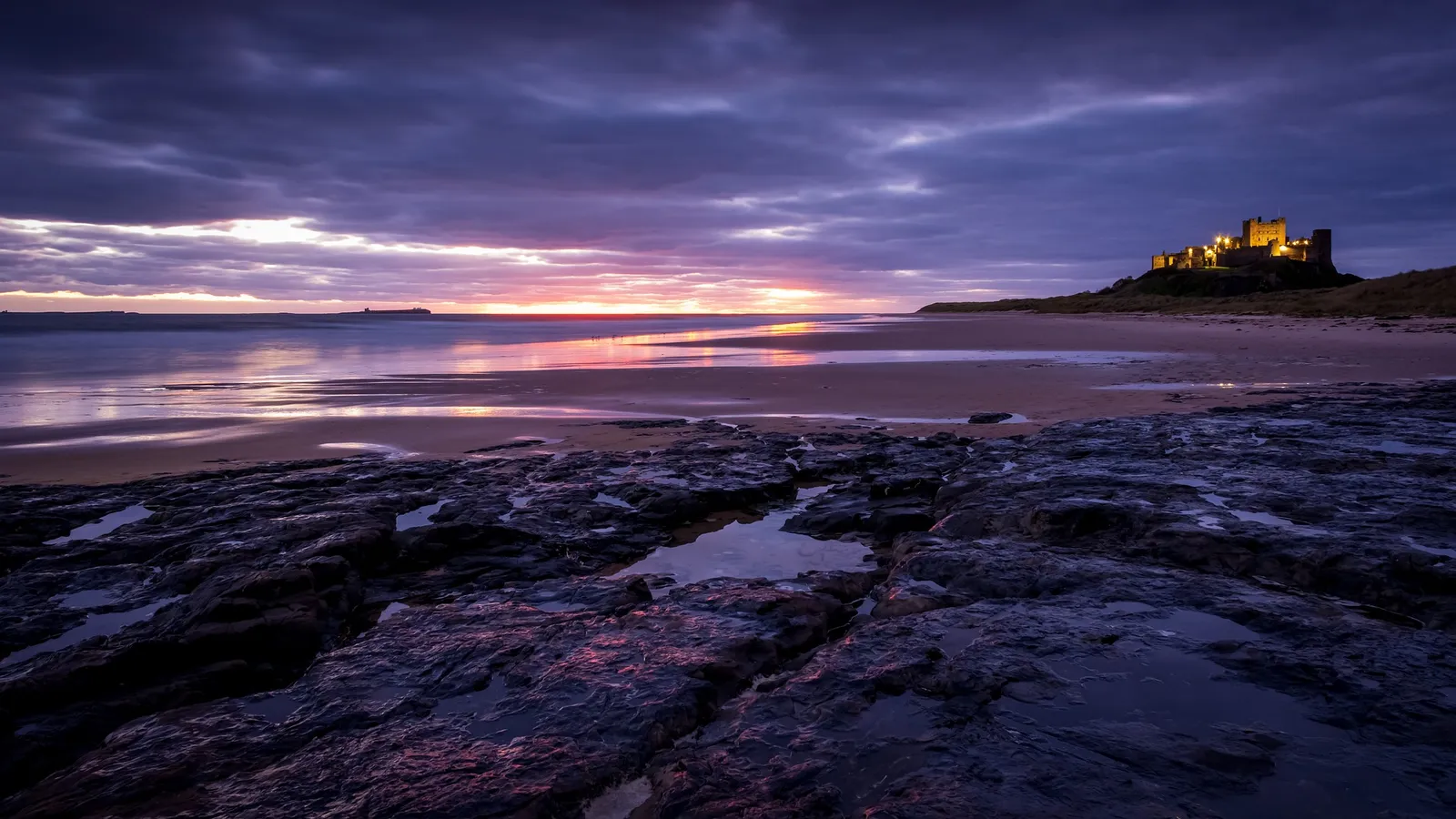
Bamburgh is the most photographed castle on the Northumberland coast, and once you have seen it you understand why. It sits on a basalt outcrop of the Great Whin Sill, rising straight out of the dunes above a vast sweep of pale sand. There has been a stronghold on this rock since Anglo-Saxon times, when it was the royal seat of the kingdom of Bernicia, and the present fortress was heavily restored by the Victorian industrialist Lord Armstrong, whose family still owns it.
Inside there is a proper collection of armour, artefacts and archaeology, and the views from the ramparts run the length of the coast to the Farne Islands and Lindisfarne. The beach below is one of the finest in England and free to walk any time. Combine the two and it is an easy day out for all ages.
Warkworth Castle
Warkworth is the classic English Heritage castle experience, a hilltop keep standing above a loop of the River Coquet with a medieval village at its feet. Like Alnwick it was a Percy stronghold, and its cross-shaped great tower is one of the most sophisticated pieces of castle design in England. Shakespeare set part of Henry IV here.
Give yourself time to climb the keep for the view over the river and out to the sea at Warkworth harbour, then walk down to the riverside hermitage, a chapel carved into the rock and reached by a short boat trip in season. Opening hours and prices are on the English Heritage site.
Dunstanburgh Castle
Dunstanburgh is the most romantic ruin in the county and the one you have to earn. There is no car park at the gate. You reach it on a level 1.3 mile coastal walk from the fishing village of Craster, with the gaunt shell of the fourteenth-century gatehouse growing larger against the sky the whole way. It was begun in 1313 by Thomas, Earl of Lancaster, on a scale meant to overshadow the king.
The castle is owned by the National Trust and managed by English Heritage, so both organisations list it. The walk itself is a highlight, with seabird cliffs, the ruins of the great tower, and Craster kippers waiting for you back in the village. Check tide and opening details with the National Trust before you set off.
Lindisfarne Castle
Lindisfarne Castle sits on Holy Island, and getting there is half the experience. The island is cut off twice a day by the tide, reached across a causeway that floods completely, so you must plan around the published safe crossing times or risk being stranded. The Tudor fort was later remodelled into an Edwardian holiday home by the architect Edwin Lutyens, and it is now cared for by the National Trust.
The castle is compact, so pair it with the priory ruins, the walled Gertrude Jekyll garden and the village. Crossing times change every day and are not negotiable, so read the National Trust guidance and the official safe crossing timetable first. This is the one castle on the list where the tide, not the opening hours, sets your day.
Chillingham Castle
Chillingham is Northumberland's ghost castle, and it leans into the reputation. The medieval fortress has dungeons, a torture chamber and a long roll of resident spirits, and it runs guided ghost tours after dark for anyone who wants them. It is privately owned and still lived in, which gives the interior a lived-with, slightly eerie character that a state-run site never quite has.
Next to the castle, in a walled park, roams the herd of Chillingham wild cattle, a genuinely rare breed that has stayed isolated and unchanged for around 700 years. Viewing them is by warden-led tour and is separate from the castle visit. Check both the castle and the wild cattle association for current opening before you go.
Prudhoe Castle
Prudhoe is the quiet one, and a good choice if you are approaching from the south or the west rather than the coast. This Norman castle stands on a wooded ridge above the Tyne valley and holds the distinction of never having fallen to the Scots, despite two sieges. It is compact, rarely busy, and run by English Heritage.
It works well as a half-day paired with Hadrian's Wall country, which is a short drive away. Opening tends to be seasonal and limited, so confirm days and times with English Heritage rather than turning up on spec.
Where to camp for a castle trip
Base yourself on the coast between Alnwick and Berwick and you can reach Alnwick, Warkworth, Dunstanburgh, Bamburgh and Lindisfarne within short drives, with Chillingham inland near Wooler and Prudhoe off to the south west near the Tyne. It is a compact county for castle hunting, which is exactly why it rewards a few nights under canvas rather than a single long day.
You can browse and compare sites across the region in our campsite directory, filtering for tents, caravans, motorhomes or glamping near the coast.
More castle counties to explore
Northumberland is the densest castle county, but it is not the only one worth pitching up in. If you are building a longer castle tour, three neighbours make natural companions.
- Yorkshire's historic castles pair grand ruins with family days out just to the south.
- Cumbria's best castles sit within easy reach across the Pennines, alongside Lake District camping.
- Kent's majestic castles are the southern equivalent, a border county that fortified against the Continent rather than the Scots.
Frequently asked questions
Which county has the most castles in England?
Northumberland. Its position on the England to Scotland border made it the most fought-over county in England for centuries, and landowners built and rebuilt in stone. It has more castles and fortified houses than anywhere else in the country.
What is the biggest castle in Northumberland?
Alnwick Castle, the seat of the Duke of Northumberland, is the largest and is the second-largest inhabited castle in England after Windsor. Bamburgh is the most dramatic to look at, rising on a basalt crag above the beach.
Can you visit Lindisfarne Castle by car?
You drive across the causeway to Holy Island, but only during the published safe crossing times, as the tide floods the road twice a day. From the island car park it is a short walk to the castle. Never attempt the causeway outside the timetable.
Which Northumberland castle was used in Harry Potter?
Alnwick Castle stood in for Hogwarts in the first two Harry Potter films, and its lawns host broomstick-flying lessons in summer. It also appeared as Brancaster Castle in Downton Abbey.
Do you have to walk to Dunstanburgh Castle?
Yes. There is no car park at the castle. You reach it on a level walk of about 1.3 miles along the coast from Craster, or a longer route from Embleton. The walk, with its seabird cliffs, is part of the appeal.
Are Northumberland's castles free to enter?
The grounds and beaches, such as Bamburgh sands, are free to walk, but the castles themselves charge admission. English Heritage and National Trust members get free entry to the sites those bodies run. Check each castle's official site for current prices.
The short version
Northumberland is England's castle county, and a few nights on the coast puts Alnwick, Bamburgh, Warkworth, Dunstanburgh and Lindisfarne within easy reach, with Chillingham and Prudhoe inland. Plan Lindisfarne and Dunstanburgh around the tide and the walk, and check opening times before you travel.
When you are ready to book, browse the region in our campsite directory, or read the wider guide to camping near Britain's castles.