Castles to Visit in the UK: The Best of Britain and Where to Camp Nearby
· Updated
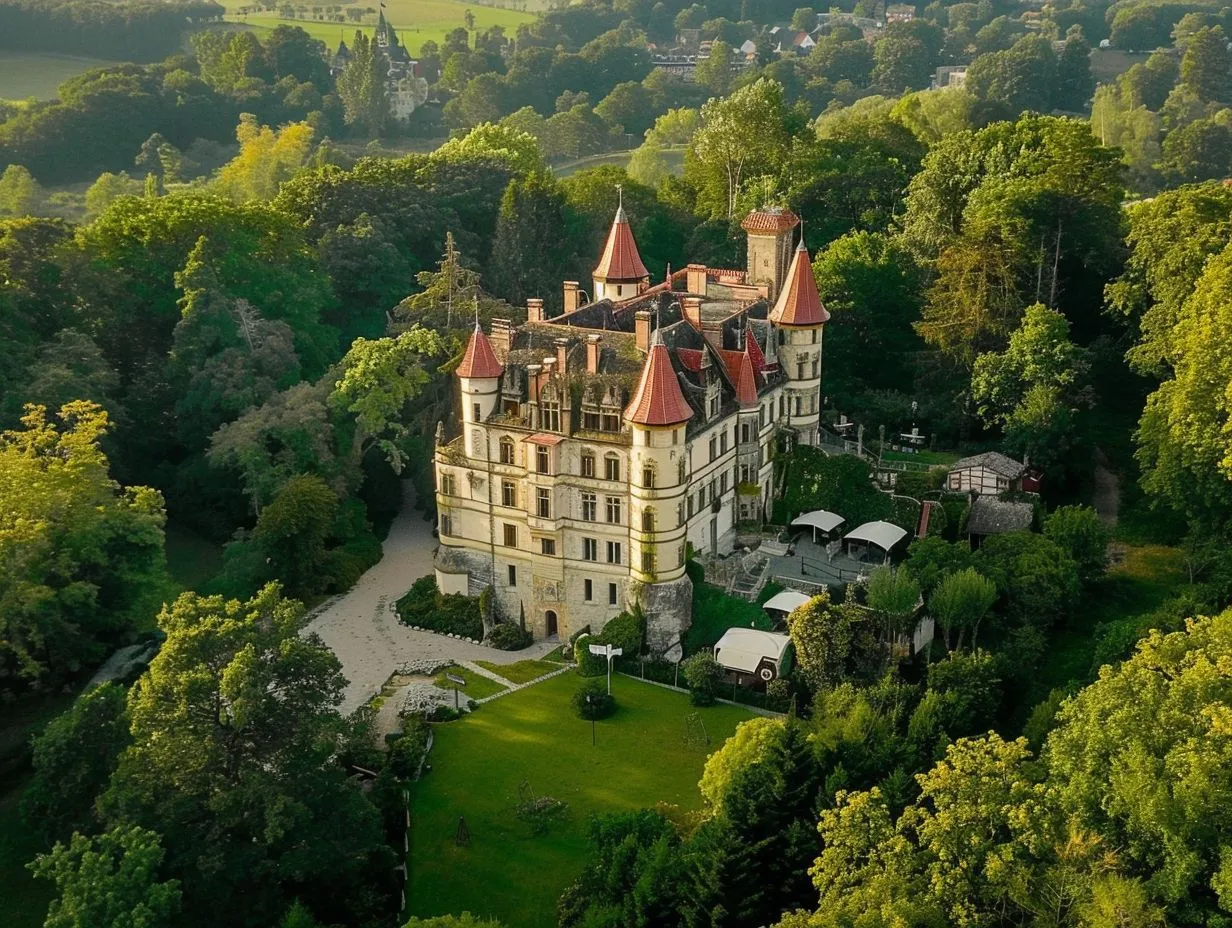
Britain has more than a thousand castles, and several hundred are open to visit, from complete medieval fortresses you can walk around in a day to romantic ruins on a clifftop. The finest are cared for by four organisations: English Heritage in England, Cadw in Wales, Historic Environment Scotland north of the border, and the National Trust across England, Wales and Northern Ireland. Between them they look after almost every castle people travel to see.
This guide covers the best castles to visit in each nation, who runs them, what a visit costs in 2026, and how to camp within easy reach of the walls. Use the table to find a landmark castle near you, then read on region by region for the ones worth planning a trip around.
It is the castles guide from Camping Sites in Britain, where you can find and compare campsites, caravan parks and glamping across the UK.
Iconic castles at a glance
| Region | Landmark castle | Era | Who runs it |
|---|---|---|---|
| Berkshire, England | Windsor Castle | Norman, from 1070 | Royal Collection Trust |
| Northumberland, England | Bamburgh Castle | Medieval, rebuilt Victorian | Privately owned (Armstrong family) |
| Kent, England | Dover Castle | Medieval, from the 1180s | English Heritage |
| Warwickshire, England | Warwick Castle | Medieval, from 1068 | Privately run |
| Gwynedd, Wales | Caernarfon Castle | 13th century, Edward I | Cadw |
| Edinburgh, Scotland | Edinburgh Castle | Medieval, on older rock | Historic Environment Scotland |
| Highlands, Scotland | Eilean Donan | 13th century, rebuilt 1900s | Privately owned (Conchra Trust) |
Who looks after Britain's castles
Four bodies care for most of the castles you can visit, and membership of one or two of them is how regular visitors keep the cost down. Each covers a different part of the country, so the right card depends on where you camp.
- English Heritage runs more than 400 historic sites in England, including Dover, Kenilworth, Carlisle and Tintagel. Individual membership is £84 a year, family membership £149, and both give free entry to every site (english-heritage.org.uk).
- Cadw is the Welsh Government's historic environment service and looks after Caernarfon, Conwy, Harlech, Beaumaris, Caerphilly and dozens more. Members enter free, and many smaller Cadw castles are free to everyone (cadw.gov.wales).
- Historic Environment Scotland cares for Edinburgh, Stirling, Urquhart and around 300 other sites. Adult membership is £72 a year, or £64 by direct debit (historicenvironment.scot).
- The National Trust owns castles and fortified houses across England, Wales and Northern Ireland, alongside its houses, gardens and coast. Individual membership is £100.80 a year (nationaltrust.org.uk).
If castles are your main reason to travel, English Heritage in England and Historic Environment Scotland in Scotland give the best value, because both are built around fortresses and ancient monuments rather than country houses. The two organisations also run a reciprocal deal, so an English Heritage member gets free Scottish entry after the first year, and the same the other way round.
Castles in England by region
England has the largest number of visitable castles in Britain, and they cluster by region. Here is where to head, and where to pitch, in each corner of the country.
The north: Northumberland, Yorkshire and Cumbria
Northern England holds the most dramatic castles in the country. Northumberland alone has more castles than any other county, a legacy of centuries of border warfare with Scotland. Bamburgh stands on a basalt crag above the North Sea and is one of the finest sights on the English coast, while nearby Alnwick doubled as Hogwarts in the Harry Potter films and draws families all year. Read our full guide to the seven must-see castles of Northumberland before you plan a route along the coast.
Yorkshire adds Richmond, Skipton, Bolton and the ruins of Middleham, where Richard III grew up, all within easy reach of family campsites. Our guide to Yorkshire's historic castles picks the best for a trip with children, and you can compare pitches across North Yorkshire campsites to base yourself near them.
Cumbria pairs its castles with the Lake District, so you can walk fells in the morning and tour Carlisle, Muncaster or Brougham in the afternoon. See Cumbria's best castles for the pick of them, then browse Lake District and Cumbria campsites to find a spot within reach.
The south east and East Anglia: Kent, Essex, Suffolk and Norfolk
The south east has the castles that guarded England against invasion, and Kent has the grandest of them. Dover Castle, run by English Heritage, is the largest castle in England and has guarded the shortest sea crossing to the continent for more than 900 years, with secret wartime tunnels beneath it. Leeds Castle, set on two islands in a lake near Maidstone, is often called the loveliest castle in the world. Our guide to Kent's majestic castles covers all ten worth the trip.
Essex mixes castles with grand stately homes, from the Norman keep at Colchester, the oldest in Europe, to Hedingham and the moated ruin at Hadleigh. See our guide to Essex stately homes and castles. In neighbouring East Anglia, Suffolk offers Framlingham, Orford and Bungay, gathered in our guide to Suffolk's top five castles, while Norfolk counters with the superb Norman keep at Norwich and the ruins of Castle Rising and Castle Acre. Read Norfolk's castles unveiled for the five to prioritise.
The south west: Dorset, Devon and Somerset
The south west trades in atmospheric ruins, and Corfe Castle in Dorset is the finest of them. Deliberately blown up by Parliament in 1646, its shattered towers rise above a village that shares its name, cared for by the National Trust. Our guide to the nine castles in Dorset maps the rest, and Dorset campsites put you close to the Jurassic Coast as well.
Devon has coastal Dartmouth, Powderham and clifftop ruins along both coasts, set out in our guide to Devon's magnificent seven castles, with plenty of Devon campsites nearby. Somerset adds Dunster, Nunney and the legend-soaked hill of Cadbury, long linked to King Arthur, all covered in our best castles to visit in Somerset.
The Midlands and the Welsh marches: Warwickshire, Gloucestershire, Shropshire and Lincolnshire
The heart of England holds two of the best days out in the country. Warwick Castle is the most complete medieval castle open as a full visitor attraction, with birds of prey, a trebuchet and events through the year, while nearby Kenilworth is a magnificent English Heritage ruin. Gloucestershire brings Berkeley, where Edward II was murdered in 1327 and which the same family has held for 850 years, plus Sudeley and the ruins of St Briavels. Our guide to Gloucestershire's top four castles has the detail.
Along the Welsh border, Shropshire is castle country, from Ludlow to Stokesay, one of the finest fortified manor houses in England. See our nine must-visit castles in Shropshire. To the east, Lincolnshire holds Lincoln Castle, home to one of only four surviving 1215 Magna Carta documents, and the moated Tattershall. Read our pick of the top five castles in Lincolnshire, then compare Lincolnshire campsites for a base.
Castles in Wales, the castle capital of Europe
Wales has more castles per square mile than anywhere else in the world, with well over 600, and the greatest are the work of one king. Between 1277 and 1330 Edward I ringed north Wales with a chain of fortresses to hold his conquest. Four of them, Caernarfon, Conwy, Harlech and Beaumaris, together with their town walls, form the Castles and Town Walls of King Edward in Gwynedd, a UNESCO World Heritage Site. Caernarfon is the grandest, with its banded walls and polygonal towers, and it is still used for the investiture of the Prince of Wales.
Further south, Caerphilly is the largest castle in Wales and the second largest in Britain after Windsor, ringed by water defences that have kept its famous leaning tower standing for 700 years. Our guide to Wales's majestic castles is the place to start a family trip, and most of these are Cadw sites, so a Cadw card or the pay-as-you-go option both work.
For the coast around the Edward I castles, Gwynedd campsites put you within a short drive of Caernarfon, Conwy and Harlech, while Pembrokeshire campsites sit near the mighty riverside castle at Pembroke, birthplace of Henry VII, and Carew. To match sites to specific fortresses, read our guide to camping near historical sites in Wales.
Castles in Scotland
Scotland's castles are its signature landscape, and two dominate. Edinburgh Castle sits on an extinct volcano above the capital and is the most visited paid attraction in Scotland, holding the Honours of Scotland and the Stone of Destiny. Stirling Castle, perched on its own crag, was the key to the kingdom and looks out over the Bannockburn battlefield where Robert the Bruce beat the English in 1314. Both are run by Historic Environment Scotland.
Beyond the cities, Eilean Donan on its little island where three sea lochs meet is the most photographed castle in the country, and Dunnottar stands on a sheer clifftop stack south of Aberdeen. Our guide to 11 Scottish castles for family adventures covers the best for a trip with children. Many of the finest sit in the north, so browse Highlands campsites to base yourself near Eilean Donan, Urquhart on Loch Ness, and the castles of the west coast.
Haunted castles for an autumn trip
Britain's castles come with centuries of ghost stories, and some lean into them hard at Halloween. Chillingham in Northumberland is often called the most haunted castle in Britain, and places such as Warwick, Edinburgh and Tamworth run after-dark tours through October. If you fancy a spooky weekend away, our guide to creepy castles to visit this Halloween rounds up the best, and an autumn pitch is usually cheaper and quieter than high summer.
How to camp near a castle
You rarely camp inside a castle, but you can almost always camp within a few miles of one, and that is the affordable way to build a trip around them. A campsite pitch is a fraction of the price of a hotel, and many sites sit in the same historic landscape as the castle itself.
A handful of properties do let you pitch on the estate. The National Trust and Forestry England both have campsites on some of their land, and the Camping and Caravanning Club runs Club Sites at several heritage locations, so it is always worth checking whether the castle you want to see has camping attached. Corfe Castle, Bamburgh, Dunster and the Welsh coast castles all have well-rated campsites within a short drive.
The wider point is that castles cluster where the scenery is best, on coasts, rivers and hilltops, which is exactly where the good campsites are too. The simplest approach is to pick your castle, then compare pitches nearby on campsites across the UK before you book. If you want to build a whole trip around history rather than a single castle, see our guide to camping at the UK's heritage sites, which covers abbeys, Roman remains and stone circles alongside the castles.
Frequently asked questions
What is the cheapest way to visit lots of castles in the UK?
Annual membership. English Heritage at £84 a year, or Historic Environment Scotland at £72, pays for itself in three or four visits and covers hundreds of sites. Many Cadw castles in Wales and smaller English Heritage ruins are free to enter for everyone.
Is English Heritage or National Trust membership better for castles?
English Heritage, for castles specifically. It is built around fortresses and ancient monuments, so it covers far more castles than the National Trust, whose strength is houses, gardens and coastline. In Scotland the equivalent is Historic Environment Scotland, and in Wales it is Cadw.
Can you stay overnight in a castle in the UK?
Yes, at some. A number of castles offer accommodation, from Landmark Trust holiday lets in historic towers to castle hotels, but both cost far more than camping. For most trips a campsite within a few miles is the cheaper and more flexible choice.
What is the most impressive castle in the UK?
It depends what you want. Windsor is the largest and oldest occupied castle in the world, Edinburgh the most visited, Caernarfon the grandest of the Welsh fortresses, and Bamburgh the most spectacular on the coast. Dover is the biggest castle in England.
Are UK castles free to visit?
Many ruins are. Cadw and English Heritage both keep numerous smaller castles open to the public free of charge, and any castle in a public park or town is usually free to walk around outside. The major, fully staffed castles charge for entry.
Which is the biggest castle in Britain?
Windsor Castle, covering around 13 acres and still an official royal residence. Caerphilly in Wales is the second largest, and Dover is the largest in England. For a complete medieval castle run as a visitor attraction, Warwick is the one to see.
The short version
Britain has hundreds of castles open to visit, and the finest are looked after by English Heritage, Cadw, Historic Environment Scotland and the National Trust. Join whichever covers the region you visit most, head for Northumberland or the Welsh coast for the drama, and Scotland for the setting.
Then pick your castle and find a pitch nearby. Compare campsites, caravan parks and glamping across the country on Camping Sites in Britain and build the trip around the walls you most want to see.