Dog Hiking Gear: A UK Kit List for Hiking and Camping With Your Dog
· Updated
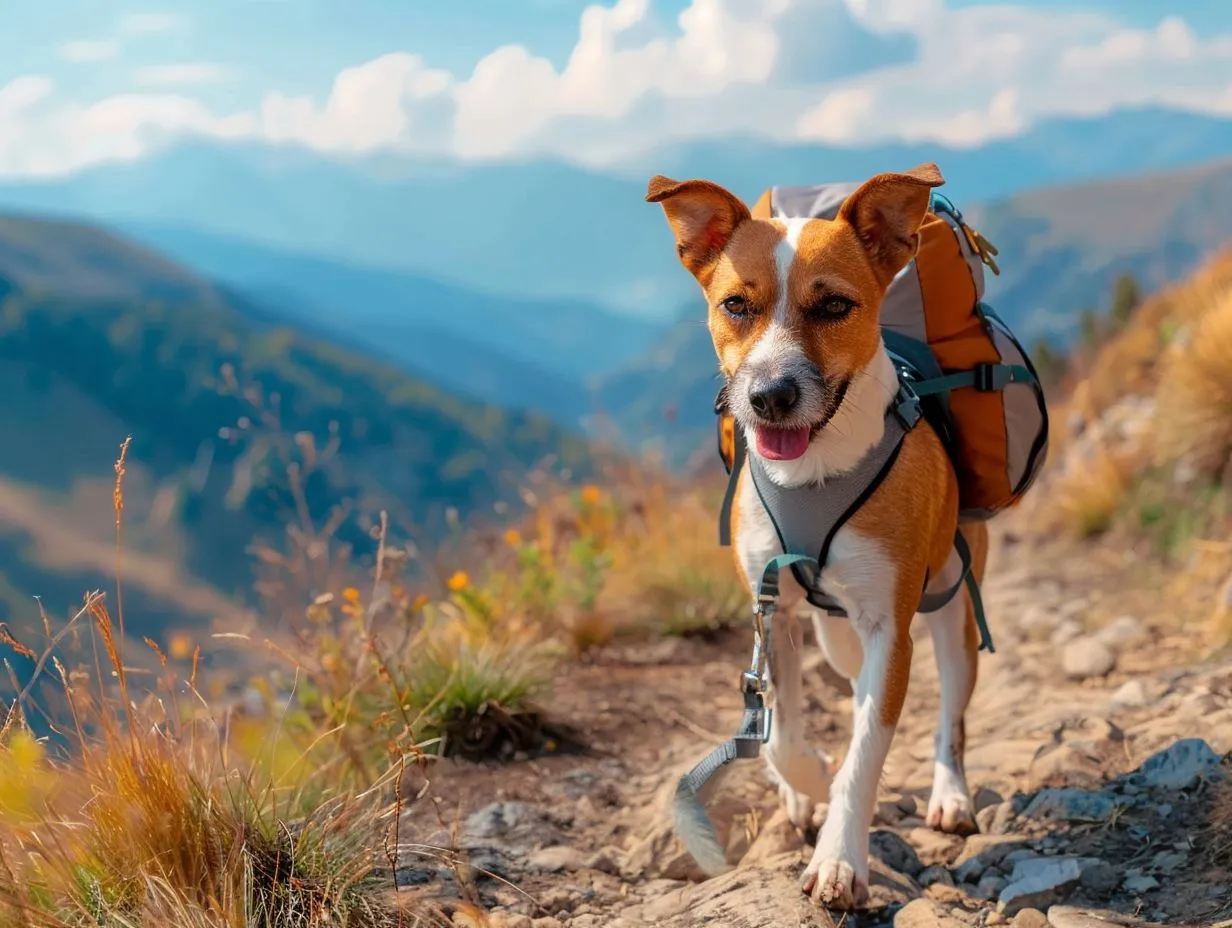
The kit that matters for hiking and camping with a dog is short: a harness that fits, a strong lead plus a short one for livestock, a coat for cold and wet, booties for rough or hot ground, water and a collapsible bowl, a dog pack, a tick tool, a small first aid kit, and a warm mat for the tent. Everything else is optional.
Buy for fit and function over brand or colour. A cheap harness that sits right beats an expensive one that rubs, and the two things dogs most often come to grief without on the trail are a well-fitted harness and paw protection.
This is part of our guide to camping with your dog, and it sits alongside the listings on Camping Sites in Britain, where you can filter for dog-friendly sites across the UK.
The kit list at a glance
Everything below in one table, with what to look for and when each item earns its place in the pack.
| Item | What to look for | When you really need it |
|---|---|---|
| Harness | Y-front clear of the throat, back handle, two or more adjusters | Every hike |
| Strong lead plus short lead | Fixed 1.5 to 2 metre lead, second short lead for stock | Every hike; short lead near livestock by law |
| Dog coat | Waterproof, covers chest and belly, fleece lining | Cold, wet, short-haired or older dogs |
| Booties | Rubber sole, secure ankle strap, correct paw width | Scree, ice, gritted or hot ground |
| Collapsible bowl and water | Packable bowl, at least a litre carried | Every hike, more in heat |
| Dog pack | Built on a harness, balanced pockets, 10 to 15% of body weight | Longer trips with a fit adult dog |
| Tick tool | Tick hook or fine-tipped tweezers | Bracken, long grass, deer country |
| First aid kit | Vet wrap, saline, tweezers, your vet's number | Every trip |
| Warm mat or bag | Waterproof-backed, insulating, washable | Camping overnight |
A well-fitted harness
A harness, not a collar, is what your dog should pull and be lifted by on the trail. A collar puts all the force on the neck; a harness spreads it across the chest, which matters on scrambles where you may need to help your dog up or hold them back from an edge.
Look for a Y-shaped front that sits clear of the throat and shoulders, at least two points of adjustment, padding where the straps cross the chest, and a sturdy back handle so you can lift or steady your dog over stiles and rock. A second attachment point at the chest helps with dogs that pull. Check the fit with two fingers under every strap, then check again on a long walk, because rubbing only shows up once the miles add up.
A strong lead, plus a short one for livestock
Carry two leads: a strong fixed lead of about 1.5 to 2 metres for general walking, and a short lead for passing livestock. Extending leads are the wrong tool on hills, because they give you no real control near a cliff, a road or a flock of sheep.
The short lead is not just good manners, it is the law near stock. On open access land in England and Wales you must keep your dog on a lead of no more than 2 metres near livestock, and on that lead between 1 March and 31 July to protect ground-nesting birds (gov.uk open access land guidance). In Scotland the Scottish Outdoor Access Code says keep your dog on a short lead or close at heel near farm animals, and stay out of fields with lambs or calves altogether (Scottish Outdoor Access Code). Worrying livestock is a criminal offence, and a farmer is within their rights to shoot a dog that is chasing stock, so the short lead protects your dog as much as the sheep.
A hands-free waist lead is worth adding if you hike or run with your dog often. Our guide to mountain biking with your dog covers keeping a dog safely tethered while your hands are busy.
A dog coat for cold and wet
A coat earns its place for short-haired dogs, small dogs, puppies and older dogs, and for any dog camping out in a British autumn or winter. Thick-coated breeds like a husky or a collie rarely need one; a whippet or a staffie will shiver without.
Look for a waterproof, windproof outer that covers the chest and belly, not just the back, with a fleece lining for cold nights and a lighter shell for milder wet days. Reflective trim helps in low light on short winter afternoons. Make sure it clears the harness clips and does not restrict the legs, and pack it dry in a bag, because a wet coat will chill your dog further once you are in the tent.
Booties for rough or hot ground
Booties protect paws on ground that cuts or burns them: sharp scree, frozen trails, paths gritted and salted in winter, and hot rock or tarmac in summer. Most dogs cope barefoot on grass and soft paths, so booties are for specific terrain rather than every walk.
Look for a grippy rubber sole, a secure ankle strap that will not spin off in a bog, and a breathable upper. Buy by measuring the paw width with the dog standing, so the weight spreads the pad to full size, and introduce them at home first, because most dogs walk like a cat on a hot tin roof for the first five minutes. Carry a spare, as a lost bootie in a peat hag is gone for good.
A collapsible water bowl and water
Carry water for your dog and a bowl they can actually drink from, because you cannot rely on streams being clean, flowing or safe. Standing water can carry blue-green algae, which is poisonous to dogs, and upland streams often run dry in summer.
A silicone collapsible bowl that clips to a bag is the simplest option; a squeeze bottle with a built-in trough works well one-handed on the move. Offer water roughly every hour in warm weather, more for a working breed, and carry at least a litre for a half-day walk on top of your own. Heavy panting, drooling and stumbling are signs of overheating, and they mean shade, water and a stop straight away.
A dog pack for carrying their own kit
A fit, healthy adult dog can carry its own water, bowl and snacks, which is the whole point of a dog pack. As a rough guide, keep the loaded weight to around 10 to 15 per cent of a healthy dog's body weight, and less for puppies, older dogs and short-nosed breeds that struggle to cool themselves.
Look for a pack built onto a proper harness rather than panniers slung over a collar, with even, balanced pockets and a back handle. Load both sides equally, build the weight up over several walks, and never pack it for a growing puppy whose joints are still forming. Take it off at rest stops so your dog can cool down properly.
A tick tool
A tick remover is a tiny bit of plastic that saves a lot of grief, because ticks are common in bracken, long grass and deer country across upland Britain and can pass on Lyme disease. Check your dog over at every stop and again at the tent, paying attention to the ears, armpits, groin and between the toes.
Use a tick hook or fine-tipped tweezers, get right down against the skin, and pull straight and steady without twisting or squeezing the body. Do not use a lit match, oil or alcohol, all of which make the tick regurgitate and raise the infection risk. A repellent helps too, and our guide to the best insect repellents for campers covers what is safe to use around dogs.
A dog first aid kit
A small dog first aid kit handles the injuries dogs pick up on the trail: cut pads, torn claws, grass seeds and stings. Most of it doubles for you, so you only need to add a few dog-specific items.
Pack vet wrap and a non-stick dressing for a cut pad, tweezers and the tick tool, saline or clean water for flushing eyes and wounds, blunt scissors, a spare slip lead, and a foil blanket. Write your own vet's number and a 24-hour emergency vet's number on the lid, and check where the nearest open vet is before you set off somewhere remote.
A warm mat or sleeping bag for the tent
A dog needs insulation from the cold ground at night just as you do, because a dog lying on a bare groundsheet loses heat fast. A closed-cell foam mat, an old self-inflating mat, or a purpose-made dog sleeping bag all do the job.
Choose something waterproof-backed and washable that packs down, and add a familiar blanket from home so the tent smells right and your dog settles. For cold trips a dog sleeping bag or a fleece-lined mat is worth the pack space; in summer a thin insulated mat simply keeps them off wet grass. Keep a towel by the door and your bedding survives the muddy paws.
Frequently asked questions
What is the most important piece of dog hiking gear?
A well-fitted harness. It gives you control on scrambles, spreads the load away from the neck, and lets you lift or steady your dog over stiles and rock in a way a collar cannot. Get the harness right before you spend on anything else.
Do dogs need boots for hiking?
Only on ground that cuts or burns: scree, ice, gritted winter paths, and hot summer rock or tarmac. Most dogs walk happily barefoot on grass and soft trails, so carry booties for the terrain rather than wearing them all day.
How much weight can a dog carry in a pack?
Around 10 to 15 per cent of a healthy adult dog's body weight, built up gradually over several walks. Skip packs entirely for puppies, older dogs, and short-nosed breeds that overheat easily.
Is it a legal requirement to keep my dog on a lead?
Near livestock, yes. On open access land in England and Wales your dog must be on a lead of no more than 2 metres near farm animals, and on a lead from 1 March to 31 July for nesting birds. Scotland asks for a short lead near stock and no dogs in fields with lambs.
Can my dog drink from streams and puddles while hiking?
Not safely. Standing water can carry blue-green algae, which is poisonous to dogs, and hill streams may be dry or dirty. Carry water and a collapsible bowl, and offer it every hour or so in warm weather.
What should be in a dog first aid kit?
Vet wrap, a non-stick dressing, saline, fine tweezers, a tick tool, blunt scissors, a spare slip lead, a foil blanket, and your vet's number. Most human first aid items work on dogs too, so you are mainly adding paw and tick kit.
The short version
Get the harness, leads and paw protection right first, carry water, a tick tool and a small first aid kit every time, and add a coat and a warm mat once you are camping overnight. Buy for fit and function, break new kit in at home, and keep the short lead handy for every field of sheep.
Plan the trip itself with our guide to hiking with your dog, or find a pitch through the campsite listings, from the Scottish Highlands to dog-friendly camping in Scotland. It all sits within our guide to camping with your dog.