Mountain Biking With Your Dog in the UK: Fitness, Heat and Trail Safety
· Updated
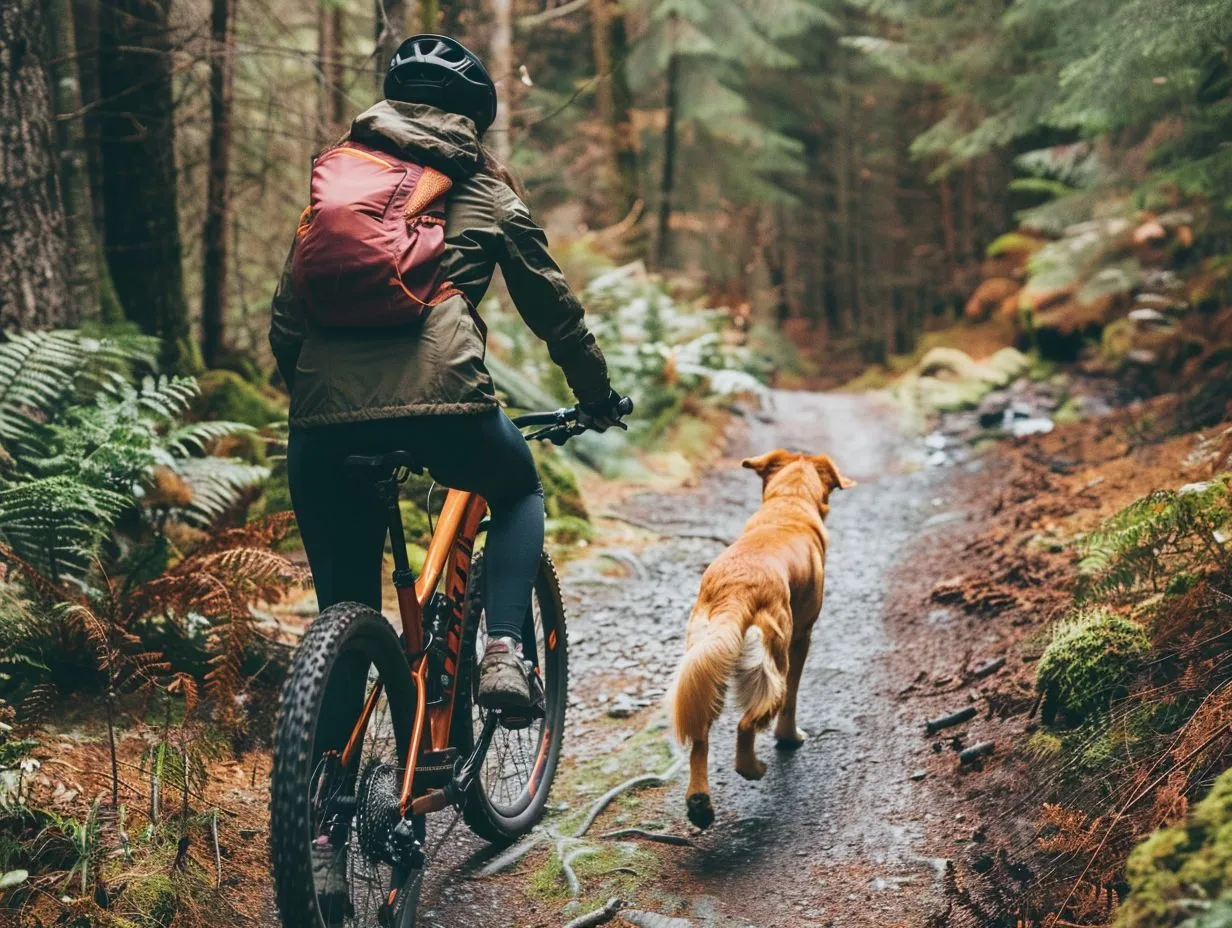
A fit, adult dog of the right breed can happily run alongside a mountain bike, but the pace is set by the dog, not the rider. That means a dog that is over 18 months old, conditioned over weeks rather than days, worked in the cool of the morning or evening, and kept to soft trails rather than hot tarmac. Get those four things right and it is one of the best days out you can share. Get them wrong and you can seriously hurt your dog.
The single biggest mistake is speed. A bike lets you cover ground far faster than a dog should be asked to sustain, so a lively spaniel that would self-regulate on a walk will run itself into trouble trying to keep up. Everything below is about matching the ride to what your dog can actually do.
This guide is part of our advice on camping with your dog, and it sits alongside the campsite and trail listings at Camping Sites in Britain. If you are basing yourself at a campsite for a weekend of riding, it pairs naturally with a dog on the trails.
Which dogs are built for it
Lean, athletic working and sporting breeds are the ones suited to running beside a bike. Border collies, springer and cocker spaniels, Vizslas, pointers, working Labradors and the northern breeds like huskies have the stamina and the build for sustained trotting. Flat-faced breeds cannot do it safely at all, and several other types are better left at the campsite or carried in a trailer.
| Type of dog | Suited to running with a bike? | Why |
|---|---|---|
| Working and gundog breeds (collie, spaniel, Vizsla, pointer, working Lab) | Yes, once mature and fit | Built for sustained trotting over distance |
| Northern breeds (husky, malamute) | Yes, but only in genuinely cool weather | Huge stamina, but a thick coat overheats fast |
| Flat-faced breeds (bulldog, pug, French bulldog, boxer) | No | Cannot cool themselves; high heatstroke risk |
| Toy and small breeds | Better in a trailer or basket | Short legs mean a punishing stride rate to keep up |
| Giant and heavy breeds | Short, gentle sessions only | Extra weight loads the joints on rough ground |
| Puppies under 18 months | No | Growth plates are still open and easily damaged |
Age matters as much as breed. A dog's growth plates, the soft areas at the ends of the long bones, do not finish closing until roughly 12 to 18 months, and later in larger breeds. Repeated high-impact running before then risks lasting joint damage, so wait until your dog is skeletally mature and ask your vet if you are unsure. At the other end, an older or arthritic dog can still enjoy a gentle amble but should not be chasing a bike. A quick vet check before you start is sensible for any dog over about seven.
Build up fitness and distance gradually
Condition your dog over several weeks, not in one keen weekend. A dog that walks daily is not automatically ready to trot for an hour, because the sustained cardiovascular effort and the wear on paw pads are different demands. Start with short sessions of 10 to 15 minutes at an easy pace and add distance slowly, roughly ten per cent a week, watching how your dog recovers the following day.
Read your dog rather than the odometer. A dog that drops behind, pants heavily with a wide curled tongue, or lies down and will not get up is telling you it has done enough. Stiffness or reluctance the next morning means you pushed too far. Toughening the pads takes time too, so early rides on grass, forest tracks and bridleways build resilience before you tackle anything rocky or gravelly.
The same conditioning principles apply on foot, and our guide to hiking with your dog is a good companion for the walking weeks that lead up to riding.
Heat, paws and hydration
Heat is the thing most likely to harm your dog, and it does not take a heatwave. The Kennel Club advises that most dogs are comfortable between 15 and 25°C, but that figure depends on the breed, coat, age and how hard the dog is working, and a running dog generates far more heat than one on a lead. Ride in the early morning or the evening and avoid the middle of the day, exactly as you would for a hot-weather walk (Kennel Club, walking your dog on warm days).
Know the signs of heat exhaustion and stop the moment you see them: heavy relentless panting, thick drooling saliva, bright red gums, wobbling or collapse. Get the dog into shade, wet it with cool (not icy) water, offer small drinks and get to a vet if it does not recover quickly. Heatstroke kills dogs every summer in Britain, and a dog running to keep up will not stop itself in time.
Protect the paws. Tarmac and hard-packed gravel bake in the sun, and the Kennel Club's rule is simple: if you cannot hold the back of your hand on the surface for seven seconds, it is too hot for your dog's pads. Keep to shaded, softer trails on warm days and check the pads for cuts and grit at every stop.
Carry more water than you think you need, for the dog as much as for you. Stop every 15 to 20 minutes on a warm day to offer a drink from a collapsible bowl or a squeeze bottle, and plan a route that passes a stream or two. A dog cannot ask for a break, so build the breaks into the ride.
Trail etiquette and the law
Your dog must be under close control at all times, which on a shared trail usually means reliable recall or a lead. Bikes, walkers, horse riders and other dogs all use the same bridleways and trail centres, and a dog that bolts across a descending rider's line puts everyone at risk. Practise recall to a whistle before you ride, slow right down when you meet other people, and step off the trail to let horses pass.
Livestock is where etiquette becomes law. Under the Countryside Code you should keep your dog on a lead around sheep, cattle and other farm animals, and a dog that chases or attacks livestock is committing an offence under the Dogs (Protection of Livestock) Act 1953. A farmer is entitled to act to protect their animals. If cattle approach and you feel threatened, let the dog off the lead so it can escape and do not put yourself between the herd and the dog.
Clean up after your dog and take the bag with you, follow any dog rules posted at Forestry England, Natural Resources Wales or private trail centres, and remember that many purpose-built mountain bike trails ask dogs to stay off the fastest descents for their own safety. Where dogs are not welcome on the singletrack, the surrounding forest tracks and bridleways usually still are.
Kit you actually need
A well-fitted harness, a hands-free waist lead and water are the essentials. A harness spreads any sudden pull across the chest rather than the neck, a bungee lead that clips to your waist or a bikejor attachment keeps your hands on the bars, and a collapsible bowl or bottle covers hydration. Everything else is refinement.
For longer or rockier days, consider paw balm or boots to protect the pads, a light-up collar for dawn and dusk starts, and a small first aid kit with a vet-wrap bandage and tick tweezers. Our roundup of the best dog hiking gear covers harnesses, leads, boots and cooling coats that all carry straight over from the trail to the bike. If you are heading north to ride, the trail country of the Scottish Highlands has some brilliant options, and our guide to dog-friendly campsites in Scotland is a good place to start.
Frequently asked questions
How far can a dog run next to a bike?
A fit, conditioned adult of a suitable breed can manage several miles at an easy trot, but there is no fixed number. Build up gradually over weeks, keep the pace slow, and let your dog's recovery the next day tell you whether the distance was right.
At what age can my dog start running with a bike?
Wait until your dog is skeletally mature, which is roughly 18 months and later for larger breeds, because the growth plates need to close first. High-impact running before then risks lasting joint damage. Ask your vet if you are unsure about your dog.
What temperature is too hot to ride with a dog?
Most dogs are comfortable between 15 and 25°C, but a running dog overheats far more easily than one on a walk. Ride in the early morning or evening, avoid the midday sun, and cancel the ride altogether on hot, humid days.
Can I take a small or flat-faced dog?
Flat-faced breeds like pugs, bulldogs and French bulldogs should never run beside a bike, as they cannot cool themselves and overheat dangerously. Small breeds are better carried in a trailer or basket than asked to keep up on foot.
Do I have to keep my dog on a lead on the trail?
You must keep your dog under close control, and a lead is required around livestock under the Countryside Code. Even where off-lead is allowed, reliable recall is essential on trails shared with other riders, walkers and horses.
The short version
Mountain biking with your dog is brilliant when the dog is mature and fit, the weather is cool, the pace is set by the dog and the paws are looked after. Build up slowly, carry plenty of water, keep control around people and livestock, and stop at the first sign of heat trouble. For the wider picture, head back to our guide to camping with your dog or browse campsites across Britain to plan your base.