The Best Rain Gear for Camping in the UK
· Updated
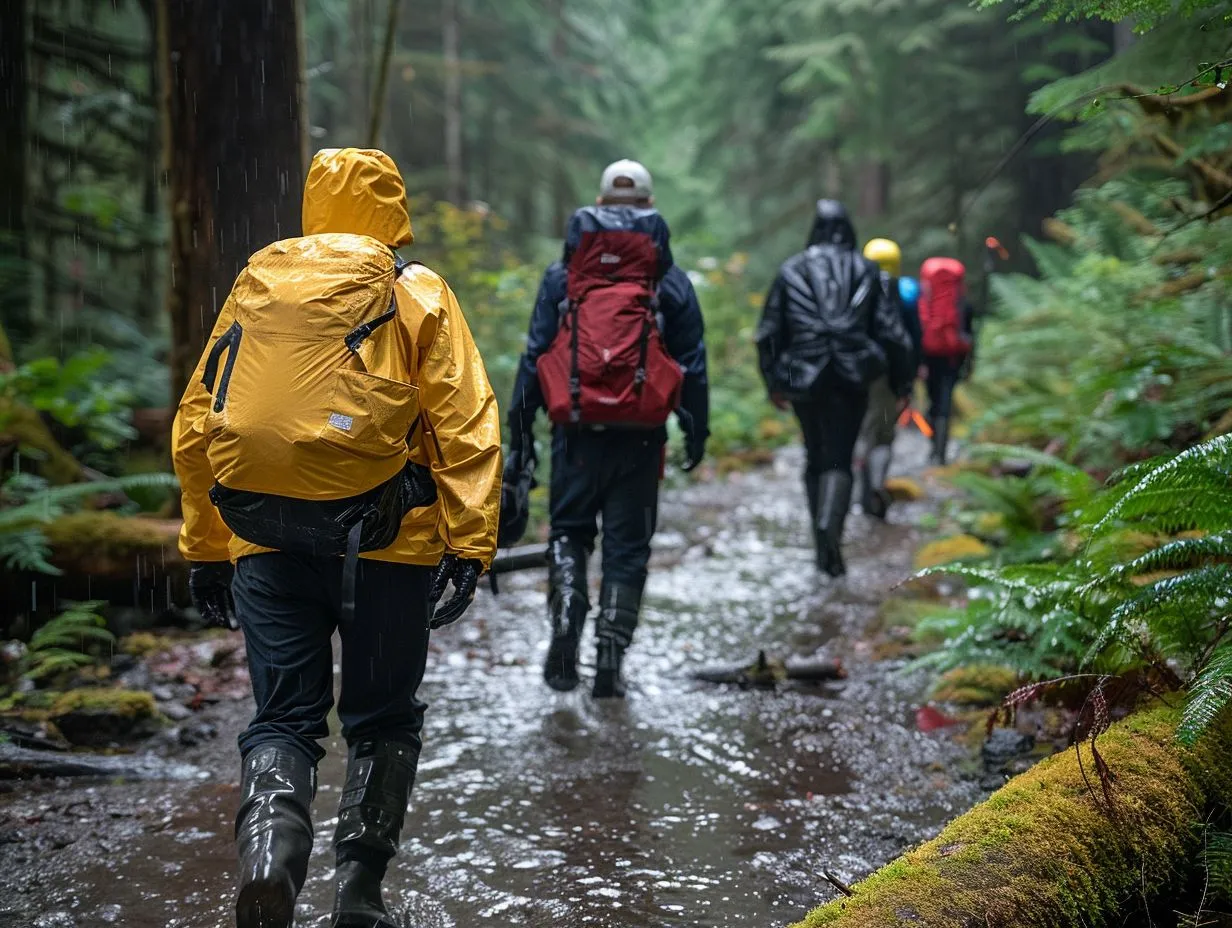
The best rain gear for camping in the UK is a full kit, not a single jacket. A waterproof jacket keeps your top half dry, but British rain arrives sideways, sits on the grass and soaks up through your feet. To camp comfortably through a wet weekend you want a jacket, waterproof over-trousers, dry bags for your spares, a tarp for a dry outdoor space and proper footwear. Sort those six things and the weather stops mattering.
Rain is the single biggest reason a trip goes wrong, so it pays to kit up properly. This guide is part of the complete UK camping gear guide from Camping Sites in Britain, and it covers everything below the jacket that actually keeps you dry.
Waterproof over-trousers
Waterproof over-trousers are the most skipped and most useful bit of rain kit. Wet legs make you cold fast, and jeans or joggers hold water for hours. A pair of over-trousers pulls straight over your normal clothes and keeps your legs and lower body dry when you are pitching a tent in the rain or walking to the toilet block at 7am.
Look for full-length side zips. They let you get the trousers on over wet boots without doing a hopping dance in a puddle. Budget pairs from brands like Regatta or Trespass cost around £20 to £35 and are fine for campsite use. If you are hillwalking as well, Berghaus or Rab pairs at £60 to £120 last longer and pack smaller. For a still evening around camp, a cheap pair does the job.
Ponchos versus jackets
A jacket wins for most campers, but a poncho earns its place as a backup. A proper waterproof jacket is closer-fitting, breathable and stays put in wind, which matters on an exposed pitch or a Welsh hillside. A poncho is a big sheet with a hood that drapes over you and your rucksack at once.
The poncho trade-off is simple. It covers your bag and your legs for about £10 to £25 and packs down to the size of a fist, so it is brilliant as an emergency layer or for kids who grow out of everything. The catch is that wind gets underneath it and it flaps, so it is poor on open ground. Pack a jacket as your main defence and keep a cheap poncho in the car for downpours and quick dashes.
Understanding hydrostatic head
Hydrostatic head is the number that tells you how waterproof a fabric really is. It measures, in millimetres, how tall a column of water the fabric holds back before it leaks. Under the British and European test standard (BS EN ISO 811), a fabric must reach at least 1,500mm to be legally called waterproof, and garments are rated for weather protection under EN 343.
As a rough guide, 1,500mm handles light showers, 5,000mm copes with steady rain, 10,000mm keeps out a proper downpour, and 20,000mm shrugs off a full day of Lake District weather. Tent flysheets are quoted the same way, usually 2,000mm to 5,000mm. For the detail on jacket ratings, seams, taping and breathability, read our guide to the best waterproof jackets for campers.
Gaiters for wet grass and mud
Gaiters keep water, mud and grass seeds out of the tops of your boots. They wrap around your lower leg from ankle to just below the knee and fasten with a strap under the boot, sealing the gap where over-trousers meet footwear. On a wet campsite, morning dew alone will soak your socks through the boot cuff long before any rain does.
A pair of walking gaiters costs about £15 to £45. They are essential if you are pitched on long grass, heading onto moorland or walking anywhere churned up by other campers. For a car-camping weekend on a mown field they are optional, but they weigh nothing and live in a jacket pocket, so most regulars carry them.
Waterproof gloves and hats
Cold wet hands and a dripping head ruin a trip faster than a leaky jacket. Your hands and head lose heat quickly, and once your gloves are soaked you cannot put up a tent, light a stove or hold a torch properly. A waterproof hat also keeps rain off your face and out of your collar.
For hats, a wide-brimmed waterproof bush hat sheds rain away from your neck, while a peaked cap keeps it off your glasses. Both cost around £10 to £30. For gloves, look for a waterproof membrane rather than just a water-resistant coating; expect £20 to £50 for a pair that stays dry. Waterproof socks from a brand like Sealskinz (£25 to £40) are the same idea for your feet and are a genuine game-saver in wellies or leaky boots.
Dry bags to keep your spares dry
Dry bags are the difference between a damp night and a miserable one. The one thing that must survive a wet trip is a dry set of clothes and a dry sleeping bag, and a roll-top dry bag guarantees it. You stuff your kit in, roll the top down three or four times and clip it, and it stays sealed even if the whole bag goes under water.
A set of three dry bags in different sizes costs about £12 to £25 and lasts years. Use a large one for your sleeping bag, a medium one for spare clothes and a small one for your phone, wallet, matches and first aid kit. They double as a way to keep your rucksack contents dry on a walk. For a full run-through of rucksack liners and waterproof holdalls, see our guide to the best waterproof camping bags.
A camp tarp for a dry outdoor space
A tarp gives you a dry patch of outdoors to cook, sit and dry kit under when it is raining. Rigged between trees, walking poles or your car and a couple of guy lines, a tarp creates a sheltered porch far bigger than your tent doorway. It is the single thing that turns a washout weekend into a decent one, because you can be outside without being rained on.
A 3m by 3m tarp with eyelets costs around £20 to £45 and packs down small. Add six guy lines and a few tent pegs and you can pitch it a dozen ways. Set one edge low into the wind and prevailing weather, and angle the sheet so rain runs off away from your seating. On a family pitch it also shelters the muddy boots and the camping stove.
Wellies versus waterproof boots
Wellies win for a fixed campsite, waterproof boots win the moment you walk anywhere. Wellington boots are fully waterproof to the knee, wipe clean and are perfect for wet grass, mud and the walk to the shower block. Waterproof walking boots breathe, grip and support your ankle, which matters over any distance or uneven ground. Most seasoned campers pack both.
| Feature | Wellies | Waterproof boots |
|---|---|---|
| Best for | Camp, mud, wet grass, quick trips | Walking, hiking, uneven ground |
| Waterproofing | Total, up to the knee | Membrane, up to the ankle cuff |
| Breathability | Poor, feet sweat | Good with a Gore-Tex lining |
| Support and grip | Minimal | Strong ankle support and tread |
| Rough price | £15 to £90 | £70 to £180 |
If you are car camping and staying on one site, wellies plus a pair of dry socks are hard to beat. If your trip involves any walking, waterproof boots with gaiters keep you dry and steady on the trail. Whichever you choose, keep a spare pair of dry socks in a dry bag.
Your wet-weather kit list
Here is the full rain kit in one place, roughly in order of how much difference it makes.
- Waterproof jacket: 10,000mm hydrostatic head or more, taped seams, hood.
- Waterproof over-trousers: full-length side zips for easy on and off.
- Dry bags: keep sleeping bag, spare clothes and valuables sealed.
- Tarp: 3m by 3m with guy lines for a sheltered outdoor space.
- Footwear: wellies for camp, waterproof boots for walking.
- Extras: gaiters, waterproof gloves, a brimmed hat and waterproof socks.
Kitted out like this, you can pitch up anywhere in Britain and enjoy it. Browse the Camping Sites in Britain directory to find a site with hardstanding pitches or good drainage, which makes a wet trip far easier.
Frequently asked questions
What is the most important piece of rain gear for camping?
A waterproof jacket with a hydrostatic head of at least 10,000mm and taped seams. It protects your core, where staying warm and dry matters most. Add over-trousers and dry bags next, as wet legs and a wet sleeping bag are what turn a shower into a ruined trip.
What hydrostatic head do I need for UK rain?
Aim for at least 10,000mm for a jacket in British weather. Fabric must reach 1,500mm under BS EN ISO 811 to be called waterproof, but that only handles light showers. For a full day of steady rain, 10,000mm to 20,000mm keeps you reliably dry.
Are wellies or walking boots better for camping?
Wellies are better around a fixed campsite for mud and wet grass, while waterproof walking boots are better for any walking. Wellies are fully waterproof but do not breathe or support your ankle. Many campers pack both and swap depending on the day.
Do I really need a tarp if my tent is waterproof?
Yes, because a tarp gives you dry outdoor space your tent cannot. You can cook, sit and store muddy boots under it without being rained on, which makes a wet weekend bearable. A 3m by 3m tarp costs around £20 to £45 and packs down small.
How do I keep my sleeping bag dry when camping in the rain?
Store it inside a roll-top dry bag from the moment you pack. Roll the top down three or four times and clip it, so the bag stays sealed even if your rucksack gets soaked. A down sleeping bag in particular loses almost all its warmth once wet.
Is a poncho a good alternative to a waterproof jacket?
A poncho is a useful backup, not a replacement. It covers you and your rucksack cheaply and packs tiny, but it flaps in wind and offers less warmth and control than a fitted jacket. Carry a jacket as your main layer and a poncho for emergencies.
The short version
Full rain gear for UK camping means a jacket, over-trousers, dry bags, a tarp and the right boots, not just a coat. Get those sorted and rain becomes background noise rather than a reason to pack up early. For the rest of your kit, from sleeping mats to stoves, read the complete UK camping gear guide, then find your pitch in the Camping Sites in Britain directory.