Dry Bags for Camping: The UK Guide to Waterproof Storage
· Updated
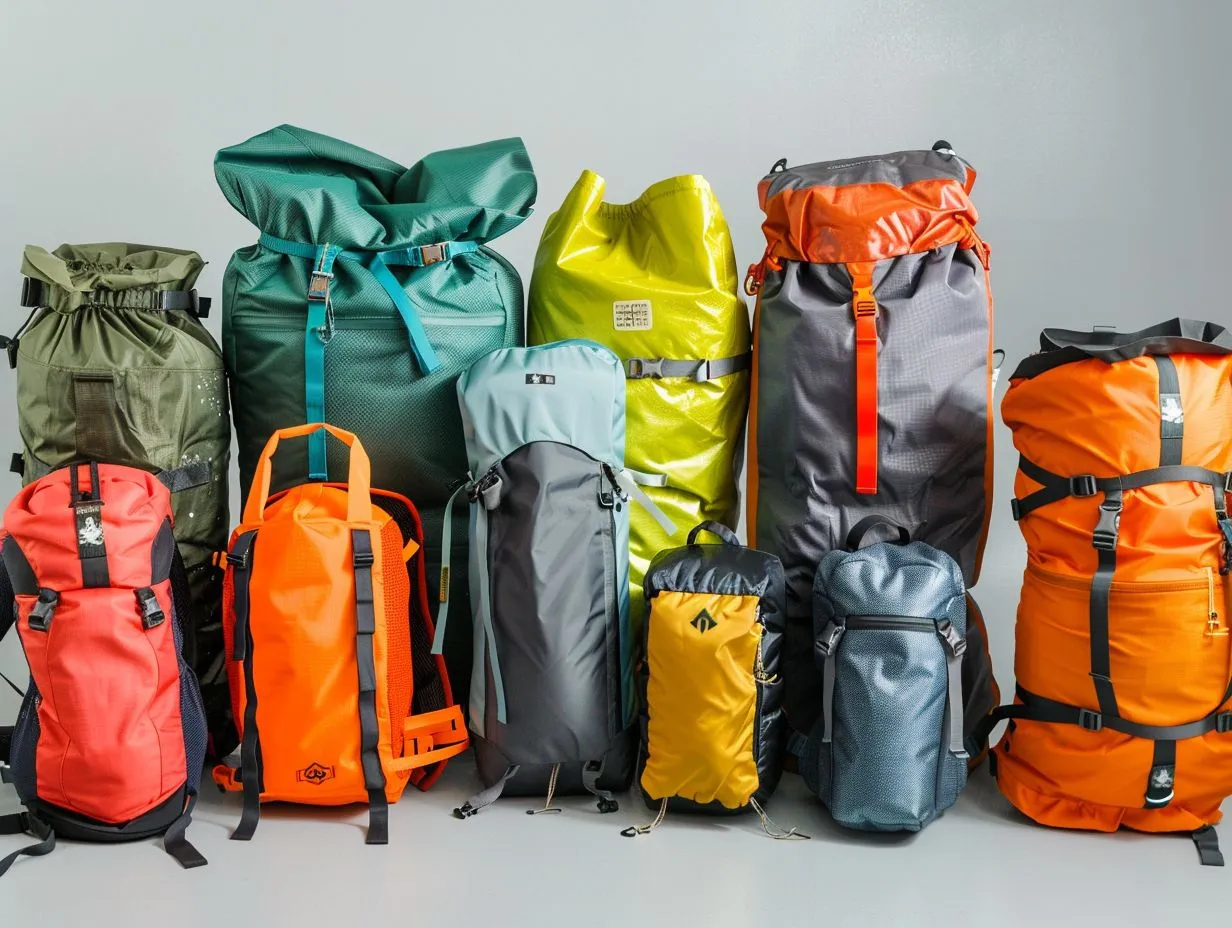
A roll-top dry bag is the cheapest, most reliable way to keep your kit dry when you camp in Britain. You fold the top down three or four times, clip the buckle, and the trapped air seals against rain, spray and the puddle that forms under your tent at 3am. No zips to fail, no special skills needed. For most campers, two or three dry bags in different sizes will do more to protect your gear than any expensive "waterproof" rucksack.
This guide covers how the roll-and-clip seal actually works, which material to pick, what each size holds, and how to line a rucksack so a wet weekend never reaches your sleeping bag. It is part of the complete UK camping gear guide from Camping Sites in Britain, where we help you get properly sorted before you pitch up.
How a roll-top dry bag seals
A roll-top dry bag seals by trapping a pocket of air behind folded fabric. Squeeze the excess air out, fold the open top down flat, then roll it towards the bag at least three to four times before clipping the two ends of the buckle together. That roll is what keeps water out, so fewer than three folds is the most common reason a dry bag leaks.
Two things matter when you roll it. First, leave a little air inside rather than none, because a bag with some air floats and the folds stay firm. Second, roll evenly across the whole width so the top is flat and tight, not bunched at one side. Done properly, a roll-top will shrug off a downpour and a brief dunk. Done in a rush with two lazy folds, it will wick water straight in.
Clipping the buckle also gives you a handle, so a large dry bag doubles as a grab loop when you are hauling kit from the car to the pitch.
Materials: lightweight nylon versus heavy PVC
The choice comes down to two families of fabric: light coated nylon for carrying on your back, and heavy PVC or tarpaulin for abuse near water. Nylon dry bags weigh very little and pack down to nothing, which is why backpackers use them. PVC dry bags are tougher and fully submersible, which is why paddlers and festival campers use them.
| Fabric | Weight and feel | Waterproofing | Best for |
|---|---|---|---|
| Coated ripstop nylon (70D to 210D, TPU or silicone coating) | Very light, packs tiny, soft | Water-resistant to waterproof; rolls small | Backpacking, hiking, lining a rucksack, organising kit |
| Heavy PVC or tarpaulin (500D and up) | Heavy, stiff, wipes clean | Fully waterproof with welded seams; submersible | Kayaking, canoeing, boat trips, muddy festivals, gear that gets thrown about |
For a typical weekend under canvas in the Lake District or Snowdonia, coated nylon is the sensible pick. It is light, it stuffs into gaps in your pack, and it keeps rain off. Save the heavy PVC for when the bag will sit in bilge water or get dragged across a shingle beach.
What size dry bag do you need
Match the litres to the job rather than buying one big bag for everything. Small dry bags keep valuables to hand and let you colour-code your kit; large ones line a rucksack or swallow a sleeping bag. Most campers end up with two or three sizes.
| Size | What it holds |
|---|---|
| 2L to 5L | Phone, wallet, keys, documents, a small first aid kit, snacks |
| 8L to 13L | A spare set of clothes, a mid layer, a head torch and power bank |
| 20L | A compressed sleeping bag, or a full change of clothes and a fleece |
| 35L | Two to three days of kit, or a liner for a 30L to 40L daypack |
| 60L | A liner for a large expedition rucksack, or a holdall for family kit |
If you only buy one, a 13L bag is the most useful all-rounder. If you buy two, add a 20L for your sleep system and a 5L for the things you cannot afford to soak.
Fully waterproof versus water-resistant
Not every dry bag is fully waterproof, and the difference is in the seams. A water-resistant roll-top keeps rain and spray out and survives a short dunk, but water can eventually seep through stitched seams if it sits submerged. A fully waterproof dry bag has welded or radio-frequency welded seams with no stitching, so it can be held underwater without leaking.
Some bags carry an IP rating to prove it. IPX6 means it resists heavy spray, IPX7 means it survives immersion to one metre for 30 minutes, and IPX8 means deeper or longer submersion. Most simple roll-tops are not formally rated and are sold as "water-resistant", which is genuinely enough for a rucksack liner or keeping clothes dry in a tent. Only pay for welded, submersible construction if your bag will actually go in the water, such as on a canoe trip.
Whichever you buy, the seal is only as good as your rolling. A welded bag with one careless fold leaks just like a cheap one.
Lining a rucksack and organising your kit
The most reliable way to waterproof a rucksack is to line it with a single large dry bag, not to rely on the pack's own fabric or a clip-on rain cover. A rain cover leaves the back panel, zips and seams exposed, and British rain always finds them. Drop a 35L or 60L dry bag inside the main compartment, pack everything into it, then roll and clip the top before closing the lid. Your pack can soak through and your kit stays bone dry.
Inside that liner, use smaller coloured dry bags to organise by category so you are not emptying the whole pack to find one sock. A common system is one colour for the sleep system, one for clothes, one for food, and a small bright one for electronics and documents. It keeps everything sorted, and it means each group gets a second layer of protection. Our guide to packing light for a camping trip pairs well with this if you are trying to shave weight.
If you want a bag you can wear rather than one that lives inside your pack, look at a dedicated waterproof backpack for hiking instead. Dry bags protect the contents; a waterproof pack protects the whole thing while you carry it.
Keeping a sleeping bag and electronics dry
Your sleeping bag is the one item that must never get wet, so give it its own dry bag at the bottom of your pack. A damp sleeping bag is a cold, miserable night, and a down bag loses most of its warmth once it soaks up water because the down clumps and stops trapping air. A compression dry sack does two jobs at once here: it seals out water and squeezes the bag down to save space.
For electronics, double up. Put your phone, power bank and head torch in a small roll-top, and for a phone you want to keep reaching for, a hard waterproof case or a clear pouch is easier than unrolling a bag every time. Toss in a sachet of silica gel to mop up condensation, and keep the electronics bag near the top of your pack where you can grab it fast. A soaked phone with no signal on a hillside is a safety problem, not just an expensive one. If you camp with a lot of gadgets, a purpose-made waterproof jacket for yourself and sealed cases for your kit are money well spent for a wet British summer.
Frequently asked questions
Are dry bags fully waterproof?
Some are, some are water-resistant. A roll-top with stitched seams keeps rain out and survives a brief dunk. Only a bag with welded seams, sometimes carrying an IPX7 or IPX8 rating, is safe to hold fully underwater.
What size dry bag do I need for a sleeping bag?
A 20L dry bag suits most three-season sleeping bags, and a compression dry sack of the same size squeezes it smaller. Bulky winter or synthetic bags may need 25L to 35L. Check your bag's packed size before buying.
Can you use a dry bag to line a rucksack?
Yes, and it is the most reliable way to keep a pack's contents dry. Choose a dry bag roughly the same litres as your rucksack, pack everything inside it, then roll and clip the top. It beats a clip-on rain cover in heavy rain.
How do you seal a roll-top dry bag properly?
Push out most of the air, fold the top down flat, then roll it towards the bag three to four times and clip the buckle ends together. Leave a little air inside so the folds stay firm. Fewer than three folds is the usual cause of leaks.
What is the difference between a dry bag and a waterproof backpack?
A dry bag protects whatever you put inside it and often lives inside your pack. A waterproof backpack is built to keep water out while you wear it, with sealed seams and a roll-top or welded closure. Many campers use both together.
How do you stop a dry bag smelling?
Rinse it with mild soapy water, turn it inside out and let it air dry fully before storing it loosely, never rolled up damp. Storing a wet bag sealed is what breeds mould and that stale smell.
The short version
Buy two or three coated-nylon roll-top dry bags, learn to fold the top three to four times, and line your rucksack with a big one so a wet weekend never reaches your sleeping bag. Save heavy PVC and welded seams for trips that actually go on the water. Read the complete UK camping gear guide for the rest of your kit list, then find your next pitch across our campsite listings.