Best Waterproof Rucksack UK: Hiking and Camping Guide
· Updated
Almost no hiking rucksack is truly waterproof. A pack labelled "waterproof" usually means water-resistant, which is fine for a shower but not for a full day of British rain or a stream crossing. The genuinely dry options come down to three: a roll-top pack with welded seams, a normal pack under a rain cover, or, and this is the one most seasoned walkers actually use, a normal pack with a dry bag liner inside it.
For most people, the dry bag liner is the best value by a distance. You keep the comfortable, well-fitting pack you want and add a cheap waterproof bag inside to protect the kit that must stay dry. This guide is part of the complete UK camping gear guide from Camping Sites in Britain, and it covers the three approaches, the right capacity for your trip, why fit matters more than the label, and how to keep your electronics and sleeping bag bone dry.
The three ways to keep a pack dry
There are three real methods, and they suit different trips and budgets. A truly waterproof pack seals water out at the fabric and closure. A water-resistant pack shrugs off light rain and relies on a cover for anything heavier. A dry bag liner ignores the pack entirely and protects the contents directly.
| Method | How it works | Typical cost | Best for |
|---|---|---|---|
| Truly waterproof pack | Roll-top closure, welded (not stitched) seams, TPU or PVC fabric | £120 to £220 | Kayaking, packrafting, sustained heavy rain, river crossings |
| Water-resistant pack plus rain cover | Coated nylon body, taped main seams, clip-on cover for downpours | £80 to £180 pack, £12 to £25 cover | General UK hiking and camping in mixed weather |
| Normal pack plus dry bag liner | A waterproof roll-top bag inside any rucksack | £15 to £30 for the liner | Best value; almost everyone, most of the time |
A truly waterproof pack, such as a roll-top model from Ortlieb or Exped, keeps water out even when it sits in a puddle. The trade-off is comfort and organisation: fully welded packs tend to have simple single-chamber bodies, stiffer backs and fewer pockets, and they are heavier for the same volume. That is a fair swap on the water, but overkill for a weekend in the Lake District.
A water-resistant pack covers the majority of British walking. The fabric is coated and the big seams are taped, so drizzle and passing showers do nothing. When the sky properly opens, you pull the built-in or separate rain cover over the top. A cover weighs 100g to 150g, costs £12 to £25, and lives in a base pocket until you need it.
Why a dry bag liner is usually the smart buy
Lining a normal pack with a dry bag is the cheapest and most reliable way to keep your kit dry. Rain covers fail at the back panel and the straps, and driving rain still finds the zips. A liner sits inside the main compartment, so even if the outside of the pack is soaked through, everything sealed inside stays dry.
Buy a roll-top liner sized to your pack: a 13L liner suits a 20L to 30L day pack, a 20L to 35L liner suits a 40L to 50L overnight pack, and a 35L or larger liner suits a 60L expedition pack. Load your sleeping bag and spare clothes, squeeze out the air, roll the top three times and clip it. A good liner costs £15 to £30 and lasts for years. For the full range of options, see our guide to the best waterproof camping bags and dry bags.
Many walkers combine methods: a water-resistant pack, a rain cover for the worst of it, and a dry bag liner for the sleeping bag and electronics. Belt and braces, and still cheaper than one fully welded pack.
What capacity you need by trip length
Match the litres to the nights, not to the "biggest is safest" instinct. An oversized pack tempts you to fill it, and a heavy pack is a miserable pack. Rucksack capacity is measured in litres, and the sensible bands are simple.
| Trip | Capacity | What it carries |
|---|---|---|
| Day hike | 20 to 30 litres | Waterproofs, lunch, 1 to 2 litres of water, a warm layer, first aid |
| One or two nights (summer) | 40 to 50 litres | The above plus tent, sleeping bag, mat, stove and food |
| Multi-day or cold weather | 60 litres and up | Bulkier sleeping bag, more food and fuel, extra insulation |
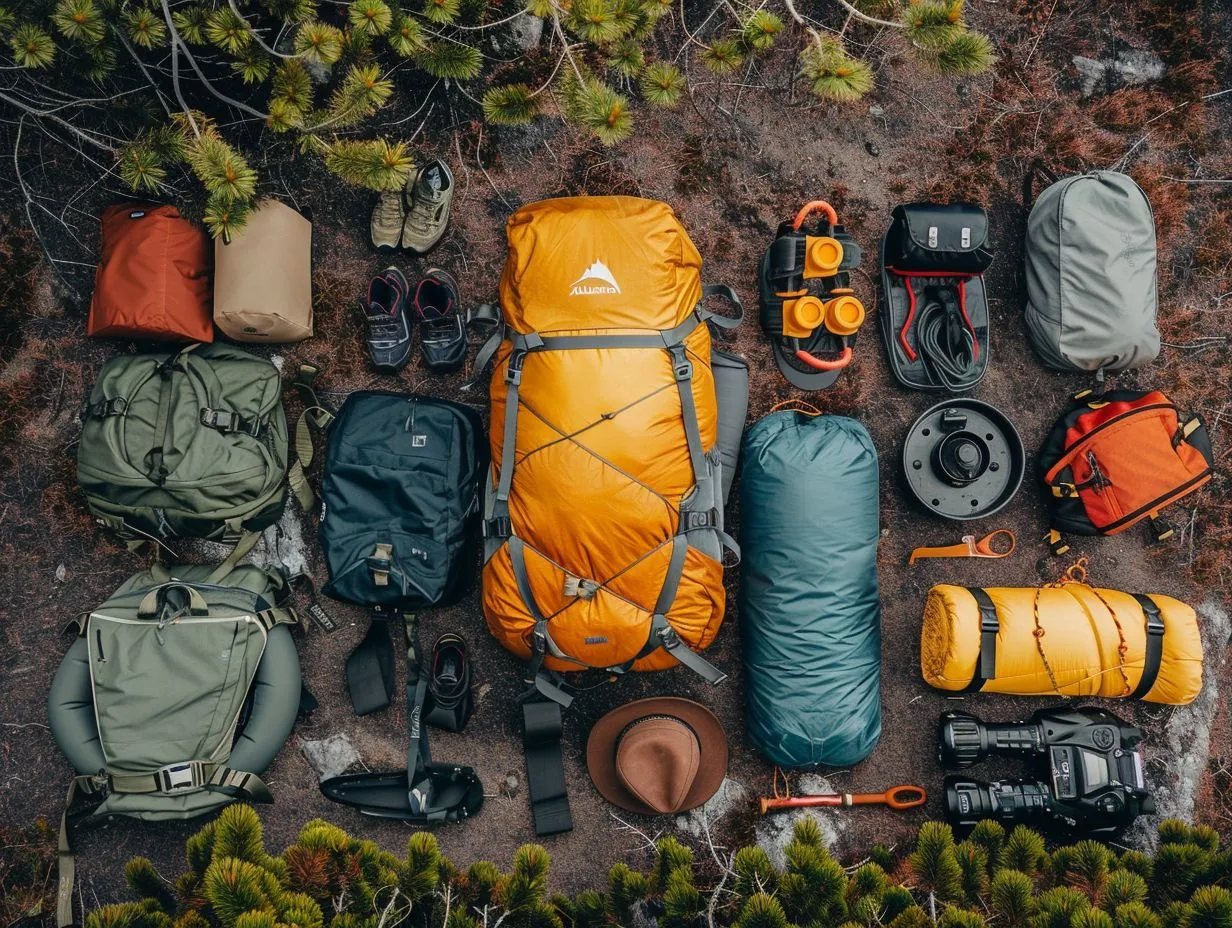
For UK three-season backpacking, a 50L to 60L pack is the versatile all-rounder. Go bigger only if you carry a winter bag, share group kit, or your gear is old and bulky. If you are still building your kit list, our guide to the best lightweight camping gear will help you shave litres and grams, which lets you drop to a smaller, comfier pack.
Fit and back length matter more than the label
A pack that fits your back beats a "waterproof" pack that does not. Comfort on a loaded rucksack comes from back length, not chest or waist size, so a tall person and a short person of the same weight need different packs. Get this wrong and the hip belt sits in the wrong place, the load hangs off your shoulders, and no fabric rating will save the day.
Back length is the distance from the bony bump at the base of your neck (the C7 vertebra) down to the top of your hip bones (the iliac crest). Most brands sell packs in size bands, roughly a short back at 40cm to 46cm, a regular at 46cm to 51cm and a long at 51cm and above, and many have an adjustable harness so you can fine-tune it. Load the pack with 8kg to 10kg in the shop, tighten the hip belt on the top of your hips, and check that around 80 per cent of the weight sits on your hips, not your shoulders.
Look for a padded, ventilated back panel, a proper padded hip belt, and load-lifter straps at the top of the shoulders. On the trail you will also want good waterproof boots and dry feet, so it is worth reading our guide to the best waterproof jackets for campers to complete the layering system that keeps you comfortable in a downpour.
Keeping electronics and your sleeping bag dry
Protect the two things that ruin a trip if they get wet: your electronics and your sleeping bag. A damp phone or dead power bank is an inconvenience; a soaked down sleeping bag is a genuine safety problem, because wet down loses almost all of its warmth and takes days to dry.
Pack the sleeping bag at the bottom of the pack inside its own small dry bag, then inside the main liner. That double layer is cheap insurance and doubles as a pillow stuff sack. Down bags need it most; a synthetic bag keeps some warmth when damp but is still far better dry.
For electronics, use a small 1L to 3L roll-top dry bag or a hard waterproof case for your phone, camera, head torch batteries and power bank, and keep it in the lid or a hip-belt pocket so it stays close but sealed. A resealable freezer bag works in a pinch, but it will not survive a fall in a stream. In cold weather, keep batteries in an inside layer during the day, because the cold drains them faster than the wet does.
Frequently asked questions
Is any hiking rucksack fully waterproof?
Very few. Only roll-top packs with welded seams and no zips into the main body, such as those from Ortlieb or Exped, keep water out under real submersion. Standard hiking packs are water-resistant at best, which is why a dry bag liner or rain cover matters.
Do I need a rain cover if I use a dry bag liner?
No, not for keeping kit dry. A liner protects the contents on its own. A cover is still worth carrying because it stops the pack fabric soaking up water and gaining weight, and it keeps external pockets and straps cleaner and drier.
What size rucksack do I need for a weekend camping trip?
A 40 to 50 litre pack suits one or two summer nights with a tent, sleeping bag and stove. Step up to 60 litres and above for colder conditions, a bulkier winter sleeping bag, or if you are carrying shared group kit and food.
How do I measure my back length for a rucksack?
Measure from the bony bump at the base of your neck down to the top of your hip bones, ideally with a friend and a soft tape. That figure, not your height or waist, tells you which size band or harness setting to choose. Many packs adjust across a range.
Are cheap waterproof rucksacks worth it?
A cheap fully waterproof pack often sacrifices back support and organisation. You usually get better value buying a comfortable water-resistant pack you like and adding a £15 to £30 dry bag liner, rather than paying more for a welded pack that fits poorly.
How do I keep a down sleeping bag dry?
Store it in its own dry bag at the bottom of your rucksack, inside the main liner. Wet down loses nearly all its warmth, so the double layer is essential. A synthetic bag is more forgiving but still performs far better kept dry.
The short version
Buy the comfortable, well-fitting pack in the right capacity for your trips, then keep the contents dry with a dry bag liner and a rain cover. Save a fully waterproof roll-top pack for water sports or relentless rain. Get the fit right first, because a pack that carries well will earn its place on every trip. Ready to put it to use? Browse campsites across Britain or start with the Lake District, and read the complete UK camping gear guide for the rest of your kit list.