Horsefly Bites: Why They Hurt So Much and What to Do About Them
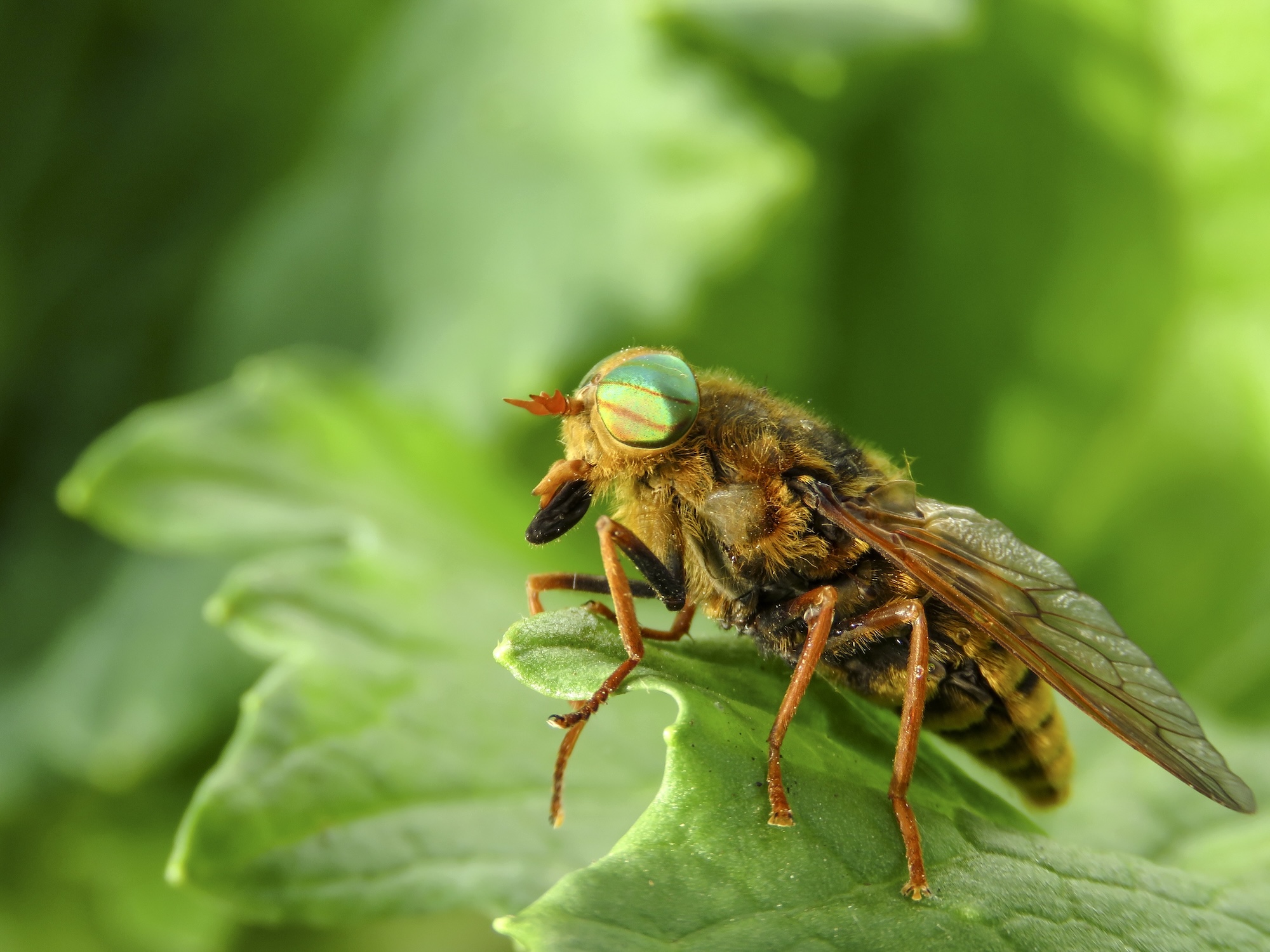
A horsefly does not pierce your skin. It cuts it open with a pair of blades and drinks from the pool. That single fact explains why the bite hurts immediately, why it bleeds, why it swells for days and why it gets infected far more often than a midge or mosquito bite.
It also explains why the usual advice does not help much. This guide covers what actually works, how to tell a horsefly bite from everything else, and when the swelling has stopped being normal.
It comes from Camping Sites in Britain, the UK campsite, caravan park and glamping finder, and it is part of our wider guide to insects and wildlife that bother campers in Britain.
What to do right now
- Wash it properly with soap and warm water. This matters more than with any other insect bite, because you have an open cut rather than a puncture
- Apply something cold for about ten minutes, wrapped in a cloth
- Do not scratch it. Horsefly bites itch violently as they heal and scratching is what turns them into infections
- Take an antihistamine for the itch and swelling, and paracetamol or ibuprofen for the pain
- Keep it covered if you are still outdoors and the skin is broken
- Watch it for three days. Spreading redness, heat, pus or a fever means see a GP or call 111
Skip the vinegar, the bicarbonate paste and the tea tree oil. None of them do anything and tea tree irritates plenty of people's skin.
Why horsefly bites hurt so much
Mosquitoes and midges have needle-like mouthparts and inject a mild anaesthetic, which is why you often do not notice the bite until later. Horseflies do neither.
A female horsefly has blade-like mandibles that scissor through the skin to open a wound, then she laps up the blood that pools in it. There is no anaesthetic, so you feel every bit of it, and the wound is a ragged cut rather than a clean hole.
Three consequences follow, and they are the whole story of a horsefly bite:
- It hurts instantly, sharply, and you almost always know exactly when it happened
- It often bleeds, and can keep bleeding for a while because her saliva contains an anticoagulant
- It gets infected more easily than any other common British insect bite, because an open cut lets skin bacteria straight in
Only females bite. Males live entirely on nectar and pollen and will not touch you. The female needs a protein-rich blood meal to develop her eggs, which is why she is so persistent about getting one.
Horsefly or cleg? The two you will meet in Britain
| Horsefly (Tabanus and relatives) | Cleg (Haematopota pluvialis) | |
|---|---|---|
| Size | Large, up to 25mm. Unmistakable | Smaller, around 10mm. Easy to miss |
| Look | Bulky, often with iridescent green or purple eyes | Dull grey-brown, mottled wings held in a V at rest |
| Approach | Noisy, obvious, you hear it coming | Silent. Lands without you noticing and bites before you react |
| Where | Everywhere, especially near cattle, horses and water | Scotland, northern England, damp and humid ground |
| Weather | Warm, still, sunny | Happy in dull, humid, overcast weather too |
| Reputation | Painful and hard to swat | The one that gets you on a Highland walk |
The cleg is the reason people say "there was nothing there" and then find a bleeding lump on their arm. It is the smaller, quieter and in practice more troublesome of the two, and it is largely absent from the American health articles that dominate search results for this topic.
What a horsefly bite looks like, day by day
Horsefly bites follow a fairly predictable course. Knowing it is the difference between worrying unnecessarily and missing something that needs treating.
| When | Normal |
|---|---|
| Immediately | Sharp pain, a visible cut or puncture, often a spot of blood |
| First hour | A raised red weal, sometimes with a pale centre. Burning rather than itching |
| Day 1 to 2 | Swelling peaks. Can be large, hot and firm. Itching starts and is often intense |
| Day 3 to 5 | Swelling settles, redness fades from the edges inwards, itching continues |
| Up to 2 weeks | A small firm lump or dark mark can linger. This is normal |
A big local reaction is common and not dangerous on its own. A bite on the ankle or the back of the hand can swell enough to be genuinely uncomfortable, and swelling that spreads across a wide area in the first 48 hours is usually just the reaction rather than an infection.
When it is infected
This is where horsefly bites differ from everything else on a campsite, and it is worth knowing the difference clearly.
| Normal reaction | Possible infection |
|---|---|
| Worst at 24 to 48 hours, then improving | Getting worse after day 3 |
| Redness fades at the edges | Redness spreading outwards, sometimes in streaks |
| Warm to the touch | Hot, and increasingly painful rather than itchy |
| Clear or slightly weepy | Pus, or a yellow crust |
| You feel fine | Fever, chills, feeling generally unwell, swollen glands |
See a GP or call 111 if you recognise the right-hand column. Infected bites are treated with antibiotics and clear up quickly once treated, and cellulitis from an untreated bite is a genuinely unpleasant thing to acquire on holiday.
Call 999 for swelling of the face, lips, tongue or throat, wheezing or difficulty breathing, a fast heartbeat, dizziness or fainting. These are signs of anaphylaxis and can follow any insect bite. Full guidance is on the NHS insect bites and stings page.
If you are on a rural campsite, have the site name, postcode and pitch number ready and send someone to the entrance to flag the ambulance down.
Why they keep picking on you
Horseflies hunt by sight and heat, not by smell, which is why they behave so differently from mosquitoes and midges.
- Movement. They target moving objects, which is why they find you walking back from the shower block and ignore the person sitting still
- Dark colours. Dark clothing reads as a large mammal. Light colours are meaningfully better
- Warmth. They prefer warmer targets, so a hot sweaty walker is more attractive than a cool one
- Water. They breed in damp ground and are worst near lakes, rivers, marsh and wet pasture
- Livestock. Cattle and horses are their main hosts. A field of cows is a horsefly nursery
- Bare skin. They will bite through thin fabric but much prefer skin
How to avoid them when camping
Pitch selection and clothing do most of the work here, because repellent does less than you would like.
- Pitch away from cattle and horses. The single biggest factor. A site bordering wet pasture in July will be bad
- Avoid damp, low ground near still water, boggy corners and stream edges
- Wear light colours and cover your arms and legs in the evening. Loose fabric beats tight
- Keep moving or get inside. Standing around in the open in warm still weather is when you get bitten
- Sit in a breeze. Horseflies are strong fliers but they still prefer still air
- Shower off sweat before sitting outside in the evening
- Check the tent porch before zipping up. A horsefly shut in with you overnight is a bad night
Does insect repellent work on horseflies?
Partly, and less well than on mosquitoes. DEET and icaridin do reduce horsefly bites, but horseflies are hunting visually rather than following your scent, so a repellent that hides your smell is working against only half their method. Apply it, but do not rely on it the way you would against midges.
Our guide to the best insect repellents for campers covers concentrations and what to buy. Permethrin-treated clothing is more effective than skin repellent for horseflies specifically, because they will land on fabric.
Dogs and horses
Dogs get bitten on the belly, ears and anywhere the coat is thin, and they scratch and lick the site, which is exactly how it becomes infected. Clean the bite, discourage licking, and see a vet if it swells hard, weeps, or your dog goes off its food.
If you are camping near a livery or with horses, fly rugs and face masks exist for good reason. A horsefly bite on a horse can cause a serious reaction and a bolting horse is a hazard to everyone around it.
When horseflies are out in Britain
| Month | Activity |
|---|---|
| May | First ones appear late in the month |
| June | Building, clegs already out in Scotland |
| July | Peak. Warm still days are worst |
| August | Still high, tailing off late in the month |
| September | Declining fast |
| October to April | None |
Peak horsefly season overlaps almost exactly with the school summer holidays, which is why so many British campers meet them. A hot, humid, windless week in July near livestock is the worst combination there is.
Frequently asked questions
Why do horsefly bites hurt more than other insect bites?
Because horseflies cut the skin open with blade-like mouthparts rather than piercing it with a needle, and they inject no anaesthetic. You feel the wound being made, and it is a ragged cut rather than a clean puncture.
How long does a horsefly bite last?
Swelling usually peaks 24 to 48 hours after the bite and settles over three to five days. A small firm lump or dark mark can persist for up to two weeks. Anything getting worse after day three should be checked.
How do I know if a horsefly bite is infected?
Infection shows as redness spreading outwards after day three, increasing pain rather than itching, heat, pus or yellow crusting, and feeling unwell or feverish. See a GP or call 111. It is treated with antibiotics.
What is a cleg?
A cleg is a smaller horsefly, Haematopota pluvialis, common in Scotland and northern England. It is roughly 10mm, dull grey-brown, and lands silently, so most people never see it before it bites. It is happy in dull humid weather.
Do horseflies carry disease in the UK?
No. British horseflies transmit no disease to humans. The risk from a horsefly bite is the pain, the reaction and the possibility of a bacterial skin infection from the open wound, not anything the fly itself carries.
Why do horseflies chase you?
They hunt by sight and heat rather than smell, so movement and dark clothing attract them and they will follow a moving target persistently. Running does not help much. Getting into a tent, car or building does.
Does anything actually keep horseflies away?
Light clothing, covering up, avoiding cattle and damp ground, and staying out of warm still air do most of the work. DEET and icaridin help but less than against mosquitoes, because horseflies are hunting visually. Permethrin-treated clothing is more effective.
The short version
A horsefly bite is a cut, not a puncture, so treat it like a wound. Wash it, cool it, leave it alone, and watch it for three days.
Avoiding them is mostly about where you pitch. Away from cattle, off the damp ground, light clothes, and out of the still warm air in July. And if something bit you in the Highlands and you never saw it coming, that was a cleg.
For everything else that bites, stings or raids your food in Britain, see our complete guide to camping pests in Britain.