The Best Portable Grills and BBQs for Campsite Cooking
· Updated
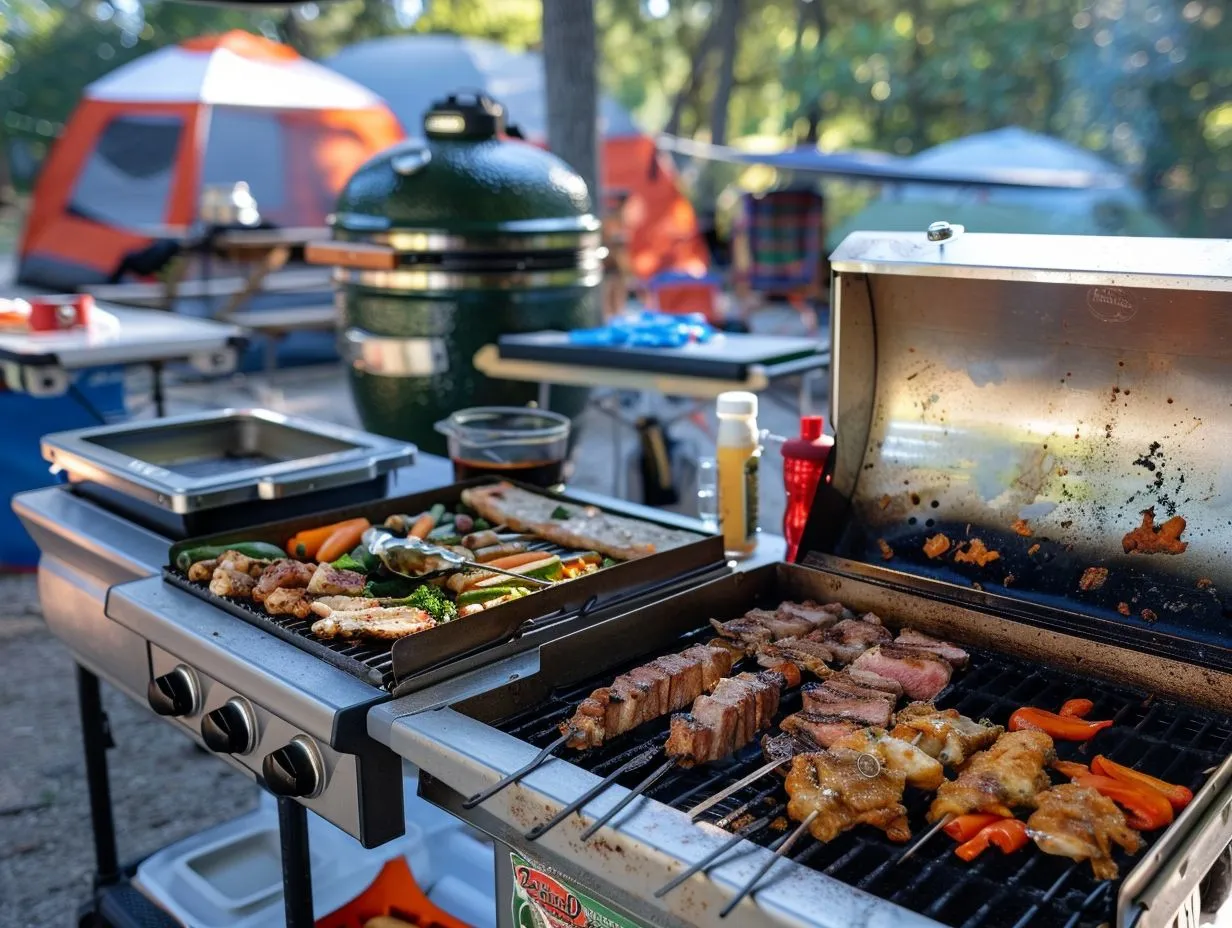
The best portable grill for most campers is a gas barbecue that fits the boot, lights in seconds and gives you a dial to control the heat. A cartridge model like the Cadac Safari Chef or the Weber Go-Anywhere Gas will cook breakfast, burgers and a proper roast without the wait or the mess of charcoal. If you want that smoky flavour, a compact charcoal barbecue does the job brilliantly, and if you are cooking over an open fire, a flat-pack grill grate turns the flames into a hob.
This guide covers every type worth packing, the real trade-offs, and how to use one safely on a pitch. It is part of our guide to campfire cooking essentials, from the team at Camping Sites in Britain, where you can find and compare campsites across the UK.
One rule up front: check your site allows barbecues before you pack one. Many do, some ban them entirely in dry weather, and a few only permit off-ground models. A quick look at the site's rules on our campsites directory or a phone call saves you turning up with kit you cannot use.
The types at a glance
There are four kinds of portable grill that suit camping, and the right one comes down to how you cook and how much space the boot can spare.
| Type | Best for | Watch out for |
|---|---|---|
| Portable gas BBQ | Speed, heat control, easy cleaning | Carrying a gas cartridge or canister |
| Portable charcoal BBQ | Smoky flavour, a traditional cook | Slower to light, ash to dispose of |
| Flat-pack or folding fire pit grill | Cooking over an open fire, packing flat | Needs a fire and a site that allows one |
| Disposable BBQ | One-off convenience only | Wasteful, a fire risk and a carbon monoxide killer |
Portable gas barbecues
Gas is the fastest, most controllable way to cook on a pitch, which is why it wins for most families. You turn a dial, it lights, and you are grilling in a couple of minutes with no lighting fluid and no waiting for coals to grey over. When the meal is done you turn it off and the heat stops, which also makes gas the safer choice around children.
The Cadac Safari Chef is a genuine camping favourite. It runs off a screw-on gas cartridge or a canister, packs into a tidy round case, and swaps between a grill plate, a flat griddle and a pan surface, so one unit does the fry-up and the burgers. The Weber Go-Anywhere Gas is the other classic: a rectangular box with a proper lid, a wide cooking area and Weber's build quality, running off a small gas canister. Both are stable, quick to clean and easy to live with over a long weekend.
Look for a lid if you want to roast a chicken or melt cheese rather than only sear, and check whether the model takes the cartridges or canisters you can actually buy near your site. A griddle plate is worth having for eggs, bacon and anything small that would fall through bars.
Portable charcoal barbecues
Charcoal gives you the flavour gas cannot match, and a compact model carries that smoky taste to the campsite. You trade speed for it, because coals need 20 to 30 minutes to reach cooking heat, and you have hot ash to deal with afterwards. For a relaxed evening cook where the barbecue is part of the entertainment, that trade is well worth making.
The Weber Go-Anywhere Charcoal is the benchmark: a rugged, lidded box that holds heat, fits in any boot and lasts for years. Beyond it you will find two familiar shapes. Bucket barbecues are cheap, light and fine for sausages and burgers. Kettle styles, scaled down from the full-size Weber kettle, add a domed lid that lets you roast and cook indirectly, which turns a barbecue into something closer to an outdoor oven.
Whatever you choose, let the ash cool completely before you deal with it, and never tip warm coals onto grass or into a plastic bin. A lidded charcoal barbecue also doubles nicely alongside a fire pit, and our guide to the best fire pits for no-trace camping covers keeping the ground underneath you clean.
Flat-pack and folding fire pit grills
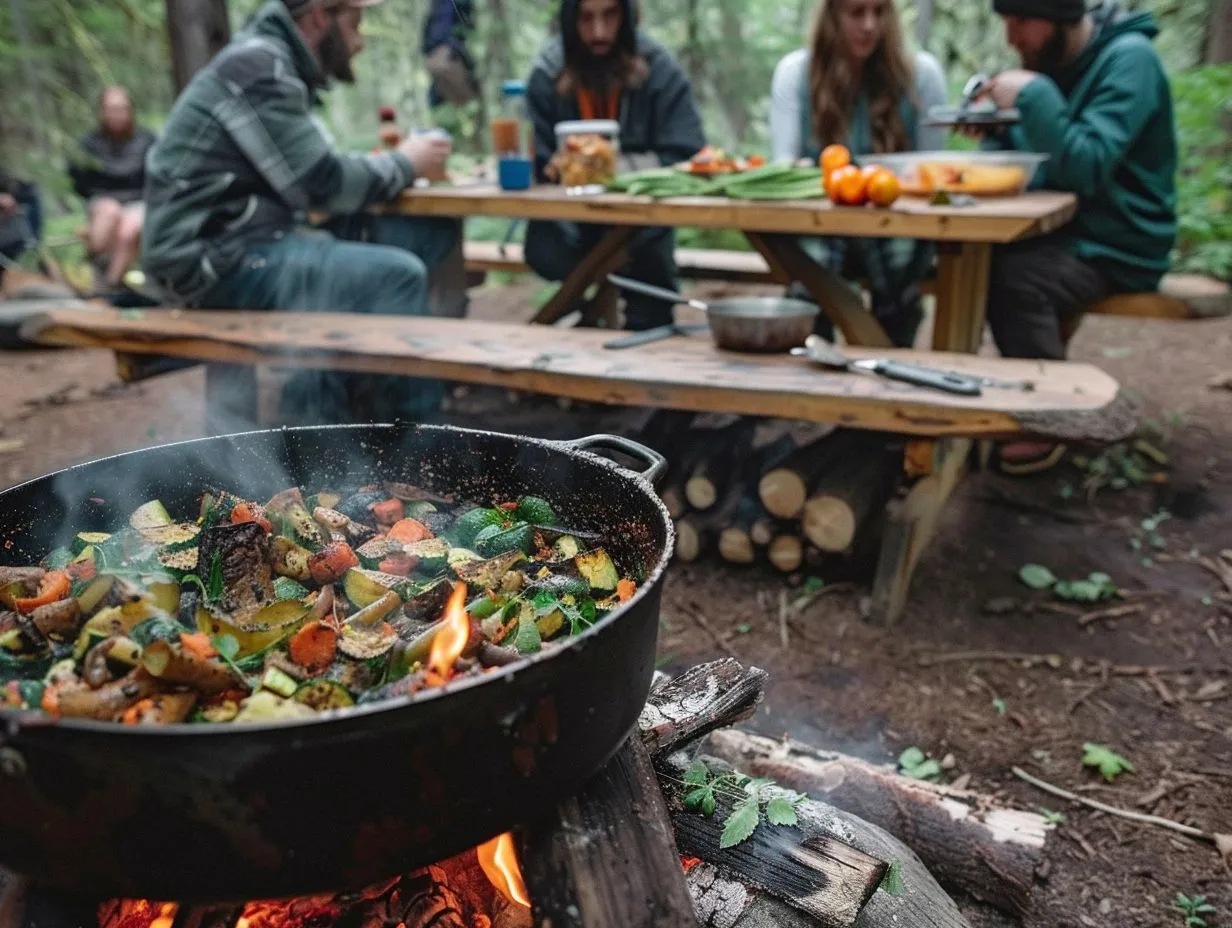
If you are already lighting a campfire, a folding grill grate is the lightest cooking kit you can carry. These are steel frames or mesh grates that sit over the flames or fold out on legs above a fire pit, packing down almost flat against the side of a rucksack or the boot. They cost little, weigh next to nothing, and turn a fire you were building anyway into a cooking surface.
The catch is that you need a fire and a site that permits one, and the heat is far harder to control than a gas dial. You cook by moving food to the cooler edges and building the fire down to embers rather than flames, which is a skill in itself. Only ever cook over a fire where the site allows open fires, and read up first on campfire safety and etiquette so you keep the flames contained and the pitch intact.
Disposable barbecues: convenient, but think twice
Disposable barbecues are cheap and quick, and that is the whole of their appeal. Everything else counts against them. They are wasteful single-use metal trays, they scorch and kill the grass beneath them, they stay dangerously hot for hours after the food is done, and they are a leading cause of accidental fires on campsites and in the countryside. Many sites now ban them outright, and plenty of beaches and beauty spots do too.
The most serious danger is invisible. A disposable barbecue gives off carbon monoxide long after the flames have died and the coals look grey and cold, and that gas has killed campers who took a used or still-warm barbecue into a tent, awning or campervan to keep warm or to finish cooking. UK fire services and public health bodies are blunt about it: never take a barbecue, lit or cooling, inside any enclosed space. Carbon monoxide has no smell and you can be overcome in your sleep, as the London Fire Brigade warns.
If you do use one, place it on bricks or a stand off the grass, never on a wooden picnic table, keep it well away from the tent, let it cool for hours, douse it with water and only ever bin it in a metal bin. For the full picture on why open flames and enclosed canvas never mix, read the dangers of cooking in a tent.
What to look for when buying
The right portable grill balances how it cooks against how it packs, so weigh these features against your trips and your car.
- Fuel type. Gas for speed and control, charcoal for flavour. Check the exact cartridge or canister a gas model needs and that you can buy it easily.
- Packed size and weight. Measure your boot space. A round Cadac case and a flat-pack grate suit small cars far better than a stand-up unit.
- Cooking area. Match it to your group. A couple needs far less grill than a family of five wanting burgers on all at once.
- A lid. A lid lets you roast, bake and cook indirectly rather than only sear, which doubles what one barbecue can do.
- Stability and legs. Solid, level legs or a wide base stop a hot barbecue tipping. This matters most on soft or uneven pitches.
- Easy cleaning. Removable grates, porcelain or non-stick surfaces and a drip tray turn washing up from a chore into a rinse.
Using a portable grill safely on a pitch
Safe barbecuing on a campsite comes down to a handful of firm rules, and they hold for gas, charcoal and fire pit grills alike.
- Set the barbecue on a stable, level, non-flammable surface, never straight on dry grass, and keep it well clear of the tent, guy lines and awning.
- Never light or use any barbecue inside a tent, awning, gazebo or campervan. There is no safe way to do it, because of both fire and carbon monoxide.
- Never move a lit barbecue, and never leave one unattended while children or dogs are about.
- Keep water or a fire blanket within reach, and know where the site's fire point is before you start.
- Let charcoal and disposable barbecues cool fully, then douse them and dispose of ash and trays in a metal bin only.
- Check the site's rules first. Confirm barbecues are allowed and whether they must be raised off the ground.
Frequently asked questions
What is the best portable barbecue for camping?
For most campers a portable gas barbecue is best, because it lights fast, controls heat with a dial and cleans easily. The Cadac Safari Chef and Weber Go-Anywhere Gas are proven camping favourites. Choose charcoal instead if smoky flavour matters more than speed.
Is gas or charcoal better for campsite cooking?
Gas is faster, cleaner and easier to control, which suits families and quick meals. Charcoal takes 20 to 30 minutes to heat and leaves ash, but gives a smoky flavour gas cannot. Pick gas for convenience, charcoal for taste and a relaxed evening cook.
Are disposable barbecues allowed on campsites?
Many campsites now ban disposable barbecues because they scorch the ground and cause fires, and some allow them only raised off the grass. Always check the site's rules before you pack one. They are wasteful and risky, so a reusable grill is almost always the better choice.
Can you use a barbecue inside a tent or awning?
No. Never use or store any barbecue inside a tent, awning or campervan, even one that looks cool. A cooling barbecue releases carbon monoxide, a gas with no smell that has killed campers in their sleep. Keep every barbecue outside and well away from canvas.
How long does a disposable barbecue stay hot?
A disposable barbecue stays dangerously hot for several hours after cooking and gives off carbon monoxide long after the coals look grey. Let it cool fully, douse it with water, and only ever put it in a metal bin, never a plastic one or straight onto grass.
What size portable barbecue do I need?
Match the cooking area to your group and the boot to the packed size. A couple manages with a small round or bucket model, while a family wants a wider grill with a lid. Measure your boot space before buying, as stand-up units take far more room.
The short version
A portable gas barbecue like the Cadac Safari Chef or Weber Go-Anywhere Gas is the easy all-rounder, charcoal wins on flavour, a folding grate is brilliant over a fire, and disposables are best avoided for the waste, the fire risk and the very real carbon monoxide danger. Whatever you pack, keep it outside, keep it stable, and check your site's rules first. For more on feeding a camp, see campfire cooking essentials or browse pitches on our campsites directory.