Campfire Cooking Equipment: The UK Guide to Fires, Stoves and Safe Food
· Updated
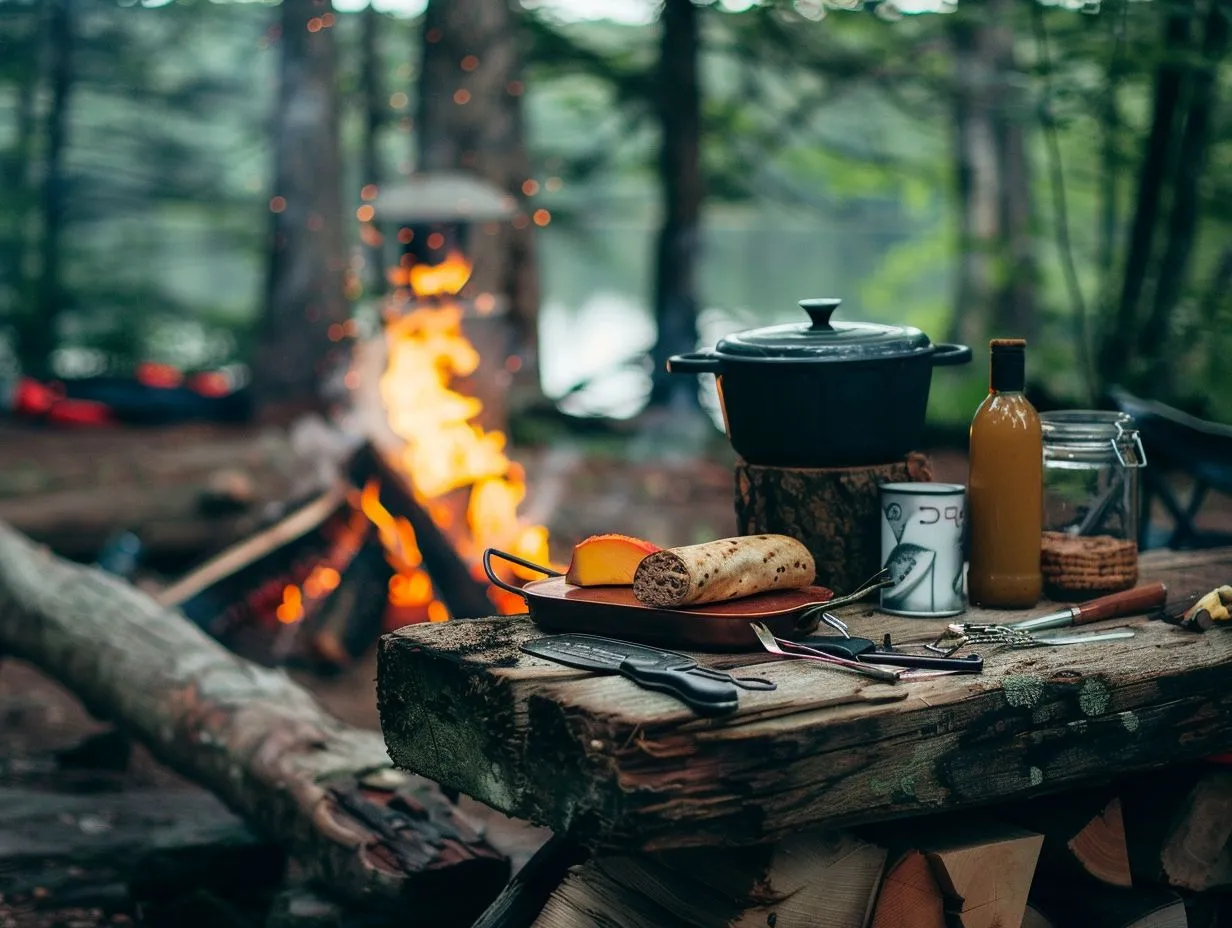
Cooking outdoors in Britain comes down to two decisions: how you make the heat, and whether you are even allowed to make it. A gas stove is legal almost everywhere and works in the rain. An open campfire is a treat, but many UK campsites ban them outright, and several national parks ban fires and disposable barbecues on their land completely. Sort those two things first and the food is the easy part.
This guide covers the whole cooking pillar: what fire you are allowed, how to build and light one, which firewood to buy under the Ready to Burn rules, the stoves and grills worth packing, what to actually cook, and how to store and reheat food so nobody spends the drive home feeling ill. Use the comparison table to pick your heat source, then jump to the section you need.
It is the campfire cooking guide from Camping Sites in Britain, where you can find and compare campsites, caravan parks and glamping across the UK.
Pick your heat source
| Method | Best for | Allowed where | Watch out for |
|---|---|---|---|
| Gas canister stove | Fast boils, backpacking, wet weather | Almost all campsites | Wind, running out of gas |
| Family gas stove (2 burner) | Cooking real meals for four or more | Almost all campsites | Bulk, needs a table |
| Portable barbecue or grill | Searing meat and veg, sociable cooking | Most sites, off the ground | Charcoal disposal, fire risk |
| Contained fire pit | Ambience plus cooking, leave no trace | Sites that allow raised fires | Scorching grass, sparks |
| Open campfire on the ground | The classic, where permitted | Rare. Only with permission | Bans, wildfire, damage |
If you only take one thing from the table: a gas stove is the reliable workhorse, and the fire is the bonus you check the rules for. For a full run through of pots, pans and gadgets, our guide to camping cooking equipment lays out the kit list.
Can you have a campfire at all?
You can cook over an open fire in Britain only where the landowner or campsite explicitly allows it, and a large number do not. Most commercial sites either ban ground fires or restrict you to a raised fire pit or an off-ground barbecue, so check the site rules before you pack the marshmallows. The full etiquette, including spacing, quiet hours and cleaning up, is in our guide to campfire rules on UK campsites.
On open access land the picture is stricter still. The New Forest bans all fires and barbecues, including disposable ones, across the whole national park, and moorland areas like the Peak District treat any naked flame as a wildfire risk in dry spells. Wild camping itself is only a legal right on Dartmoor, confirmed by the UK Supreme Court on 21 May 2025, and even there lighting fires is not permitted. Everywhere else in England and Wales you need the landowner's permission. In Scotland the broad right to wild camp under the Land Reform (Scotland) Act 2003 comes with a firm expectation that you use a stove rather than scar the ground with a fire.
The official safety advice is worth reading before any trip: see the government's fire safety outdoors guidance. Never leave a fire unattended, keep water to hand, and never light one in windy or tinder-dry conditions.
Building and lighting the fire
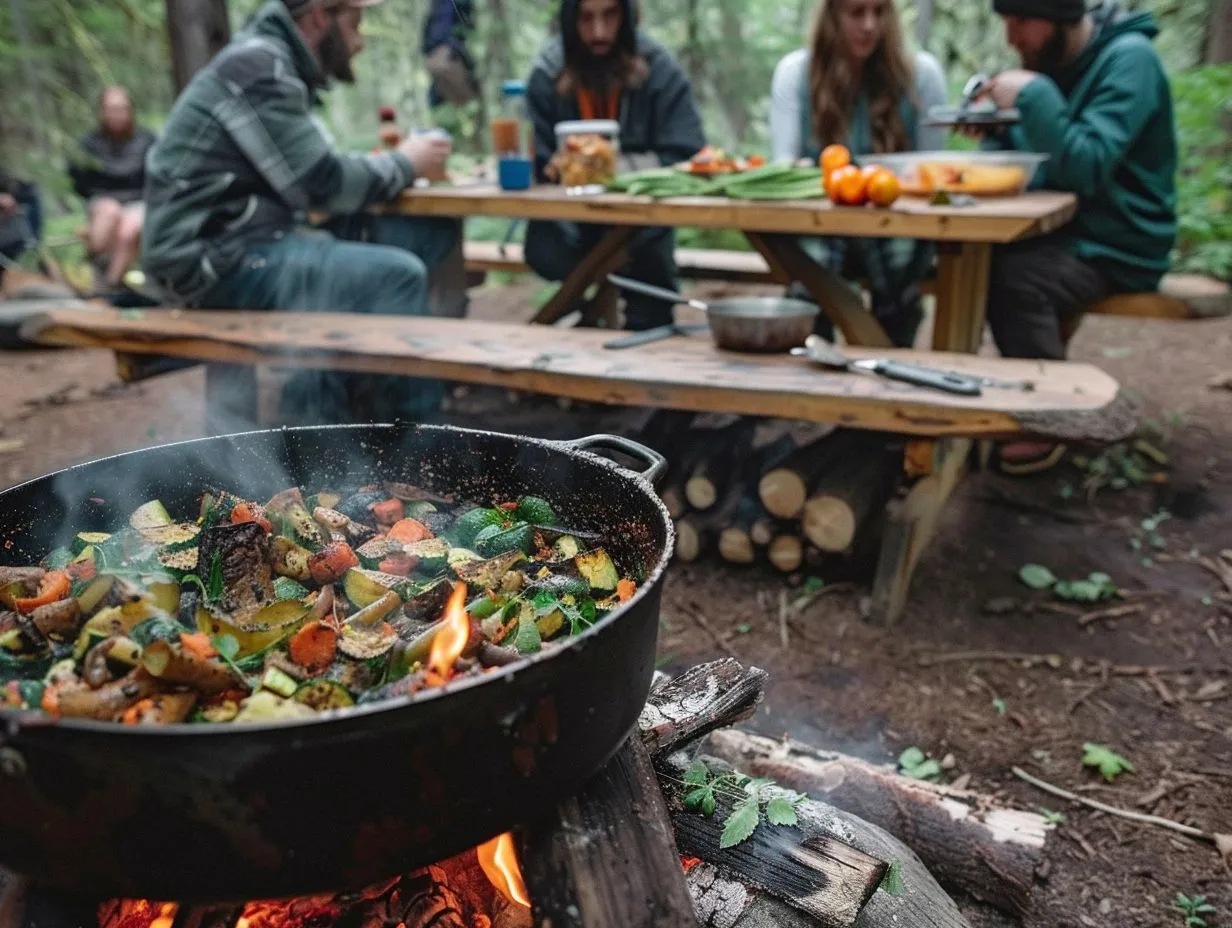
A good cooking fire is built for embers, not flames, because you cook over glowing coals rather than a roaring blaze. Start small with dry tinder and thin kindling, build up to thumb-thick sticks, then let it burn down for 20 to 30 minutes until you have a bed of orange embers. That is when a pan will actually cook something rather than just get sooty. Our full method is in how to build a campfire.
Lighting is where most trips stall, usually because the kindling is damp. Carry a reliable firelighter and a spark source, and pack a backup. Cotton pads smeared with petroleum jelly, or dryer lint stuffed into a cardboard egg box, light in the wet and cost almost nothing to make at home. We show you three of them in how to make DIY fire starters for camping.
Firewood, kiln-dried logs and Ready to Burn
Buy firewood with a moisture content of 20% or less, because wet wood smokes, spits and refuses to give you cooking heat. In England this is now the law for small quantities: wood sold in volumes under 2 cubic metres must carry the Ready to Burn certification, which confirms the moisture is 20% or below. Kiln-dried hardwood logs are the easiest way to hit that number without gambling on a garage forecourt net.
For heat and flavour, dense hardwoods win. Oak, ash, beech and hornbeam burn long, hot and clean, while softwoods like pine spit resin and are better as kindling than cooking wood. Ash is the exception that burns even slightly green. Never cook over treated, painted or painted-looking timber, and never burn pallets of unknown origin. Our pick of the cleanest-burning logs is in the best firewood for campfires in the UK.
Leave no trace matters here. Use a raised fire pit where the site requires it so you do not kill the turf, and take a look at the best portable fire pits for no-trace camping for models that pack flat and protect the ground.
Stoves and gas: the cooker that does the work
A stove is the piece of kit that will cook 90% of your meals, so buy for how you actually camp. Backpackers want a light canister stove that boils fast and packs into a mug. Families want a stable two-burner that can hold a frying pan and a kettle at once without wobbling off a picnic bench.
For walking and wild pitches, weight and boil time rule. Compare the leading models in the best lightweight backpacking stoves in the UK. For a family basecamp where you are frying breakfast for four, see the best family camping stoves in the UK. If you run a caravan or larger tent kitchen off a refillable bottle, our guide to how long a Calor gas bottle lasts helps you size it and avoid running dry mid-fry.
One hard safety rule: never cook or run a stove inside a tent or a closed porch. Stoves produce carbon monoxide, which is odourless and has killed campers who lit a burner to keep warm. Cook outside, in the open air, every time. The full explanation is in the dangers of cooking in your tent.
The cook kit: pans, grills and the extras
Your cook set should be light, nest together and cover boiling, frying and eating. A pot with a lid, a frying pan or a small skillet, a spork and a decent knife will handle most trips. Backpackers should look at the best lightweight backpacking cookware in the UK, which nests into a single pouch and shaves grams where it counts.
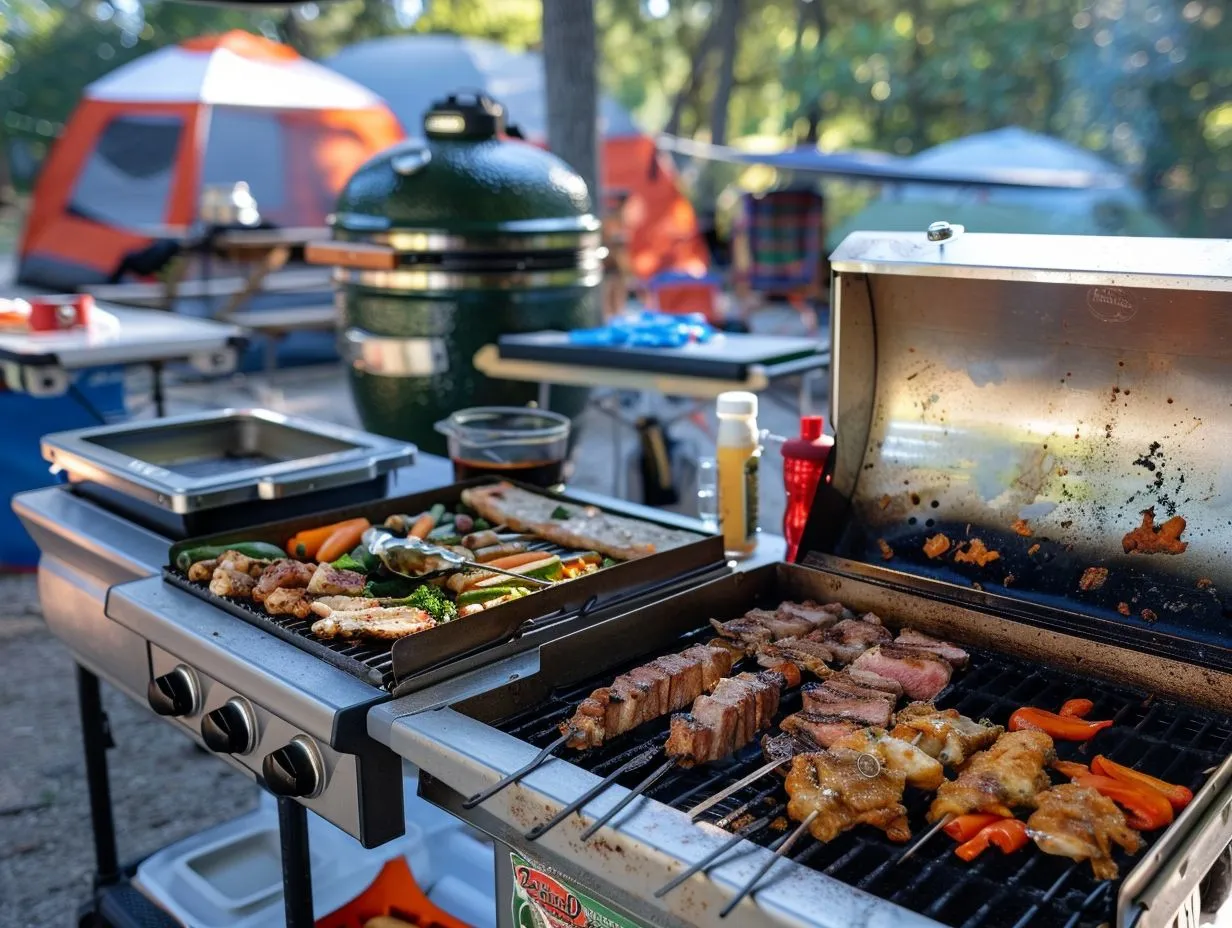
For sociable cooking, a portable grill turns a pitch into a barbecue. A raised grill keeps charcoal off the grass and gives you a proper searing surface for sausages, halloumi and corn. Our recommendations are in the best portable barbecues for camping in the UK.
Coffee is the one luxury worth the weight. You can brew straight in the pot, or pack a proper maker. Purists should read how to make campfire coffee for the cowboy method, while anyone who cannot start the day without a flat white will want the best portable espresso makers for camping in the UK.
What to cook
The best camping food is simple, one-pot and hard to ruin over uneven heat. Stews, pasta, fajitas, foil-wrapped potatoes and a fry-up cover most nights, and prepping components at home (chopping, marinating, pre-cooking rice) saves fuel and washing up on site. Start with easy camping meals you can build from a short shopping list.
Diets are easy to cater for outdoors with a bit of planning. We have full recipe sets for vegetarian campfire recipes, vegan camping meals and gluten free camping meals. For long walks or fast-and-light trips where you would rather add boiling water and eat, compare the best freeze-dried camping meals in the UK.
Snacks keep everyone going between meals. Pack calorie-dense trail food using the best hiking snacks in the UK, and once the embers are glowing, work through amazing snacks to cook over an open fire for the toasted, gooey end of the menu.
Foraging to add to the pot
Foraging can genuinely improve a campfire meal, but only if you can identify what you pick with total certainty. Blackberries, wild garlic and elderflower are low-risk and abundant across Britain in season. Mushrooms are not: several deadly UK species look almost identical to edible ones, so never eat a wild mushroom you are not 100% sure of. Learn the safe basics in foraging while camping in the UK, and read the specialist guide to mushroom foraging near campsites before you touch a single fungus. Always follow the Countryside Code and take only what you will use.
Food storage and food safety
Keep cold food below 8°C and cook everything thoroughly, and campsite food poisoning becomes very unlikely. The Food Standards Agency advises cooking food so the centre reaches 70°C for two minutes, or an equivalent such as 75°C for 30 seconds, and reheating leftovers until they are steaming hot all the way through, only once. Poultry, burgers, sausages and any minced meat must be cooked right through with no pink meat and clear juices.
The cool box is your fridge, so treat it like one: pre-chill it, pack it with ice blocks, keep raw meat sealed at the bottom away from ready-to-eat food, and keep the lid shut. Full method is in how to store food when camping and how to keep food fresh while camping. The official advice on temperatures and reheating is on the Food Standards Agency cooking your food guidance.
Which cooker should you choose?
Match the cooker to the trip, not the other way round. Here is the short decision:
- Backpacking or wild camping. One light canister stove, a nesting cook pot, and freeze-dried or one-pot meals. No fire.
- Family in a big tent for a week. A two-burner gas stove, a proper cook set, a cool box and a portable grill for barbecue nights.
- Fire allowed and you want the experience. Kiln-dried Ready to Burn logs, a raised fire pit, a grill grate, plus a gas stove as backup for the morning brew.
- Caravan or motorhome. Refillable Calor gas, a full kitchen set, and no need to skimp on weight.
Wherever you are heading, from a fire-friendly farm pitch in the Scottish Highlands to a family site in the Lake District, you can filter for the facilities you need across our UK campsite listings.
Frequently asked questions
What equipment do I need to cook on a campfire in the UK?
At minimum: a heat source you are allowed to use, dry Ready to Burn firewood or charcoal, a grill grate or a cast iron pan, long-handled tongs, heatproof gloves and water to douse the fire. A gas stove is a sensible backup, since many UK sites restrict open fires.
Can you have a campfire on UK campsites?
Only where the site allows it, and many do not. Commercial sites often ban ground fires and permit only raised fire pits or off-ground barbecues. National parks such as the New Forest ban all fires and disposable barbecues. Always check the site rules first.
What is the best firewood for cooking?
Dense, dry hardwood such as oak, ash, beech or hornbeam, with a moisture content of 20% or less. Kiln-dried logs certified Ready to Burn are the reliable choice. Avoid softwoods like pine for cooking, and never burn treated or painted wood.
What temperature should camping food be cooked to?
The Food Standards Agency recommends the centre of the food reaches 70°C for two minutes, or 75°C for 30 seconds. Cook poultry, burgers and sausages right through until juices run clear with no pink meat, and reheat leftovers until steaming hot, once only.
Is it safe to cook inside a tent?
No. Stoves and barbecues release carbon monoxide, which is odourless and can be fatal in an enclosed space. Never cook or run a stove inside a tent or a closed porch, even to keep warm. Always cook outside in the open air.
Do I need to buy special firewood by law?
In England, wood sold in volumes under 2 cubic metres must be certified Ready to Burn, confirming 20% moisture or less. This rule targets sellers, but it makes certified kiln-dried logs the easy, legal choice for campers buying small nets.
The short version
Take a gas stove you can rely on, check whether your site actually allows a fire before you plan around one, and buy Ready to Burn logs so the wood lights and cooks. Keep the cool box cold, cook meat right through to 70°C, and never light a burner inside the tent.
Get those basics right and campfire cooking is the best meal of the trip. Find a pitch that suits how you like to cook across our UK campsite listings, or start planning your next camping adventure with us.