How to Build a Campfire: A Step-by-Step Guide for UK Campsites
· Updated
Before you build anything, check that a fire is allowed. Most UK campsites ban fires on the ground, and many ban open fires altogether. Where fires are permitted you are usually asked to keep them off the grass in a raised fire pit or a fire bowl. Always confirm the rules with the site before you strike a match, and never light a fire on open access land, moorland or peat without the landowner's say-so.
Once you have the green light, a good campfire is simple: a safe spot, dry wood in three sizes, one of three reliable lays, and a proper method for putting it out. This guide walks through all of it. If your plan is to cook over the flames rather than just sit by them, pair it with our guide to campfire cooking essentials.
This is part of the outdoor skills library at Camping Sites in Britain, where you can find and compare campsites, caravan parks and glamping across the UK, including many that welcome fires.
First, check you are allowed a fire
Assume no fire until someone tells you otherwise. The Countryside Code asks visitors not to light fires and to be careful with anything that can spark a wildfire, because a single stray fire on dry ground can spread for miles. Read the official guidance in the Countryside Code before you head out.
On a booked pitch the site's rules are the ones that matter. Many campsites allow fires only in a raised container, off the grass, and some ban them entirely in dry spells. A good number of UK sites do welcome fires, and you can filter for them across the directory at Camping Sites in Britain. When in doubt, ask at reception. The etiquette side of this, from smoke drifting into a neighbour's awning to leaving a scorched patch behind, is covered in our guide to campfire safety and etiquette.
Prepare a safe spot
A safe fire starts with a safe base. If ground fires are allowed, clear a circle of bare earth at least 2 metres across, down to the soil, with no grass, roots or leaf litter left inside it. Where the site requires a raised fire, set your fire pit or bowl on a heat-resistant surface such as slabs or bare ground, never on decking or a picnic bench.
Look up as well as down. Keep the fire well clear of overhanging branches, and a safe distance from tents, awnings and vehicles, because a spark can melt a flysheet in seconds. Never light a fire on peat, which can smoulder underground for weeks. Keep a full bucket of water beside the fire before you light it, not after.
The three fuel types you need
Every reliable fire uses three sizes of fuel, added in order. Skip a stage and the fire either fails to catch or smothers itself.
| Fuel type | What it is | Its job |
|---|---|---|
| Tinder | Dry grass, birch bark, cotton wool, a shop-bought or DIY firelighter | Catches a spark or flame instantly and burns for a minute or two |
| Kindling | Dry twigs and split sticks, from pencil-thick up to thumb-thick | Turns that first flame into a proper burn |
| Fuel wood | Split logs, wrist-thick and up | Gives you sustained heat and a long-lasting fire |
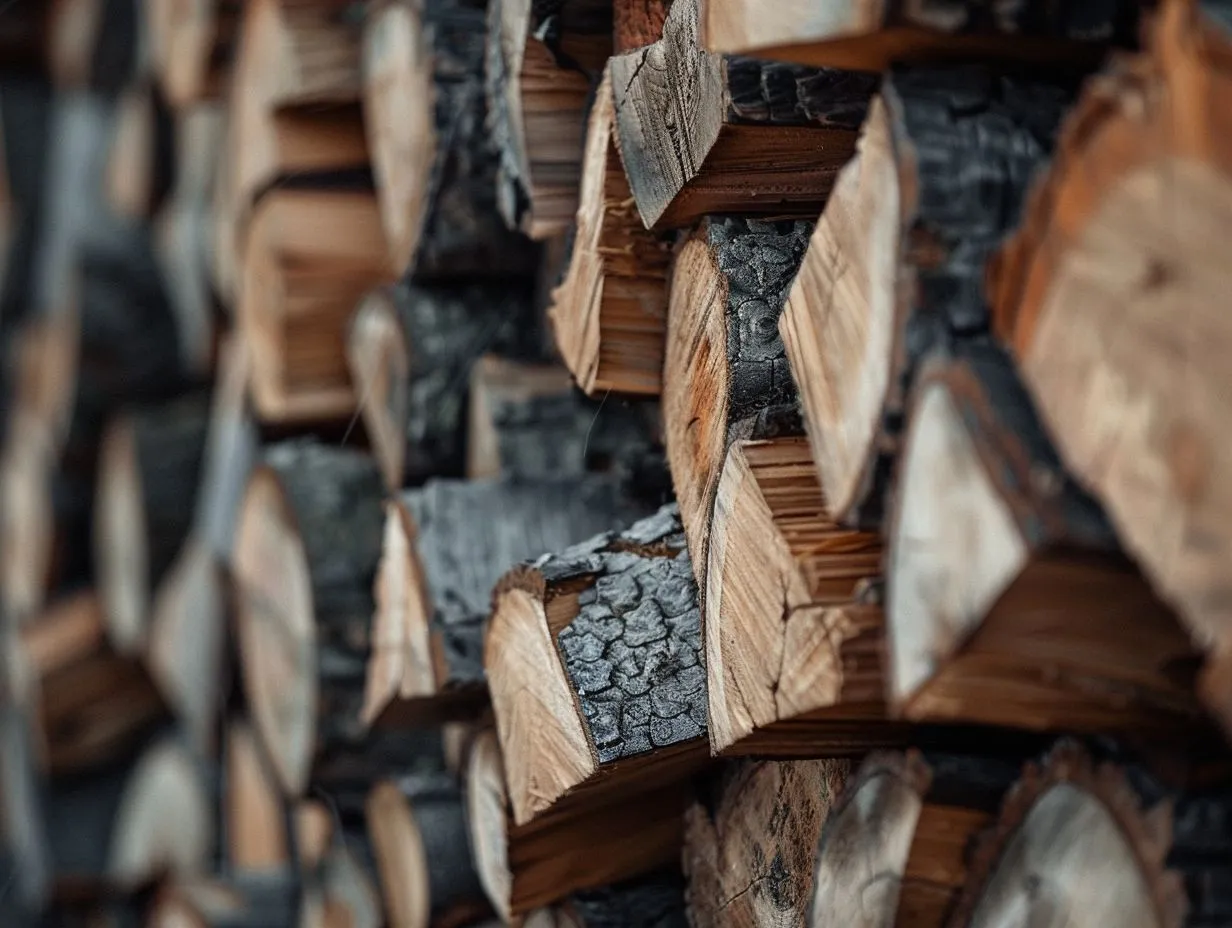
Use dry, seasoned or kiln-dried wood only. Wet or green wood hisses, smokes and refuses to draw. In England, firewood sold in small volumes must be certified under the Ready to Burn scheme, which means a moisture content of 20 per cent or less, so a Ready to Burn logo is a quick shortcut to wood that will actually light. Buy your wood locally or on-site rather than hauling it across the country, which helps stop the spread of tree pests and disease. For a full rundown of what burns clean and hot, see our guide to the best firewood for campfires.
Three reliable fire lays
Three arrangements cover almost every situation. Build your chosen lay over a fist-sized bundle of tinder.
Teepee
The teepee is the easiest lay to light and the best for a quick, bright fire. Stand your kindling up in a cone around the tinder, leaning the sticks together at the top with a gap on one side to light through. As the cone burns it collapses inward, feeding itself, and you add fuel wood around the outside once it is established. It burns fast and needs regular feeding.
Log cabin
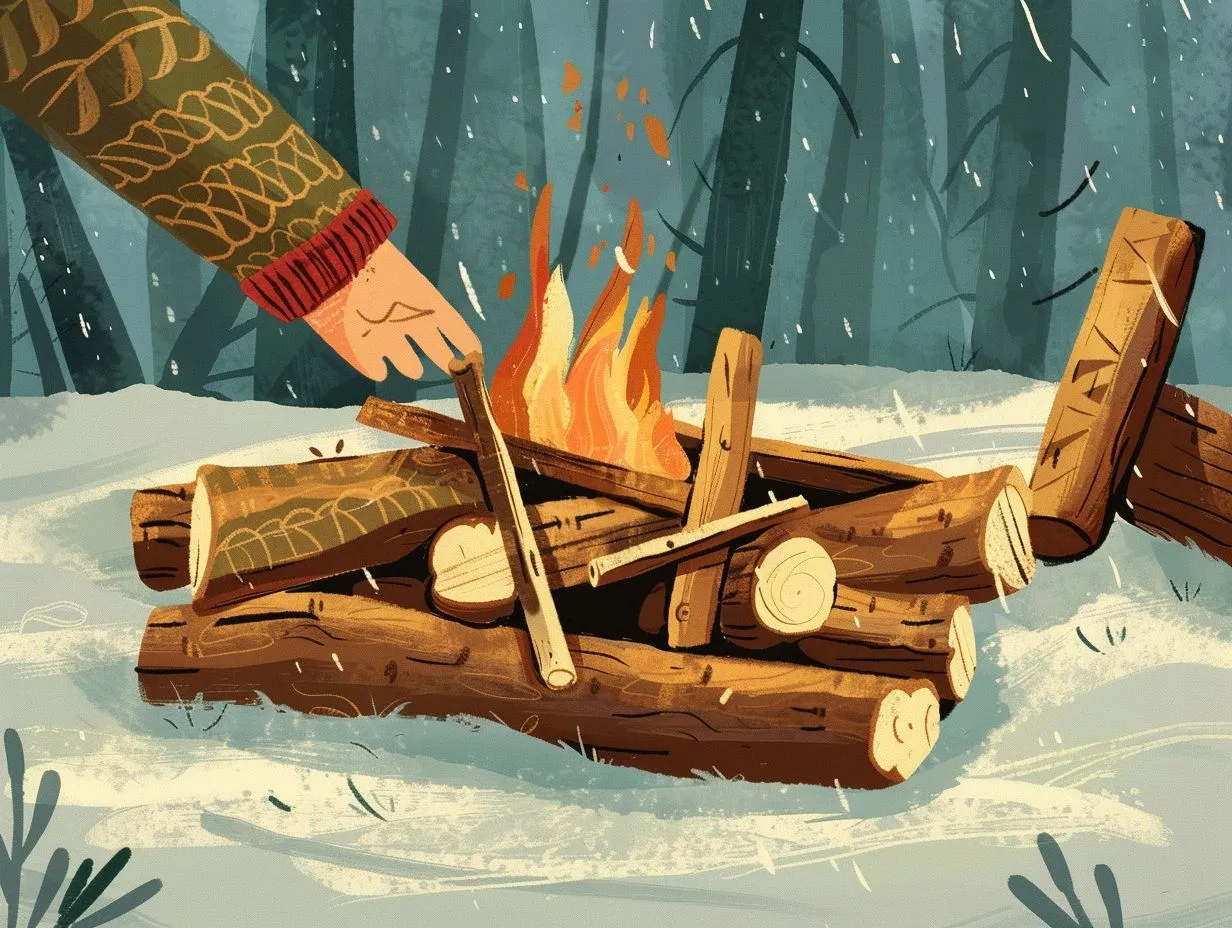
The log cabin gives the steadiest, longest burn and is the one to build for warmth or cooking. Place two fuel logs parallel, then two more across them at right angles, stacking upward like a square well and shrinking each layer slightly. Put your tinder and kindling in the middle. Airflow rises through the structure, so it lights readily and settles into a stable bed of embers.
Lean-to
The lean-to is the most wind-resistant lay. Push one thicker stick into the ground at an angle, or rest it on a log, then lean kindling against it over the tinder like a sloping roof. The big stick shelters the flame from the wind and the leaning kindling catches from below. It is the reliable choice on an exposed pitch.
Lighting the fire
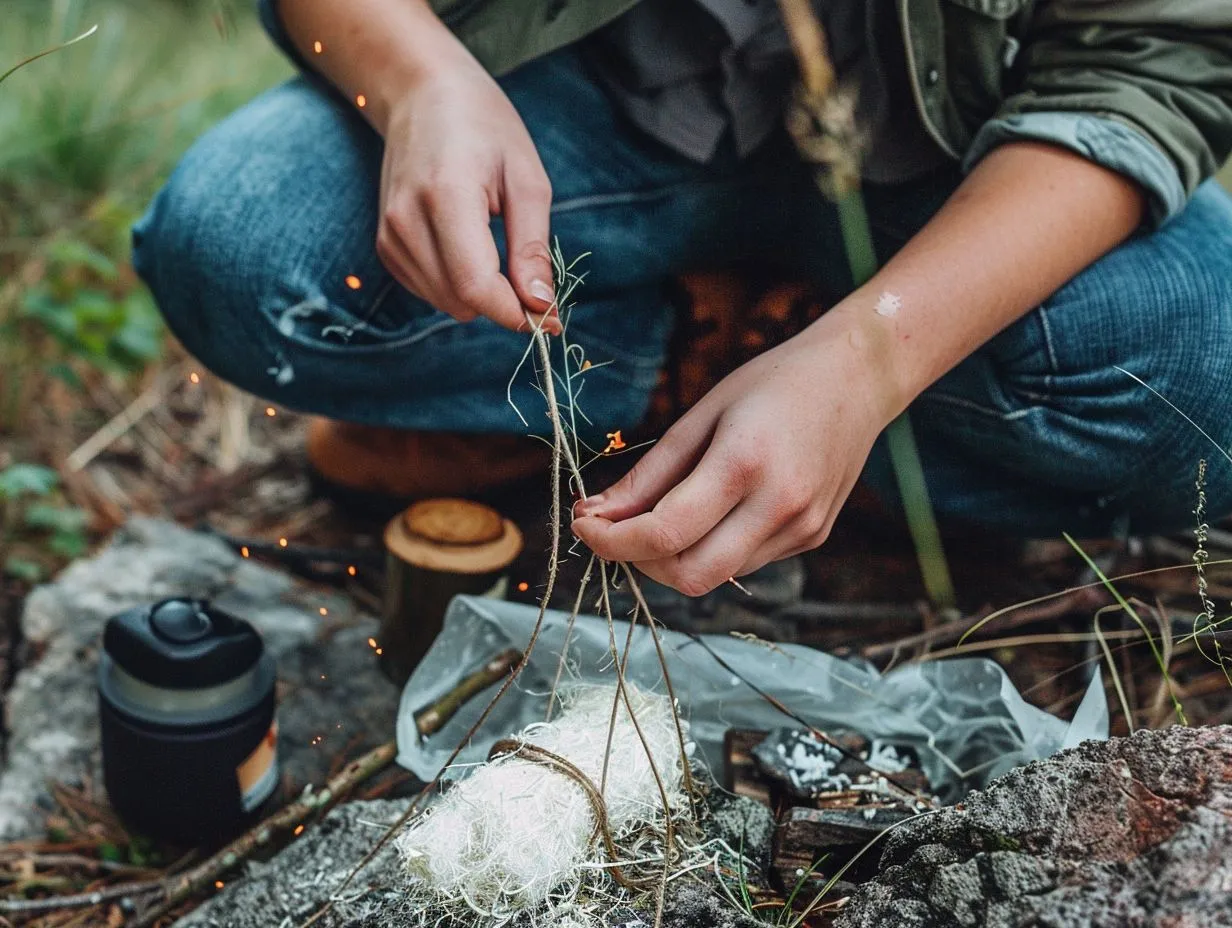
Light the tinder, not the wood. A ferro rod throws sparks straight into tinder and works when wet, a lighter or matches are quicker in calm conditions, and a firelighter or a DIY starter gives you a longer flame to work with. Cotton wool smeared with petroleum jelly, or cardboard egg boxes filled with dryer lint and wax, both catch instantly and burn long enough to get kindling going. Our guide to DIY fire starters has several you can make at home for pennies.
Light from the upwind side so the flame is blown into the fire rather than away from it. Get down low and shield the first flame with your hands until the kindling catches, then leave it alone. The commonest mistake is piling on big logs too soon and smothering the flame before it has taken hold.
Keeping it going and controlling the size
Feed the fire in stages and keep it small. Add kindling until you have a confident burn, then introduce fuel wood one or two pieces at a time, waiting for each to catch before adding more. A tidy fire the size of a dinner plate throws plenty of heat and is far easier to control than a bonfire.
If the fire is struggling, it usually wants air rather than more wood. Open up the lay and blow gently at the base of the embers. Resist the urge to build it high, especially on a breezy evening, because sparks travel and a large fire is harder to put out cleanly at the end of the night.
Putting it out properly
Never leave a fire to burn down on its own, and never walk away from embers. Start winding it down well before you want to turn in, so the wood has time to burn to ash. Then put it out cold using the drown, stir, drown method.
- Drown it. Pour water over the whole fire, not just the flames, until the hissing stops.
- Stir it. Rake through the ashes and embers with a stick, turning everything over to reach hidden hot spots.
- Drown it again. Add more water and keep going until there is no steam, no hiss and no heat.
The fire is only out when the ashes are cold to the touch. Check with the back of your hand. Once everything is cold, scatter the dead ash widely, remove any unburnt wood, and leave the spot as you found it so there is no trace you were ever there. If you used a fire pit, let it cool fully before packing it away.
Campfire safety
A campfire is safe when someone is watching it and water is within reach. Keep a full bucket of water or a hose beside the fire the entire time it is lit, and never leave it unattended, not even for a few minutes. Keep children and dogs an arm's length back, and keep aerosols, gas canisters and anything flammable well clear of the heat.
Watch the conditions. In a dry spell or a strong wind, the sensible call is not to light one at all, and many sites suspend fires entirely when the wildfire risk is high. Tie back loose clothing, and cool any burn under running water for at least 20 minutes. If a fire ever gets away from you, get everyone clear and call 999.
Frequently asked questions
Are campfires allowed on UK campsites?
It depends on the site. Many UK campsites ban ground fires and some ban open fires altogether, while others allow them in a raised fire pit off the grass. Always check the site's rules and the local fire risk before lighting one.
What wood should I use for a campfire?
Use dry, seasoned or kiln-dried wood only. In England, look for the Ready to Burn logo, which means the moisture content is 20 per cent or less. Buy your wood locally to avoid spreading tree pests and disease.
What is the easiest fire lay for beginners?
The teepee is the easiest to light. Stand kindling in a cone around a bundle of tinder, leave a gap to light through, and add fuel wood around the outside once it is burning steadily.
How do I start a fire without firelighters?
Use natural tinder such as dry grass or birch bark, or a DIY starter like cotton wool coated in petroleum jelly. Light it with a ferro rod, matches or a lighter, then feed the flame with kindling before adding logs.
How do I put a campfire out safely?
Drown it with water until the hissing stops, stir the ashes with a stick to reach hidden hot spots, then drown it again. Repeat until the ashes are cold to the touch, then scatter the cold ash and leave no trace.
Can I light a fire while wild camping?
Only with the landowner's permission, and never on moorland or peat. The Countryside Code asks visitors to avoid fires because of the wildfire risk. In most of Britain a raised stove is the responsible choice over an open fire.
The short version
Check the fire is allowed, prepare a safe spot with water to hand, and build with dry wood in three sizes using a teepee, log cabin or lean-to. Keep it small, watch it the whole time, and put it out cold before you leave. When you are ready to cook on it, read our guide to campfire cooking essentials, or find a fire-friendly pitch across the Camping Sites in Britain directory.