The Best Firewood for a Smokeless Campfire: A UK Guide
· Updated
Smoke comes from wet wood. Get that one fact right and most of your campfire smoke problem disappears. The moisture content of your firewood matters more than the species, the fire shape or anything else, so the best firewood for a smokeless campfire is dry, seasoned or kiln-dried hardwood with a moisture content below 20%.
Wet wood spends its energy boiling off water instead of burning cleanly. That half-burnt result is the grey smoke stinging your eyes and clinging to your jumper. Dry wood burns hot and clean, so choosing it well is the difference between a smoky nuisance and a proper evening round the flames.
This guide sits alongside our wider advice on campfire cooking essentials, because the same dry, hot fire that stays smokeless is also the fire you want to cook on. We are Camping Sites in Britain, and we like a fire that behaves.
Why moisture is the thing that matters
Wet or green wood is the single biggest cause of campfire smoke. Freshly cut wood can hold 50% or more of its weight in water, and every bit of that has to evaporate before the wood will properly catch. While it does, the fire runs cool, combustion stays incomplete, and you get smoke plus a sticky tar called creosote instead of clean heat.
Dry wood, at 20% moisture or less, lights quickly and burns hot enough to consume its own smoke. Aim for that 20% figure and you are most of the way to a smokeless fire, whatever species you use. A cheap moisture meter, around £10 to £20 from any hardware shop, settles the question in seconds: push the two prongs into a freshly split face of the log and read the number.
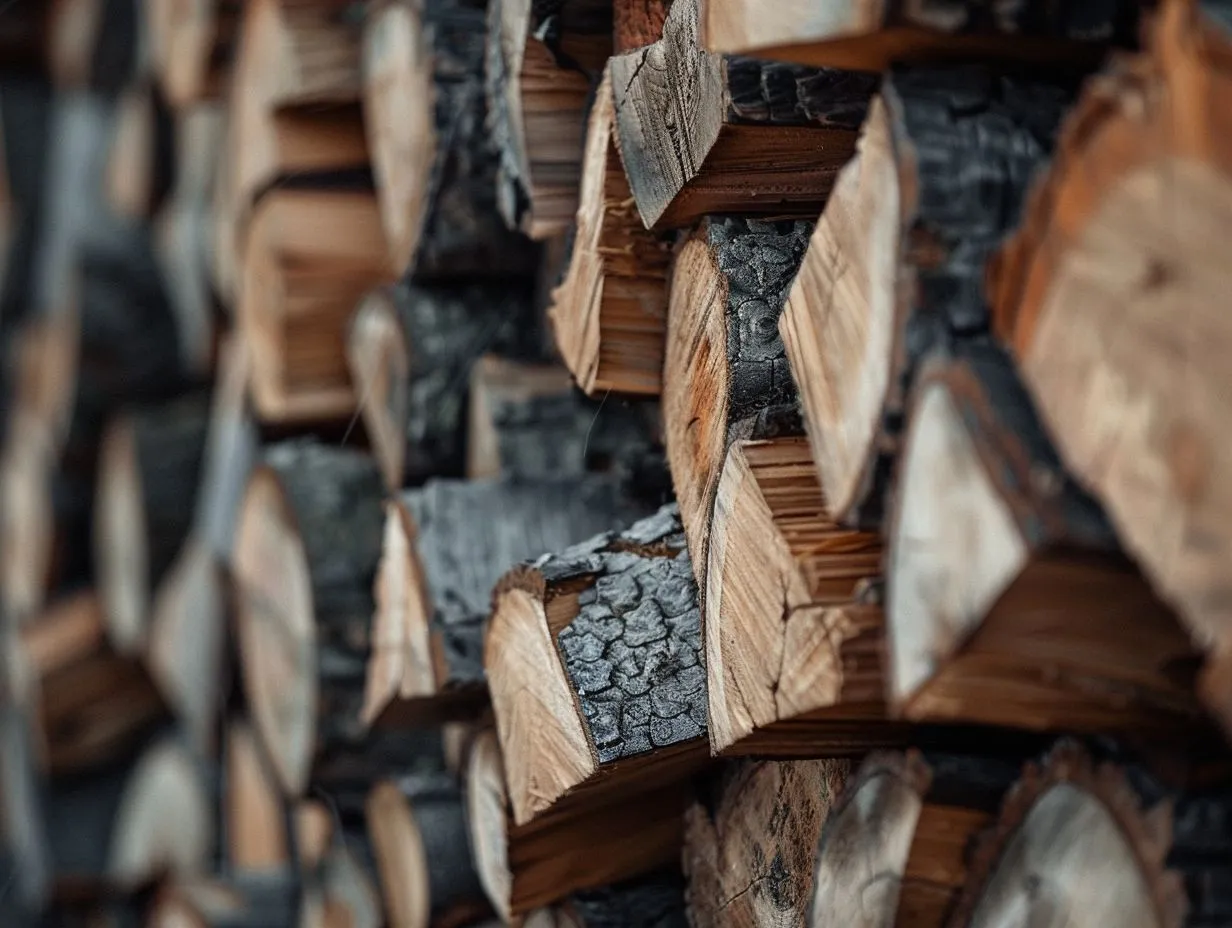
You can also read the wood itself. Seasoned logs are lighter than they look, darker and often cracked across the end grain, and they knock together with a hollow clack rather than a dull thud. Bark that peels away easily is another good sign.
Look for the Ready to Burn logo
In England, wood sold in units under 2 cubic metres must legally be certified dry, so the easy shortcut is to buy fuel carrying the Ready to Burn logo. Under the Air Quality (Domestic Solid Fuels Standards) (England) Regulations 2020, in force since May 2021, small volumes of firewood have to be certified to a moisture content of 20% or less before they can be sold for burning at home (legislation.gov.uk).
The Woodsure Ready to Burn mark is the scheme that certifies it. If you see that logo on the net or bag, the wood is dry and ready to light, no seasoning or guesswork required. Those kiln-dried nets you spot at petrol stations, garages and supermarkets are the usual example, and they are the fastest route to a clean fire when you have not brought your own wood.
Loads of 2 cubic metres or more can still be sold wet, on the understanding that you will season them yourself, so the certification rule is really aimed at the small nets most campers buy. When in doubt, buy certified.
Hardwoods versus softwoods
Hardwoods are the better choice for a clean, smokeless fire. They are denser than softwoods, so they burn hotter, last longer and give off far less smoke and spitting once they are dry. Softwoods like pine and spruce are full of resin, which pops, throws sparks and smokes even when seasoned, so they are best kept for kindling rather than the main burn.
The classic UK firewood hardwoods are ash, oak, beech, birch and hornbeam. Ash is the traditional all-rounder and the one most people name first: it burns steadily, gives good heat and even lights reasonably well at slightly higher moisture than the rest. Here is how the common woods compare once properly dried.
| Wood | Type | Smokeless burn | Notes |
|---|---|---|---|
| Ash | Hardwood | Excellent | The best all-rounder, steady heat, forgiving |
| Oak | Hardwood | Excellent | Dense and long-lasting, needs proper seasoning |
| Beech | Hardwood | Very good | Hot, clean burn when dry |
| Hornbeam | Hardwood | Very good | Very dense, excellent heat output |
| Birch | Hardwood | Good | Lights easily, burns fast, pleasant scent |
| Pine, spruce | Softwood | Poor | Resinous, spits and smokes, kindling only |
Ash: the classic best all-rounder
If you buy one wood for a smokeless campfire, buy ash. It has a lower natural moisture content than most hardwoods, so it seasons faster and behaves better even when it is not bone dry. The heat is steady rather than fierce, which suits a long evening by the fire and works nicely for cooking too.
What to avoid
Some wood should never go on a campfire, whatever the smoke. Avoid green or unseasoned wood, because it will smoke, hiss and refuse to catch no matter how you build the fire. Beyond the smoke, a few materials are genuinely unsafe.
- Painted or treated timber: old pallets, fence panels, decking offcuts and skip finds. The paint, glue and preservatives release toxic fumes when burnt.
- Driftwood: lovely to look at, but the sea salt soaked into it gives off harmful chemicals as it burns. Leave it on the beach.
- Live wood from trees: never strip or cut branches from living trees. It is green so it will not burn cleanly, it damages the tree, and on most land it is not yours to take.
Sticking to dead, dry, untreated wood keeps both the smoke and the risk down. For more on doing fire properly on site, read our guide to campfire safety and etiquette.
Seasoning and storing your own wood
If you season wood yourself, give it time and keep it dry. Freshly cut hardwood needs roughly one to two years of air drying to fall below 20% moisture, though ash and birch can be quicker. Split the logs first, because smaller pieces expose more surface area and dry far faster than whole rounds.
Storage is where most people go wrong. Stack the wood off the ground on pallets or bearers, keep the top covered from rain, but leave the sides open so air can move through. Wood that sits on damp grass or under a sealed tarp reabsorbs moisture and undoes months of drying. On a trip, keep your nets in the car or a dry bag rather than on wet ground overnight.
Building the fire so it stays clean
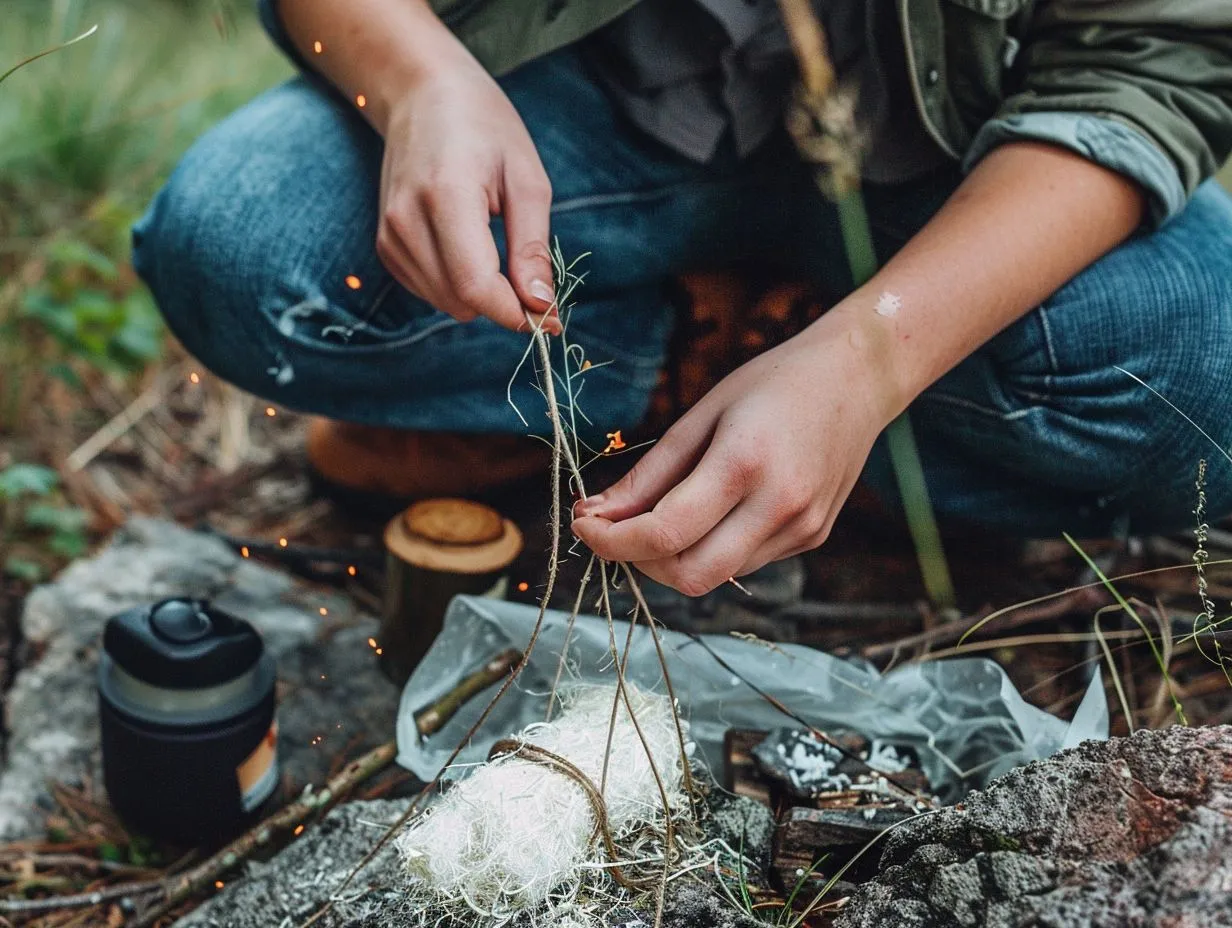
Dry wood does most of the work, but good airflow finishes the job. A fire starved of oxygen smoulders and smokes, so build it to breathe. Start small with a proper firelighter or tinder, add fine kindling, and only build up to your split hardwood once you have a hot, established base of flame.
Get that base right and larger logs catch cleanly instead of sitting there steaming. Our step-by-step walk-through covers the stacking and lighting in full: see how to build a campfire, and if you want to make your own tinder before you go, try these DIY fire starters.
Frequently asked questions
What is the best firewood for a smokeless campfire?
Dry, seasoned or kiln-dried hardwood below 20% moisture, with ash as the top all-rounder. Oak, beech, hornbeam and birch are all excellent too. Avoid softwoods like pine and spruce, which are resinous and smoke even when dry.
Why does my campfire smoke so much?
Almost always because the wood is too wet. Water in the log has to boil off before it burns, and that incomplete, cool combustion is what makes smoke. Use wood under 20% moisture and improve airflow, and the smoke drops dramatically.
What is Ready to Burn wood?
Ready to Burn is a certification showing firewood has a moisture content of 20% or less. In England, wood sold in units under 2 cubic metres must be certified this way, so the logo is a reliable guarantee that the wood is dry enough to burn cleanly.
Is kiln-dried wood better than seasoned wood?
Both work if they are below 20% moisture. Kiln-dried wood is guaranteed dry and ready to light straight away, which is handy on a trip. Well-seasoned wood is cheaper but needs one to two years of correct storage to reach the same dryness.
Can I burn driftwood on a campfire?
No. Driftwood is soaked in sea salt, which releases toxic fumes when burnt. It is unsafe to breathe and best left where you found it. Stick to dry, untreated firewood you know the source of.
How do I check firewood moisture without a meter?
Dry logs feel lighter than they look, have cracks across the end grain, and knock together with a hollow clack rather than a dull thud. Bark that peels off easily is a good sign too. A £10 to £20 moisture meter confirms it exactly.
The short version
Buy dry hardwood, ash if you can get it, and look for the Ready to Burn logo so you know it is below 20% moisture. Skip anything green, painted, treated or salty, store your wood off the ground and covered, and build the fire to breathe. Do that and you get warmth without the smoke. Find your next fire-friendly pitch over on our campsite listings, or brush up first with our guide to campfire cooking essentials.