How to Make DIY Fire Starters for Camping: 6 Cheap Recipes That Work
· Updated
The most reliable camping fire starter you can carry costs about a penny to make: a cotton wool ball smeared in petroleum jelly. It lights from a single spark, burns for three to five minutes with a strong flame, packs down to nothing, and shrugs off the odd bit of damp. Six homemade recipes on this page will get a campfire going in almost any weather, and every one uses things you already have at home.
Getting the fire lit is only the start. Once you have a flame, our guide to campfire cooking essentials covers the kit and technique that turn it into dinner. This page is the bit before that, brought to you by Camping Sites in Britain, where you can find and compare campsites, caravan parks and glamping across the UK.
A quick word before the recipes: a fire starter only helps once you are somewhere fires are actually allowed. Most of the countryside is not that place, so read the safety section near the end before you strike a match.
What makes a good fire starter
A good fire starter does three jobs at once: it catches from a spark or match instantly, it burns long enough to get your kindling alight, and it stays small and dry in your pack. Anything that fails one of those three is more trouble than it is worth.
- Catches easily. It should take a flame from a match, a lighter or a ferro rod straight away, without needing to be coaxed. Loose fibres and a wax or jelly fuel do this best.
- Burns long enough. Three to five minutes of steady flame is the target. That is the awkward window where thin kindling needs sustained heat before it catches on its own.
- Packs small and stays dry. A starter that soaks up rain is useless on a British camping trip. Wax and petroleum jelly are naturally water resistant, which is why the best recipes lean on them.
Judge every recipe below against those three points and you will quickly work out which ones suit your trips.
Six DIY fire starters you can make at home
These are the six that genuinely earn their place in a kit, roughly from quickest to most involved. Start with the first two, which need no heat and take minutes.
1. Vaseline cotton wool balls
The classic, and still the best value. Take plain cotton wool balls and work a generous smear of petroleum jelly (Vaseline) right through each one, leaving a bit of dry fluff on the outside to catch the spark. Pack them into an old film canister, a tin or a zip bag.
Each ball burns for three to five minutes. To use one, pull it open slightly so the dry fibres are exposed, set a spark or match to it, and build your kindling over the flame. A bag of 20 costs pennies and weighs almost nothing.
2. Jute twine teased out
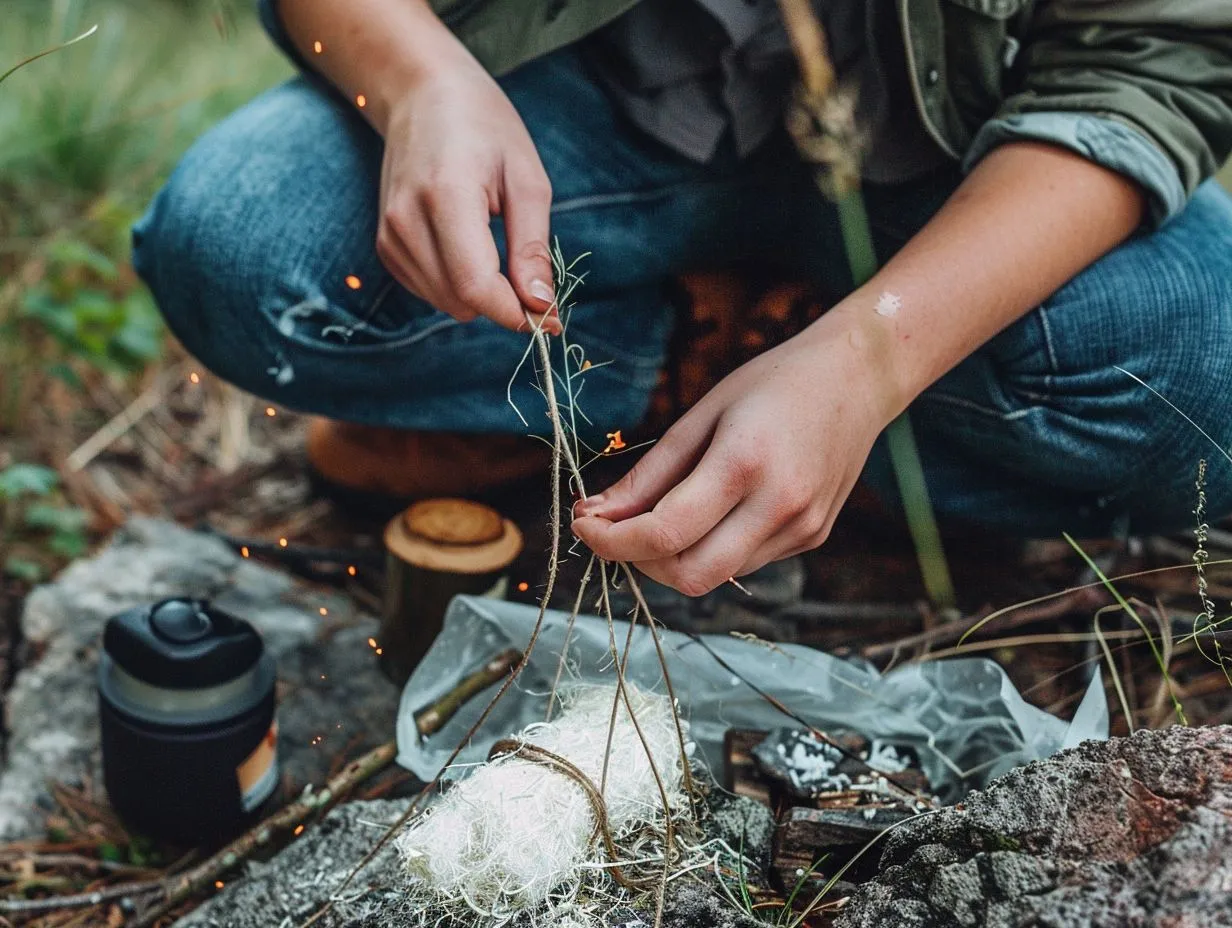
Natural jute twine is a fire starter hiding in plain sight. Cut a 10cm length, unravel it, and tease the fibres apart into a loose bird's nest. The fluffed-up fibres take a ferro rod spark beautifully and flare into a quick, hot flame.
On its own jute burns fast, closer to one minute, so it suits practising with a spark rod or lighting an already dry fire. Rub a little petroleum jelly through the fibres first and you get the best of both: easy ignition and a longer burn.
3. Egg box fire cubes
A brilliant way to use rubbish. Take a cardboard (not foam) egg box and pack each cup with dryer lint, the fluff from your tumble dryer filter. Melt down old candle stubs or a block of paraffin wax in a tin standing in a pan of simmering water, then pour the wax over each cup until the lint is soaked.
Once the wax sets, cut or tear the box into individual cubes. Each cube is a self-contained starter that burns for around five to ten minutes, long enough to light stubborn or slightly damp kindling. The cardboard acts as its own wick.
4. Cardboard tube stuffed with lint
Save an empty toilet roll or kitchen roll tube and stuff it tight with dryer lint. That alone works as a quick starter. For a longer, weatherproof burn, dip the whole stuffed tube in melted wax or fold the ends over first. Pack it upright in your kit so the filling stays put.
These burn a little longer than a bare cotton ball and throw a taller flame, which helps when you are lighting a fire in a slight breeze.
5. Wax-dipped pinecones
The good-looking option, and genuinely effective. Collect dry, open pinecones, tie a length of cotton wick or jute to each, and dip them into melted wax two or three times, letting each coat set. The open scales hold the wax and give the flame plenty of surface to climb.
A dipped cone burns for eight to fifteen minutes depending on size, making it the longest-lasting starter here. They double as a decent gift and look the part in a basket by a wood burner at home.
6. Char cloth
The traditionalist's choice, and the one for flint and steel or a ferro rod. Cut squares of 100 per cent cotton fabric (an old tea towel is ideal), pack them into a tin with a small hole punched in the lid, and heat the tin over a fire. When the smoke from the hole stops, the cloth has charred. Let it cool sealed.
Char cloth catches the faintest spark and holds a glowing ember you can transfer to a tinder bundle. It does not flame on its own, so it is a first-stage tinder rather than a standalone starter, but nothing beats it for lighting a fire without matches.
How the recipes compare
Different starters suit different trips. Cotton balls and jute are the featherweight, no-cook options; wax cubes and cones are the workhorses for damp weather. Here is how they stack up.
| Fire starter | Burn time | Effort | Water resistance | Best for |
|---|---|---|---|---|
| Vaseline cotton ball | 3 to 5 min | Very low, no heat | Good | Everyday all-rounder |
| Jute twine | 1 min (longer with jelly) | Very low, no heat | Low unless waxed | Ferro rod practice, dry fires |
| Egg box cube | 5 to 10 min | Medium, melting wax | Very good | Damp kindling, groups |
| Lint-stuffed tube | 5 to 8 min | Low to medium | Good if waxed | Breezy conditions |
| Wax-dipped pinecone | 8 to 15 min | Medium, melting wax | Very good | Cold nights, stubborn wood |
| Char cloth | Glowing ember | Medium, needs a fire first | Poor when damp | Flint and steel, no matches |
None of these lights the fire on its own. You still need dry kindling and well-seasoned wood on top, which is where the best firewood for campfires and our step-by-step guide to how to build a campfire take over.
How to store your fire starters
Keep them dry and keep them together, and they will last for years. Petroleum jelly and wax do not go off, so a batch made in spring will still light a fire the following winter.
A resealable zip bag is the simplest option and squeezes the air out to save space. An old sweet tin or tobacco tin is better still: it keeps the starters from getting crushed in the bottom of a rucksack and doubles as a dry box for a lighter and a few matches. Store the tin somewhere cool, since wax cubes left in a hot car boot can soften and stick together.
Safety and where you can actually light a fire
Homemade fire starters are accelerant-light, meaning they are designed to catch fast, so treat them with respect. Keep them well away from children and pets, who can mistake a wax cube for a sweet, and store the raw petroleum jelly and matches separately. When melting wax, use a tin standing in a pan of simmering water rather than a naked flame, keep a lid nearby to smother any flare-up, and never leave the pan unattended.
The bigger point is where you use them. A fire starter does not give you permission to light a fire. Across most of England and Wales, open fires and even disposable barbecues need the landowner's permission, and many places ban them outright: the New Forest, the Peak District open countryside, and most nature reserves and commons among them. The Countryside Code is blunt about it, telling visitors not to light fires and to only have barbecues where signs say you can. During dry spells, fire severity warnings can ban them everywhere.
On a campsite, the rule is simpler: ask. Many UK sites do not allow open fires on the pitch at all, some provide fire pits or braziers, and plenty are fine with a raised barbecue. Check when you book. If you are ever unsure, our guide to campfire safety and etiquette covers how to build, contain and put out a fire responsibly, and you can filter for sites that welcome campfires across our UK campsite listings.
DIY fire starters versus shop-bought firelighters
Homemade starters win on cost and pack size; shop-bought firelighters win on convenience and consistency. Both light a fire perfectly well, so it comes down to what you value on the trip.
Commercial firelighters, whether white paraffin blocks or the natural wood-wool and wax kind, are cheap enough at a couple of pounds a box and completely reliable. The paraffin sort can smell strongly and are not something you want near food you are about to cook over, which is the main reason many campers switch to making their own. Natural wood-wool firelighters avoid the smell but cost more.
DIY starters cost almost nothing, use up rubbish that would otherwise go in the bin, and let you control exactly what goes into the flame under your dinner. The trade-off is the ten minutes of making them at the kitchen table before you leave. For most people who camp more than once or twice a year, a tin of homemade cotton balls and wax cubes is the easy answer.
Frequently asked questions
What is the easiest homemade fire starter?
Cotton wool balls smeared in petroleum jelly. There is no melting, cutting or waiting: just work the jelly through plain cotton balls and drop them in a bag. Each one lights from a single spark and burns for three to five minutes.
How long do DIY fire starters burn?
It depends on the recipe. Teased jute lasts about a minute, Vaseline cotton balls three to five minutes, egg box and lint cubes five to ten minutes, and wax-dipped pinecones eight to fifteen minutes. Wax and petroleum jelly extend the burn considerably.
Do homemade fire starters work when wet?
The wax and petroleum jelly ones do. Vaseline coats the cotton and wax seals the egg cubes and pinecones, so light damp is no problem. Char cloth and bare jute are the exceptions and need to be kept dry.
Can I use any wax to make fire starters?
Yes. Old candle stubs, paraffin wax and soy wax all work, and mixing them is fine. Paraffin is the cheapest and most common. Avoid scented candles near food, and never use anything petrol-based, which is dangerous and unnecessary.
Are DIY fire starters safe to carry and use?
Yes, when stored sensibly. They are designed to catch quickly, so keep them in a sealed tin or bag away from children and pets, and away from a heat source until you want a flame. Only light one where fires are permitted.
Do I still need kindling if I use a fire starter?
Yes. A fire starter buys you three to fifteen minutes of flame, but it will not light a log. Build fine dry kindling over the starter first, then add thicker sticks and seasoned wood once that has caught.
The short version
Make a tin of Vaseline cotton balls for everyday use and a few wax egg-box cubes or dipped pinecones for cold and damp nights, and you will never struggle to light a fire again. They cost almost nothing, pack down small, and outperform half the firelighters on the shop shelf.
Just make sure you are somewhere fires are allowed before you strike the match. When you are, our guide to campfire cooking essentials takes it from there, and you can find your pitch through our UK campsite listings.