The best castles to visit in Wales
· Updated
Wales has more castles per square mile than any country in the world. There are over 600 of them, from grass-covered earthworks to the mighty stone fortresses that ring the coast, and a good handful rank among the finest castles anywhere in Europe. If you want one country that delivers a proper castle every day of a week's trip, this is it.
Four of them share a single UNESCO World Heritage listing, one has a leaning tower that outleans Pisa, and another is the oldest surviving stone castle in Britain. Most are looked after by Cadw, the Welsh Government's historic environment service, so opening times and access are consistent and well signposted. This guide is about the castles themselves and the days out they make.
It sits alongside our wider guide to camping near Britain's castles, part of Camping Sites in Britain, where you can find and compare campsites, caravan parks and glamping across the UK. For the where-to-stay detail in Wales specifically, see our companion piece on camping near castles in Wales.
The four UNESCO castles of King Edward I
Caernarfon, Conwy, Harlech and Beaumaris form the "Castles and Town Walls of King Edward I in Gwynedd", a single UNESCO World Heritage Site inscribed in 1986. Edward I built them in the late 13th century to hold down Gwynedd after conquering the last native Prince of Wales, and together they are the best surviving examples of medieval military architecture in Europe. All four are run by Cadw and all four are worth the trip in their own right.
Caernarfon Castle
Caernarfon is the grandest of the four, built as much to impress as to defend. Its banded stone and polygonal towers were modelled on the walls of Constantinople, and it was here that the Prince of Wales was invested in 1911 and again in 1969. The castle guards the mouth of the River Seiont and holds the museum of the Royal Welsh, so you can spend a full half day inside the walls.
Conwy Castle
Conwy is the most complete of the set. Eight huge round towers and a nearly intact circuit of town walls enclose the whole medieval town, and you can walk the battlements for views over the estuary and the mountains behind. It is one of the finest walled towns in Europe and pairs naturally with a wander through Conwy itself, home to the smallest house in Britain.
Harlech Castle
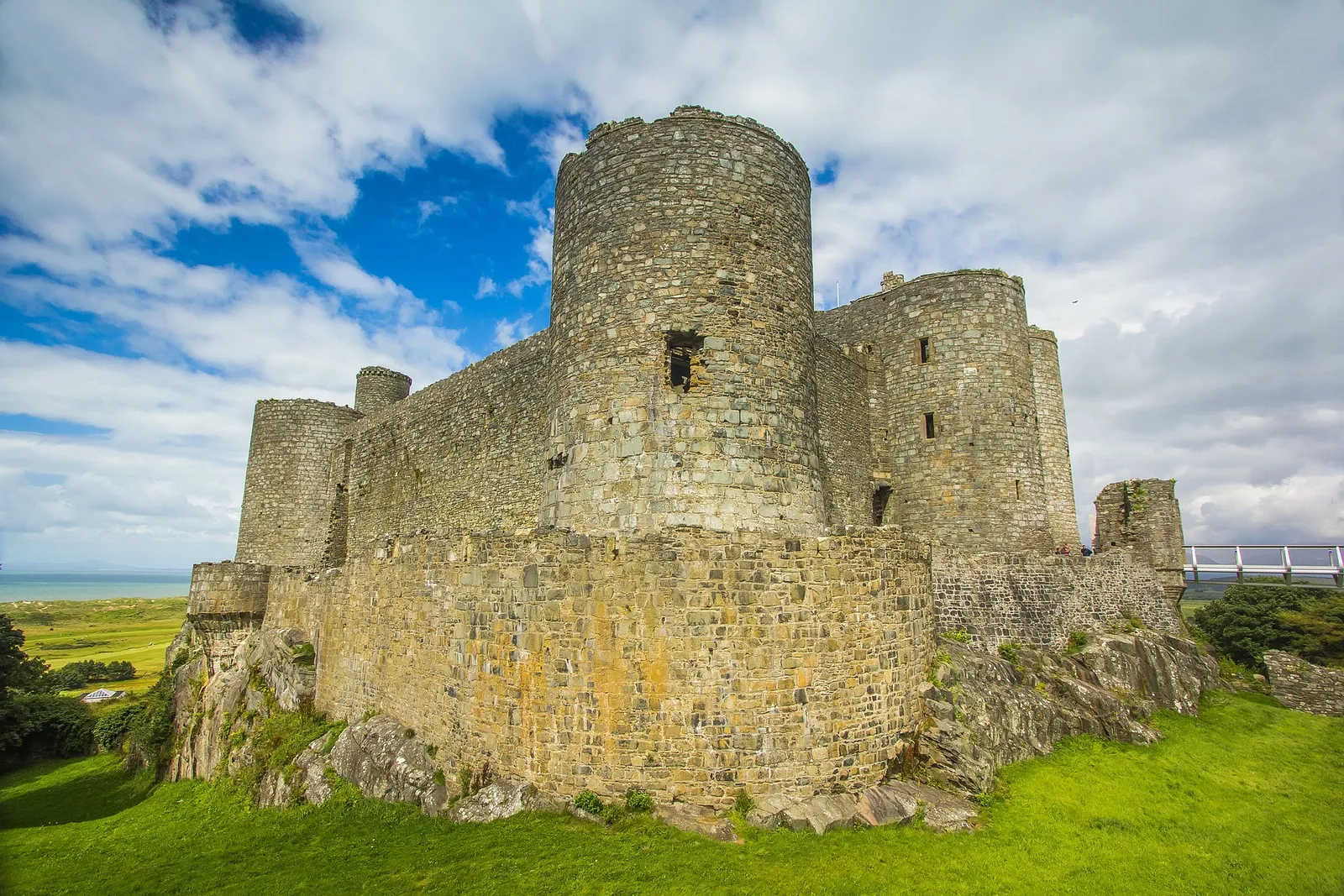
Harlech sits on a rocky crag with Snowdonia at its back and Cardigan Bay in front, and the song "Men of Harlech" comes from the seven-year siege it withstood in the 15th century. A modern "floating" footbridge now carries you into the gatehouse. When it was built the sea reached the foot of the crag, and a fortified stairway still runs down the cliff to what was once the water gate.
Beaumaris Castle
Beaumaris, on Anglesey, is the last and most perfect of Edward's castles, and it was never finished. Its concentric design, a ring of walls inside a ring of walls, is considered the most technically accomplished in Britain, and it keeps a genuine water-filled moat. Because the money ran out the towers never reached full height, which makes it an easy, low-key castle to explore with children.
Caerphilly Castle
Caerphilly is the largest castle in Wales and the second largest in Britain after Windsor. Built from 1268 by Gilbert de Clare, it was the first concentric castle in Britain and its vast water defences, with lakes and dams, still surround it today. The headline act is the south-east tower, which leans further out of true than the Leaning Tower of Pisa after a Civil War attempt to blow it up. It is a Cadw site and one of the best value big days out in south Wales.
Cardiff Castle
Cardiff Castle packs 2,000 years of history into one site in the middle of the capital. Roman legionaries built the first walls here, the Normans raised the stone keep on its motte, and in the 19th century the third Marquess of Bute and the architect William Burges turned the lodgings into a riot of Victorian Gothic fantasy. The painted ceilings, the Arab Room and the roof garden are extraordinary. Cardiff Castle is run by the city rather than Cadw, and you can climb the Norman keep for a view over the whole city.
Pembroke Castle
Pembroke Castle is the birthplace of Henry VII, the first Tudor king, born within its walls in 1457. It stands on a rocky promontory almost surrounded by water, and its Great Keep is one of the finest round towers in Britain, rising over 20 metres with walls close to six metres thick. Beneath the castle is the Wogan, a huge natural cavern that opens to the river. It is a great base for exploring the Pembrokeshire coast.
Chepstow Castle
Chepstow is the oldest surviving stone fortification in Britain, begun in 1067, the year after the Norman conquest. Strung out along a cliff above the River Wye on the border with England, it was one of the first castles the Normans built in stone rather than earth and timber, and its Great Tower still stands. The castle's wooden doors are among the oldest in Europe. It is a Cadw site and pairs well with nearby Tintern Abbey.
More Welsh castles worth the drive
Beyond the headline names, Wales is thick with castles that would be a county's proudest landmark anywhere else. Raglan Castle in Monmouthshire is a lavish late-medieval palace-fortress with a hexagonal Great Tower and a moat. Kidwelly Castle in Carmarthenshire is a superbly preserved Norman stronghold with a twin-towered gatehouse. Carreg Cennen, high on a limestone crag in the Brecon Beacons, hides a natural cave you can explore beneath the ruins by torchlight.
| Castle | Where | Custodian | Best for |
|---|---|---|---|
| Caernarfon | Gwynedd | Cadw | Grand scale, royal history |
| Conwy | Conwy | Cadw | Walking the town walls |
| Harlech | Gwynedd | Cadw | Dramatic setting |
| Beaumaris | Anglesey | Cadw | Moat, easy with kids |
| Caerphilly | Caerphilly | Cadw | Size, the leaning tower |
| Cardiff | Cardiff | City of Cardiff | Victorian Gothic interiors |
| Pembroke | Pembrokeshire | Private trust | Great keep, Tudor history |
| Chepstow | Monmouthshire | Cadw | Oldest stone castle in Britain |
| Carreg Cennen | Carmarthenshire | Cadw | Cave and hilltop views |
Planning a castle trip and where to camp
The castles cluster in two natural circuits, which makes a camping tour easy to plan. The north coast gives you Caernarfon, Conwy, Beaumaris and Harlech within an hour of each other, so a single base in Gwynedd covers the whole UNESCO set. The south west pairs Pembroke with Carreg Cennen and Kidwelly, so a pitch in Pembrokeshire handles the western castles and the coast in one go.
Cadw runs an Explorer membership that covers entry to its sites, which pays for itself quickly if you plan to visit three or more. Always check opening times before you set off, as smaller sites like Carreg Cennen keep shorter winter hours. Full current details and prices are on the Cadw visitor pages. For the practical side of basing a trip near these sites, our guide to camping near castles in Wales has the detail.
If your castle-hunting takes you across the border, Wales has plenty of company. See our guides to the must-visit castles in Shropshire and the top castles to visit in Gloucestershire for the Marches and the west of England.
Frequently asked questions
How many castles are there in Wales?
Wales has over 600 castles, more per square mile than any other country in the world. They range from Norman earthworks and native Welsh strongholds to Edward I's great stone fortresses. Around 30 are managed by Cadw and open to visitors.
What is the biggest castle in Wales?
Caerphilly Castle is the largest in Wales and the second largest in Britain after Windsor. Built from 1268, it covers around 30 acres including its lakes and water defences, and it is famous for a south-east tower that leans further than the Tower of Pisa.
Which Welsh castles are UNESCO World Heritage Sites?
Caernarfon, Conwy, Harlech and Beaumaris make up the "Castles and Town Walls of King Edward I in Gwynedd", inscribed by UNESCO in 1986. All four were built in the late 13th century and all four are run by Cadw.
What is the oldest castle in Wales?
Chepstow Castle, begun in 1067, is the oldest surviving stone fortification in Britain. It was one of the first castles the Normans built in stone rather than earth and timber, and its Great Tower still stands above the River Wye.
Which Welsh castle was a king born in?
Henry VII, the first Tudor king, was born in Pembroke Castle in 1457. The castle's Great Keep is one of the finest round towers in Britain, and a huge natural cavern called the Wogan sits directly beneath it.
Are Welsh castles free to visit?
Most of the major castles charge admission, as they are staffed and maintained by Cadw or private trusts. Some smaller ruins are free and open access. A Cadw Explorer membership covers entry to its sites and is worth it if you plan several visits.
The short version
Wales is the castle capital of the world, and a week is enough to see the best of them. Start with the four UNESCO castles in the north, add Caerphilly and Cardiff in the south, and let the coast do the rest. For the full picture, read our guide to camping near Britain's castles.