The best castles to visit in Shropshire
· Updated
Shropshire has more castles than almost any county in England, and the reason is simple: for centuries this was the front line. As part of the Welsh Marches, the border country between England and Wales, it was studded with fortresses built to hold ground against Welsh raids. That legacy leaves you spoilt for choice today, with grand ruins, a near-perfect fortified manor house and a working regimental museum all within an easy drive of one another.
The pick of them are Ludlow, Stokesay, Shrewsbury and Clun, but there are smaller, quieter ruins worth the detour too. Most sit in or beside the Shropshire Hills National Landscape, so a castle day doubles as a walk in genuinely lovely country. It makes the county one of the best bases in Britain for camping near Britain's castles.
This guide is from Camping Sites in Britain, where you can find and compare campsites, caravan parks and glamping across the UK. Below are the castles worth your time, who looks after each one, and how to plan a trip around them.
The Shropshire castles at a glance
Seven of the county's best are gathered here, sorted by who runs them so you know what to expect on arrival. English Heritage sites have set opening hours and admission; the community and privately run ones vary, so check ahead.
| Castle | Where | Custodian | What it is |
|---|---|---|---|
| Ludlow Castle | Ludlow | Privately owned (Earl of Powis) | Grand medieval ruin in a market town |
| Stokesay Castle | Near Craven Arms | English Heritage | Fortified manor house, 13th century |
| Shrewsbury Castle | Shrewsbury | Shrewsbury Town Council | Red sandstone castle and regimental museum |
| Whittington Castle | Near Oswestry | Community run | Moated ruin with a gatehouse |
| Acton Burnell Castle | Acton Burnell | English Heritage | Fortified manor ruin |
| Clun Castle | Clun | English Heritage | Norman ruin above the town |
| Moreton Corbet Castle | Near Shawbury | English Heritage | Medieval castle and Elizabethan mansion ruin |
Ludlow Castle
Ludlow Castle is the one to see first. It is a grand medieval ruin set at the heart of one of England's finest market towns, and it is privately owned by the Earl of Powis rather than a heritage body, so it feels a little different to visit. Founded in the late 11th century by the de Lacy family, it grew from a border stronghold into a genuine seat of power.
For much of the Tudor period it was the headquarters of the Council in the Marches of Wales, the body that governed Wales and the border counties, which is why the ruins are so extensive. You can climb the round chapel, walk the great hall where princes once lived, and take in the view over the River Teme. The town itself is worth a full day, with its independent shops, food and Georgian streets right outside the gate.
Stokesay Castle
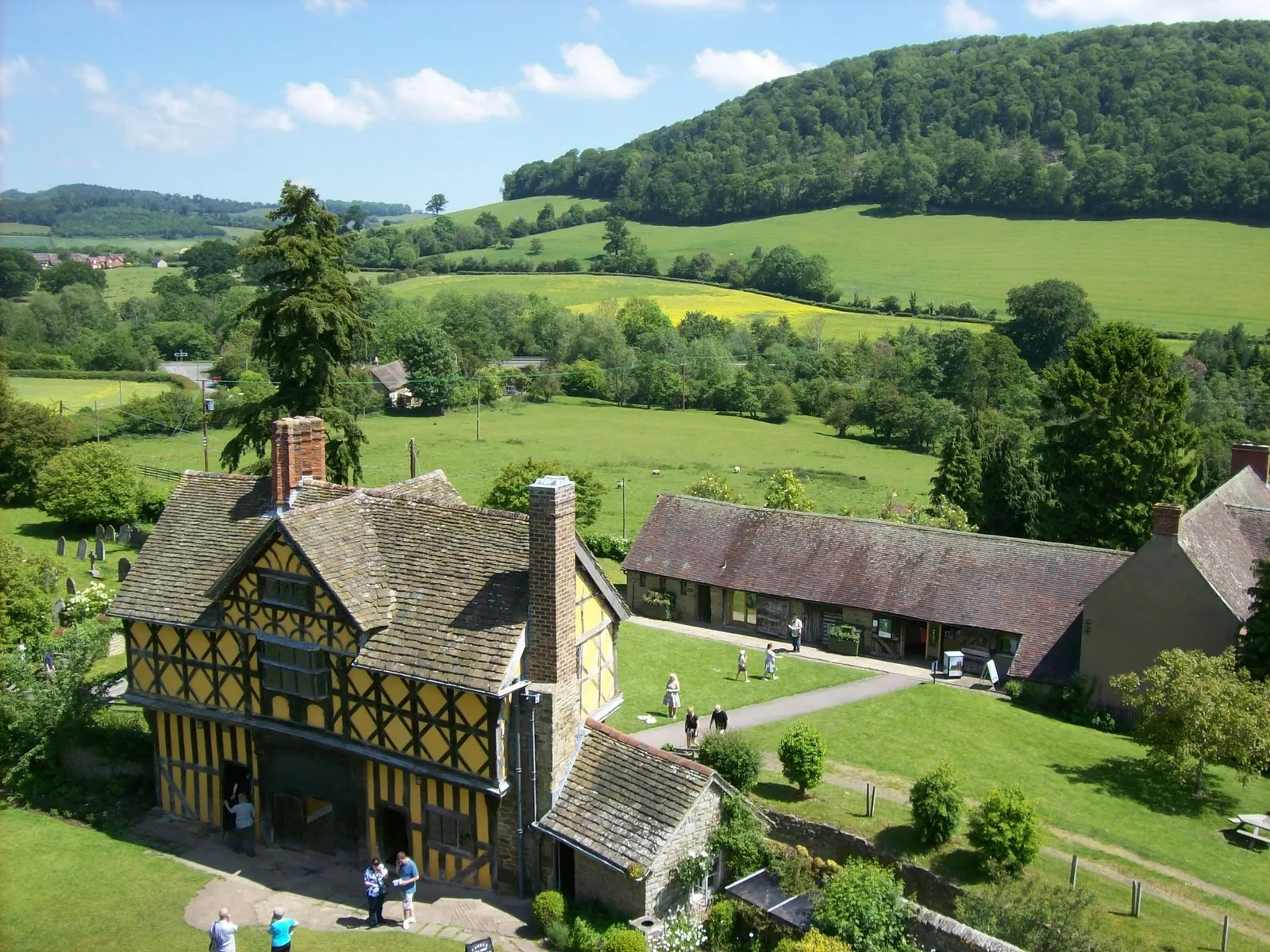
Stokesay Castle is the finest and best-preserved fortified medieval manor house in England, in English Heritage's own words, and it is the standout of the county. It sits just south of Craven Arms and dates from the late 13th century, built by Laurence of Ludlow, one of the richest wool merchants of his day, who wanted a home that looked defensible without being a true castle.
That is exactly what survives. The great hall is close to untouched since the 1280s, the timber-framed Jacobean gatehouse is a picture in itself, and the whole thing sits in quiet countryside with the Shropshire Hills as a backdrop. Verify current opening times and admission on the English Heritage Stokesay Castle page before you go.
Shrewsbury Castle
Shrewsbury Castle is the red sandstone fortress guarding the neck of land inside the great loop of the River Severn, and today it houses the Shropshire Regimental Museum. The Normans raised it around 1070 to control the county town, and its warm red stone still dominates the approach from the railway station.
Inside, the museum tells the story of Shropshire's soldiers across three centuries. Climb Laura's Tower, an 18th-century folly by Thomas Telford, for one of the best views over Shrewsbury's rooftops. It is compact, central and easy to fold into a wider day in the town.
Clun Castle
Clun Castle is a dramatic English Heritage ruin standing on a steep mound above the little town of Clun, deep in the south west of the county near the Welsh border. This was Norman work, a motte-and-bailey stronghold that became a substantial keep, built to hold one of the wildest stretches of the frontier.
The great tower still rises three storeys, and the earthworks around it are some of the best you will see. Clun sits right in the Shropshire Hills, so pair the castle with a walk on the surrounding uplands. Admission to the ruin is free.
Whittington Castle
Whittington Castle is a moated ruin near Oswestry, and it is one of the few castles in Britain run by its own community. A local trust took it on and now cares for the gatehouse, the moat and the grounds, which gives the place a friendly, lived-in feel that the bigger sites lack.
The twin-towered gatehouse reflected in the moat is the classic view, and there is a tearoom in the gatehouse itself. It dates from the early 13th century and changed hands repeatedly during the border wars. Entry to the grounds is free, with donations welcome.
Acton Burnell Castle
Acton Burnell Castle is a quiet English Heritage ruin south of Shrewsbury, and it is really a fortified manor house rather than a war castle. It was built in the 1280s by Robert Burnell, Bishop of Bath and Wells and Lord Chancellor to Edward I, and its warm red sandstone walls still stand to roof height.
Tradition holds that an early English Parliament met here in 1283. The ruin sits in parkland beside the village church and is rarely busy, making it one of the county's best spots for a peaceful wander. Admission is free.
Moreton Corbet Castle
Moreton Corbet Castle is a striking English Heritage ruin north east of Shrewsbury that layers two eras in one site. The oldest parts are a medieval castle of the 12th and 13th centuries, but what catches the eye is the shell of a grand Elizabethan mansion, begun in the 1570s and never finished.
Its ornate stone facade, all classical detail and empty windows, is unlike anything else in Shropshire. The castle was slighted during the Civil War, which is why so much stands as a ruin. It is free to visit and rarely crowded.
How to plan a Shropshire castle trip
Base yourself in the Shropshire Hills and you can reach most of these castles within 40 minutes. Craven Arms sits almost dead centre, with Stokesay on its doorstep, Ludlow and Clun a short drive south, and Shrewsbury to the north. It makes an ideal hub for a long weekend.
The county is well served by campsites, caravan parks and glamping, many of them on farms in the hills with the kind of dark skies and quiet you come to the Marches for. Browse and compare pitches across the country in our campsite directory and pick a base that keeps your driving short.
If you are building a longer castle tour, Shropshire pairs naturally with its neighbours. Cross the border for Wales's majestic castles, head south to Gloucestershire's medieval castles, or go further north to the must-see castles of Northumberland.
Frequently asked questions
Which is the best castle to visit in Shropshire?
Stokesay Castle, near Craven Arms, is widely rated the finest, described by English Heritage as the best-preserved fortified medieval manor house in England. Ludlow Castle is the grandest ruin and the best for a full day out, thanks to the market town on its doorstep.
How many castles are there in Shropshire?
Shropshire has the remains of dozens of castles and fortified sites, a legacy of its position on the Welsh border. Around seven are genuinely worth visiting today, including Ludlow, Stokesay, Shrewsbury, Clun, Whittington, Acton Burnell and Moreton Corbet.
Are Shropshire castles free to visit?
Several are. Clun, Acton Burnell and Moreton Corbet are free English Heritage sites, and Whittington's grounds are free with donations welcome. Ludlow and Stokesay charge admission, so check current prices with the site or English Heritage before you go.
Where should I camp to visit Shropshire's castles?
The Shropshire Hills National Landscape around Craven Arms and Church Stretton is the ideal base, central to Stokesay, Ludlow, Clun and Shrewsbury. Many campsites and glamping sites sit on hill farms nearby, with short drives to the main castles.
Which Shropshire castle is best for families?
Stokesay Castle works well for families, with a compact site, an audio tour and open grounds to run in. Whittington Castle near Oswestry is another good choice, being free, community run and home to a gatehouse tearoom.
The short version
Shropshire is castle country because it was border country, and you can see the best of it in a single long weekend from the Shropshire Hills. Start with Stokesay and Ludlow, add Clun, Shrewsbury or a quieter ruin like Acton Burnell, and let the drives between them show you the Marches.
For more castle trips and where to pitch near them, see our guide to camping near Britain's castles.