Roman Forts in Britain: The Best Sites to Visit While Camping
· Updated
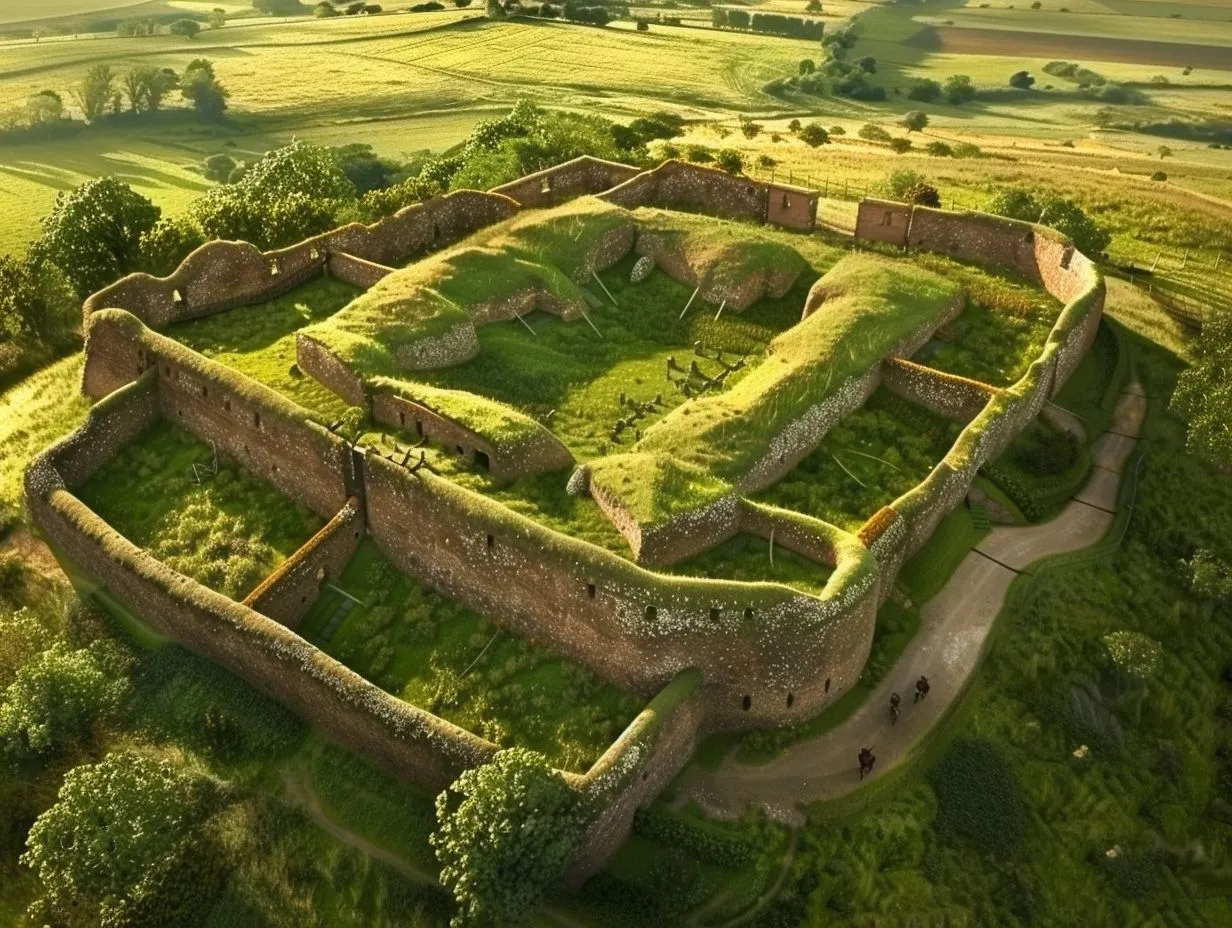
Rome held Britain for nearly four centuries, and the forts, walls and towns it left behind are some of the best places you can pitch up near. The greatest concentration runs along Hadrian's Wall in the north, a UNESCO World Heritage Site begun in AD 122 under the emperor Hadrian, but there is Roman Britain to explore from Kent to central Scotland and from South Wales to the West Country.
This guide names the sites worth planning a trip around, tells you who looks after each one, and points you to campsites nearby. It is part of our guide to camping at the UK's heritage sites, and it comes from Camping Sites in Britain, where you can find and compare campsites, caravan parks and glamping across the country.
If you want the short answer: base yourself in Northumberland for Hadrian's Wall, and you are within reach of Housesteads, Vindolanda, Chesters and Birdoswald in a single trip. Everything else below is a brilliant day out in its own right.
Hadrian's Wall and its forts
Hadrian's Wall is the finest Roman monument in Britain and the reason most people plan a Roman camping trip at all. It ran 73 miles coast to coast, from Wallsend on the Tyne to the Solway Firth, marking the north west frontier of the empire. The central section in Northumberland has the best surviving stonework and the most rewarding forts, and several sit within a short drive of each other.
Housesteads Roman Fort
Housesteads is the most complete Roman fort in Britain. Set high on the Whin Sill escarpment, it preserves the full plan of a frontier fort: the headquarters building, the commanding officer's house, granaries, barracks and the best surviving Roman toilets in the country. It is managed by English Heritage in partnership with the National Trust. See the English Heritage Housesteads page for current opening times and admission.
Vindolanda
Vindolanda is the fort where Roman voices survive. Waterlogged ground has preserved thousands of the Vindolanda writing tablets, wafer thin sheets of wood carrying everyday Roman letters, including a birthday party invitation and a request for more beer, now among the British Museum's greatest treasures. Excavation continues most years, so you can often watch archaeologists at work. It is run by the independent Vindolanda Trust, not English Heritage, and has its own museum. Check the Vindolanda Trust site for dig dates and tickets.
Chesters Roman Fort
Chesters is the best preserved Roman cavalry fort in Britain. It sits beside the North Tyne and keeps its bath house, the remains of a bridge abutment across the river, and a museum packed with Roman sculpture and inscriptions collected by the Victorian antiquarian John Clayton. It is an English Heritage site.
Birdoswald Roman Fort
Birdoswald overlooks a loop of the River Irthing and has the longest continuous stretch of visible wall anywhere on the frontier running beside it. Cared for by English Heritage, it is quieter than Housesteads and a good place to grasp how the wall, its forts and its turrets worked together as one defensive line.
Segedunum, Wallsend
Segedunum marks the eastern end of the wall, in Wallsend on the edge of Newcastle. Run by Tyne and Wear Archives and Museums, it has a reconstructed bath house and a viewing tower that lets you read the whole fort plan laid out below you, which few other sites allow.
Walking the wall: the Hadrian's Wall Path
The Hadrian's Wall Path is an 84 mile National Trail that runs the full width of the country, from Wallsend in the east to Bowness-on-Solway in the west. It links most of the forts above, so you can walk between Housesteads, Vindolanda and Chesters rather than drive. Most walkers take six or seven days over the whole route, but the central Northumberland section is the scenic highlight and works well as a series of day walks from one base.
Plan it in the drier months. The National Trail authority asks walkers to avoid the softest ground in winter to protect the archaeology underneath the turf. Camping along the route puts the best of the wall on your doorstep, and you will find sites to compare in our campsite directory.
Roman Scotland: the Antonine Wall
Rome pushed north of Hadrian's Wall around AD 142 and built a second frontier, the Antonine Wall, across the narrow waist of central Scotland between the Firth of Forth and the Firth of Clyde. Built of turf on a stone base, it was held for only about 20 years before the army fell back to Hadrian's Wall, so it is far less visible today. It is a UNESCO World Heritage Site all the same, cared for by Historic Environment Scotland, and its best surviving stretches of rampart and ditch lie around Falkirk and Bearsden.
Roman forts and towns beyond the walls
Roman Britain reaches well past the northern frontier, and several of its finest sites are in Wales, the West Country and the south. Custodians differ by nation: English Heritage looks after sites in England, while Cadw is the Welsh government's historic environment service and manages the Roman remains in Wales.
| Site | Roman name | Where | Custodian | Do not miss |
|---|---|---|---|---|
| Caerleon | Isca | Newport, South Wales | Cadw and Amgueddfa Cymru | Amphitheatre and legionary barracks |
| Chester | Deva | Cheshire | Chester city and museums | Roman amphitheatre, the largest in Britain |
| Bath | Aquae Sulis | Somerset | Bath and North East Somerset Council | The Roman Baths and temple spring |
| Portchester Castle | Portus Adurni | Hampshire | English Heritage | Saxon Shore fort walls |
| Richborough | Rutupiae | Kent | English Heritage | Landing place of the AD 43 invasion |
| Ribchester | Bremetennacum | Lancashire | Ribchester Roman Museum | Cavalry fort and museum |
Caerleon, South Wales
Caerleon was Isca, one of only three permanent legionary fortresses in Roman Britain and base of the Second Augustan Legion. You can walk the best preserved Roman amphitheatre in Britain, the foundations of the legionary barracks and a fortress bath house. The National Roman Legion Museum, part of Amgueddfa Cymru, sits in the village and tells the story of the legion that built it.
Chester, Deva
Chester grew from the fortress of Deva and keeps the largest Roman amphitheatre yet found in Britain, half excavated on the edge of the medieval walls. The city walls themselves follow the Roman line in places, and the Grosvenor Museum holds an outstanding collection of Roman tombstones.
Bath, Aquae Sulis
Bath was Aquae Sulis, the great Roman spa built around Britain's only hot spring. The Roman Baths complex below the modern city preserves the lead lined Great Bath, the temple precinct and the gilded bronze head of the goddess Sulis Minerva. It is one of the most complete Roman religious sites north of the Alps.
Portchester and Richborough: the Saxon Shore
Late Roman Britain built a chain of coastal forts against sea raiders, known today as the Saxon Shore. Portchester Castle in Hampshire keeps the most complete Roman fort walls in northern Europe, still standing to their full height around a later medieval castle, and is an English Heritage site. Richborough in Kent is where it all began: the Claudian invasion of Britain landed here in AD 43, and the site, also English Heritage, preserves the massive foundations of a triumphal arch that once marked the gateway to the province.
Planning a Roman camping trip
The smartest approach is to cluster your sites. Hadrian's Wall is the obvious base, where four or five major forts sit within half an hour of each other, but you can build a shorter break around Caerleon and the Welsh Marches, around Chester, or around Bath and the south west.
Book ahead in the school holidays, when the wall in particular gets busy, and check each custodian's website before you travel, because English Heritage, Cadw, Historic Environment Scotland and the Vindolanda Trust all set their own opening seasons and prices. Members of English Heritage get free entry to its sites, which pays for itself quickly on a Hadrian's Wall trip. To find pitches near any of these, browse our directory of UK campsites.
Roman sites pair naturally with the rest of Britain's deep history. If forts are your thing, you will probably enjoy exploring historical ruins near campsites, tracing historic battlefields near campsites, and discovering Neolithic sites near UK campsites that predate the Romans by thousands of years.
Frequently asked questions
What is the best Roman site to visit in Britain?
Hadrian's Wall is the standout, and Housesteads is its most complete fort. For Roman voices, Vindolanda and its writing tablets are unmatched. Away from the north, Bath's Roman Baths and Caerleon's amphitheatre in South Wales are the best single sites to visit.
How long is Hadrian's Wall and can you walk it?
The wall ran 73 miles coast to coast. The Hadrian's Wall Path National Trail is 84 miles and follows it from Wallsend to the Solway Firth, usually walked over six or seven days. The central Northumberland section is the scenic highlight.
Who looks after Britain's Roman sites?
English Heritage cares for most Roman sites in England, Cadw for those in Wales, and Historic Environment Scotland for the Antonine Wall. Vindolanda is run by the independent Vindolanda Trust, and some sites, such as Bath and Chester, are managed by local museums or councils.
Where did the Romans first invade Britain?
The Claudian invasion of AD 43 landed at Richborough in Kent, Roman Rutupiae. The English Heritage site there preserves the foundations of a giant triumphal arch that later marked the official gateway into the province.
Can you camp near Hadrian's Wall?
Yes. Campsites and caravan parks are dotted along the Northumberland section of the wall, close to Housesteads, Vindolanda and Chesters, and many walkers use them as bases for day walks. Compare sites in our campsite directory before you book.
Is the Antonine Wall worth visiting?
Yes, if you are in central Scotland, though far less survives than at Hadrian's Wall. Built of turf and held for only about 20 years, its best stretches of rampart and ditch lie around Falkirk and Bearsden. It is a UNESCO World Heritage Site.
The short version
For the fullest Roman experience, base yourself in Northumberland and work along Hadrian's Wall, taking in Housesteads, Vindolanda and Chesters. Beyond the frontier, Bath, Caerleon, Chester and Richborough each reward a day, and every one has campsites within easy reach.
Check the custodian's website for opening times, pack for northern weather, and start your trip in our guide to camping at the UK's heritage sites.