Neolithic and Prehistoric Sites to Visit While Camping in Britain
· Updated
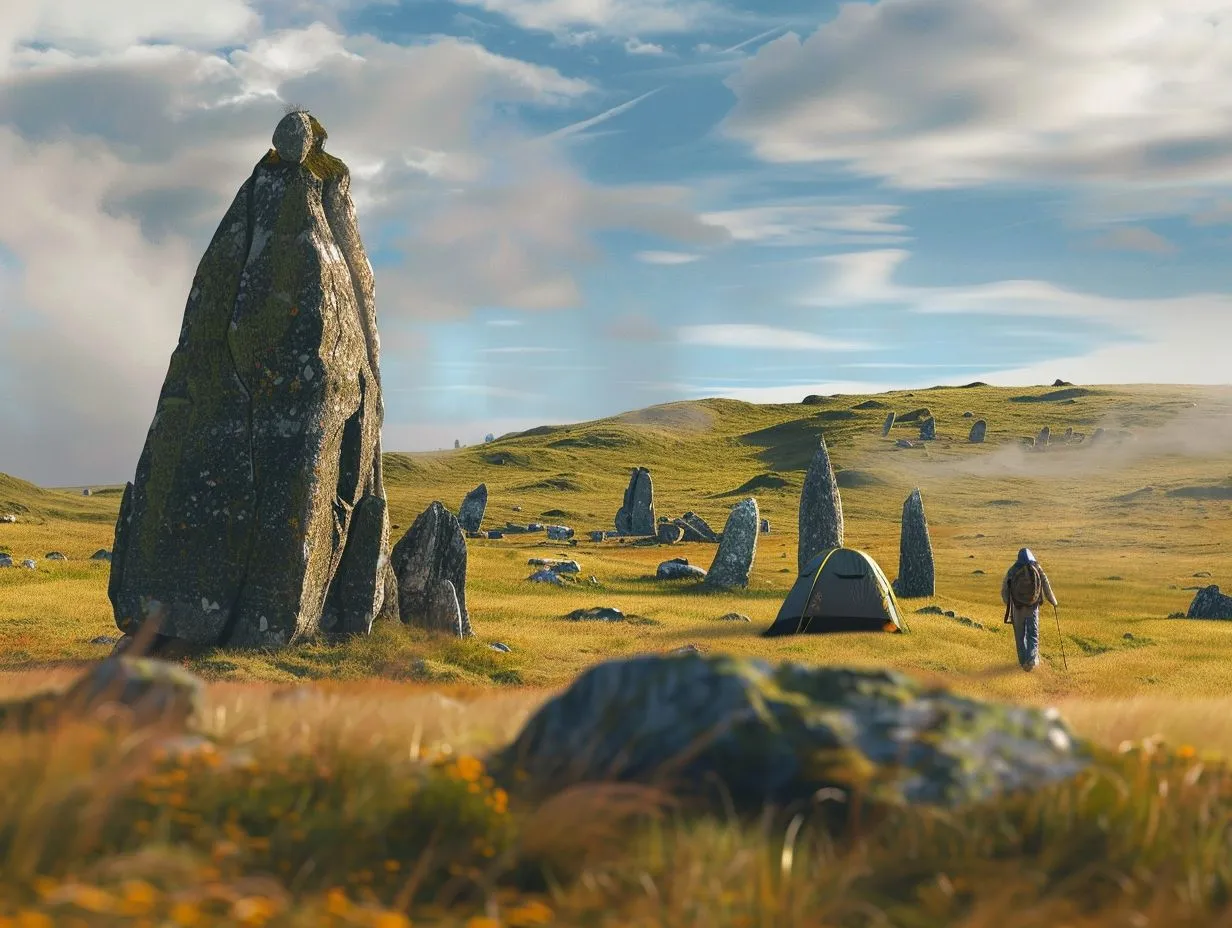
Britain has more standing stones, chambered tombs and Neolithic villages within reach of a campsite than almost anywhere in Europe, and most of them are free or cheap to visit. The Neolithic (roughly 4000 to 2500 BC) gave us the great stone circles and burial mounds; the Bronze Age that followed (about 2500 to 800 BC) added barrows and field systems on top. Pitch up near the right stretch of countryside and you can walk among monuments that predate the pyramids.
This guide names the sites worth planning a trip around, with rough dates and the organisation that looks after each one, so you know what you are looking at and who to check opening times with. It is part of our guide to camping at the UK's heritage sites.
It comes from Camping Sites in Britain, where you can find and compare campsites, caravan parks and glamping near the places below.
The prehistoric sites worth a trip
These are the standout Neolithic and Bronze Age monuments across Britain, grouped by where you would base yourself. Every one is a genuine, dateable site cared for by a national heritage body, so you can plan a visit with confidence.
| Site | Where | Rough date | Looked after by |
|---|---|---|---|
| Stonehenge | Wiltshire | c. 3000 to 2000 BC | English Heritage (UNESCO) |
| Avebury | Wiltshire | c. 2850 to 2200 BC | National Trust (UNESCO) |
| Skara Brae | Orkney | c. 3180 to 2500 BC | Historic Environment Scotland (UNESCO) |
| Callanish Standing Stones | Isle of Lewis | c. 2900 to 2600 BC | Historic Environment Scotland |
| Castlerigg stone circle | Cumbria | c. 3000 BC | English Heritage |
| Bryn Celli Ddu | Anglesey | c. 3000 BC | Cadw |
| Pentre Ifan | Pembrokeshire | c. 3500 BC | Cadw |
| Grimes Graves | Norfolk | c. 2600 BC | English Heritage |
| Belas Knap | Gloucestershire | c. 3000 BC | English Heritage |
Stonehenge and Avebury, Wiltshire
Wiltshire holds the two most famous prehistoric monuments in the country, and they sit within the same UNESCO World Heritage Site. Base yourself here and you can do both in a weekend.
Stonehenge, cared for by English Heritage, was built in stages from around 3000 to 2000 BC, with the huge sarsen stones raised in the centuries around 2500 BC. It is the most architecturally sophisticated stone circle in the world and the reason the wider landscape holds its World Heritage status. The visitor centre, car park and shuttle sit a short way off, so booking a timed ticket in advance is the sensible move. Check current prices and opening times on english-heritage.org.uk.
Avebury, 25 miles north, is the largest stone circle in Europe and part of the same UNESCO listing. The National Trust looks after it, a village sits inside the henge, and unlike Stonehenge you can walk right up to the stones for free. Nearby are Silbury Hill, the tallest prehistoric mound in Europe, and West Kennet Long Barrow, a chambered tomb you can step inside. Together they make Avebury the better bet if you are travelling with children who want to touch history rather than view it from a rope.
Skara Brae and the Heart of Neolithic Orkney
Skara Brae is a remarkably preserved Neolithic village on Orkney that is older than Stonehenge, occupied from around 3180 BC. Historic Environment Scotland cares for it, and the stone houses still have their beds, dressers and hearths in place, buried in a dune for millennia and uncovered by a storm in 1850.
It is one part of the Heart of Neolithic Orkney UNESCO World Heritage Site, which also takes in the Ring of Brodgar, a vast stone circle, and Maeshowe, a chambered cairn aligned so the midwinter sun lights its passage. Orkney is a proper expedition from the mainland, reached by ferry, but no other trip in Britain packs this much intact prehistory into one island. Confirm site details on historicenvironment.scot.
Standing stones in Scotland and the north
Some of the most atmospheric stone circles sit well away from the crowds, which makes them ideal to pair with a quiet camping trip.
The Callanish Standing Stones on the Isle of Lewis form a cross-shaped setting of tall, thin gneiss pillars raised around 2900 to 2600 BC, cared for by Historic Environment Scotland and often far quieter than their fame deserves. On the mainland, Castlerigg stone circle near Keswick is the one to build a Lake District trip around. Set in a bowl of fells and dated to about 3000 BC, it is managed by English Heritage, open at all times and free to visit. Find your base among the campsites in the Lake District and Cumbria and it is a short drive from most of them.
Welsh tombs: Bryn Celli Ddu and Pentre Ifan
Wales has two prehistoric monuments that reward the effort of reaching them, both cared for by Cadw and both free to enter.
Bryn Celli Ddu on Anglesey is a chambered tomb of around 3000 BC, built over an earlier henge, with a passage that aligns with the midsummer sunrise. You can walk inside the mound. Pentre Ifan in Pembrokeshire is the finest dolmen in Wales, a burial chamber of roughly 3500 BC whose enormous capstone appears to balance on its uprights. It stands in open fields with views to the Preseli Hills, the source of Stonehenge's bluestones. Pitch nearby among the campsites in Pembrokeshire and pair it with the coast path.
Something different: Grimes Graves and Belas Knap
Not every Neolithic site is a stone circle. Two English Heritage sites show the range of what our ancestors built.
Grimes Graves in Norfolk is a field of Neolithic flint mines, around 2600 BC, where you can climb down a ladder into an excavated shaft and see the galleries the miners dug for flint to make axes and tools. It is the only prehistoric mine in Britain open to visitors this way. Belas Knap in Gloucestershire is a Neolithic long barrow of about 3000 BC on a Cotswold hilltop, with false entrances and burial chambers you can crawl into, reached by a decent uphill walk that keeps the numbers down.
How to plan a prehistory camping trip
Pick one cluster and build around it rather than trying to see everything. Wiltshire gives you Stonehenge and Avebury in a weekend; the Lake District pairs Castlerigg with fells and lakes; Orkney is a longer expedition that repays the ferry crossing.
Most sites in open countryside, such as Castlerigg, Callanish, Pentre Ifan and Belas Knap, are free and open at any time. Ticketed, staffed sites such as Stonehenge, Skara Brae and Grimes Graves have set opening hours and often need booking ahead, so check the custodian's website before you set off. Membership of English Heritage, the National Trust, Historic Environment Scotland or Cadw pays for itself quickly if you plan to visit several. Wear proper footwear for the barrows and mines, and follow the Countryside Code by sticking to paths and never climbing on the stones.
If prehistory is your thing, you will also enjoy our guides to the mystical sites of Britain, historical ruins near campsites and Britain's Roman forts and camps.
Frequently asked questions
What is the oldest Neolithic site in the UK?
Skara Brae on Orkney is among the oldest well-preserved sites, occupied from around 3180 BC, which makes it older than Stonehenge and the Egyptian pyramids. Individual long barrows such as those in the Cotswolds can be older still.
Can you camp at Stonehenge or Avebury?
No. You cannot camp on the monuments themselves, which are protected sites. Base yourself at a nearby campsite instead and visit during opening hours. Avebury is free to walk around; Stonehenge needs a timed ticket booked in advance.
What is the difference between Neolithic and Bronze Age?
The Neolithic (about 4000 to 2500 BC) was the late Stone Age, when people farmed and raised stone circles and tombs. The Bronze Age (about 2500 to 800 BC) followed, adding metalworking and round burial barrows. Many sites were used across both periods.
Are Neolithic sites free to visit?
Many are. Open-countryside monuments such as Castlerigg, Callanish, Pentre Ifan and Belas Knap are free and accessible at any time. Staffed sites like Stonehenge, Skara Brae and Grimes Graves charge admission, though membership of the relevant heritage body covers entry.
Who looks after Britain's prehistoric monuments?
English Heritage cares for sites in England such as Stonehenge and Grimes Graves, the National Trust manages Avebury, Historic Environment Scotland runs Skara Brae and Callanish, and Cadw looks after Welsh monuments including Bryn Celli Ddu and Pentre Ifan.
Which stone circle is the largest in the UK?
Avebury in Wiltshire is the largest stone circle in Europe, far bigger than Stonehenge, with a henge so large that a village sits inside it. It is part of the same UNESCO World Heritage Site as Stonehenge.
The short version
Britain's Neolithic and Bronze Age sites are among the best in the world and most sit within easy reach of a campsite. Pick a cluster, check whether it is free or ticketed, and let the custodian's website confirm the practical details. Start by finding a base among our campsites across Britain, then read the full guide to camping at the UK's heritage sites.