Camping Near Heritage Sites in the UK: Castles, Roman Forts and Historic Homes
· Updated
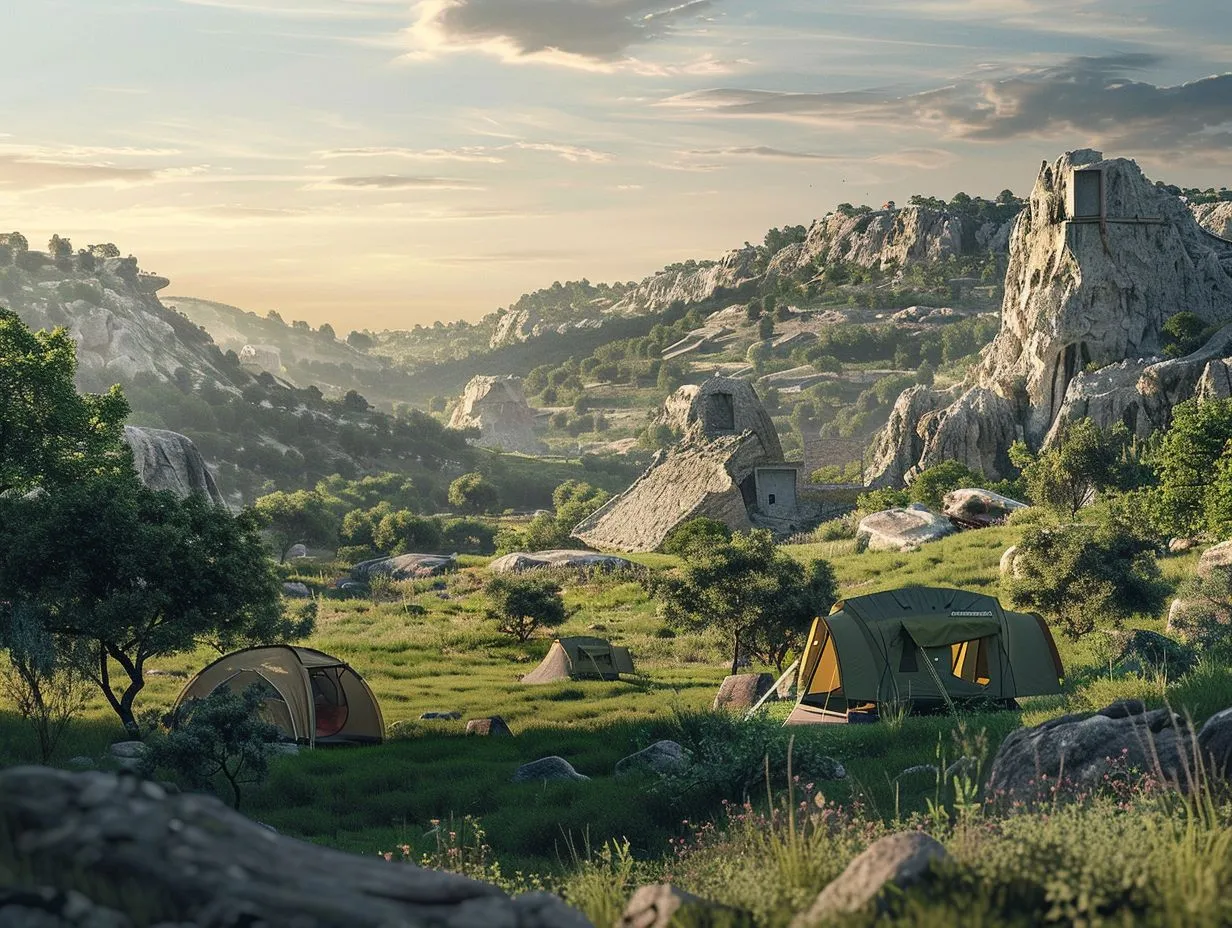
Britain has more castles per square mile than almost anywhere on earth, along with Roman forts, stone circles older than the pyramids, and thousands of protected historic buildings. Pitch a tent within a short drive of most of them and you turn a weekend under canvas into a proper trip through 5,000 years of history.
This guide covers where to camp near the best heritage sites nation by nation, which of the big heritage bodies is worth joining, and how to build a castle-and-campfire trip that keeps everyone happy. Use the table to see who looks after what, then jump to your region.
It is the heritage guide from Camping Sites in Britain, where you can find and compare campsites, caravan parks and glamping across the UK.
Who looks after Britain's heritage
Four main organisations care for the castles, abbeys, forts and historic houses you will want to visit. Each covers a different part of the UK, and joining one gets you free entry across its whole estate.
| Body | Covers | Roughly what it looks after | Type |
|---|---|---|---|
| English Heritage | England | Over 400 historic sites, including Stonehenge and Hadrian's Wall forts | Charity |
| Cadw | Wales | More than 130 monuments, including Caernarfon and Conwy castles | Welsh Government service |
| Historic Scotland (Historic Environment Scotland) | Scotland | More than 300 properties, including Edinburgh and Stirling castles and Skara Brae | Public body |
| National Trust | England, Wales and N. Ireland | More than 500 places, mostly houses, gardens and coast | Charity |
The National Trust for Scotland is a separate charity that looks after Scottish places such as Culzean Castle and Glencoe. Camping itself has a longer history than most people think, and our potted history of camping traces how the modern trip grew out of Victorian and Edwardian adventuring.
Is heritage membership worth it for campers?
Membership pays for itself quickly if you visit even a handful of paid sites a year, which is easy to do on a touring camping holiday. Each body sells annual membership and, in most cases, a shorter pass for a single trip.
- English Heritage gives members free entry to more than 400 sites across England and reduced or free entry to Cadw and Historic Scotland sites after your first year. Details are on the English Heritage join page.
- Cadw membership covers its Welsh castles and abbeys and includes free entry to English Heritage and Historic Scotland sites. See Cadw member benefits.
- Historic Scotland offers annual membership plus a short Explorer Pass aimed at visitors, both explained on the Historic Environment Scotland membership page.
- National Trust membership covers houses, gardens, parkland and long stretches of coast, plus free parking at its car parks, which alone saves campers a fair bit. See the National Trust membership page.
Prices change each year, so check the official pages above for current rates before you join. If you plan to base yourself near National Trust land, our guide to camping in National Trust properties explains where you can and cannot pitch, and our guide to camping near Britain's historic homes covers the stately homes with campsites in their grounds.
Camping near castles in England
England has castles in almost every county, from Norman keeps to romantic ruins, and there is nearly always a campsite within reach. Start with our overview of Britain's historic castles and their campsites, then pick a county below.
Northern England
The north holds England's grandest castles because it was border country for centuries. Northumberland alone has Alnwick, Bamburgh and Dunstanburgh, covered in our guide to the seven must-see castles of Northumberland. Cumbria pairs its castles with the fells in Cumbria's best castles, and Yorkshire, with giants like Bolton and Richmond, features in Yorkshire's historic castles. Compare pitches for the latter across North Yorkshire campsites.
The Midlands and East
The Midlands and eastern counties are quieter for tourists but rich in castles. Shropshire, on the old Welsh border, has more than most, listed in our nine must-visit castles in Shropshire. Gloucestershire adds Berkeley and Sudeley in Gloucestershire's medieval splendour. Lincolnshire, with Lincoln Castle and its rare Magna Carta, appears in our top five castles in Lincolnshire, near the Lincolnshire campsites. Norfolk and Suffolk round out the east in Norfolk's castles unveiled and Suffolk's top five castles, while Essex mixes castles with grand houses in the grandeur of Essex.
The South and West Country
The south coast and West Country combine coastal castles with camping weather that is often the best in the country. Kent, the traditional gateway to England, has the most, set out in Kent's majestic castles. Dorset's Corfe Castle and its neighbours feature in our guide to nine enchanting castles in Dorset, with plenty of nearby Dorset campsites. Devon has coastal and moorland castles in Devon's magnificent seven, near the Devon campsites, and Somerset finishes the region in our nine best castles in Somerset.
Camping near castles in Wales
Wales has the highest density of castles of any country in Europe, a legacy of Edward I's ring of stone and the Welsh princes who resisted him. The four castles of Caernarfon, Conwy, Harlech and Beaumaris form a UNESCO World Heritage Site, most of them cared for by Cadw and clustered in the north west near Gwynedd campsites.
Our guide to Wales' majestic castles maps a family camping route around the best of them, and camping near historical sites in Wales covers the wider picture, from hillforts to abbeys, with the campsites that suit each.
Camping near castles in Scotland
Scotland's castles run from clifftop ruins to fairytale towers still lived in today. Edinburgh and Stirling castles dominate the central belt, while the Highlands and islands hold dramatic clan strongholds within reach of the Highlands campsites. Our guide to 11 Scottish castles picks the best for a family trip, with details on which allow you to explore the grounds freely.
Roman Britain: forts, walls and ruins
The Romans held Britain for nearly four centuries and left forts, roads and Hadrian's Wall, the northern frontier of their entire empire. Many of the best-preserved sites sit in open country with campsites nearby, which makes them ideal for a camping visit. Our guide to Britain's Roman forts and camps covers the major ones, from Housesteads and Vindolanda on the Wall to the forts of Wales and the south.
For Roman ruins that stand alongside later abbeys and castles, our guide to historical ruins near campsites pulls together the atmospheric remains worth pitching up beside.
Neolithic and ancient sites
Britain's oldest heritage predates the Romans by thousands of years. Stone circles, burial chambers and standing stones are scattered across the country, and unlike castles they are usually free to visit and open at all hours. Our guide to Neolithic sites near UK campsites covers Stonehenge, Avebury, Skara Brae and the lesser-known circles that reward the effort of getting there.
Many of these places carry legends and folklore that go far beyond the archaeology, and our guide to the mystical sites of Britain is the one to read for holy wells, ley lines and ancient forests. For a different kind of vanished history, our guide to the UK's lost villages visits the abandoned settlements you can still walk through today.
Battlefields, industry and heritage railways
Heritage is not only castles and stones. Britain's battlefields, its industrial past and its preserved railways all make brilliant days out from a campsite, and they tend to be quieter than the big-name attractions.
- Battlefields: from Hastings to Bannockburn and Culloden, our guide to historic battlefields near campsites covers the fields that shaped the nation and where to stay nearby.
- Industrial heritage: mills, mines and ironworks tell the story of the Industrial Revolution, and our guide to Britain's industrial heritage near campsites picks the best, many of them UNESCO listed.
- Heritage railways: steam lines run through some of the finest scenery in the country, and our guide to Britain's historic railways near campsites shows which ones stop within walking distance of a pitch.
Can you camp at a heritage site?
You camp near heritage sites, not on them. Castles, abbeys and stone circles are protected monuments, and pitching a tent on them is not allowed. The trick is finding a good campsite within a short drive, which is what this whole guide is for.
Wild camping close to a historic site follows the same law as anywhere else in Britain, and most people get it wrong. In England and Wales you need the landowner's permission everywhere except Dartmoor, where the UK Supreme Court confirmed a legal right to backpack camp on 21 May 2025. In Scotland you have a broad right to wild camp under the Land Reform (Scotland) Act 2003 and the Scottish Outdoor Access Code, though Loch Lomond and The Trossachs needs a permit in its camping management zones from 1 March to 30 September. Wherever you pitch, follow the Countryside Code and leave no trace.
Which heritage membership should you choose?
- Touring England: English Heritage. More than 400 sites, free parking at many, and Stonehenge included. Best value if castles and Roman sites are the point of your trip.
- A holiday in Wales: Cadw. It covers the Welsh castles you will actually want to see, and includes free entry to English Heritage and Historic Scotland sites too.
- A Scottish tour: Historic Scotland for a longer trip, or the Explorer Pass if you are only away a week or two.
- Houses, gardens and coast: National Trust. Less about castles, more about grand houses, parkland and free coastal car parks, which suit families and dog walkers.
- One-off day out: skip membership and pay on the gate, or look for a castle you can view free from the outside, which covers a surprising number of romantic ruins.
For an atmospheric autumn trip, our guide to creepy castles to visit this Halloween is the one to read, and it pairs well with a crisp night around the campfire. Whatever you choose, compare pitches, facilities and dog policies across the whole of Britain on Camping Sites in Britain before you book.
Frequently asked questions
Can you camp near castles in the UK?
Yes. Almost every English, Welsh and Scottish county with castles has campsites within a short drive, and many castles have caravan parks or campsites in their grounds or nearby villages. You cannot pitch a tent on the monument itself, as castles are protected sites.
Is English Heritage or National Trust better for campers?
English Heritage suits campers who want castles, abbeys and Roman sites, including Stonehenge. The National Trust is stronger for grand houses, gardens, parkland and free coastal parking. Many touring campers join both, or pick the one that matches their route.
Does English Heritage membership work in Wales and Scotland?
Partly. English Heritage members get free entry to Cadw and Historic Scotland sites after the first year of membership, and reduced entry before that. Cadw and Historic Scotland membership work the same way in reverse. Check each body's website for current terms.
What is the oldest heritage site you can camp near in Britain?
The Neolithic sites, which predate the Romans and the castles by thousands of years. Stonehenge, Avebury and Skara Brae in Orkney are all older than the Egyptian pyramids, and campsites sit within easy reach of each.
Are stone circles free to visit?
Most are. Standing stones and burial chambers in open country, such as Avebury and Callanish, are usually free and open at all hours. Stonehenge is the main exception, with paid, timed entry managed by English Heritage.
Can you wild camp near a castle or historic site?
Only under the normal wild camping rules. In England and Wales you need the landowner's permission, except on Dartmoor. Scotland allows responsible wild camping under its access code, with a permit needed in parts of Loch Lomond and The Trossachs from March to September. Use a proper campsite to be sure.
The short version
Britain's castles, Roman forts, stone circles and historic houses are spread across every nation, and there is almost always a campsite nearby. Pick your region, decide whether English Heritage, Cadw, Historic Scotland or the National Trust matches your trip, and book a pitch that puts the history on your doorstep.
Find and compare the campsites, caravan parks and glamping near every heritage site on this page at Camping Sites in Britain.