Britain's Industrial Heritage Sites to Visit While Camping
· Updated
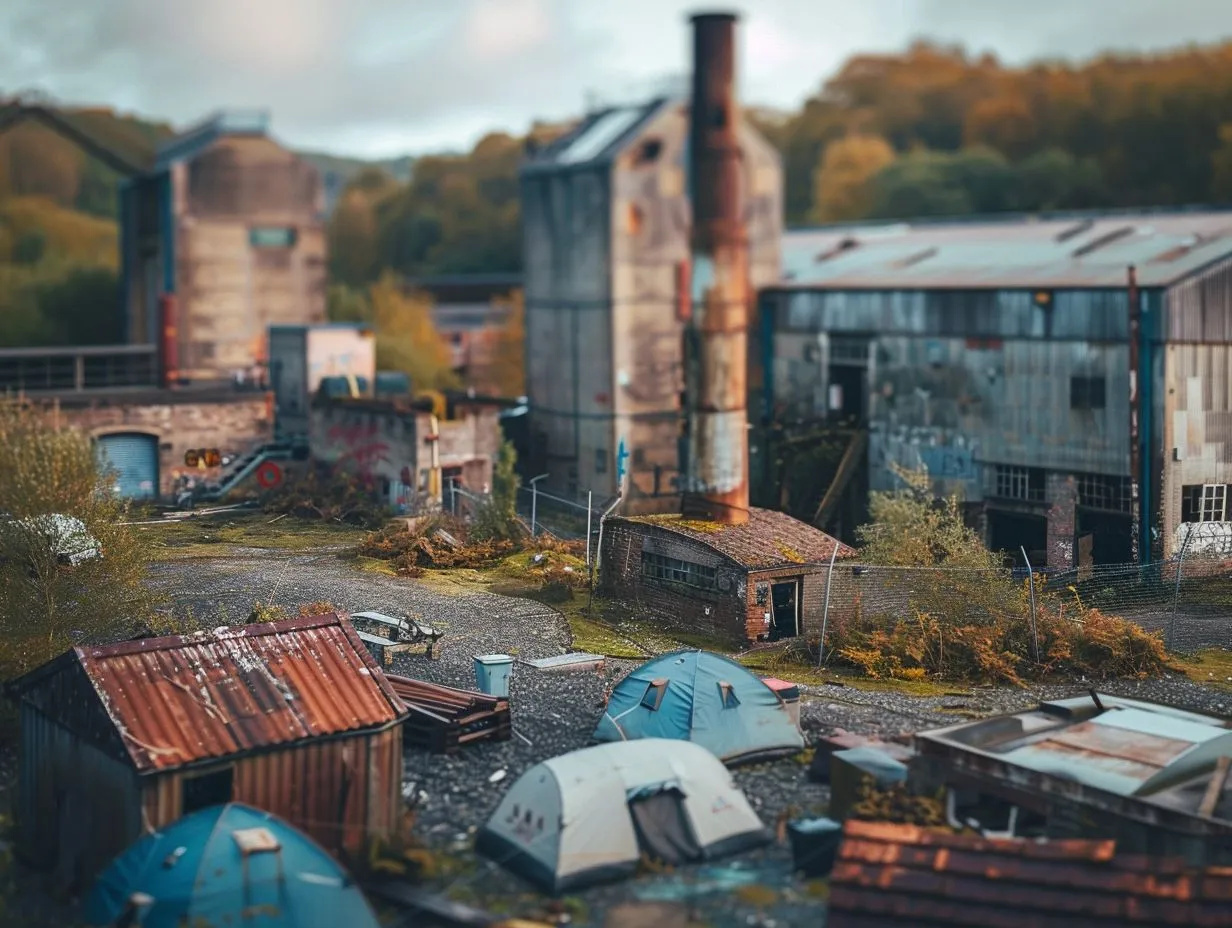
Britain invented the modern industrial world, and much of the evidence still stands. The Industrial Revolution began here in the 1700s, and the mills, ironworks, pit heads, canals and engine houses that powered it are now some of the most rewarding days out in the country. Several are UNESCO World Heritage Sites, and almost all of them sit within an easy drive of good camping.
This is our pick of the industrial heritage worth building a trip around, from the world's first iron bridge to a coal mine you can descend 90 metres into. It is part of our wider guide to camping at the UK's heritage sites, and every site below has campsites nearby that you can find and compare on Camping Sites in Britain.
Pack sturdy footwear and a warm layer. Ironworks and quarries are exposed places, and the underground tours are cold whatever the weather is doing above ground.
Why Britain has so much industrial heritage
Britain was the birthplace of the Industrial Revolution, the roughly hundred years from the 1760s when water power, then steam, turned a nation of workshops and farms into the world's first industrial economy. Coal, iron, cotton, slate and the canals and railways that moved them all scaled up here first, and the physical remains are unusually complete because so much survived into an age that decided to preserve it.
That is why the UK has such a dense cluster of industrial World Heritage Sites. UNESCO recognises places of outstanding universal value, and Britain's ironworks, mill villages and mining landscapes qualified because this is where the template for modern industry was written. Visiting them in order tells the whole story, from the first coke-fired blast furnace to the model villages built by reformers who had seen what unregulated industry did to people.
The industrial heritage sites worth a trip
Ten sites stand out, spread from Cornwall to the Scottish Lowlands. The table gives you the shape of it, and the sections below go deeper on the ones worth planning a whole weekend around.
| Site | Where | What it is | UNESCO |
|---|---|---|---|
| Ironbridge Gorge | Shropshire | World's first iron bridge, ten museums | Yes |
| Blaenavon and Big Pit | South Wales | Ironworks and coal museum | Yes |
| Derwent Valley Mills | Derbyshire | Birthplace of the factory system | Yes |
| New Lanark | South Lanarkshire | Robert Owen's model mill village | Yes |
| Saltaire | West Yorkshire | Victorian model village and Salts Mill | Yes |
| Cornish Mining | Cornwall | Tin and copper engine houses | Yes |
| Pontcysyllte Aqueduct | Wrexham, Wales | Telford's canal in the sky | Yes |
| Slate Landscape and Slate Museum | Gwynedd | Quarries and the National Slate Museum | Yes |
| Anderton Boat Lift | Cheshire | Victorian canal boat lift | No |
| Beamish | County Durham | Open-air living museum | No |
Ironbridge Gorge, Shropshire
This is where to start, because the Industrial Revolution arguably started here too. The Iron Bridge itself was cast in 1779 and opened on New Year's Day 1781, the first single-span bridge in the world made of iron, thrown across the River Severn by Abraham Darby III. The gorge around it holds ten museums run by the Ironbridge Gorge Museum Trust, including the Coalbrookdale foundry where Darby's grandfather first smelted iron with coke, Blists Hill Victorian Town, and the Coalport china works.
You can walk the bridge for free at any time. The museums each charge, or a single Annual Passport covers all ten, and current prices are on the Ironbridge Gorge Museum Trust site. Give it two days if you can.
Blaenavon and Big Pit, South Wales
Blaenavon is the best place in Britain to understand coal and iron together. The Blaenavon Industrial Landscape became a World Heritage Site in 2000, and its centrepiece is Big Pit National Coal Museum, a real colliery that closed in 1980 and reopened as a museum. Entry is free, and the highlight is the underground tour: you take the cage 90 metres down the shaft and walk the workings with a guide who is usually a former miner. Nearby stand the ruined Blaenavon Ironworks, with some of the best preserved blast furnaces of the early Industrial Revolution anywhere.
Derwent Valley Mills, Derbyshire
The factory system was invented in this valley. Richard Arkwright built Cromford Mill in 1771, the world's first successful water-powered cotton spinning mill, and with it the model of housing workers around a machine that ran day and night. The whole Derwent Valley from Matlock Bath down to Derby is a World Heritage Site, and Cromford Mill is open with tours and exhibitions. It is a short hop from the Peak District, so it pairs naturally with walking.
New Lanark, South Lanarkshire
New Lanark shows what industry looked like when someone tried to do it decently. The cotton mills on the River Clyde were run from 1800 by the reformer Robert Owen, who provided decent housing, a school and the first workplace nursery rather than the usual squalor. The restored village is a World Heritage Site with a working mill, a visitor centre and the original store that inspired the co-operative movement. It sits about 25 miles south east of Glasgow.
Saltaire, West Yorkshire
Saltaire is a complete Victorian model village, built from 1851 by the wool baron Titus Salt to move his workers out of polluted Bradford. The vast Salts Mill now houses a permanent David Hockney gallery, shops and cafes, and admission is free, while the surrounding streets of workers' houses, the church and the institute survive almost intact. It is easy to reach by train and makes a gentle half day.
Cornish Mining and the engine houses at Botallack
Cornwall's tin and copper mines powered a global industry, and their engine houses are the county's signature ruins. The Cornish Mining World Heritage Site covers sites right across Cornwall and West Devon, but the most spectacular is Botallack near St Just, where the Crowns engine houses cling to the cliff edge above the Atlantic with the shafts running out under the seabed. The surrounding coast path is free to walk and unforgettable at sunset.
Pontcysyllte Aqueduct, Wales
Thomas Telford's aqueduct carries the Llangollen Canal 38 metres above the River Dee on a cast iron trough, and it has done since 1805. It became a World Heritage Site in 2009, and you can walk the towpath across it for free or take a narrowboat trip over the top, which is not one for anyone nervous of heights. It is a short drive from the town of Llangollen.
The slate landscape of Gwynedd
North Wales roofed the world, and the evidence is written across the mountains of Gwynedd. The Slate Landscape of Northwest Wales became a World Heritage Site in 2021, taking in the huge quarries around Blaenau Ffestiniog and Llanberis. The National Slate Museum at Llanberis, part of Amgueddfa Cymru, is free to enter and sits in the old Dinorwig quarry workshops beneath Snowdon, with the largest working waterwheel in mainland Britain. Find your pitch in campsites across Gwynedd.
Anderton Boat Lift, Cheshire
The Anderton Boat Lift is the "Cathedral of the Canals", a Victorian machine that raises boats 15 metres between the River Weaver and the Trent and Mersey Canal. Built in 1875 and restored by the Canal and River Trust, it still lifts boats today, and you can ride it or watch from the visitor centre. It is not a World Heritage Site, but as a piece of working engineering it is hard to beat.
Beamish, County Durham
Beamish is a living museum rather than a preserved factory, a large open-air site where costumed staff run a 1900s town, a colliery village, a working farm and period trams. It is the easiest of these places to visit with children, who can go down a drift mine, ride the trams and buy sweets made the old way. Allow a full day, because the site is big and much of the pleasure is in wandering.
Camping near the industrial heritage
Every site on this list has campsites within reach, and combining the two makes for a proper adventure rather than a day trip. Use the full directory of campsites across Britain to find a base, then plan the sites around it. Shropshire, the Peak District, South Wales and Snowdonia are all strong camping regions in their own right, so the heritage is a bonus rather than the whole point.
A few practical notes. The underground tours at Big Pit and the drift mine at Beamish run to timed slots, so book ahead in the school holidays. The free national museums, Big Pit and the National Slate Museum, are the best value days out here by a distance. And several of these sites are ruins on exposed ground, Botallack and Blaenavon especially, so treat them like a hillwalk for footwear and weather.
If the engineering side appeals, two neighbouring trips are worth pairing with these. Our guide to Britain's historic railways near campsites covers the preserved steam lines that grew straight out of this same industrial boom, and many run right past the sites above. For a quieter contrast, the UK's lost villages near campsites shows what happened to communities the other way, when the work dried up and people left.
Plenty of these sites also sit on or near National Trust or Cadw land, so if you are visiting a run of them our tips for camping in National Trust properties will help you plan the stays. Down in the far west, the Cornish engine houses pair naturally with a coast trip, and you can browse campsites across Cornwall to pitch up near Botallack.
Frequently asked questions
Which industrial heritage sites in Britain are UNESCO World Heritage Sites?
Ironbridge Gorge, the Blaenavon Industrial Landscape, the Derwent Valley Mills, New Lanark, Saltaire, the Cornish Mining landscape, the Pontcysyllte Aqueduct and the Slate Landscape of Northwest Wales all hold UNESCO World Heritage status. Beamish and the Anderton Boat Lift do not, but are well worth visiting.
Where did the Industrial Revolution begin in Britain?
The Industrial Revolution is most associated with the Ironbridge Gorge in Shropshire, where Abraham Darby I first smelted iron with coke at Coalbrookdale in 1709, and the Derwent Valley in Derbyshire, where Richard Arkwright built the first water-powered cotton factory at Cromford in 1771.
Can you go underground at Big Pit National Coal Museum?
Yes. Big Pit near Blaenavon runs free underground tours that take you 90 metres down a real colliery shaft, guided by former miners. You wear a helmet and lamp, the tour lasts about an hour, and it is cold underground, so bring a jumper. Booking ahead is wise in busy periods.
Are Britain's industrial museums free to visit?
Some are. Big Pit National Coal Museum and the National Slate Museum are part of Amgueddfa Cymru and free to enter, and Saltaire's Salts Mill is free. Others such as Ironbridge, Beamish and New Lanark charge admission, so check the official site for current prices before you go.
Which industrial heritage site is best for children?
Beamish in County Durham, an open-air living museum where children can ride trams, go down a drift mine and watch costumed staff run a 1900s town. Big Pit and the Anderton Boat Lift also go down well with older children who enjoy the underground tour and the boat ride.
How much time do you need for Ironbridge Gorge?
Two days if you want to see the ten museums properly, or one full day for the highlights. The Iron Bridge, Coalbrookdale and Blists Hill Victorian Town are the essentials, and an Annual Passport covering all ten sites is better value than paying separately.
The short version
Britain's industrial heritage is some of the best in the world because this is where modern industry started, and most of it sits close to good camping. Start with Ironbridge, go underground at Big Pit, and pick a couple more to build a weekend around. For the wider picture, head back to our guide to camping at the UK's heritage sites.