Castles and stately homes to visit in Essex
· Updated
Essex packs a remarkable amount of history into a small area. Within an hour's drive you can stand inside the largest Norman keep ever built in Europe, walk the ruins of a clifftop castle that John Constable painted, and tour one of England's grandest Jacobean houses. It is one of the best counties in the country for a heritage day out, and it pairs neatly with a weekend under canvas.
This guide covers the castles and grand houses worth planning a trip around, what makes each one special, and where they sit on the map. It is part of our wider guide to camping near Britain's castles, and it comes from Camping Sites in Britain, where you can find and compare campsites, caravan parks and glamping across the UK.
If you are touring the region more widely, our guides to Suffolk's top castles and Kent's majestic castles cover the neighbouring counties, and both are an easy add-on to an Essex trip.
Essex castles and grand houses at a glance
Six sites carry the county. Four are castles proper, from a complete Norman keep to a romantic ruin, and two are grand houses that show off Tudor and Jacobean ambition. Here is how they compare.
| Site | Nearest town | Type | Custodian |
|---|---|---|---|
| Colchester Castle | Colchester | Norman keep and museum | Colchester Museums |
| Hedingham Castle | Halstead | Norman keep | Privately owned |
| Hadleigh Castle | Benfleet | Ruined clifftop castle | English Heritage |
| Mountfitchet Castle | Stansted Mountfitchet | Reconstructed motte and bailey | Privately owned |
| Audley End House | Saffron Walden | Jacobean mansion | English Heritage |
| Layer Marney Tower | Colchester | Tudor gatehouse | Privately owned |
Colchester Castle
Colchester Castle is the largest Norman keep ever built in Europe, and it stands in Britain's oldest recorded town. William the Conqueror's builders raised it on the surviving vaults of the Roman Temple of Claudius, which means the foundations you can visit predate the castle itself by roughly a thousand years. The keep is larger in floor area than the White Tower at the Tower of London.
Today it is run by Colchester Museums and houses one of the finest archaeological collections in the country, covering Roman Colchester, Boudica's revolt and the Norman conquest. You can climb to the roof on a guided tour and explore the Roman vaults below. It sits in Castle Park in the town centre, so it is the easiest of the six to reach without a car.
Hedingham Castle
Hedingham Castle has one of the best-preserved Norman keeps in England. Built around 1140 by the de Vere family, the stone tower stands more than 20 metres tall and still has its original banqueting hall and minstrels' gallery, spanned by one of the widest Norman arches in the country. Henry VII and Elizabeth I were both entertained here.
It is near Halstead in the north of the county, set in landscaped grounds with a Georgian mansion and a lake. The castle stays in private ownership and opens on set days and for events through the year, so check the calendar before you set off.
Hadleigh Castle
Hadleigh Castle is the county's most atmospheric ruin, a pair of ragstone towers on a hill above the Thames estuary. Edward III rebuilt it as a grand residence in the 1360s, but the London Clay it stands on has slipped over the centuries, leaving the surviving towers leaning at odd angles. The views across the marshes to Kent are the reason to climb up.
John Constable painted the castle in 1829, and his large canvas of the ruin at dawn hangs in the Yale Center for British Art. The site is looked after by English Heritage, is free to visit and open at any reasonable time, and sits within Hadleigh Country Park near Benfleet. See the official listing at English Heritage for access details.
Mountfitchet Castle
Mountfitchet Castle is a full reconstruction of a Norman motte and bailey castle and village, rebuilt on its original earthworks near Stansted Mountfitchet. Rather than a ruin, it is a working recreation of an early medieval settlement, complete with timber palisade, siege weapons, thatched houses and free-roaming deer, chickens and goats.
It is the best of the six for younger children, who can wander in and out of the houses and meet the animals. The site is privately run and open seasonally, roughly from spring to early autumn, so it suits a warm-weather trip.
Audley End House
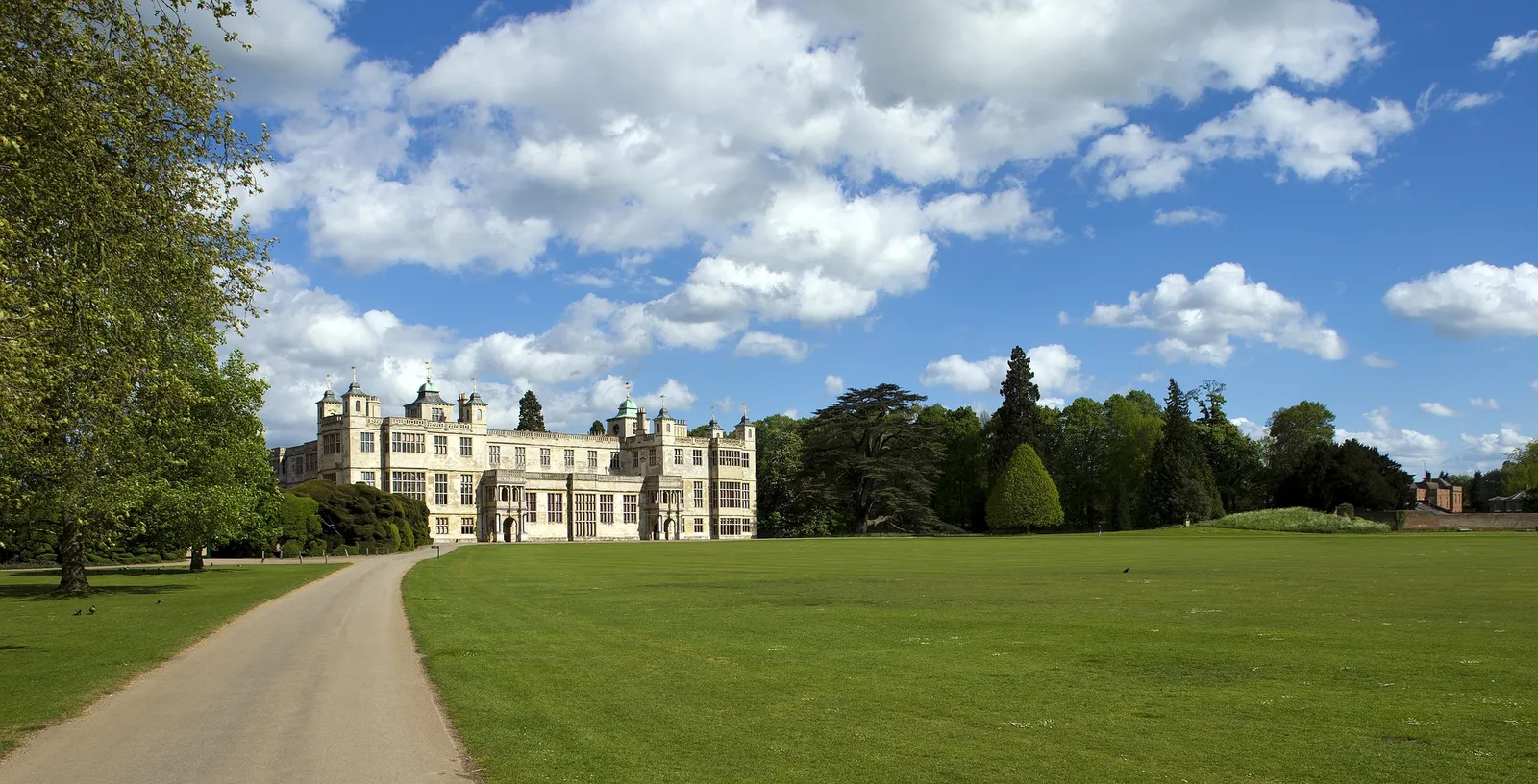
Audley End is one of England's grandest Jacobean houses, and for a short time in the 1600s it was one of the largest houses in the whole country. It was built in the early 17th century on the site of Walden Abbey and later remodelled, and its state rooms, service wing and Capability Brown parkland make it a full day out on their own.
The house sits just outside Saffron Walden and is managed by English Heritage, with a Victorian service wing, a working stable yard and a miniature railway in the grounds. Check current admission and opening times on the English Heritage website before you visit.
Layer Marney Tower
Layer Marney Tower is the tallest Tudor gatehouse in Britain, rising eight storeys to a height of around 24 metres. Lord Marney began it in about 1520 as the entrance to a great house that was never finished, because he and his son both died before the work was done, so the gatehouse stands as a magnificent fragment of Tudor ambition.
You can climb the towers for views towards the Blackwater estuary, and the surrounding gardens, farm and grounds make a relaxed afternoon south west of Colchester. It remains a privately owned family home and opens on selected days and for events.
Constable Country and the Essex coast
The north of Essex runs into Constable Country, the landscape of Dedham Vale that John Constable made famous. The Stour valley on the Essex and Suffolk border, taking in Dedham and the villages around Flatford, is protected as a National Landscape and gives you gentle walking and quiet riverside scenery between castle visits.
The coast is the county's other draw. The Thames estuary below Hadleigh, the Blackwater at Maldon and the long saltmarsh shoreline are all within reach of the heritage sites, so it is easy to build a trip that mixes castles, big skies and a walk by the water. Our guide to camping near Britain's historic homes has more ideas if grand houses are the main event.
Where to camp
Base yourself between the coast and the north Essex countryside and every site above is inside an hour's drive. The area around Colchester, Maldon and the Dedham Vale has the densest cluster of campsites, caravan parks and glamping, and it keeps you central for the castles, the estuary and Constable Country alike.
Browse and compare pitches across the county and the rest of the UK on the Camping Sites in Britain directory, then filter for the facilities you need before you book.
Frequently asked questions
What is the biggest castle in Essex?
Colchester Castle is the largest, and its keep is the biggest Norman keep ever built in Europe. It was raised on the vaults of the Roman Temple of Claudius and now houses Colchester's main museum in the town centre.
Are there any free castles to visit in Essex?
Yes. Hadleigh Castle, the ruined clifftop castle near Benfleet, is looked after by English Heritage and is free to visit at any reasonable time. Several grand houses charge admission, so check each site before you travel.
Which Essex castle did Constable paint?
John Constable painted Hadleigh Castle in 1829, showing the ruined towers at dawn above the Thames estuary. The site still gives the same wide views across the marshes towards Kent that inspired the painting.
Is Audley End a castle or a house?
Audley End is a house, not a castle. It is one of England's grandest Jacobean mansions, built in the early 17th century near Saffron Walden and now managed by English Heritage with restored state rooms and Capability Brown parkland.
What is the best Essex castle for children?
Mountfitchet Castle near Stansted is the best for younger children. It is a full reconstruction of a Norman motte and bailey village with houses to explore, siege weapons and free-roaming animals, and it opens seasonally from spring to early autumn.
How many castles are there in Essex?
Essex has four main castles worth visiting: Colchester, Hedingham, Hadleigh and the reconstructed Mountfitchet. Add the grand houses at Audley End and Layer Marney Tower and you have six major heritage sites within easy reach of each other.
The short version
Essex gives you Europe's largest Norman keep at Colchester, a near-complete keep at Hedingham, a Constable-painted ruin at Hadleigh and Jacobean grandeur at Audley End, all within an hour of the coast. Base yourself around Colchester or the Dedham Vale and you can see the lot over a long weekend. Start with our guide to camping near Britain's castles, then find your pitch on the Camping Sites in Britain directory.