The best castles to visit in Suffolk
· Updated
Suffolk packs an unusual amount of castle into one quiet county. Framlingham gave you the curtain wall and 13 towers where Mary Tudor was proclaimed queen, Orford has one of the strangest keeps in England, and Landguard Fort at Felixstowe guarded the coast right into the 20th century. Two of the best are looked after by English Heritage, and most sit within an easy drive of a good campsite.
If you want the short answer: start with Framlingham and Orford, both English Heritage sites with proper visitor facilities, then add Bungay, Clare or Landguard depending on where you pitch up. This guide runs through each castle, what there is to see, and how to make a trip of it.
It sits inside our wider guide to camping near Britain's castles, part of Camping Sites in Britain, where you can find and compare campsites, caravan parks and glamping across the UK.
The best castles in Suffolk at a glance
Framlingham and Orford are the two to prioritise if you want a full day out with tickets, exhibitions and views. The rest are ruins or specialist sites, several of them free.
| Castle | Where | Custodian | Best for |
|---|---|---|---|
| Framlingham Castle | Framlingham | English Heritage | The Wall Walk and Tudor history |
| Orford Castle | Orford | English Heritage | The polygonal keep and coastal views |
| Bungay Castle | Bungay | The town (Bungay Castle Trust) | A free Norman ruin in the town centre |
| Clare Castle | Clare | Clare Castle Country Park | A motte to climb and riverside walks |
| Landguard Fort | Felixstowe | English Heritage | Artillery history and the port |
| Mettingham Castle | near Bungay | Private | A 14th-century gatehouse (limited access) |
Framlingham Castle
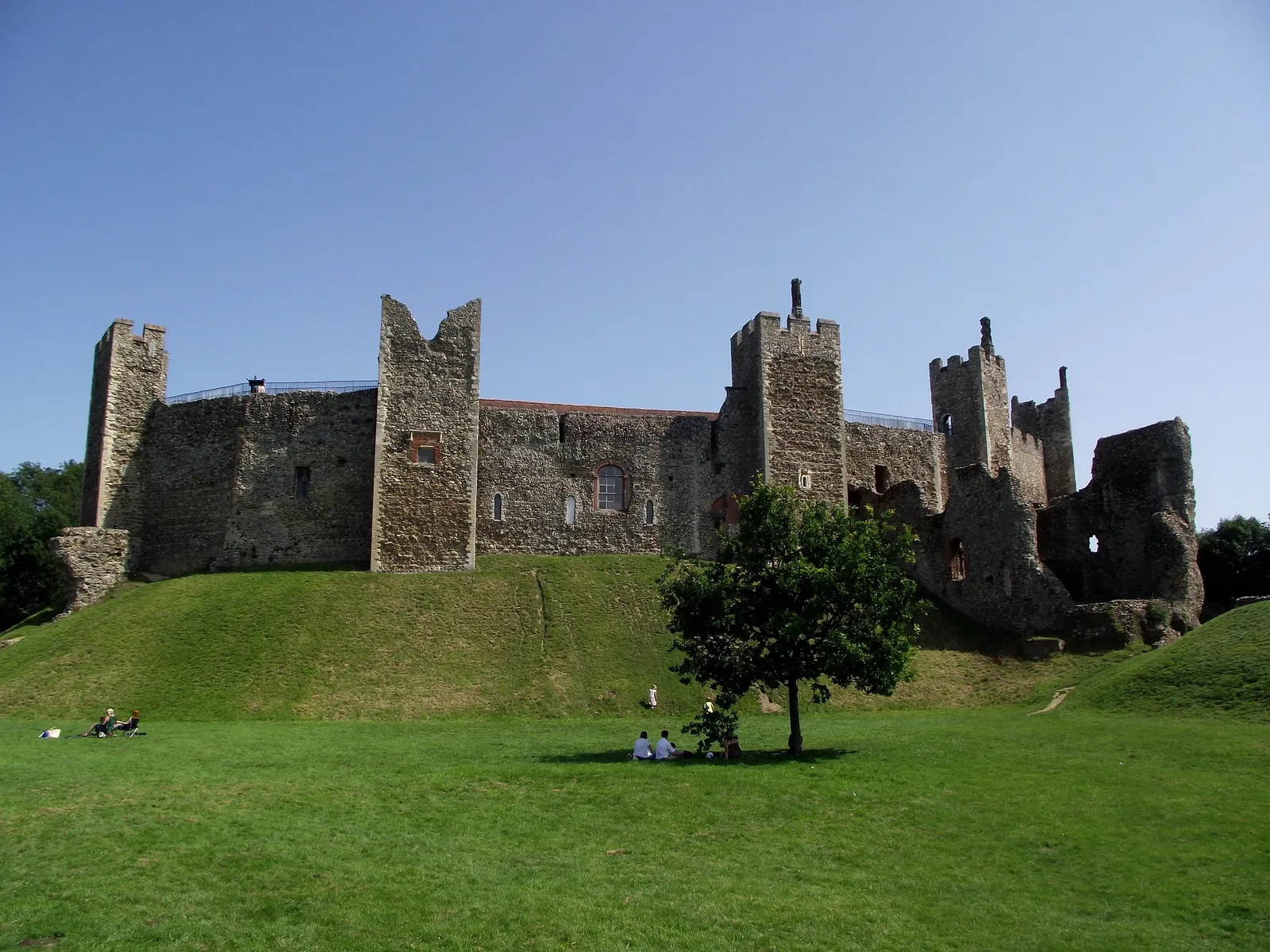
Framlingham is the one to see first. Built by the Bigod earls of Norfolk in the late 12th century, it swapped the old-fashioned keep for a continuous curtain wall studded with 13 towers, a design you can still walk almost all the way around on the Wall Walk.
Its biggest moment came in July 1553, when Mary Tudor gathered her supporters here and was proclaimed queen after the collapse of the plot to put Lady Jane Grey on the throne. The castle is also the "Castle on the Hill" of Ed Sheeran's song, as he grew up in the town. Inside there are exhibitions, a poorhouse building from its later life, and long views over the mere and countryside. It is run by English Heritage, so check current opening times and admission on the English Heritage site before you go.
Orford Castle
Orford has the most remarkable building of the lot: a polygonal keep built for Henry II between 1165 and 1173, unlike any other in England. The 90-foot tower is circular inside with three clasping towers outside, and it survives almost complete when the rest of the castle has vanished.
Climb to the roof and you look out over the village, the River Ore and the shingle spit of Orford Ness, all within the Suffolk Coast and Heaths National Landscape (the protected area you may know as the AONB). Henry built it to project royal power over a coast that local barons had treated as their own. Orford is also English Heritage, so confirm times and prices on the English Heritage site. Leave time for the quay and a smoked fish lunch in the village afterwards.
Bungay Castle
Bungay Castle is a free Norman ruin sitting right in the middle of the town. Hugh Bigod, first Earl of Norfolk, raised it in the 12th century, and the great gatehouse towers and the base of the keep still stand behind the high street.
The site is owned and cared for locally by the Bungay Castle Trust and is usually open with a small visitor centre and shop. It takes far less time than Framlingham or Orford, which makes it an easy add-on to a morning in the Waveney Valley, especially if you are already heading between Bungay and Beccles.
Clare Castle
Clare Castle is a classic motte and bailey, and the tall grassy mound with its fragment of flint wall is the centrepiece of Clare Castle Country Park. It was founded soon after the Norman conquest by Richard FitzGilbert, and the family who held it took the name de Clare.
You climb the motte for the view, then walk the parkland along the River Stour, taking in the old railway station buildings that later occupied the bailey. Access is free, there is parking and a visitor centre, and it pairs well with the wool-town architecture of Clare, Cavendish and Long Melford nearby.
Landguard Fort
Landguard Fort at Felixstowe is a castle of a later age: a coastal artillery fort rather than a medieval stronghold. In 1667 it repelled a Dutch landing during the Anglo-Dutch wars, in what is often called the last opposed seaborne invasion of England, and the site was rebuilt and rearmed repeatedly up to the Second World War.
Today you can explore the gun batteries, tunnels and Victorian ramparts, with the vast container cranes of the Port of Felixstowe rising just beyond the walls. It is in the care of English Heritage and run day to day by a local trust, so check the season and opening details on the English Heritage site. The nature reserve on Landguard Point next door is worth the extra half hour.
Mettingham Castle
Mettingham Castle is the one for completists. Sir John de Norwich was granted a licence to fortify his manor here in 1342, and the flint gatehouse and stretches of wall survive on private farmland near Bungay.
Because it is privately owned, there is no general public access, so view it from the lane rather than expecting to walk in. It rounds out the picture of Suffolk castle-building, from Norman earthworks to 14th-century licensed strongholds.
Where to camp for a Suffolk castle trip
Base yourself near the coast and you can reach Framlingham, Orford and Landguard on separate days without long drives. The Suffolk Coast and Heaths area between Woodbridge, Aldeburgh and Felixstowe puts all three within roughly 30 to 45 minutes of each other, and the same stretch covers the heaths, estuaries and shingle beaches that make the county worth staying in.
For the inland ruins, the Waveney Valley around Bungay and Beccles is handy for Bungay and Mettingham, while the south-west corner near Clare, Sudbury and Long Melford suits Clare Castle and the wool towns. Compare pitches, hook-ups and reviews across the region through the Camping Sites in Britain directory to find something close to the castles on your list.
Frequently asked questions
What is the best castle in Suffolk?
Framlingham Castle is the most complete and rewarding to visit, with its curtain wall, 13 towers and the Wall Walk you can circuit. Orford Castle runs it close for its rare polygonal keep and coastal views. Both are English Heritage sites.
How many castles are there in Suffolk?
Suffolk has a handful of castle sites worth visiting, including Framlingham, Orford, Bungay, Clare, Mettingham and the later Landguard Fort at Felixstowe. Many more medieval castles once existed but survive only as earthworks or have disappeared entirely.
Which Suffolk castles are free to visit?
Bungay Castle and Clare Castle, within Clare Castle Country Park, are free to walk around. Framlingham, Orford and Landguard Fort charge admission and are cheaper or free for English Heritage members, so check the current details before you travel.
Where was Mary Tudor proclaimed queen?
Mary Tudor was proclaimed queen at Framlingham Castle in July 1553. She rallied her supporters there after Edward VI's death, and the failed attempt to crown Lady Jane Grey collapsed within days.
Is Orford Castle the one with the unusual keep?
Yes. Orford Castle has a polygonal keep built for Henry II between 1165 and 1173, unlike any other in England. It is circular inside with three clasping towers outside and stands about 90 feet high.
Are there castles near the Suffolk coast?
Yes. Orford Castle sits by the River Ore within the Suffolk Coast and Heaths National Landscape, and Landguard Fort guards the harbour mouth at Felixstowe. Framlingham is a short drive inland from the same stretch of coast.
The short version
See Framlingham and Orford first for the full English Heritage experience, then add Bungay, Clare, Landguard or Mettingham to suit your route. If you camp near the Suffolk coast you can tick off most of them in a long weekend. For more castle trips around the country, head back to our guide to camping near Britain's castles.
Exploring castles elsewhere in the east? See our guides to Norfolk's castles, Essex stately homes and castles and Kent's majestic castles.