Zero-waste camping: how to plan a low-waste trip in the UK.
· Updated
Zero-waste camping is not one gadget or a special kit list. It is a system: refuse what you do not need, reduce what you take, reuse what you can, recycle what is left, and rot the food scraps. Get those five working together and a weekend that used to fill a bin bag will fit in a sandwich box.
Nobody hits actual zero. Treat it as a direction of travel rather than a pass or fail, because the small swaps genuinely add up over a season of trips. This guide is part of our wider guide to eco-friendly camping practices, and it sits alongside the rest of the sustainability advice at Camping Sites in Britain, where you can find and compare sites across the UK.
Below is the whole system, from the shopping you do at home to what you carry out at the end. If you want the single-use plastic detail specifically, that has its own guide to reducing plastic use on camping trips, and this page will point you there where it matters.
The five Rs, applied to a campsite
The zero-waste hierarchy is a running order, not a menu. You work down it in sequence, because the waste you never bring is worth more than the waste you recycle later.
| Step | What it means camping | Where it happens |
|---|---|---|
| Refuse | Skip packaging, freebies and single-use items before they reach your bag | The shop, at home |
| Reduce | Take only what you need, plan meals so nothing is surplus | Home, planning |
| Reuse | Refillables, real crockery, cloth not paper, rechargeable batteries | On the pitch |
| Recycle | Sort what the site accepts, carry the rest home to your kerbside bins | On the pitch, then home |
| Rot | Compost food scraps, or bag them and take them home to your caddy | Home, mostly |
Refuse and reduce before you leave home
The biggest wins happen in your kitchen, days before you pitch up. Most camping waste is packaging you carried to the site and then had to deal with, so the trick is to leave it behind where it can go in your own recycling.
Buy loose where you can and decant everything into reusable tubs at home. Pour cereal, pasta, rice, coffee and snacks into screw-top jars or lidded boxes. Split sausages, bacon and cheese out of their plastic and into a box. That stripped-down shop means no film, no polystyrene trays and no cardboard sleeves clogging a small campsite bin.
Then plan the meals properly. Write down exactly what you will eat for each breakfast, lunch and dinner, buy for that and no more, and you sidestep the two biggest sources of camping rubbish at once: excess packaging and food you never got round to cooking. Take only what you need, including the toiletries and the kit, because everything you pack is something you have to store, use or carry home.
Reuse: pack real kit, not disposable
A reusable setup is the heart of a low-waste trip, and it is cheaper over a few weekends than buying disposable versions each time. The aim is simple: nothing on your pitch should be designed to be binned after one use.
- Real plates, bowls, mugs and cutlery. Enamel or hard plastic camping sets last years. Paper plates and plastic forks are pure waste
- Refillable bottles and containers for water, milk, oil and washing-up liquid, topped up rather than replaced
- Cloth, not paper. Tea towels, a couple of flannels and cloth napkins replace whole rolls of kitchen towel
- Rechargeable batteries for head torches and lanterns, or USB rechargeable lights, instead of a fistful of single-use cells
- Beeswax wraps or lidded boxes in place of cling film and foil for leftovers and packed lunches
Charge and pack the rechargeables at home, and keep a small stuff sack for the cloths so damp ones do not end up abandoned.
Recycle: know what the site takes
Recycling on campsites is patchy, so find out before you rely on it. Some sites have proper sorted bins for glass, cans and plastic, while many, especially smaller and wilder pitches, have general waste only or ask you to take everything away.
Check the site's facilities when you book, and if in doubt, plan to take your recycling home. Keep a separate bag on the pitch for clean, dry recyclables so they are ready to drop into your kerbside bins the moment you unpack. Rinsing cans and jars before they go in stops the bag turning into a smelly mess in a warm car boot. If recycling and green credentials matter to you, they are worth filtering for when you browse the campsite listings.
Rot: dealing with food scraps
Food waste is the part people get wrong, so be clear on the rule: bury nothing and pack it all out. Peelings, cores, eggshells and plate scrapings do not vanish quietly in a field. Buried food draws rats, foxes and gulls, takes far longer to break down than people assume, and leaves a mess for the next family on the pitch.
Most UK campsites have no composting facility, so the reliable approach is to carry a small lidded caddy or a sealed tub, collect your scraps through the trip, and empty it into your food-waste caddy at home. It weighs almost nothing and keeps the whole business tidy. Where a site genuinely does offer a compost heap, use it, but never assume one exists. This is also the golden rule of the wider Leave No Trace approach: whatever you bring in, you take out. The official Countryside Code puts it plainly, bin your rubbish or take it home.
Cooking to cut food waste
Good camp cooking is low-waste cooking, and it comes down to portions, leftovers and one pan. Cook the right amount and you throw almost nothing away, which is easier over a fire or a single burner than at home anyway.
Measure portions before you go rather than guessing on the pitch, since a bag of rice cooked by eye is how half of it ends up in the caddy. Build meals so tonight's extra becomes tomorrow's lunch, roast vegetables one night and fold them through pasta the next. A one-pot approach, chilli, stew, a big pan of pasta, means less washing-up, less fuel, and one set of leftovers rather than five half-used ingredients. Keeping the pitch clean as you go stops scraps and spills attracting wildlife, which our guide to keeping your campsite clean covers in full.
Plastic-free toiletries and washing
The bathroom bag is a quiet source of waste, and it is one of the easiest to fix. Swap plastic bottles for solid bars: a shampoo bar, a soap bar and a conditioner bar replace three bottles and travel better because they cannot leak.
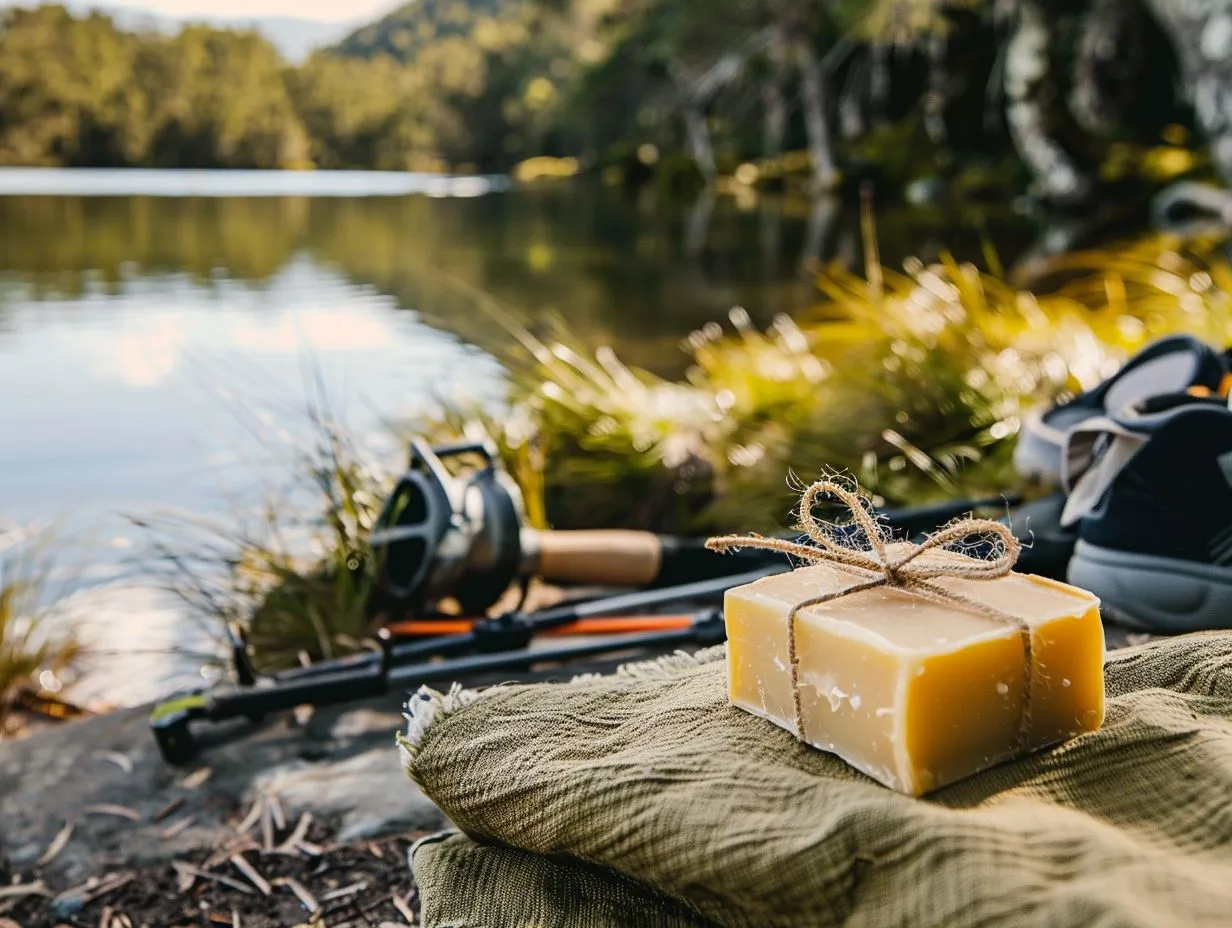
A bar of biodegradable soap doubles for hands, body and washing-up, so long as you use it well away from streams and drains. Our guide to the best biodegradable soap for camping covers which bars actually break down and how to use them without polluting water. Add a bamboo toothbrush and toothpaste tabs in a tin, a safety razor, and a menstrual cup or reusable pads, and the single-use plastic in your washbag drops close to nothing. For the wider picture on cutting plastic across the whole trip, see reducing plastic use on camping trips.
Water: refill, do not buy bottled
Bottled water is the single most avoidable waste on a campsite. UK tap water is safe and campsite taps are drinkable unless a sign says otherwise, so a couple of refillable bottles and a larger container for the pitch cover everything you need.
Fill up before you travel, top up at the site taps, and if you are heading somewhere remote, a filter bottle handles stream water without a single plastic bottle changing hands. A refillable flask keeps a coffee hot for the morning walk too, so you are not tempted by a takeaway cup.
Dealing with the waste you do create
You will still make some waste, and handling it responsibly is the last piece of the system. Keep three bags on the pitch, one for general rubbish, one for clean recycling and one for food scraps, so nothing has to be sorted later.
Never leave rubbish bagged outside the tent overnight, where foxes and gulls will open it and scatter it across the field. Store it sealed, use the site bins correctly, and if the site has no recycling or food waste provision, take those bags home rather than forcing everything into general waste. Leaving your pitch cleaner than you found it is the whole point, and it is what keeps these sites open and pleasant for the next arrivals.
Your zero-waste packing checklist
Pack this and you have designed most of the waste out before you arrive.
- Reusable tubs and jars with food decanted at home, packaging left behind
- Real plates, bowls, mugs and cutlery, one set per person
- Two refillable water bottles and a larger container for the pitch
- Beeswax wraps or lidded boxes instead of cling film and foil
- Tea towels and cloth napkins instead of kitchen roll
- A small lidded caddy or sealed tub for food scraps to carry home
- Solid toiletry bars, biodegradable soap, toothpaste tabs, a bamboo brush
- Rechargeable batteries or USB lights, charged before you leave
- Three bin bags or reusable sacks: general, recycling, food waste
- A menstrual cup or reusable pads, and a razor rather than disposables
Frequently asked questions
What does zero-waste camping actually mean?
It means running a trip so almost nothing ends up in a bin: refuse packaging, reduce what you take, reuse real kit, recycle what is left and compost food scraps. Nobody reaches true zero, so treat it as a direction of travel where small swaps add up.
How do I deal with food waste when the campsite has no compost?
Carry a small lidded caddy or sealed tub, collect peelings and scraps through the trip, and empty it into your food-waste caddy at home. Most UK campsites have no composting, so never bury food scraps, as buried waste draws wildlife and does not break down quickly.
Can I recycle on a UK campsite?
Some sites have sorted bins for glass, cans and plastic, but many have general waste only. Check when you book, keep clean recyclables in a separate bag, and if the site has no provision, take them home for your kerbside collection.
What is the easiest first swap to reduce camping waste?
Decant your food into reusable tubs at home and leave the packaging behind. It removes most of your rubbish before you arrive, needs no special kit, and means the small campsite bin is not swamped with film, trays and cardboard.
How do I cut down on plastic toiletries?
Switch to solid bars: shampoo, conditioner and a biodegradable soap that doubles for hands and washing-up. Add toothpaste tabs, a bamboo brush and a menstrual cup or reusable pads. See our biodegradable soap and reducing plastic guides for the detail.
Is bottled water necessary when camping in the UK?
No. UK tap water is safe and campsite taps are drinkable unless signed otherwise. Bring refillable bottles and a larger container, top up at the site, and use a filter bottle for stream water in remote spots.
The short version
Decant your food at home so the packaging never travels, pack real kit instead of disposables, and carry your scraps and recycling home when the site cannot take them. Do that and the bin bag shrinks to almost nothing without any effort on the pitch.
It is a direction of travel, not a test you pass or fail, and every swap counts. For the wider system, head back to our guide to eco-friendly camping practices.