The Best Bird Watching Sites in Britain for Campers
· Updated
Britain has some of the finest birdwatching in Europe, and the best of it sits within an easy drive of a campsite. Bempton Cliffs holds up to half a million seabirds, the Farne Islands put puffins within a few feet of your boots, and Cairngorm ospreys fish the same lochs they have used for decades. Pitch up nearby and you get dawn and dusk on the reserve, which is exactly when the birds are busiest.
Below are eight of the best bird watching sites in Britain for campers, with what to see, the best season to go, and where to camp within reach of each. Choosing your dates around wildlife is the same skill as choosing them around camping pests in Britain, and this guide comes from Camping Sites in Britain, where you can find and compare campsites, caravan parks and glamping across the UK.
The sites at a glance
| Reserve | Where | Star birds | Best season | Camp near |
|---|---|---|---|---|
| RSPB Minsmere | Suffolk | Bitterns, avocets, marsh harriers | April to June | Suffolk coast |
| RSPB Bempton Cliffs | East Yorkshire | Puffins, gannets, kittiwakes | April to August | North Yorkshire coast |
| Farne Islands | Northumberland | Puffins, Arctic terns, guillemots | Late April to July | Seahouses area |
| Skomer Island | Pembrokeshire | Puffins, Manx shearwaters | Late April to July | Pembrokeshire coast |
| WWT Slimbridge | Gloucestershire | Bewick's swans, wildfowl, waders | November to February | Severn Vale |
| RSPB Loch Garten | Cairngorms | Ospreys, crested tits, crossbills | April to August | Aviemore, the Highlands |
| RSPB Leighton Moss | Lancashire | Bitterns, bearded tits, avocets | April to June | Morecambe Bay |
| Isle of Mull | Argyll | White-tailed eagles, golden eagles | Spring and summer | Mull and Oban |
RSPB Minsmere, Suffolk
Minsmere is the most famous reserve in England and the one the BBC chose for Springwatch, and it earns the reputation. Its reedbeds, lagoons and heath pack more than 340 recorded species into one coastal site, so a single visit can turn up bitterns booming in the reeds, avocets on the Scrape, marsh harriers overhead and bearded tits pinging through the reeds.
Go from April to June for the fullest cast, when breeding birds are noisy and migrants are passing through. The Scrape hides give close views without disturbing anything. Camp along the Suffolk coast near Dunwich and Westleton, a few minutes from the reserve, and you can be in a hide for the dawn chorus.
RSPB Bempton Cliffs, East Yorkshire
Bempton is the best place in England to see puffins from dry land, and the noise alone is worth the trip. Up to half a million seabirds gather along these chalk cliffs between March and October, including gannets, kittiwakes, guillemots, razorbills and the puffins everyone comes for. It holds the only mainland gannet colony in England, and the safe clifftop viewpoints put you almost level with the birds.
Puffins are ashore from roughly late April to mid July, which is the window to aim for. The gannets stay longer, into autumn. Base yourself on the North Yorkshire coast around Filey and Scarborough, and browse campsites in North Yorkshire for a pitch within half an hour of the cliffs.
Farne Islands, Northumberland
The Farnes give you the closest puffin encounter in Britain, with Arctic terns nesting so near the paths that they will dive at your hat. Around 200,000 seabirds breed across these National Trust islands, including puffins, guillemots, razorbills, shags and four species of tern, alongside a large grey seal colony.
Boats run from Seahouses harbour, and the landing season is roughly late April to late July, with puffins at their best in June. Book a landing trip rather than a cruise if you want time ashore. Campsites cluster around Seahouses, Bamburgh and Belford, so you can catch an early boat and still be back for lunch.
Skomer Island, Pembrokeshire
Skomer holds one of the largest puffin colonies in southern Britain and the biggest Manx shearwater colony in the world, with several hundred thousand pairs nesting in burrows. By day the puffins pose beside the footpaths; the shearwaters only come and go under cover of darkness, which is why staying overnight in the island hostel is such a draw for serious birders.
Day boats run from Martin's Haven from roughly April to July, weather permitting, and puffins are at their best in May and June. Landing places are limited, so arrive early. Camp along the Pembrokeshire coast near Marloes and the boat departs almost from the doorstep.
WWT Slimbridge, Gloucestershire
Slimbridge is the one to save for winter, when tens of thousands of wildfowl pour into the Severn estuary. Founded by Sir Peter Scott in 1946, it is the headquarters of the Wildfowl and Wetlands Trust, and from November to February its hides overlook wild Bewick's swans, white-fronted geese, wigeon, teal and waders in huge numbers. Heated hides make a cold morning bearable.
The reserve is open year round, so spring and summer bring breeding waders and warblers, but the winter spectacle is the reason to go. Camp in the Severn Vale or the southern Cotswolds and combine a morning at the hides with a walk on the estuary.
RSPB Loch Garten, Cairngorms
Loch Garten put ospreys back on the map, and it remains the classic place to watch them. Set in the ancient Caledonian pinewoods of Abernethy in the Cairngorms, the reserve has hosted breeding ospreys since the 1950s, and from April to August you can watch them fish and raise young. The same forest holds Scottish specialities you will struggle to see anywhere else: crested tits, Scottish crossbills and, with real luck, capercaillie.
Late spring and early summer are the peak. Base yourself near Aviemore or Boat of Garten, and look at campsites in the Highlands for a pitch among the pines. Pack midge protection, because the still forest evenings can be fierce.
RSPB Leighton Moss, Lancashire
Leighton Moss is the largest reedbed in the north west of England and the most reliable place in the region to hear a bittern boom in spring. The reserve blends reedbed and saltmarsh pools beside Morecambe Bay, so a morning here can deliver bitterns, bearded tits, marsh harriers and breeding avocets, with red deer wading through the reeds at dawn.
April to June is the boom season for bitterns and the busiest for breeding birds, while autumn brings starling murmurations over the reeds. Camp around Morecambe Bay, Silverdale and Arnside, an Area of Outstanding Natural Beauty that is worth a full weekend in its own right.
Isle of Mull, Argyll
Mull is the best island in Britain for birds of prey, and its white-tailed eagles are the largest in the UK, with a wingspan approaching eight feet. These sea eagles were reintroduced to Scotland and now breed on Mull, sharing the skies with golden eagles, hen harriers, short-eared owls and merlins. Boat trips off the coast bring the sea eagles down to snatch fish from the water within camera range.
Spring and summer give the best chances of active eagles and the widest range of other species. Ferries cross from Oban, and campsites are dotted around Mull itself and along the Argyll coast near Oban, so you can build a trip around the eagles and the otters that share the shoreline.
When is the best time of year to go?
Spring and early summer are the best overall, roughly April to July, because that is when seabirds crowd the cliffs, reedbed birds are breeding and noisy, and summer migrants have arrived. Puffins are only ashore in this window, so seabird colonies like Bempton, the Farnes and Skomer are strictly seasonal.
Winter flips the map. Estuaries and wetlands such as Slimbridge fill with wildfowl and waders escaping the Arctic, and starling murmurations build over reedbeds on still evenings. Autumn is prime for migration on the east and south coasts. There is good birdwatching in Britain in every month, so match the season to the birds you most want to see.
What to take
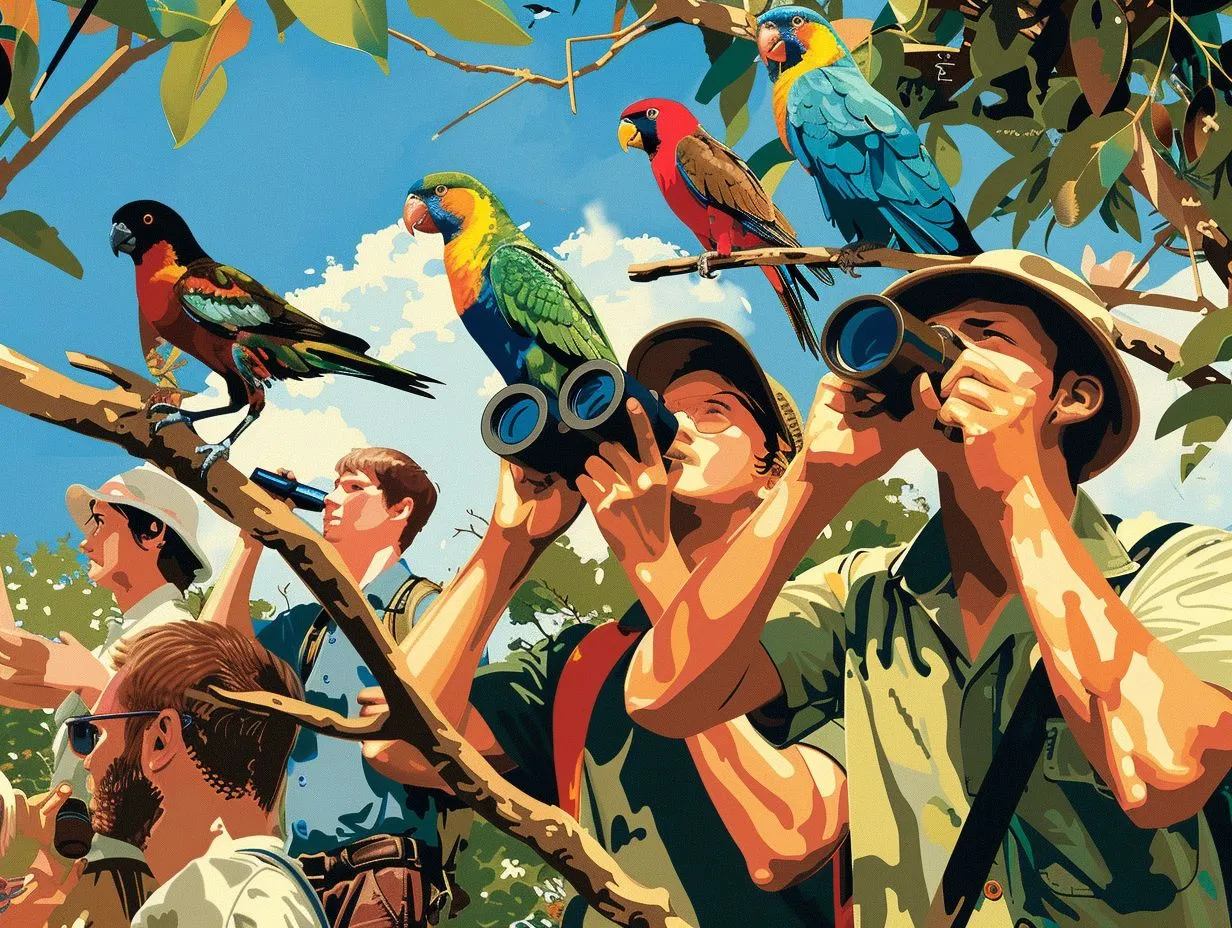
- Binoculars. An 8x42 pair is the standard all-round choice and handles low light in a hide well
- A field guide or an app to confirm what you are looking at, covered in our guide to bird watching while camping
- Muted, quiet clothing in greens and browns, because bright colours and rustling fabrics flush birds
- Waterproofs and warm layers, since hides are cold and coastal reserves are exposed
- Midge protection for Scottish reserves, especially wooded ones like Loch Garten on a still evening
- A flask, because the best sightings come to those who sit still and wait
Watching birds without disturbing them
Keep your distance and let the birds carry on as if you were not there, which is the whole point of a hide. Never approach a nest, a nesting colony or a bird that is clearly alarmed, and keep dogs on leads or leave them at the campsite near sensitive reserves. Ground-nesting birds on heath and shingle are easily trodden out, so stick to marked paths.
Our full guidance on this is in the guide to ethical wildlife watching for campers, and if you want to build a whole trip around wildlife, see the best campsites for viewing wildlife and our guide to visiting the UK's nature reserves while camping. Access and opening times for RSPB reserves are on the RSPB reserves finder.
Frequently asked questions
Where can I see puffins in Britain?
The easiest mainland site is RSPB Bempton Cliffs in East Yorkshire, where puffins nest on chalk cliffs you can watch from safe viewpoints. The Farne Islands in Northumberland and Skomer in Pembrokeshire offer closer views by boat. All three are best from late April to July.
What is the best bird watching site in the UK?
RSPB Minsmere in Suffolk is the most celebrated, with more than 340 recorded species across reedbed, heath and coast. For sheer numbers, Bempton Cliffs holds up to half a million seabirds. The best site depends on the birds and the season you are chasing.
Do I need a permit or ticket to visit RSPB reserves?
Many RSPB reserves are free to enter, though larger ones such as Minsmere and Leighton Moss charge non-members for parking or admission. Island trips to the Farnes and Skomer need a boat ticket booked in advance. Check the reserve page before you travel.
Can I camp inside a nature reserve?
No. Wild camping is not permitted on RSPB or National Trust reserves, and in England and Wales you need the landowner's permission to camp anywhere off a campsite. Book a nearby site instead, which is often only a few minutes from the reserve gates.
When can I see ospreys at Loch Garten?
Ospreys are present at Loch Garten from roughly April to August, when they return from Africa to breed. Late spring and early summer give the best views of the birds fishing and raising chicks. The rest of the year the ospreys are away in West Africa.
What binoculars are best for birdwatching?
An 8x42 pair suits most campers: enough magnification to identify birds, a wide field of view for following movement, and good performance in the low light of a hide or a dawn start. They are also light enough to carry all day without strain.
The short version
Britain's best birdwatching is seasonal and predictable. Book a coastal site near Bempton, the Farnes or Skomer for puffins between April and July, head to the Cairngorms for ospreys in summer, and save Slimbridge for wintering wildfowl.
Pick your pitch within reach of the reserve, get there for dawn, and let the birds come to you. Browse campsites across Britain to plan a trip around any of the sites above, or read more on bird watching while camping.