Wildflower Walks in the UK: Where and When to See Them
· Updated
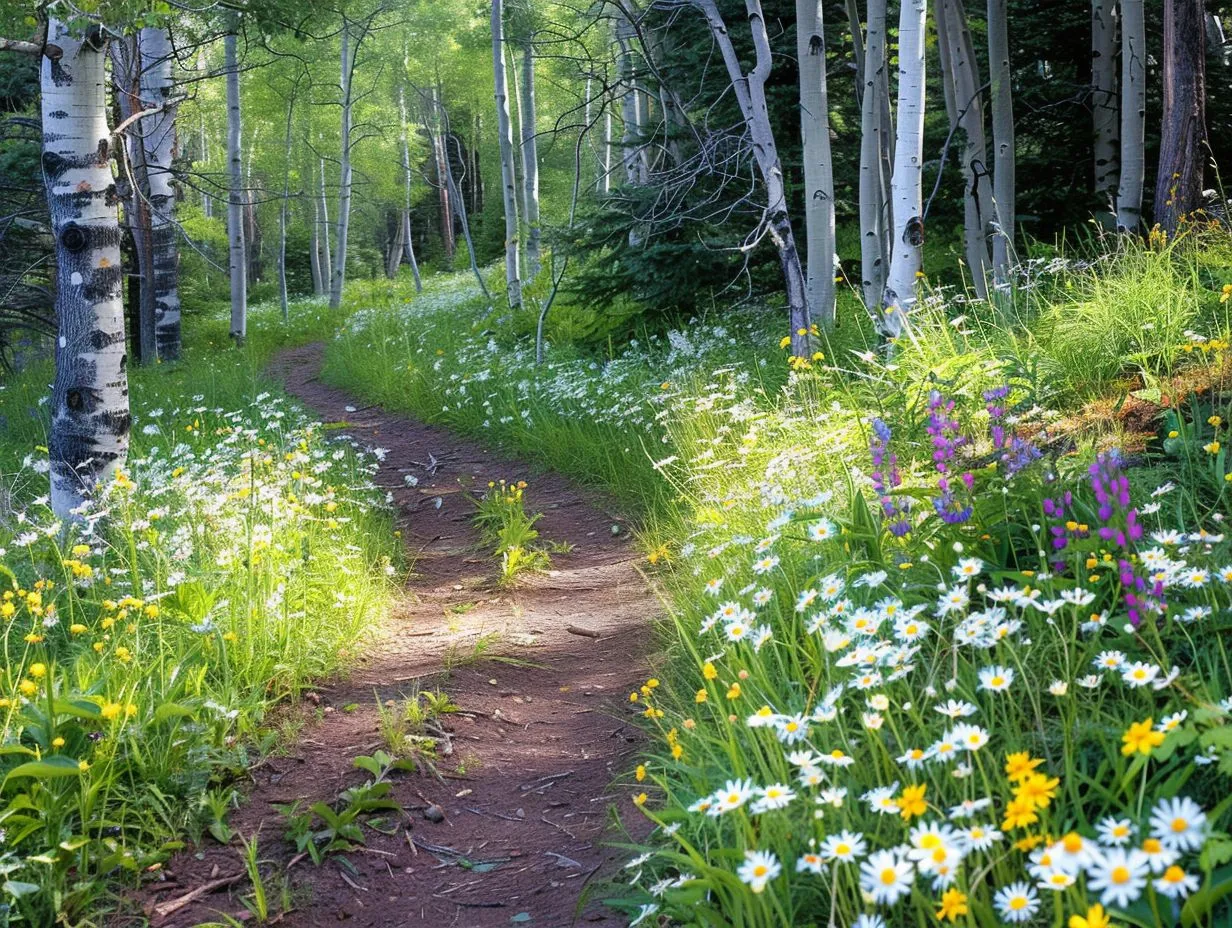
The best wildflower walks in the UK run from late April to the end of August, and the trick is matching the habitat to the month. Bluebells carpet ancient woodland in late April and May, chalk downland and hay meadows peak in June and July, and heather turns the moors purple in August. Pick the right week and the right place and you get a proper spectacle, not a few flowers by the path.
This guide sorts the best walks by season and habitat, names real species and real places, and tells you the one rule that matters legally: you can look and photograph, but you cannot pick or dig up wild flowers. Many of the finest displays sit right next to a pitch, so it pairs neatly with camping along the UK's national trails, where the South West Coast Path, the South Downs Way and the Cleveland Way all run through the habitats below.
It is the wildflower guide from Camping Sites in Britain, where you can find and compare campsites, caravan parks and glamping across the country. Use the month-by-month table to plan your dates, then read the habitat section that matches.
What is in bloom, month by month
Use this to line up a trip with peak flowering. Dates shift a week or two north to south and with the season, so treat them as a guide, not a guarantee.
| Month | Star flowers | Where to see them |
|---|---|---|
| April | Bluebells (starting), wood anemone, wild garlic | Ancient woodland, southern England first |
| May | Bluebells (peak), wild garlic, early orchids, cowslip | Woods, chalk downland, hedgerows |
| June | Orchids, hay meadow flowers, thrift, sea campion | Downland, upland hay meadows, coast paths |
| July | Machair flowers, meadow cranesbill, harebell, poppies | Hebrides, Yorkshire Dales, arable margins |
| August | Heather (ling), bell heather, harebell, knapweed | Moorland, the North York Moors, the Peak District |
| September | Late heather, devils-bit scabious, ivy in flower | Moor edges, grassland, woodland margins |
Spring: bluebell woods and wild garlic
Ancient woodland from late April to mid May gives you the classic British wildflower scene, a haze of native bluebell under the trees. The UK holds around half the world's bluebells, so this is one display you cannot see better anywhere else. Look for the deep violet-blue flowers that droop to one side of the stem with a sweet scent, which is how you tell the native from the paler, upright Spanish garden escape.
The Blean woods near Canterbury, the beech hangers of the Chilterns, and Micheldever Wood in Hampshire are three of the most reliable displays in the south, all best in the first two weeks of May. Get there early in the day for the light and the quiet. Wild garlic, or ramsons, takes over the damp valley woods at the same time, a broad white star flower with a smell you will notice long before you see it.
Stick to the path in a bluebell wood. The plants take years to recover from trampling, and a single crushed patch can take the best part of a decade to come back. If you fancy putting a name to what is edible in those same woods, our guide to foraging while camping covers wild garlic and the rules around it.
Early summer: chalk downland and hay meadows
June and July are the months for grassland, and the richest grassland in Britain is old chalk downland and traditional hay meadow. A square metre of good chalk turf can hold 40 or more plant species, including several wild orchids. The South Downs and the wide grasslands of Salisbury Plain are the strongholds in the south, with common spotted, pyramidal and bee orchids among the more findable species from mid June.
Further north, the upland hay meadows of the Yorkshire Dales are a national treasure. The Muker meadows in Swaledale are the best known, a walled patchwork of wood cranesbill, pignut, yellow rattle and buttercup that peaks in the last two weeks of June before the hay is cut. Footpaths run through them on stone-slab causeways, so you can walk the meadows without touching a single flower. Campsites cluster around Muker and Reeth, and you can browse the wider area through the North Yorkshire campsite listings.
The rarest habitat of all is machair, the flower-rich shell-sand grassland of the Outer Hebrides and the north west coast. In late June and July it turns to a solid sheet of red clover, buttercup, harebell and orchid, humming with bees. Uist and Tiree hold the best of it.
Coast paths: thrift and sea campion
The cliff tops of the south west and Wales come alive with sea pink from late May into July. Thrift, its proper name, forms low cushions of grey-green leaves topped with round pink flower heads, and it grows right on the cliff edge alongside white sea campion and yellow kidney vetch. The Pembrokeshire Coast Path and the Cornwall stretch of the South West Coast Path are the two great walks for it.
Time it for late May to mid June and the clifftops are banded with colour, pink and white against the sea. The Lizard in Cornwall adds genuine rarities, including the Cornish heath, which grows wild almost nowhere else in Britain. Base yourself along the coast through the Cornwall campsite listings or the Pembrokeshire campsite listings, both packed with pitches a short walk from the path. If waterfalls are also on the route, our guide to visiting UK waterfalls near campsites pairs well with a coastal walking week.
August: heather moorland
Heather moorland flowers in August, and for a few weeks the uplands turn deep purple. Three plants make up the show: ling, the fine common heather that gives the broadest wash of colour, bell heather with its darker, richer purple on the drier ground, and cross-leaved heath in the wetter hollows. The bloom peaks in the second and third weeks of August most years.
The North York Moors hold the largest continuous stretch of heather in England and Wales, and the moor above Rosedale and Westerdale is a reliable pick. The Peak District, especially the eastern moors and Stanage, is the great display in the Midlands and north west. Both sit within easy reach of pitches, and the North York Moors in particular has campsites all around its edge in the North Yorkshire listings. Families walking the moors will also want our guide to the best family hikes in Wales for a gentler upland option.
Cornfield flowers: poppies and cornflowers
Arable field margins give you the reddest display of the year in June and July. The common poppy is the one everyone knows, a scarlet sheet along the edge of a wheat field, and it comes up wherever the soil has been disturbed. Cornflower, corn marigold and corncockle once grew with it as the classic cornfield flowers, though modern farming has made all three scarce in the wild.
You will find the best poppy fields on the chalk of the south and east, often on set-aside strips and conservation margins that farmers now leave unsprayed. These are a bonus rather than a destination, so keep an eye on field edges as you drive or walk between campsites in June and you will spot them.
The law: look, do not pick
It is illegal to uproot any wild plant without the landowner's permission. Section 13 of the Wildlife and Countryside Act 1981 makes it an offence for anyone to dig up or otherwise remove a wild plant from the land it grows on unless they are authorised to do so. "Uproot" covers digging up the whole plant, roots and all, and the rule applies to every wild plant, common or not.
Some species get stronger protection still. The plants listed on Schedule 8 of the Act, such as the bluebell as a species traded commercially and several rare orchids, are protected against picking, uprooting, destroying and sale. For everyday flowers, picking a bloom is not itself the offence that uprooting is, but the sensible and widely encouraged position is to leave them all where they are so the next walker sees them too. You can confirm the wording at legislation.gov.uk and read the plain-English version from the Wildlife Trusts.
The practical etiquette is simple. Stick to paths to avoid trampling, keep dogs from bounding through flower-rich ground, take your litter home, and photograph rather than pick. All of this is baked into the Countryside Code, which is the official guidance for enjoying the outdoors in England and Wales.
Apps for identifying flowers
A phone app will name most flowers from a photograph in seconds. Seek by iNaturalist is the friendliest for beginners and works offline once loaded, giving a live identification as you point the camera. PlantNet is strong on European wild plants and lets you compare several photos of the same plant for a better match.
For a check you can trust, Google Lens is quick for a rough steer and the free PlantNet or iNaturalist results are usually reliable to species. If you want certainty on a rare orchid or a tricky heather, cross-check the app against a proper field guide before you record it anywhere.
Frequently asked questions
When is the best time to see bluebells in the UK?
Late April to mid May. Southern England peaks first, usually the first two weeks of May, with the north a week or two later. Ancient woodland gives the fullest display, so aim for well-established woods rather than young plantations.
Is it illegal to pick wild flowers in the UK?
It is illegal to uproot any wild plant without the landowner's permission under Section 13 of the Wildlife and Countryside Act 1981. Rare species on Schedule 8 are also protected against picking. In practice, leave all wild flowers where they grow and photograph them instead.
Where can I see heather in bloom?
On upland moorland in August. The North York Moors hold the largest heather expanse in England, and the Peak District moors around Stanage are the best display in the Midlands. The purple peaks in the second and third weeks of the month.
What is machair and where do I find it?
Machair is flower-rich grassland on shell sand, found on the west coast of the Outer Hebrides and islands like Tiree. In late June and July it flowers as a dense carpet of clover, buttercup, harebell and orchid. It is one of the rarest habitats in Europe.
How do I tell native bluebells from Spanish ones?
Native bluebells are deep violet-blue, droop to one side of the stem, have a sweet scent and cream-coloured pollen. Spanish bluebells stand upright, have paler blue flowers all round the stem, little scent and blue pollen. Native ones dominate old woodland.
Are there good wildflower walks near campsites?
Yes. The South West Coast Path in Cornwall, the Pembrokeshire Coast Path, the Yorkshire Dales meadows and the North York Moors all have campsites within a short walk of the flowers. Browse pitches by area in our campsite listings.
The short version
Match the month to the habitat: bluebell woods in late April and May, chalk downland and hay meadows in June and July, coast-path thrift in early summer, and heather moors in August. Look and photograph, never pick or dig up, and keep to the path. Plan the walking around your pitch with our guide to camping along the UK's national trails, or find a base near the flowers in the campsite listings.