The Best Windbreaks for Beach Camping in the UK
· Updated
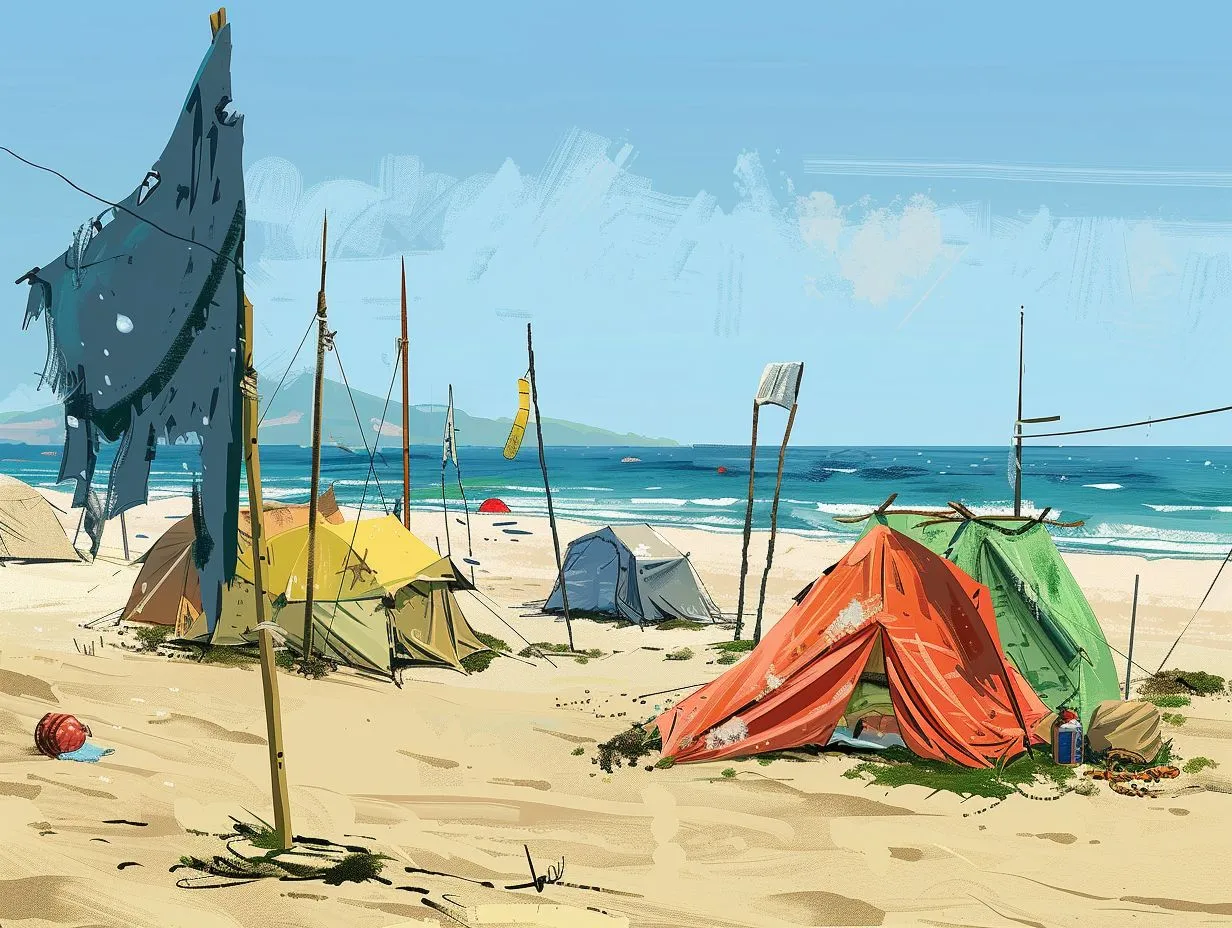
The best windbreak for beach and exposed camping is a traditional poles-and-fabric screen with four to eight panels, steel poles and a height of at least 1.4 metres. It blocks wind, marks out your pitch and gives you a bit of privacy, and it packs down to the size of a rolled towel. Pop-up windbreaks are quicker to put up but they are lighter, lower and far more likely to take off in a proper gust, so they suit calm days rather than a blustery British shoreline.
Get the pitch right and a good windbreak turns an exposed spot into a sheltered one. Get it wrong and it becomes a sail. This guide covers the two main types, how many panels and what height you actually need, wooden versus steel poles, and the trick to driving pegs into soft sand so the whole thing holds firm.
This is part of the complete UK camping gear guide from Camping Sites in Britain, where we cover the kit that earns its place in the car.
The two main types of windbreak
There are two designs worth your money: the traditional poles-and-fabric windbreak and the pop-up. Traditional windbreaks win for exposed coastal pitches because they are taller, sturdier and repairable. Pop-ups win only on convenience.
| Type | How it works | Best for | Rough price |
|---|---|---|---|
| Traditional poles and fabric | Fabric panels thread onto separate poles you drive into the ground | Windy beaches, exposed campsites, family pitches | £15 to £70 |
| Pop-up | Sprung frame springs open, pegs and short guy lines hold it down | Calm days, quick stops, solo trips | £20 to £50 |
A traditional windbreak is the one you see lining every British beach on a bank holiday, and there is a reason for that. Because each pole goes in separately, you can drive them deep, angle them and add extra pegs where the wind hits hardest. A pop-up relies on a few short pegs and a sprung hoop, which is fine in a light breeze but folds or lifts when the wind gets up.
Fabric and pole quality
Look for woven polyester or heavy cotton canvas rather than thin nylon. Canvas is heavier and pricier but it holds shape in strong wind and lasts years. Cheaper polyester models are lighter to carry and perfectly good for two or three trips a season. Whatever the fabric, check the poles slide through proper sewn sleeves or eyelets rather than flimsy loops, because that seam is what takes the strain.
How many panels and how tall
For a family you want six to eight panels; for a couple or solo camper, four to five is plenty. Each panel is roughly 70 to 80 centimetres wide, so a six-panel windbreak gives you about 4.5 metres of screen, enough to wrap two sides of a small pitch. Eight panels let you form an L-shape or a three-sided bay around a stove and chairs.
Height matters more than most people expect. A screen of 1 to 1.2 metres blocks wind at ground level but does little once you stand up. Aim for 1.4 metres or taller if you want shelter while sitting on a chair and genuine privacy for changing. Taller windbreaks catch more wind, so the extra height is exactly why the poles and pegging need to be solid.
Wooden poles or steel poles
Steel poles are the better choice for exposed and coastal camping. They are stronger, they flex without snapping and they take repeated hammering into hard or stony ground. The trade-off is weight and rust, so rinse and dry them after a salty trip to stop corrosion.
Wooden poles look the part and are traditional, but they are heavier, they can split when you hammer them into compacted sand or shingle, and a cracked wooden pole is hard to fix on the beach. Fibreglass poles sit in between: light and rustproof, but they can shatter in a strong gust and the splinters are nasty. For a windbreak you will actually rely on when the weather turns, steel earns its place.
How to put a windbreak up firmly in sand
Pitch the windbreak so its back is to the wind, then drive the poles in deep and angle them slightly away from the wind so the whole screen leans into the gust rather than away from it. Soft sand is the enemy of a firm pitch, so the method matters.
- Bring a rubber mallet. Tapping poles in by hand or with a shoe never gets them deep enough, and a mallet lets you drive steel poles a good 20 to 30 centimetres down.
- Angle the poles a few degrees into the wind, not upright. As the fabric pulls, the lean straightens the pole instead of levering it out.
- Work along the line pulling the fabric taut between each pole before you drive the next one, so there is no slack for the wind to snap at.
- In loose, dry sand, dig down 15 centimetres to firmer damp sand before you start, or bury a sand peg or a filled stuff sack as a deadman anchor for the end poles.
- Check it after 10 minutes. Sand shifts as the wind works the poles, so tap any loose ones back down.
On firm ground or a grassy exposed pitch the same rules apply, but you can add guy lines and standard tent pegs to the end poles for extra hold. Take the windbreak down if you leave the pitch for the day, because an unattended screen in a rising wind is how poles bend and fabric tears.
Using it for shelter and privacy
A windbreak does three jobs: it cuts the wind, it shelters your stove and it screens your pitch. Set it in an L-shape or a three-sided bay and you create a pocket of still air where you can cook, eat and sit without sand blasting your dinner. Position the opening away from the prevailing wind and towards the view.
For cooking, keep the stove well inside the sheltered side but never fully enclosed, and never inside a tent or a zipped beach shelter, because trapped fumes are dangerous. For privacy, a 1.4 metre or taller screen gives you a corner to change a toddler or pull on a wetsuit out of sight. It also quietly marks your patch, which keeps the neighbouring pitch a polite distance away.
Check the rules before you pitch
Many UK beaches and some campsites restrict or ban windbreaks, gazebos and large beach structures during busy periods, so check before you set one up. This is not a technicality: on a packed summer beach a wall of windbreaks blocks access, reserves space unfairly and gets in the way of lifeguards, and several councils now act on it.
BCP Council, which manages the Bournemouth, Boscombe and Poole seafront, asks visitors not to cordon off large areas and restricts gazebos and oversized structures on its busiest beaches at peak times. Other resort councils and Blue Flag beaches run similar seasonal rules, and some campsites cap windbreak size or ban them on pitches for the same reasons. Always read the site or beach information first, keep your footprint modest, and take the windbreak down when you are not using it. Check the local council or beach management page, for example BCP Council's beaches guidance, before you travel.
If you are still choosing where to go, our directory lists sites right across the country. Browse the full campsite listings or jump to the coast in Cornwall or Pembrokeshire, two of Britain's best regions for a breezy beach pitch.
Windbreaks and the rest of your beach kit
A windbreak is one piece of a proper beach setup. Pair it with the right pitch and you are sorted. Our guide on how to choose a site for beach camping covers reading the tide and the wind, and coastal camping in the UK rounds up where to go. If weight is a concern on a walk-in pitch, see our pick of the best lightweight camping gear to keep the load down.
Frequently asked questions
What is the best type of windbreak for a windy beach?
A traditional poles-and-fabric windbreak with steel poles and six to eight panels. It is taller and sturdier than a pop-up, you can drive the poles deep into the sand, and you can add pegs or a deadman anchor where the wind hits hardest.
How do you stop a windbreak blowing over in sand?
Drive steel poles 20 to 30 centimetres deep with a rubber mallet, angle them slightly into the wind, and pull the fabric taut between poles. In loose sand, dig down to firmer damp sand or bury a sand peg or filled bag as an anchor for the end poles.
How tall should a beach windbreak be?
At least 1.4 metres if you want shelter while sitting and privacy for changing. Screens of 1 to 1.2 metres only block wind at ground level. Taller windbreaks catch more wind, so pitch them firmly.
Are wooden or steel windbreak poles better?
Steel poles are better for exposed and coastal camping. They are stronger, flex without snapping and cope with hard or stony ground. Wooden poles look traditional but are heavier and can split when hammered into compacted sand. Rinse steel poles after a salty trip to prevent rust.
Are windbreaks banned on UK beaches?
Not everywhere, but many councils and campsites restrict them at busy times. BCP Council restricts gazebos and large structures on Bournemouth and Poole beaches in peak season, and other resorts run similar rules. Check the local beach or campsite information before you set one up.
Can I cook behind a windbreak?
Yes, keep the stove on the sheltered side but never fully enclosed and never inside a tent or zipped shelter, as trapped fumes are dangerous. A three-sided windbreak bay gives enough still air to cook safely with ventilation.
The short version
Buy a traditional windbreak with steel poles, four to eight panels and a height of 1.4 metres or more, then pitch it back-to-the-wind with poles driven deep and angled into the gust. Check the beach or campsite rules first, because busy resorts restrict them in summer. For the rest of your kit, head back to the complete UK camping gear guide or find your spot in the campsite listings.