Coastal Camping in the UK: The Best Beaches, Tides and Where to Pitch
· Updated
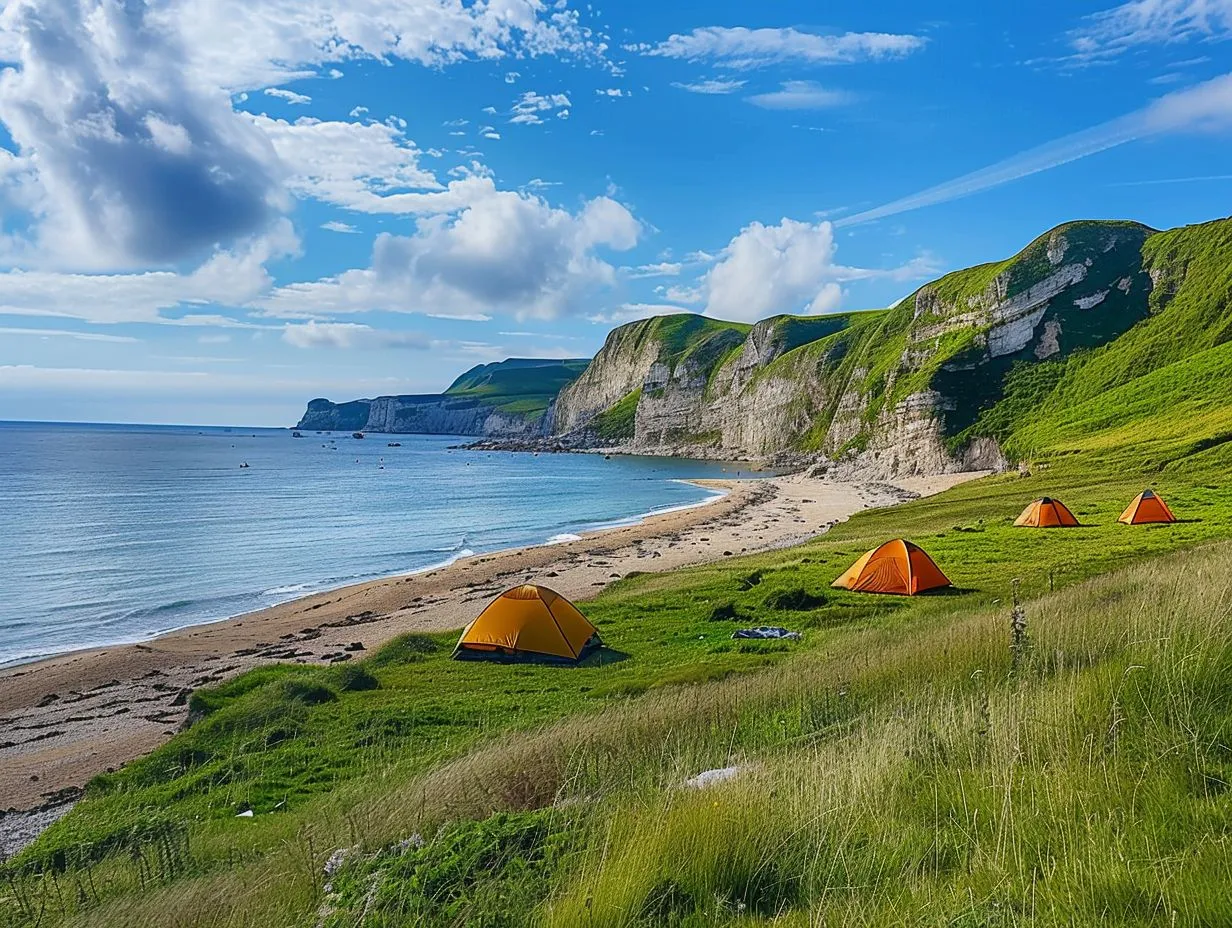
Britain has more than 11,000 miles of coastline, and you can camp within a mile of a beach in every coastal county from Cornwall to Caithness. Coastal camping means waking to the sound of the sea, but it also means wind that flattens a badly pitched tent, tides that cut off a bay in an afternoon, and a shoreline that needs a bit more respect than an inland field.
This guide covers the best stretches of coast for camping, how to pitch and stay safe on sand and shingle, and the county-by-county beach guides that tell you exactly where to go. Use the table to find your region, then read the practicalities before you book, because the difference between a brilliant beach weekend and a wet, windswept one is almost always in the planning.
It is the coastal camping guide from Camping Sites in Britain, where you can find and compare campsites, caravan parks and glamping right across the UK coast.
The best coastal regions for camping
The UK coast splits into distinct camping regions, each with its own character, weather and crowd levels. The south west has the surf and the warmest sea, the south and east have the shelter and the sunshine hours, and the north and Scotland have the drama and the space.
| Region | Coast known for | Best for |
|---|---|---|
| South West (Cornwall, Devon, Dorset, Somerset) | Surf beaches, coves, the Jurassic Coast | Surfing, families, fossil hunting |
| South Coast (Isle of Wight, Hampshire, New Forest) | Sheltered water, high sunshine hours | Sailing, first-timers, calm swimming |
| South East (Kent, East Sussex, West Sussex) | Shingle beaches, white cliffs, day trips | Weekend breaks close to London |
| East of England (Essex, Suffolk, Lincolnshire) | Big skies, wide sand, nature reserves | Birdwatching, quiet flat coast, wind sports |
| The North (Yorkshire, Cumbria) | Cliffs, fishing villages, wide bays | Walking, dramatic scenery, dog walks |
| Wales | The Wales Coast Path, blue-flag beaches | Coast path walking, sea kayaking |
| Scotland | White sand, turquoise water, solitude | Wild feel, empty beaches, big adventure |
Where to camp by the sea, county by county
Every coastal county in Britain has campsites within walking distance of a good beach, and the right one depends on what you want from the water. These are our full guides to the best beaches in each part of the coast, grouped by region.
South West England
The south west is the heart of British beach camping, with the country's best surf, its warmest sea and the fossil-rich Jurassic Coast. Cornwall and Devon draw the biggest crowds, so book early and browse Cornwall campsites and Devon campsites well ahead of the summer holidays.
For the quiet corners, read our guide to Devon's secluded beaches, then head east into Dorset. The Dorset coast holds some of the finest camping in the country, and our guide to Dorset's coastal jewels covers the best of them. Round the corner in the Bristol Channel, our Somerset beach guide picks out the sandy stretches worth the trip.
The south coast
The south coast has the most sunshine hours in Britain and the calmest, most sheltered swimming, which makes it the gentlest introduction to camping by the sea. The Isle of Wight is a favourite for families, and our guide to the Isle of Wight's top beach retreats shows where to base yourself.
On the mainland, the beaches near Portsmouth combine easy access with maritime history, while the New Forest coast pairs pristine Solent shoreline with the biggest, best-equipped campsites in the south.
The south east
The south east is all about big skies, white chalk cliffs and long shingle beaches within easy reach of London. Kent has the widest choice, and our guide to the best beaches in Kent runs from Botany Bay to Camber's edge.
Next door, Sussex splits neatly in two. Read our guide to East Sussex's coastal treasures for the Seven Sisters and Camber Sands, and our tour of West Sussex's best beaches for the calmer water around Chichester Harbour.
East of England
The east coast is Britain's big-sky country: wide, flat, sandy and quiet, with some of the finest nature reserves and the best wind sports in the UK. Essex has more coastline than any other English county, and our guide to Essex's coastal jewels makes the case for it.
Further north, our guide to Suffolk's seaside wonders covers Southwold and the shingle at Dunwich, and our pick of Lincolnshire's coastal escapes runs the length of a coast you can explore from any Lincolnshire campsite.
The north
The northern coast trades warm water for drama, with towering cliffs, working fishing villages and huge empty bays. Yorkshire has the best of it, and our guide to Yorkshire's must-visit beaches covers everything from Whitby to Filey. Base yourself at a North Yorkshire campsite to reach them.
On the other side of the country, Cumbria's coast is quietly overlooked, which is exactly its appeal. Our guide to Cumbria's hidden coastal treasures pairs perfectly with the fells, and you can compare Lake District and Cumbria campsites to reach both in one trip.
Wales
Wales has the only coast path that runs the full length of a country's shoreline, and some of the cleanest beaches in Britain. Our guide to the must-see beaches of Wales covers the pick of them, from Gower to Anglesey.
For the classic camping bases, browse Pembrokeshire campsites for the south west coast and Gwynedd campsites for the beaches of the Llyn Peninsula and Cardigan Bay.
Scotland
Scotland has the most beautiful beaches in Britain and almost nobody on them: white sand, turquoise water and the space to have a bay to yourself. Our guide to Scotland's seaside jewels runs from the Outer Hebrides to the north coast, much of it reachable from a Highlands campsite. Scotland also gives you the strongest wild camping rights in Britain under the Scottish Outdoor Access Code, so a responsible pitch above the tideline is often legal here in a way it is not further south.
Beach camping practicalities: wind, tides and safety
Camping on the coast is more exposed than anything inland, and the two things that catch people out are wind and water. Get your pitch, your pegs and your tide times right and the rest is easy. Our full guides to choosing a site for beach camping and to a safe and enjoyable beach camping trip go deeper, and the essentials are below.
Wind and pitching on sand
Wind is the single biggest problem on the coast, and standard tent pegs are useless in soft sand. They pull straight out under load. Pack wide plastic sand pegs or long screw-in pegs for dunes, rock pegs for shingle, and a mallet, and back up the main guy lines by burying a peg or a stuff sack full of sand as a deadman anchor.
Pitch with the low, narrow end of the tent facing the prevailing wind, which on most of the British coast is the south west, and use a windbreak to shelter your stove and doorway. Check the forecast before you commit: a pitch that is idyllic in a light breeze becomes miserable in a Force 6, and our guide to securing a tent in high winds is worth reading before an exposed coastal weekend.
Tides
The UK has two high tides and two low tides roughly every 24 hours, with about 12 hours and 25 minutes between one high water and the next. The range between them can be enormous: the Severn Estuary has the second largest tidal range in the world at around 15 metres, and a fast incoming tide across flat sand at somewhere like Morecambe Bay can move quicker than you can walk.
Never pitch below the high tide line, which you can read from the strand of seaweed and debris on the beach. Check a tide table for your beach before you arrive, plan any walk out to a headland or island around low water, and give yourself a wide margin to get back. The Met Office and the UK Hydrographic Office publish free tide times for every stretch of coast.
RNLI flags and water safety
The RNLI patrols more than 240 beaches across the UK and Channel Islands, and the safest place to swim is always between the red and yellow flags on a lifeguarded beach. The flags are a simple code worth knowing before you get in the water.
- Red and yellow flags: the lifeguarded zone. Swim and bodyboard between them.
- Black and white chequered flag: for surfboards and other craft, not for swimmers.
- Red flag: danger, do not enter the water under any circumstances.
- Orange windsock: offshore wind, so do not use inflatables.
If you get into trouble in the water, the RNLI advice is to Float to Live: tilt your head back with your ears submerged, relax and breathe normally, and use your hands and feet to stay afloat until the panic passes, then call for help or swim to safety. If you see someone else in difficulty, do not go in after them. In a coastal emergency call 999 or 112 and ask for the Coastguard. Full guidance is on the RNLI beach safety page.
Coastal paths and walks
Some of the best coastal camping is built around a walk, pitching each night within reach of a footpath along the cliffs. Britain has thousands of miles of waymarked coast path, including the 630-mile South West Coast Path and the Wales Coast Path, which was the first in the world to follow an entire national coastline.
Our guide to exploring Britain's coastal pathways covers the great long-distance routes, and our guide to Britain's coastal trails and campsites pairs each one with places to pitch along the way. For a shorter classic, our walks on the Jurassic Coast take in England's only natural World Heritage Site, where the cliffs record 185 million years of history.
Secret beaches and hidden coves
The best coastal pitches are often the ones nobody else has found: a cove reached down a cliff path, or a stretch of sand with no car park. They take more effort to reach and reward it with space and quiet even in August.
Our guide to Britain's secret beaches and cove campsites is the place to start, and our round-up of the UK's most secluded shores adds 10 more hidden beaches for a proper getaway. Wherever you pitch off the beaten track, follow the Countryside Code and leave no trace: pack out everything you bring, and get permission if the land is private.
Seaside towns and coastal attractions
Not every coastal trip is about solitude, and a good seaside town gives you fish and chips, a harbour and somewhere to shelter when the weather turns. Our guide to Britain's seaside towns for campers picks the best bases with campsites close by.
For something different along the way, our guide to Britain's lighthouses maps out the ones you can visit and camp near, and our pick of the best campsites for fossil hunting turns a wet day on a Dorset or Yorkshire beach into a treasure hunt.
Which coastal trip should you choose?
- First trip or young children: the sheltered south coast or the Isle of Wight, with calm water and big campsites.
- Surfing and warm water: Cornwall and north Devon, home to the best waves in England.
- Coast path walking: Pembrokeshire and the South West Coast Path, with pitches strung along the route.
- Empty beaches and big scenery: the Scottish Highlands and islands, or the quiet Cumbria coast.
- Wildlife and wide skies: the east coast of Essex, Suffolk and Lincolnshire, with its nature reserves.
- Fossils and geology: the Jurassic Coast of Dorset and East Devon.
Whichever you pick, compare pitches, facilities and dog policies right along the coast on Camping Sites in Britain before you book.
What to pack for beach camping
- Sand pegs and rock pegs. Wide plastic pegs for sand, tough steel pegs for shingle, plus a mallet. Standard pegs will not hold.
- Extra guy lines and a windbreak. The cheapest way to survive an exposed pitch in a stiff onshore breeze.
- A groundsheet footprint. Keeps sand and damp out of the tent, and sand gets into everything.
- A tide table for your beach. Printed or on an app, checked before you pitch and before any walk out.
- Sun cream and a sun shelter. Sea breeze hides how much sun you are getting, and there is often no shade at all.
- Warm layers for the evening. The temperature on an open beach drops fast once the sun goes down.
- Fresh water. Many beach and coastal sites have limited taps, so carry more than you think you need.
- A dry bag and a waterproof phone pouch. Useful for kit, essential if you are anywhere near the water.
Frequently asked questions
Can you camp on a beach in the UK?
Not usually as a right. Almost every beach in England and Wales is owned by someone, so you need the landowner's permission or a proper campsite, and many beaches ban overnight camping outright. Scotland is the exception, where the Scottish Outdoor Access Code allows responsible wild camping above the tideline on most unenclosed land.
Where is the best coastal camping in the UK?
Cornwall and Devon for surf and warm water, Pembrokeshire for the coast path, Dorset for the Jurassic Coast, and the Scottish Highlands and islands for empty white-sand beaches. The sheltered south coast and Isle of Wight are best for families and first-timers.
How do I stop my tent blowing away on the beach?
Use wide sand pegs or long screw pegs instead of standard ones, back up the main guy lines with a buried deadman anchor, and pitch the low end of the tent into the wind. Add a windbreak and check the forecast, because an exposed coastal pitch takes far more wind than an inland field.
Do I need to worry about tides when camping by the sea?
Yes. Never pitch below the high tide line, marked by the strand of seaweed on the beach, and check a tide table before you arrive. On flat sand a fast incoming tide can move quicker than walking pace, so plan any walk to a headland or island around low water and leave a wide margin to get back.
What do the flags on a beach mean?
Red and yellow flags mark the lifeguarded swimming zone, the black and white chequered flag marks the area for surfboards and craft, a red flag means do not enter the water, and an orange windsock means offshore wind and no inflatables. Always swim between the red and yellow flags.
What number do I call in a coastal emergency?
Call 999 or 112 and ask for the Coastguard. If you fall in unexpectedly, the RNLI advice is to Float to Live: lean back, submerge your ears, breathe normally, and use your hands and feet to stay afloat until you are calm enough to call for help or swim to safety.
The short version
Coastal camping in the UK is at its best in Cornwall and Devon for surf, Pembrokeshire and Wales for the coast path, Dorset for fossils, and Scotland for empty beaches. Wherever you go, pack sand pegs, pitch above the high tide line and into the wind, check a tide table, and swim between the red and yellow flags.
Pick your stretch of coast, then find and compare the campsites, caravan parks and glamping nearby on Camping Sites in Britain.