How to Keep Bees Away When Camping: A UK Guide That Actually Works
· Updated
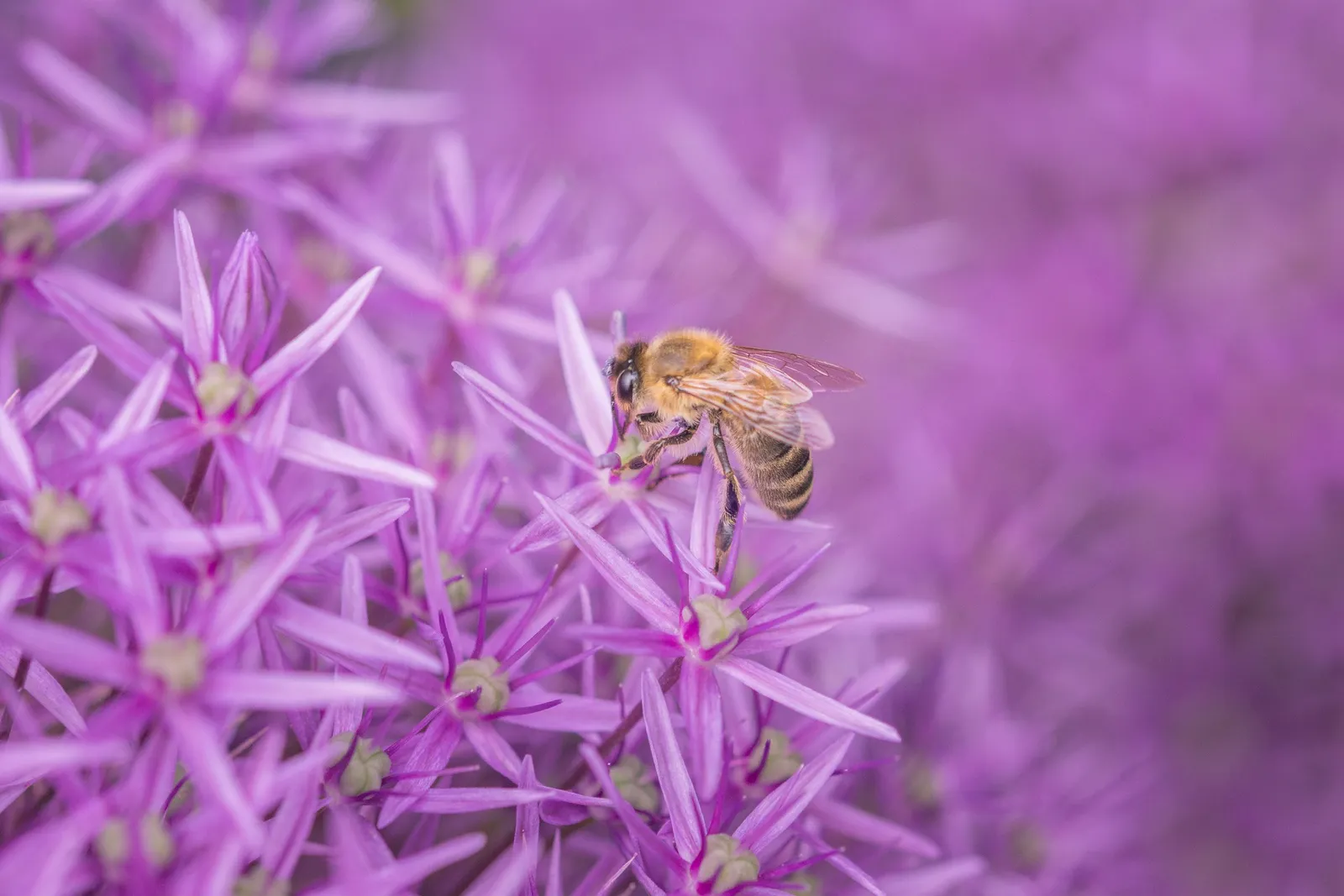
Bees are almost never the problem. If something is circling your plate, landing on your beer can and refusing to leave, it is a wasp. Bees want flowers. Wasps want your lunch.
That single distinction solves most of what campers call a "bee problem", and it is the reason most advice you will read online does not work. This guide covers what actually keeps bees off your pitch in Britain, what is a myth, how to identify the species you will genuinely meet, and what to do if you find a nest or swarm.
It comes from Camping Sites in Britain, where you can find and compare campsites, caravan parks and glamping across the UK, and it is part of our wider guide to insects and wildlife that bother campers in Britain.
The short answer
Keep bees away from your pitch by removing sugar, removing strong floral scent, and choosing where you camp. Nothing else reliably works.
- Cover sweet food and drinks, and use cans with lids or a bottle you can close
- Skip perfumed sun cream, shampoo, deodorant and hairspray on the morning you pitch
- Avoid pitching next to clover, bramble, lime trees, ivy in autumn, or standing water
- Wear plain, muted colours rather than bright florals
- Wash up straight after eating and bag your rubbish
- Stay still if one lands on you and let it leave, or brush it gently with a card
- Zip the inner tent when you are not in it
That is the whole reliable list. Everything else, and there is a lot of everything else on the internet, is either unproven or counterproductive.
Bee or wasp? Work this out first
Nine out of ten late-summer campsite incidents in Britain involve common wasps, not bees. The two need completely different handling, so identify what you are dealing with before you do anything.
| Feature | Bee | Wasp |
|---|---|---|
| Body | Rounded, furry, dusty looking | Smooth, glossy, sharply defined stripes |
| Waist | Thick, no obvious gap | Very narrow, an obvious pinch |
| Legs in flight | Tucked under the body | Dangling behind |
| Interested in your food | Rarely, and mostly sugary drinks in late summer | Yes, aggressively, especially August and September |
| Interested in meat | Never | Yes, early summer |
| Sting | Honeybee stings once and dies, leaving the sting behind | Stings repeatedly |
| Behaviour if you swat | Usually leaves | Escalates, and can recruit others |
If it is a wasp, read our guide to keeping wasps away when camping instead. The tactics are different and the sugar-trap advice that is wrong for bees is partly right for wasps.
The bees you will actually meet in Britain
Britain has around 270 bee species. Four groups account for nearly every campsite encounter, and none of them are looking for a fight.
| Species | When | Where you meet it | Sting risk |
|---|---|---|---|
| Honeybee | March to October | Foraging on clover and bramble, occasionally on spilled sugary drinks in late summer | Low unless you disturb the colony. Stings once |
| Bumblebee (buff-tailed, red-tailed, common carder) | March to September | Everywhere. Blunders into tents and porches | Very low. Will not sting unless squashed or trodden on |
| Tree bumblebee | April to July | Nests in bird boxes, soffits and shed roofs. Males hover outside the nest | Low, but the nest entrance is defended within about a metre |
| Mining bee | March to June | Small holes in short grass and sandy banks, sometimes hundreds together | Effectively nil. Most cannot sting through skin |
Mining bees are worth knowing about because a lawn full of little holes with bees coming and going looks alarming and is completely harmless. Pitch on it if you want. They will be gone by July.
What works, and what does not
This is the section most articles skip, and it is the reason they are wrong. Here is an honest assessment of every deterrent you will see recommended.
| Method | Does it work? | Why |
|---|---|---|
| Covering food and drink | Yes | Removes the only reason a bee has to approach your table |
| Unscented toiletries | Yes | Floral and fruity fragrance genuinely reads as a flower |
| Muted clothing | Yes, mildly | Bees see ultraviolet and blue strongly. Bright floral prints attract investigation |
| Choosing your pitch | Yes, the most effective single action | Bees forage near forage. Move 30 metres from the clover and the problem largely disappears |
| Standing still | Yes | Fast movement triggers defensive behaviour. Stillness does not |
| Peppermint, clove or lemongrass oil | Partly, briefly | Some repellent effect in studies, but it evaporates within an hour or two outdoors |
| Insect repellent (DEET, picaridin) | No | Formulated for mosquitoes, midges and ticks. It does not repel stinging insects |
| Ultrasonic repellers | No | No credible evidence they affect insects at all |
| Sugar water or honey traps | No, actively harmful | Attracts more insects to your pitch and drowns pollinators. Never do this for bees |
| Vinegar spray | No | No evidence. Repeated online because it is repeated online |
| Planting mint | Not applicable | You are on a pitch for two nights. A pot of mint on the table does nothing at range |
| Fake nests | No, for bees | Works somewhat on territorial wasps. Bees do not defend territory |
| Campfire smoke | No | Smoke calms honeybees by masking alarm scent. It does not drive them away |
| Swatting | No, makes it worse | A crushed honeybee releases isopentyl acetate, an alarm pheromone that attracts more bees |
| Calling an exterminator | No, and do not try | See the nest section below. This is the wrong call in Britain |
Choosing a pitch that bees ignore
Where you put the tent matters more than anything you spray, wear or hang up. Walk the field before you commit.
- Avoid clover. A lawn that looks like grass from standing height is often half white clover. Crouch down and check. Clover in flower is the single biggest cause of bees around tents and bare feet
- Avoid bramble in flower, usually June and July, and ivy in flower, September and October. Both are magnets
- Avoid lime trees in late June and July. A lime in flower can hold thousands of bees and drips sticky honeydew onto everything below
- Avoid standing water and dripping taps. Honeybees collect water in hot weather and will visit the same source all day
- Check for holes in the ground and in walls. Bees flying steadily in and out of one spot means a nest. Pitch elsewhere
- Look up. Bird boxes, soffits and roof gaps on shower blocks are classic tree bumblebee sites
Food and drink rules
Sugar is the only thing on your pitch that interests a bee. Control it and you have controlled the problem.
- Decant fizzy drinks into bottles with lids, or use a can with a slider cap. A bee or wasp inside an open can is the most common cause of a sting to the mouth
- Clear plates within a few minutes of finishing rather than leaving them out
- Wipe the table. Spilled squash on a picnic bench works on insects all afternoon
- Bag rubbish and take it to the bins rather than leaving a bag by the tent
- Keep jam, honey and sweet cereal in sealed boxes, not just in the food crate
- Rinse recycling. An unrinsed cider bottle by the tent will attract insects all night
- Watch children with ice creams and lollies. Sticky hands and faces attract attention
When one gets into your tent
Open the door wide, stay still, and let it find its own way out. A bee in a tent is trying to leave, not trying to sting you.
If it will not go, wait until it lands on the fabric, place a cup over it, slide a postcard underneath, and carry it outside. Do not flap at it, do not throw a towel at it, and do not spray it with anything. A trapped bumblebee that has been swatted at is the one scenario where an otherwise harmless insect will sting.
Zip the inner tent whenever you leave, particularly if you are drying towels or leaving sweets inside. Bumblebees investigating a dark opening is how most tent invasions start.
If you find a nest or a swarm on the campsite
Tell the site warden and keep your distance. Do not spray it, do not block the entrance, and do not ring a pest controller yourself.
A swarm is a football-sized or larger cluster of honeybees hanging from a branch, fence post or tent pole, often with thousands more flying around it. It looks terrifying and is the least dangerous state a honeybee colony is ever in. Swarming bees have no home to defend and have filled up on honey before leaving. They usually move on within a few hours to two days.
The British Beekeepers Association runs a free swarm collection service. A local volunteer beekeeper will come and take the swarm away to be rehomed, at no cost, provided it is honeybees and it is somewhere they can safely reach. Pass this to the site warden rather than ringing yourself, as the site will want to manage access.
A bumblebee nest in a bank, a bird box or under a shed needs nothing done to it. Bumblebee colonies die out naturally by late summer and the nest will not be reused. Rope off a metre or two and carry on.
A mining bee aggregation, dozens of small holes in short turf, is harmless and finishes by early summer.
No reputable British pest controller will destroy a honeybee colony, and the answer to "how do I get rid of bees permanently" on a campsite is that you do not. You move your tent. If it is genuinely a wasp nest, that is a different conversation and the warden should handle it.
Bee stings: what to do
Most stings need nothing more than cleaning and a cold compress. The NHS advice is straightforward.
- Remove the sting if one is left in the skin. Only honeybees leave a sting. Scrape it sideways with a fingernail or the edge of a bank card. Do not use tweezers or pinch it, as that squeezes more venom in
- Wash the area with soap and water
- Apply something cold for at least ten minutes. A cool pack from the cool box wrapped in a tea towel works
- Raise the limb if it starts to swell
- Avoid scratching, and do not use home remedies like vinegar or bicarbonate of soda
- An antihistamine tablet and paracetamol will handle the itch and soreness
Swelling that spreads over the next day or two is normal and unpleasant rather than dangerous.
Call 999 immediately if there is swelling of the face, lips, tongue or throat, difficulty breathing or wheezing, a fast heartbeat, dizziness or fainting, or if the person feels a sense of impending doom. These are signs of anaphylaxis. If they carry an adrenaline auto-injector such as an EpiPen, Jext or Emerade, help them use it. Call 999 even if they begin to feel better, because symptoms can return. Full guidance is on the NHS insect bites and stings page.
Give the ambulance service the campsite name, the postcode and the field or pitch number. Rural campsites are hard to find, and someone waiting at the site entrance saves real minutes.
Camping with children and dogs
Most childhood stings in Britain happen to bare feet on clover. Sandals or wellies while running around solve it almost entirely.
Teach the same rule adults need: stand still, do not flap. A bee investigating a child who is standing still will leave in seconds. A bee being swatted at by a panicking child is the one that stings.
Dogs snap at bees and get stung in the mouth. A sting inside the mouth or throat needs a vet call, because swelling there can obstruct the airway. Stings elsewhere usually need only a cold compress. Know where the nearest out-of-hours vet is before you set off.
When bees are a problem in Britain, month by month
| Month | What is about | Risk to campers |
|---|---|---|
| March to April | Bumblebee queens, mining bees, early honeybee foraging | Very low |
| May to June | Peak honeybee swarming season, tree bumblebees active | Low. You may see a swarm, which looks worse than it is |
| July | Clover, bramble and lime in flower. Colonies at maximum size | Moderate. This is peak bees-near-the-tent season |
| August to September | Bee numbers falling. Wasps at their worst | Low for bees, high for wasps. Almost everything bothering you now is a wasp |
| October | Ivy flowering, last honeybee foraging | Very low |
| November to February | Colonies clustered, queens hibernating | None |
If you are booking a trip specifically to avoid stinging insects, late May and early June or the first half of October are your best windows.
Frequently asked questions
What smells keep bees away?
Peppermint, clove, eucalyptus and lemongrass oils have a mild, short-lived repellent effect. Outdoors they evaporate within an hour or two. Far more useful is removing the smells that attract bees: floral perfume, fruity sun cream, scented shampoo and sugary drinks.
What repels bees fast?
Nothing sprays a bee away instantly, and anything that did would also make it defensive. The fastest reliable action is to cover the food, move away from the source calmly, and stand still. A bee with no reason to stay leaves within seconds.
What is the 3 3 3 rule for bees?
It is a beekeeping guideline that a swarm typically settles within about three minutes, stays roughly three hours to three days, and clusters around three metres off the ground. It is a rule of thumb, not a law, and it tells you a settled swarm is temporary.
How do I get rid of bees permanently?
On a campsite, you do not. You move your pitch and tell the warden. Honeybee colonies are collected free by BBKA volunteer beekeepers rather than destroyed, bumblebee nests die out naturally by autumn, and mining bees finish by early summer.
Does insect repellent work on bees?
No. DEET, picaridin and citronella-based repellents are formulated for mosquitoes, midges and ticks. They have no meaningful effect on bees or wasps. Buy repellent for the biting insects it does work on and manage bees by other means.
Should I put out a sugar trap to lure bees away?
No. Sugar and honey traps attract far more insects to your pitch than they remove, and they drown pollinators indiscriminately. Beekeeping organisations advise against them. Remove the sugar instead of adding more.
Why do bees keep landing on me?
Usually fragrance, colour or sweat. Floral or fruity sun cream, perfume and shampoo read as flowers, bright floral prints attract investigation, and honeybees will land on skin for salt in hot weather. Change the products, not your behaviour.
Can I outrun bees?
Not a defensive honeybee colony, which can pursue for a hundred metres or more. If bees are actively attacking rather than investigating, walk quickly away in a straight line and get inside a car, caravan or building. Do not jump into water, as they wait above the surface.
The bottom line
Bees are not out to get you. They are the least aggressive stinging insect you will meet in a British field, and the reason you notice them is almost always that you have pitched next to their food or left yours out.
Pick your pitch with your eyes open, keep the sugar covered, skip the perfumed toiletries, and stand still when one comes near. Ignore the sugar traps, the ultrasonic gadgets and the vinegar. And if what is bothering you is glossy, narrow-waisted and going for your ham sandwich, it is a wasp, and you want a different guide entirely.
For everything else that bites, stings or raids your food in Britain, from midges and ticks to horseflies and seagulls, see our complete guide to camping pests in Britain.