Ticks in the UK: What They Look Like, How to Remove One, and Lyme Disease
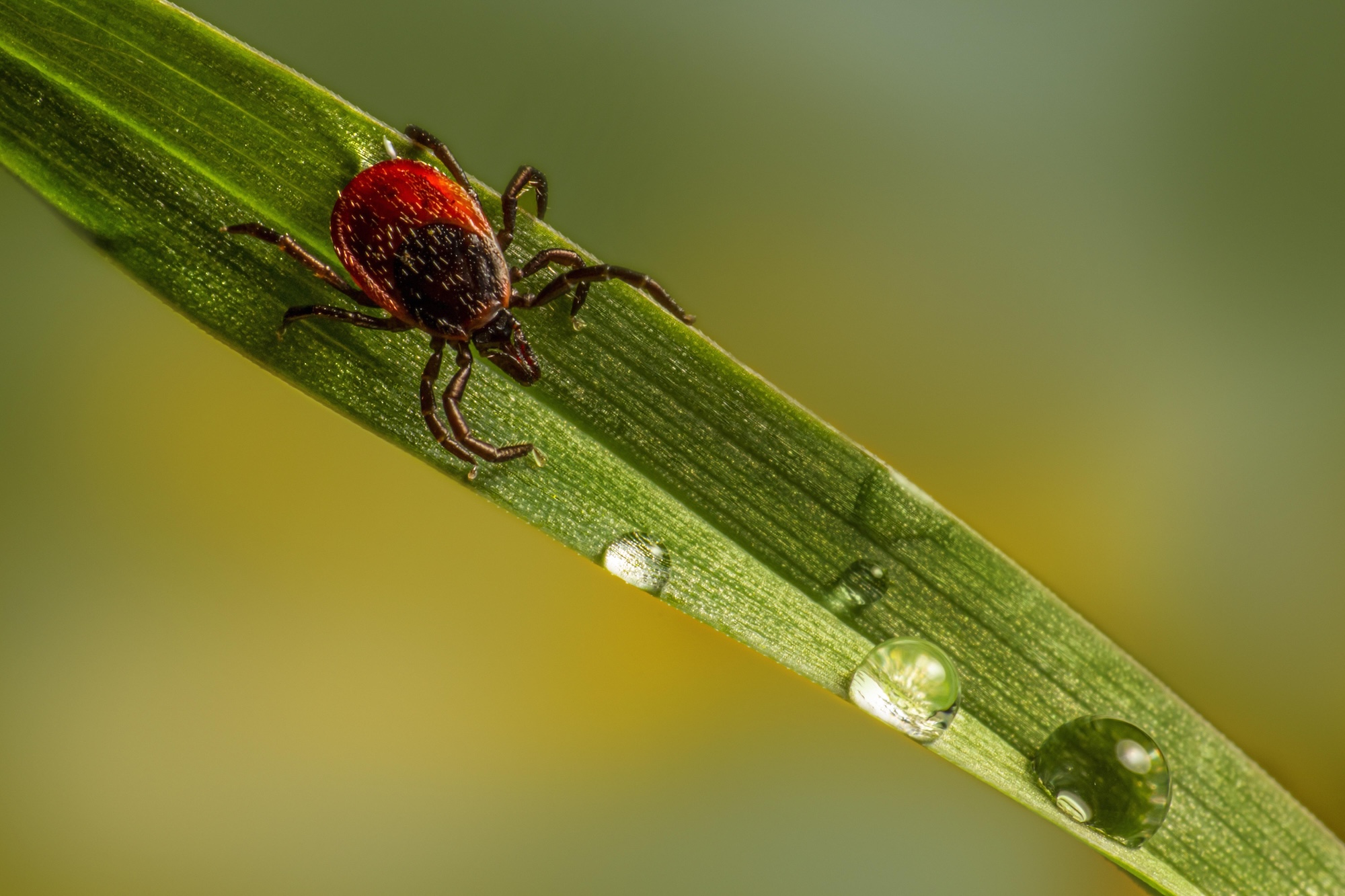
The tick that gives people Lyme disease is usually about the size of a poppy seed. That is the whole problem. Everyone is looking for something the size of a baked bean, and by the time it gets that big it has been attached for days.
Ticks are the only genuine disease risk to campers in Britain, and also the most manageable, because a tick removed promptly is very unlikely to infect you. This guide covers what they look like at each size, how to get one off properly, and what to watch for afterwards.
It is one of the camping guides at Camping Sites in Britain, where you can find and compare campsites, caravan parks and glamping across the UK, and it is part of our wider guide to insects and wildlife that bother campers in Britain.
The short answer
- Check every evening, especially behind the knees, groin, waistband, armpits, behind the ears and the hairline
- Remove any tick straight away with fine-tipped tweezers or a tick tool, gripping as close to the skin as possible and pulling steadily upwards
- Do not twist, jerk, squash, burn it or smother it in Vaseline
- Wash the area afterwards and note the date
- Watch for a spreading rash over the next three to thirty days, and call your GP or 111 if one appears
Speed matters more than technique. The risk of infection climbs the longer a tick stays attached, so a slightly clumsy removal today beats a perfect one tomorrow.
What does a tick look like?
Ticks are arachnids, not insects, so an adult has eight legs. They come in three feeding stages and the size difference between them is enormous, which is why so many people fail to spot one.
| Stage | Size | Looks like | Legs |
|---|---|---|---|
| Larva | Under 1mm | A speck of dirt | 6 |
| Nymph | 1 to 2mm | A poppy seed or a freckle | 8 |
| Adult female | 3 to 4mm | A small sesame seed or spider | 8 |
| Engorged adult | Up to 11mm | A grey-brown bean or skin tag | 8 |
Nymphs cause most human Lyme disease cases in Britain. They are active through spring and summer, they are the size of a full stop, and they are very easy to mistake for a mole or a scab. If you are only checking for things you can obviously see, you are checking for the wrong thing.
An unfed tick is flat, dark and hard-bodied. A fed one is round, taut and greyish, and looks far more like a growth on the skin than an animal. Either way, a tick does not move once attached, which is the quickest way to tell it from a small spider or a piece of grit.
Britain's main species is Ixodes ricinus, called the sheep tick or castor bean tick. It is reddish-brown with a darker shield behind the head.
Where and when you pick them up
Ticks do not fly, jump or drop out of trees. They climb to the tip of a grass blade or a bracken frond, hold their front legs out and wait for something to brush past. This is called questing, and it means you collect ticks at ankle and knee height from vegetation, not from the air.
- Long grass, bracken and woodland edge are the classic habitats. Short mown grass is low risk
- Deer and sheep country is the highest risk, because that is what feeds the adult ticks
- Known hotspots include the Scottish Highlands, the Lake District, the New Forest, Exmoor and Thetford Forest. UKHSA reported the most confirmed Lyme cases in 2024 among people in the South West, South East and London
- Season runs March to October, peaking in late spring and early summer. Ticks can be active on any mild day, including in winter
- Brushing past vegetation is the moment it happens. Walking down the middle of a path rather than the edge genuinely reduces your exposure
How to check yourself
Do it every evening on a camping trip, and get someone else to check the places you cannot see. Ticks head for warm, thin-skinned, covered areas.
- Behind and between the knees
- Groin and buttocks
- Waistband line and belly button
- Armpits
- Behind the ears and along the hairline
- Back of the neck and shoulders
- Between the toes and inside socks
Check children carefully, particularly the head and neck, since they are shorter and more likely to pick ticks up on the upper body. A shower and a proper look afterwards is the easiest way to make it a habit rather than a chore.
How to remove a tick safely
- Use fine-tipped tweezers or a tick removal tool. Blunt eyebrow tweezers will squash the body, which is the one thing you want to avoid
- Grip as close to the skin as you can get, on the head and mouthparts, not the swollen body
- Pull steadily straight upwards. No twisting, no jerking, no rocking. Slow and firm
- Wash the bite with soap and water or an antiseptic wipe, and wash your hands
- Note the date and roughly where on the body. If a rash appears in three weeks you will want to know
If a tick tool is easier for you, use the hook style: slide the fork around the tick at skin level and rotate as the instructions say. Tick tools are designed to work differently from tweezers, so follow the tool rather than these steps.
What not to do
Every one of these is still widely repeated and every one increases the chance of infection, because a stressed or crushed tick regurgitates into the wound.
- Do not burn it with a match or a cigarette
- Do not smother it in Vaseline, nail varnish, alcohol or oil to "make it back out"
- Do not squeeze the body
- Do not twist or yank
- Do not use your fingernails
If the mouthparts break off and stay in the skin, leave them alone. They will work their way out like a splinter. Digging around after them causes more damage than the fragment does.
Which tick removal tool to carry
A dedicated tick tool costs a couple of pounds, weighs nothing and works far better than whatever is in your washbag. There are two useful types.
| Type | How it works | Best for |
|---|---|---|
| Hook or twister | Slides around the tick at skin level and lifts it out with a rotation | Most people, and by far the best for dogs. Usually sold as a pair of sizes |
| Fine-point tweezers | Grips the mouthparts directly and pulls straight up | Very small nymphs, and awkward spots like the hairline |
| Card or lasso styles | Various | Backups. Fine, but the hook is easier under pressure |
Carry both a hook and fine tweezers if you can, since nymphs are often too small for a hook. Put them in the first aid kit rather than the bottom of a rucksack: see essential first aid tips for campers for what else should be in there.
Lyme disease: what to watch for
Most tick bites cause nothing at all. Not every tick carries Borrelia, and even an infected one is unlikely to pass it on if removed promptly. UKHSA recorded 1,581 laboratory-confirmed cases in England in 2024, down slightly on the previous year, though the true figure is accepted to be higher because many cases are diagnosed on symptoms alone.
What matters is knowing the signal.
The rash
A spreading circular or oval rash appears in around two thirds of cases, typically between three and thirty days after the bite. It is often described as a bullseye, but plenty are a solid expanding patch instead.
Two features separate it from an ordinary bite reaction:
- It grows. An ordinary bite reaction peaks in a day or two and shrinks. Erythema migrans keeps expanding, sometimes to the width of a hand
- It usually does not itch or hurt. A normal bite is itchy. This one is often noticed by accident
Symptoms without a rash
A third of cases never develop the rash. Flu-like symptoms in the weeks after a tick bite are the thing to take seriously: fever, headache, fatigue, muscle and joint pain, and swollen glands. If you know you were bitten, say so, because it changes what the doctor is looking for.
What to do
Contact your GP or call 111 if you develop a spreading rash or flu-like symptoms after a tick bite, or after time spent in tick country even if you never saw a tick. Lyme disease is treated with a course of antibiotics and clears up straightforwardly when caught early. Left untreated for months it becomes considerably harder to deal with, which is the entire reason this article exists.
Tell the doctor when and where you were bitten. Photograph any rash, because it can fade before your appointment.
Ticks on dogs
Dogs pick up far more ticks than people do, because they move through exactly the vegetation ticks quest in. Check yours after every walk in long grass or woodland.
- Where to look: head, ears and ear flaps, neck, chest, armpits, between the toes and around the groin
- How to find them: run your fingers slowly through the coat against the lie of the hair. You are feeling for a small firm bump rather than looking
- Removal is the same as for people, and a hook-style tool is much easier on a wriggling dog than tweezers
- Do not pull with fingers, burn, or use Vaseline, for the same reasons as above
- Watch afterwards for lameness that comes and goes, lethargy, fever, swollen joints or loss of appetite in the following weeks, and see a vet if any appear. Dogs get Lyme disease too
- Preventative treatments from your vet reduce the problem substantially if you walk regularly in tick country
Ticks on cats, and one important warning
Cats get ticks too, usually on the head, neck and ears, and the removal method is identical.
Never use a dog tick or flea product on a cat. Permethrin, which appears in many dog treatments, is highly toxic to cats and can kill them. Also keep a treated dog away from the cat until the application is fully dry. Only use products prescribed or sold specifically for cats.
How to avoid picking them up
- Walk in the middle of paths rather than brushing the vegetation at the edges
- Cover your legs. Trousers beat shorts, and tucking them into socks looks daft and works
- Light colours make a tick visible before it attaches
- Use repellent on skin and clothing. DEET and icaridin both work on ticks. See the best insect repellents for campers
- Permethrin-treated clothing is the most effective option for regular walkers, though not around cats
- Pitch on short grass rather than in the long stuff at the field edge
- Keep dogs out of bracken where you reasonably can
- Check the same evening. This is the single most effective thing on the list
Tick season in Britain
| Month | Activity |
|---|---|
| March to April | Becoming active as temperatures rise |
| May to June | Peak. Nymphs are most active and hardest to spot |
| July to August | Still high, especially in the north and west |
| September to October | A second smaller peak as adults become active |
| November to February | Low, but never zero. Mild spells wake them up |
Frequently asked questions
What does a tick look like on a human?
A small dark, flat, eight-legged arachnid, from poppy-seed size as a nymph to about 4mm as an adult. Once feeding it swells into a round grey-brown lump up to 11mm that looks more like a skin tag than an animal. It will not move once attached.
How long does a tick have to be attached to transmit Lyme disease?
Risk increases considerably the longer it stays on, and is generally low in the first day. That is why a daily check matters so much: a tick found and removed the same evening is very unlikely to have passed anything on.
What is the best way to remove a tick?
Fine-tipped tweezers or a tick removal tool, gripping as close to the skin as possible and pulling steadily straight upwards. Never twist, squash, burn it or smother it, since a stressed tick can regurgitate into the wound.
What if the head stays in?
Leave it. Retained mouthparts work their way out on their own like a splinter. Digging at the skin to extract them causes more irritation and infection risk than the fragment itself.
Do all ticks carry Lyme disease?
No. Only a minority of British ticks carry Borrelia, and the proportion varies by area. Most tick bites cause nothing more than a small itchy mark, but you should still watch for a spreading rash for a month afterwards.
Should I keep the tick after removing it?
You do not need to. Routine testing of removed ticks is not part of NHS practice and a negative result would not rule Lyme out. What matters is the date, the location on your body, and watching for symptoms.
Can I get a tick in my garden?
Yes, particularly if you live near woodland, heath or deer country, or have long grass. Ticks are not restricted to remote countryside, and cases have been recorded in urban parks.
The short version
Look for a poppy seed, not a bean. Check every evening, especially the backs of knees, the waistband and the hairline. Pull anything you find straight out with a proper tool, wash it, note the date, and watch for a spreading rash over the next month.
Do that and ticks stop being the one thing in the British countryside genuinely worth worrying about.
For everything else that bites, stings or raids your food in Britain, see our complete guide to camping pests in Britain.