Camping With Kids: How to Get Them to Love the Outdoors
· Updated
The single best way to get a child to love the outdoors is to stop trying so hard. Children take to camping when it feels like play and freedom, not a route march with a nature quiz at the end. Keep it low-pressure, let them lead, and the enthusiasm looks after itself.
That means fewer plans, not more. A muddy stream, a torch after dark and permission to get filthy will beat a packed itinerary every time. Your job is to set up the conditions for fun and then get out of the way.
This is our guide to enjoying the outdoors with kids, part of a wider set of family advice on child-friendly campsites in the UK. When you are ready to book, Camping Sites in Britain lets you find and compare family sites across the country.
Keep it fun and low-pressure
Pressure is the fastest way to put a child off the outdoors, so drop the schedule and follow their lead. If they want to spend 40 minutes poking a puddle with a stick, that is a successful morning. Curiosity does the teaching, and it only shows up when nobody is forcing it.
Let them make some of the calls: which path to take, where to stop for lunch, what to look for. Children who feel in charge of a trip stop moaning and start exploring. Say yes to the small stuff, climbing the log, paddling the shallows, carrying the map, because that is where the memories are made.
Lower your own standards on mess and tidiness for the weekend. Wet knees and muddy hands are the point, not a problem. Pack a full change of clothes per child and stop worrying about the rest.
Outdoor activities kids actually love
The best camping activities cost nothing and use whatever is around you. You do not need kit or a plan, just a few ideas to start them off before they take over. Here are the ones that reliably work in Britain.
- Den building. Fallen branches against a tree trunk, and an hour disappears. Woodland campsites and National Trust estates are ideal, and it teaches teamwork without anyone noticing.
- Rockpooling. Take a bucket and a net to any rocky beach at low tide and hunt for crabs, shrimp and blennies. Check the tide times first, put everything back where you found it, and mind slippery rocks.
- Bug hunts. Turn over a log or lift a stone and see what scuttles out. A cheap magnifying pot turns woodlice and beetles into a proper expedition. Put the log back as you found it.
- Geocaching. A worldwide treasure hunt using a free app and your phone's GPS. There are caches hidden near most campsites, and the promise of finding a hidden box keeps tired legs going for miles.
- Bird spotting. Give a child a simple spotter sheet and cheap binoculars and they will happily sit still, which is a small miracle. The RSPB has free identification guides for common garden and woodland birds.
- Skimming stones. Flat stone, low throw, flick of the wrist. Endlessly repeatable and weirdly satisfying. Any lake or calm river edge will do.
- Wild swimming, safely. A dip in a lake or the sea is the highlight of many family trips, but water is where care matters most. See the safety note below before anyone goes in.
If you want a ready-made list to work through, the National Trust's 50 things to do before you're 11¾ is the best free resource going. It turns "go outside" into 50 concrete missions, from climbing a tree to catching a falling leaf, and children love ticking them off. For more structure, our guide to making a camping trip educational for kids has plenty more.
Wild swimming without the worry
Open water is colder and less predictable than a swimming pool, so a few rules make all the difference. Cold water shock is the real danger, not depth, and it can catch out strong swimmers in seconds. Enter slowly, let everyone acclimatise, and never let a child go in out of their depth.
Teach the RNLI's Float to Live technique before you travel: if you get into trouble, tilt your head back with your ears in the water, relax, and spread your arms and legs to float until the shock passes and you can call for help or swim to safety. Swim parallel to the shore rather than out from it, stay within your depth, and keep children within arm's reach at all times. Avoid rivers in spate and anywhere with a strong current.
Managing screen time
The trick with phones and tablets is to make the outdoors more interesting than the screen, not to ban devices and start a war. Hand a child a real job, spotting birds, navigating with the map, finding the geocache, and the phone stays in the tent on its own. Boredom is usually a signal that they need a mission, not a screen.
Turn the device into a tool for the trip rather than an escape from it. A phone running a geocaching app, a stargazing app or a bird identifier is part of the adventure. Agree a simple rule up front, such as screens only after tea, and stick to it so there is nothing to argue about. Our list of campsite games for rainy days is worth saving for the afternoon the weather turns and the tablet starts calling.
Weather and layers
There is no bad weather, only the wrong clothes, and with children that saying is simply true. Dress them in layers you can add and remove as they warm up and cool down: a base layer, a fleece, and a waterproof over the top. Cotton is the one to avoid, because it holds water and chills fast once it is wet.
Waterproof trousers and wellies are the items that transform a soggy day, letting a child jump in every puddle without a meltdown 10 minutes later. Pack a warm hat even in summer, because British evenings turn cold quickly once the sun drops. A dry, warm child will keep going for hours, and a cold, wet one will want the car.
| Layer | What to pack | Why it matters |
|---|---|---|
| Base | Long-sleeved top, avoid cotton | Wicks sweat, dries fast |
| Mid | Fleece or wool jumper | Traps warmth, easy to remove |
| Outer | Waterproof coat and trousers | Blocks rain and wind |
| Extras | Wellies, warm hat, spare socks | Dry feet and warmth save the day |
Snacks and keeping energy up
A snack in the pocket prevents most outdoor tantrums before they start. Little legs run on frequent fuel, so feed them little and often rather than waiting for a big meal that arrives after the mood has already gone. Hunger and tiredness are behind the majority of meltdowns on a walk.
Pack easy, high-energy snacks that survive a rucksack: flapjack, oatcakes, bananas, dried fruit, cheese, and a bag of homemade trail mix. Keep water on everyone at all times, because children forget to drink until they are already grumpy. A flask of hot chocolate is a brilliant morale boost on a cold day and buys you another mile.
Pace it to little legs
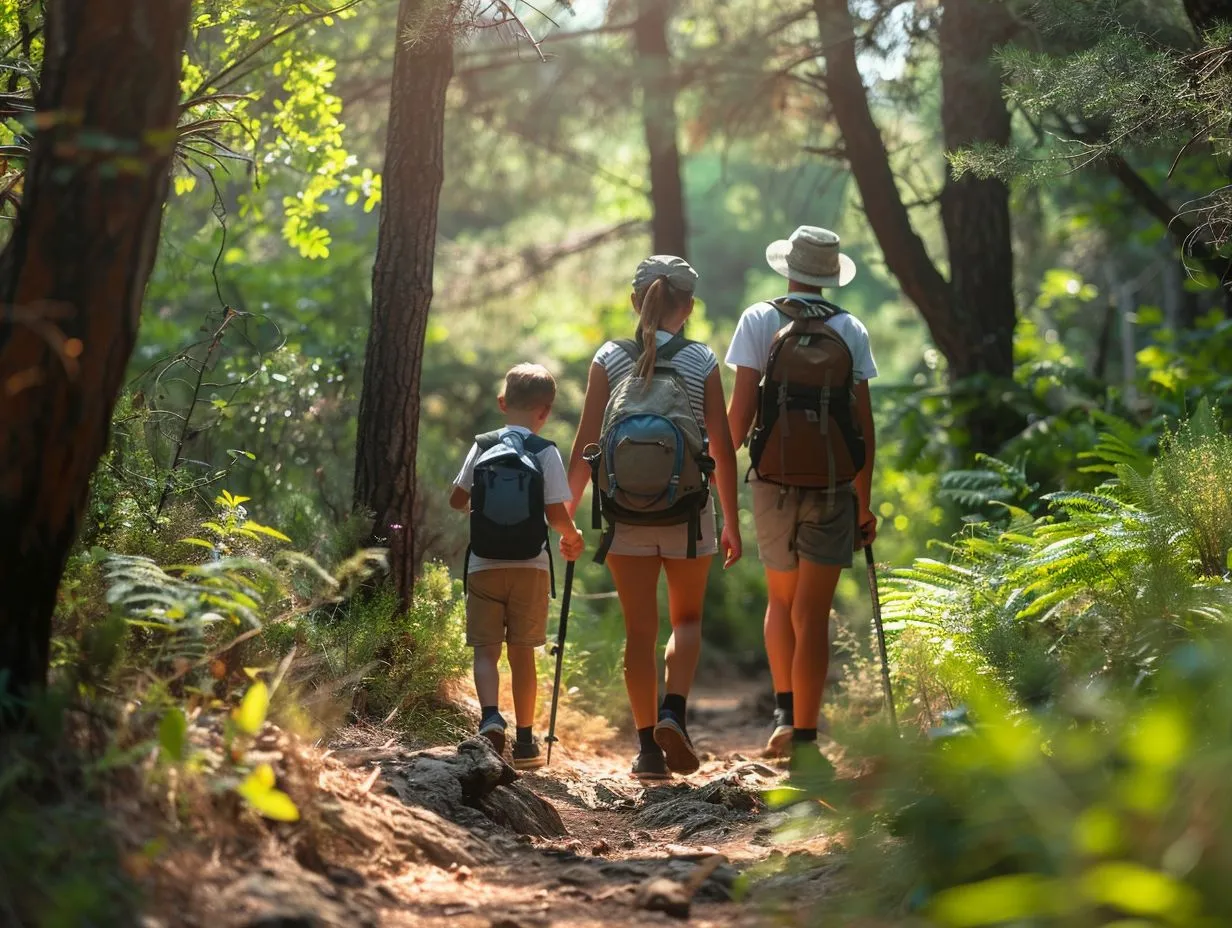
Plan for roughly half the distance you would walk without children, then halve it again for anyone under five. A toddler's idea of a good walk is 500 metres with 20 stops to inspect snails, and fighting that only ends in a tantrum and a carry. Build the stops into the plan instead of resenting them.
Make the journey the activity rather than the destination. Stop at every stream, let them scramble on rocks, and count how many different leaves they can collect. A circular route beats an out-and-back, because "we're nearly there" wears thin fast when it is not true. Turn back with energy to spare, since a happy ending matters more than the miles.
Very young children change the maths again. If you are camping with a baby or toddler, our guide to camping with a baby covers naps, carriers and kit, and once they are on wheels our family-friendly cycling routes near campsites open up longer days out.
Frequently asked questions
What is the best age to take a child camping?
Any age works with the right approach. Babies camp happily in a carrier and a warm sleeping setup, toddlers love the freedom of a field, and children from about five upwards can join in most activities. Match the plan to their stage rather than waiting for a perfect age.
How do I stop my kids getting bored on a camping trip?
Give them a job and let them lead. Den building, bug hunts, geocaching and a National Trust 50 things list all turn open time into missions. Boredom usually means a child needs a task, not a screen, so keep a few simple ideas ready to hand.
How far can young children realistically walk?
Plan about half the distance you would manage alone, and half again for under-fives. A toddler enjoys short walks with frequent stops, so build in time to look at snails and scramble on rocks. Turn back before they tire, not after.
Is wild swimming safe for children?
It can be, with close supervision and cold water sense. Enter slowly to avoid cold water shock, keep children within arm's reach and within their depth, swim parallel to the shore, and teach the RNLI Float to Live technique before you go. Avoid rivers in spate.
What snacks are best for a day outdoors with kids?
Easy, high-energy foods that survive a rucksack: flapjack, oatcakes, bananas, dried fruit, cheese and homemade trail mix. Feed little and often rather than waiting for one big meal, and keep water on everyone throughout the day.
How do I keep kids off screens while camping?
Make the outdoors the better option. Hand them a real role such as navigating or finding a geocache, agree screens only after tea, and use the phone as a trip tool for spotting apps rather than banning it outright.
The short version
Keep it fun and low-pressure, let the children lead, dress them in layers, feed them often and pace the day to little legs. Do that and the love of the outdoors takes care of itself, no lecture required.
Avoid the classic mistakes with our guide to the 10 common blunders that spoil family camping trips, then browse our campsite directory to find a family-friendly pitch for your next adventure.