
Is Wild Camping Legal in the UK? Pitching a Tent and the Law
· Updated
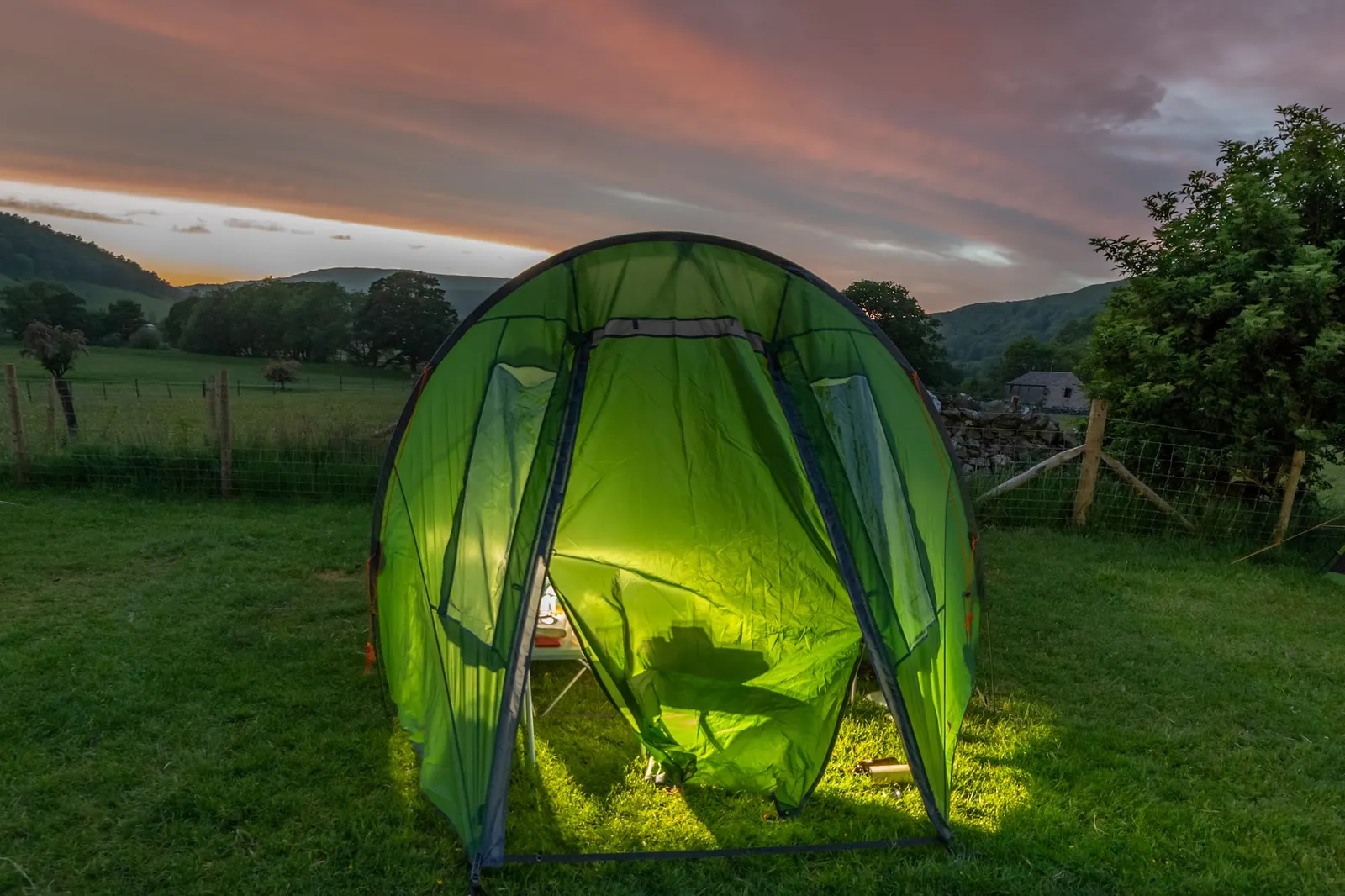
You cannot pitch a tent anywhere you like in the UK. Across most of the country, camping on land you do not own is trespass unless the landowner has given permission, and that includes moorland, forestry, beaches and the fields beside a footpath. There are exactly two places where the law is on your side: Dartmoor, where the UK Supreme Court confirmed a legal right to wild camp on 21 May 2025, and most of Scotland, where the Land Reform (Scotland) Act 2003 gives a broad right of responsible access.
That is the short answer for campers. The longer answer, for anyone thinking about hosting campers on their own land, runs through site licensing, the 28-day rule and the small-site certificates that let a farm take a handful of caravans without a full licence. This page covers both, plus the knife law that trips up more campers than any other rule.
It is the camping law guide from Camping Sites in Britain, where you can find and compare campsites, caravan parks and glamping across the UK.
Where wild camping stands, nation by nation
The rules differ across the four nations, and Dartmoor sits in a category of its own. Use this table for the at-a-glance position, then read the section for wherever you are heading.
| Nation | Wild camp without asking? | The legal position |
|---|---|---|
| Scotland | Yes, responsibly | Right of access under the Land Reform (Scotland) Act 2003 and the Scottish Outdoor Access Code. A permit is needed in the Loch Lomond and The Trossachs management zones from 1 March to 30 September. |
| Dartmoor, England | Yes, on the commons | A legal right on the Dartmoor commons, confirmed by the UK Supreme Court on 21 May 2025. The only place in England where you may wild camp without permission. |
| Rest of England | No | You need the landowner's permission. Camping without it is trespass. |
| Wales | No | You need the landowner's permission. There is no general right to wild camp. |
| Northern Ireland | No | You need the landowner's permission. Access rights are narrower than in Scotland. |
Wild camping in England: Dartmoor is the only legal right
Dartmoor is the one place in England where you can legally pitch a tent for the night without asking anyone. On 21 May 2025 the UK Supreme Court dismissed a landowner's appeal and confirmed that the public right of open-air recreation on the Dartmoor commons includes backpack camping. The right rests on the Dartmoor Commons Act 1985, and it applies only to the commons, not to enclosed farmland or the whole national park.
Everywhere else in England, you need the landowner's permission. Wild camping without it is a civil trespass, and while it rarely leads to more than being asked to move on, you have no right to be there. Mountain areas like the Lake District have a long tradition of tolerated high-level camping, but tolerance is not permission, and the ground rules are strict: arrive late, leave early, pitch out of sight of roads and houses, keep groups tiny and take everything home. If you want the certainty of a legal pitch, our directory covers hundreds of sites, including the Lake District and Cumbria and Devon around Dartmoor.
If you do head out onto open ground, the difference between welcome and unwelcome is entirely about how you behave. Our full guide to wild camping covers pitching, waste and leaving no trace, and it is worth reading before your first trip.
Wild camping in Scotland: the right to roam
Scotland gives you a genuine right to wild camp on most unenclosed land. The Land Reform (Scotland) Act 2003 created a right of responsible access, and the Scottish Outdoor Access Code sets out what responsible means in practice: small numbers, a couple of nights in any one spot, well away from houses and roads, and no trace left behind. The right does not extend to enclosed fields of crops or livestock, or to the immediate grounds of a house.
There is one important exception. In the camping management zones of Loch Lomond and The Trossachs National Park, byelaws require a permit or a place on a formal campsite between 1 March and 30 September. Book ahead, because permits for popular lochside spots go quickly. Choosing the right pitch matters more in Scotland than anywhere, and our guide to how to choose a site for wild camping in Scotland covers the ground. If you would rather have facilities, browse campsites across the Scottish Highlands.
Wild camping in Wales and Northern Ireland
Wales and Northern Ireland both follow the England rule: you need the landowner's permission, full stop. There is no general right to wild camp in either nation, and the open access land you can walk across under the Countryside and Rights of Way Act does not carry a right to camp on it. Some Welsh estates and farms will say yes if you ask, and a friendly landowner is worth far more than a quiet corner you have not cleared.
The principle across England, Wales and Northern Ireland is the same. No permission means no pitch, whatever the ground looks like.
Wild camping versus running a campsite: where the law changes
Wild camping and running a campsite are two completely different things in law, and it is worth being clear which one you are dealing with. Wild camping is you, a backpack and a night on open ground, governed by access rights and trespass. Running a campsite is inviting other people to camp on your land, and that pulls in planning permission, site licensing and, in most cases, a licence from the local council.
The moment money changes hands or you host paying guests on any scale, you have crossed from the first category into the second. The rest of this page is for landowners looking at that second question: what it actually takes to let people camp on your land legally.
Site licensing for landowners
If you want to run a campsite or caravan park, you almost always need permission from your local council. There are two layers to get right: planning permission for the change of use of the land, and a site licence for the operation itself. The exact requirements depend on what you are hosting, how many pitches and for how long each year.
The caravan site licence
Running a caravan site legally requires a site licence from your local authority under the Caravan Sites and Control of Development Act 1960. You need planning permission for the site first, and the licence then sets conditions on spacing, density, fire points, roads and facilities. A licence lasts as long as you keep to its conditions, and there is no fee for the licence itself, though the planning application costs. The full process for landowners is covered in our guide to whether you need a caravan site licence.
For a tents-only site the picture is a little different, and the term "camping licence" gets used loosely. Our guide to what a camping licence is sets out what tent operators actually need and where the caravan rules stop and start.
The 28-day rule and the 60-day campsite right
Permitted development lets you run a temporary campsite for part of the year without full planning permission. The long-standing rule allows land to be used for almost any temporary purpose, camping included, for up to 28 days in a calendar year. Since 26 July 2023, England has a separate and more generous right specifically for campsites: Class BC permitted development allows a temporary recreational campsite for up to 60 days a year, with no more than 50 pitches, for tents, motorhomes and campervans, though not touring caravans.
These rights come with strings. You must notify the local planning authority in advance, sites in flood zones need prior approval, and the 60-day right applies to England only. Use them and you can test demand before committing to a permanent, licensed site.
Certificated Locations and Certificated Sites
The simplest legal route for a small landowner is a certificate from one of the big clubs, which lets you take up to five caravans without a full council site licence. The Caravan and Motorhome Club calls these Certificated Locations, and the Camping and Caravanning Club calls them Certificated Sites. Both clubs are exempted organisations under the 1960 Act, which is what allows them to certify a small site in place of the council licence.
A certificate covers up to five caravans or motorhomes at a time, plus a small number of tents on many sites, and the club inspects the pitch and sets basic standards. It is how a great many farms and smallholdings across Britain host a handful of vans in a quiet field. You still need planning permission if the use is not temporary, so this is a licensing shortcut, not a planning one.
Knife law for campers
You can carry a folding pocket knife with a non-locking blade under 3 inches (7.62cm) in public without needing a reason, under the Criminal Justice Act 1988. That covers the classic Swiss Army style knife most campers keep in a pocket. The moment the blade locks open, or is longer than 3 inches, or is fixed rather than folding, you need a good reason to have it with you in a public place.
The good news for campers is that using or carrying a knife for camping, cooking or bushcraft is a recognised good reason, so a locking knife or a fixed-blade bushcraft knife is fine on your trip. The point is context: that knife belongs in your kit on the way to and at the campsite, not in your pocket on a night out in town. Our full guide to UK knife law for campers and hikers works through the blade types and what counts as good reason.
Do you need camping insurance?
Insurance is not a legal requirement for a camper, but it earns its place fast. A tent, sleeping system, stove and cooking kit add up to real money, and household contents cover often does not follow your gear away from home. Cancellation, lost bookings and medical cover on a trip abroad are the other common gaps. For anyone running a site, public liability cover is effectively unavoidable and is usually a condition of a licence or club certificate. Our guide to whether camping insurance is needed weighs it up for both campers and hosts.
Which route is right for you?
If you are a camper who wants a legal night under the stars for nothing, your only two options are Dartmoor and Scotland, and both come with a responsibility to camp lightly and leave no trace. Anywhere else, the honest choice is to ask the landowner or book a proper pitch. A booked site brings toilets, water, a level pitch and no risk of being moved on at midnight, which is why our campsite directory exists.
If you are a landowner, match the route to your ambition. A weekend or two a year suits the 28-day rule or the 60-day campsite right. A quiet field for a few caravans suits a club Certificated Location. A permanent, larger operation means planning permission and a full site licence. Start small, stay legal, and build from there.
Frequently asked questions
Can you camp anywhere in the UK for free?
No. The only places you can legally wild camp without permission are the Dartmoor commons and most unenclosed land in Scotland. Everywhere else in England, Wales and Northern Ireland you need the landowner's consent, or you are trespassing.
Is wild camping legal on Dartmoor?
Yes. The UK Supreme Court confirmed on 21 May 2025 that the public has a legal right to backpack camp on the Dartmoor commons. It is the only place in England with such a right, and it applies to the commons, not enclosed farmland or the whole national park.
Is wild camping legal in Scotland?
Yes, responsibly, on most unenclosed land under the Land Reform (Scotland) Act 2003 and the Scottish Outdoor Access Code. The exception is the Loch Lomond and The Trossachs management zones, where you need a permit or a formal campsite between 1 March and 30 September.
Do I need a licence to run a campsite on my land?
Usually yes. A caravan site needs a licence from your council under the Caravan Sites and Control of Development Act 1960, plus planning permission. You can avoid the full licence for up to five caravans through a club Certificated Location, or run a temporary campsite under permitted development for up to 28 or 60 days a year.
What size knife can you legally carry when camping?
A folding, non-locking blade under 3 inches (7.62cm) can be carried anywhere without a reason. Locking, fixed or longer blades need a good reason, and camping, cooking or bushcraft counts as one, so a proper camp knife is fine on your trip but not in your pocket around town.
Can you pitch a tent on a beach in the UK?
Only with permission or where a legal right exists. Most UK beaches are owned by someone, whether the Crown Estate, a council or a private estate, so pitching without consent is trespass. Scottish beaches on unenclosed land fall under the right of responsible access.
The short version
You cannot pitch a tent wherever you fancy in the UK. Dartmoor and most of Scotland give you a legal right to wild camp responsibly, and everywhere else needs the landowner's permission or a booked pitch. If you are hosting rather than camping, a site licence, the 28-day rule or a club certificate is the way to do it legally.
When in doubt, ask first or book a proper site. Browse pitches across the UK in our campsite directory, or start at the Camping Sites in Britain homepage.