How to Choose a Wild Camping Spot in Scotland
· Updated
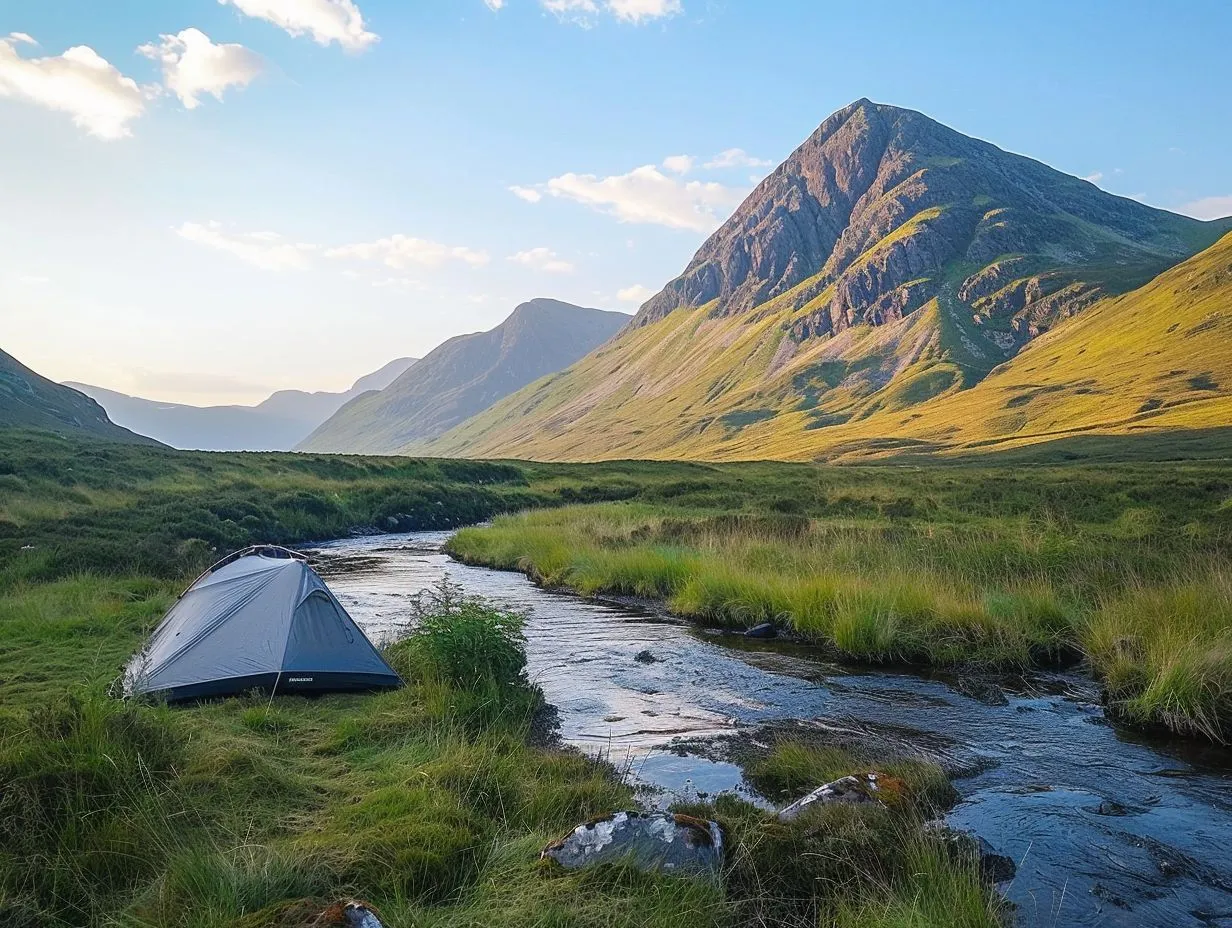
You can wild camp almost anywhere in Scotland, legally and for free. The Land Reform (Scotland) Act 2003 gives everyone a right of responsible access to most land and inland water, and the Scottish Outdoor Access Code sets out how to exercise it. Choosing a good pitch is therefore less about finding somewhere you are allowed to be and more about reading the ground in front of you.
The one big exception is the Loch Lomond and The Trossachs camping management zones, where you need a permit between 1 March and 30 September. Everywhere else, the rule of thumb is simple: pitch late, leave early, stay small, and leave no trace. This is part of our guide to wild camping in the UK, and it sits alongside the campsite listings at Camping Sites in Britain for the nights you would rather have a shower block.
Where you can and cannot pitch
Responsible access covers most unenclosed land: hills, moorland, forests, riverbanks, loch shores and the margins of farmland. It does not cover gardens, sports pitches, school grounds, farmyards, growing crops or fields with livestock in them. You camp in small numbers, in a lightweight tent, for no more than two or three nights in one place, and then you move on.
The access right also excludes motorised camping. Pitching a tent on the hill is fine; parking a campervan overnight in a lay-by is a separate matter governed by local byelaws and parking rules, not by the access code. If you are travelling off-grid by van, our guide to off-grid camping in Britain covers the practicalities.
The Loch Lomond and The Trossachs exception
Inside the national park's camping management zones you must book a permit to camp or stay overnight in a motorhome between 1 March and 30 September. Permits cost £4.50 per tent or motorhome per night, you can book up to four weeks ahead, and you can stay up to three consecutive nights in one zone. Outside those zones, and outside those dates, the ordinary access code applies. Check the park's permit map before you set off, because the zones cover many of the most popular lochside spots.
How to choose the pitch itself
A good wild camping pitch is well away from buildings and roads, on durable ground, close to water but not on top of it, sheltered from the wind, and chosen with the midges in mind. Get those five things right and the rest of the trip usually takes care of itself.
| What to look for | Why it matters |
|---|---|
| Well away from buildings and roads | The access code asks for it, and distance buys you privacy and quiet |
| Durable, level ground | Grass, moss, gravel or heather recover; boggy hollows and fragile ground do not |
| Near water, not beside it | Pitch back from the shore to protect the bank and avoid rising water |
| Sheltered from the prevailing wind | A stable, quiet night, but read the midge trade-off below |
| Off the path and out of sight | Less disturbance for you, for wildlife and for other walkers |
Get away from buildings, roads and fields
Pitch out of sight and earshot of houses, and back from any road. The access code is explicit that camping should be well away from buildings and roads, and away from the enclosed fields where farmers keep crops and stock. In practice this means walking on past the first flat patch by the car park and gaining a little height or distance before you settle. It is also plain good manners, since nobody wants a tent appearing on the view from their kitchen window.
Choose durable ground
Pitch on ground that will bounce back. Short grass, moss, gravel, heather and the firm turf beside a path all recover quickly. Avoid soft peat, boggy hollows, delicate montane plants and anywhere that is clearly waterlogged, both for the ground's sake and because a wet pitch is a miserable one. Level ground matters more than you expect at 10pm, so find the flat before you unpack, not after.
Camp near water, but not on it
Being able to collect water saves carrying litres uphill, so a burn or lochside is worth aiming for. Pitch back from the edge though, on firm ground rather than the fragile bank, and remember that Scottish rivers rise fast after rain on the hills. When nature calls, go at least 30 metres from any loch, river or burn and bury the waste, which keeps the water clean for the next person and for the wildlife that depends on it. Treat or boil water before drinking it, as even a clear Highland burn can carry giardia from livestock or deer upstream.
Find shelter, and mind the midges
Shelter and midges pull in opposite directions, and choosing your pitch is largely about balancing the two. A tucked-away spot in the lee of a boulder or a fold in the hillside gives you a calm, quiet night. The catch is that the Highland midge thrives in exactly those still, humid, sheltered conditions from late May to mid September, worst at dawn and dusk on the west coast. Midges cannot fly in a breeze above about 6mph, so on a warm damp evening a slightly more exposed pitch that catches the wind is far more comfortable than a sheltered sun trap by the water. Carry a head net either way, and read our full guide to midges in Scotland before a summer trip to the west.
Leave no trace
Leave your pitch so that nobody can tell you were there. That is the single obligation that keeps Scotland's access rights intact, and it is not complicated. Take everything out with you, including food scraps, fruit peel and anything you think might rot away, because it will not do so before it draws animals or the next camper notices it.
- Pack out all litter, including tea bags, wrappers and cigarette ends
- Bury human waste in a small hole at least 30 metres from water, and carry out used toilet paper or bury it deep
- Never wash dishes or yourself directly in a burn or loch; carry water away and use it sparingly, without soap where you can
- Move on after a night or two so the ground recovers and no single spot gets worn out
- Leave gates as you found them, and give farm animals and wildlife a wide berth
These habits are the core of low-impact camping anywhere. If you want to build them into a proper skill set, our guide to the essential skills for wild camping goes further on navigation, water and pitching.
Fires: assume no
Do not light an open fire in dry conditions, and in most of Scotland the safest default is not to light one at all. The access code strongly discourages open fires, and Scotland now sees regular wildfires on moorland and in forestry, several of them started by campers. Peaty ground is the real danger, because peat can smoulder underground long after the visible flames are out and reignite hours later.
Use a camping stove instead. Stand it on a level, non-flammable surface, keep it clear of dry grass and vegetation, and never leave it burning unattended. During the spring and summer fire risk periods, and whenever the ground is dry, treat any naked flame as a genuine hazard rather than an inconvenience. A stove cooks faster than a fire anyway, and it leaves no scorched circle behind you.
Where to head first
The Highlands offer the most space and the wildest pitches, from Torridon and Assynt in the north west to the glens around the Cairngorms. Glen Affric, Glen Etive and the shores of the quieter lochs are classic starting points, and much of the far north west has so few people that finding a legal, unobtrusive pitch is easy. If you would rather ease in with facilities on hand for the first night, browse the campsites in the Scottish Highlands and use one as a base before you head onto the hill. For inspiration on remoter corners, our guide to camping off the beaten path in Britain is a good place to start.
Frequently asked questions
Can you wild camp anywhere in Scotland?
Almost anywhere. The Land Reform (Scotland) Act 2003 gives a right of responsible access to most unenclosed land and inland water. The main exception is the Loch Lomond and The Trossachs camping management zones, which require a permit from 1 March to 30 September.
Is wild camping in Scotland free?
Yes, on almost all land it is free and legal under the access code. The only routine charge is inside the Loch Lomond and The Trossachs management zones, where a permit costs £4.50 per tent or motorhome per night during the managed season.
How far from a road or house should I camp?
The Scottish Outdoor Access Code asks you to camp well away from buildings and roads, and away from enclosed fields with crops or livestock. Aim to be out of sight and earshot of houses, which usually means walking on beyond the first obvious spot near the car park.
Can I have a campfire when wild camping in Scotland?
Open fires are strongly discouraged and should never be lit in dry conditions or on peaty ground, where they can smoulder underground and reignite. Use a camping stove on a level, non-flammable surface instead, especially during spring and summer fire risk periods.
How do I avoid midges when choosing a pitch?
Pick a pitch that catches a breeze, because midges cannot fly in wind above about 6mph. Avoid still, sheltered, humid spots by water at dawn and dusk from late May to mid September, carry a head net, and use a picaridin or DEET repellent.
How many nights can I stay in one spot?
Two or three nights at most, then move on. Lightweight camping in small numbers for a short stay is what the access code allows. Staying longer in one place, or camping in large groups, falls outside responsible access.
The short version
Wild camping in Scotland is a right, not a favour, so pitch with confidence but pitch responsibly. Get well away from buildings and roads, choose durable ground near water but not on the bank, balance shelter against the midges, skip the fire, and leave no trace at all. Remember the Loch Lomond and The Trossachs permit season, and you are sorted.
For the wider picture on rights, kit and where to go, head back to our guide to wild camping in the UK.