How long does a Calor gas bottle last? A camper's guide
· Updated
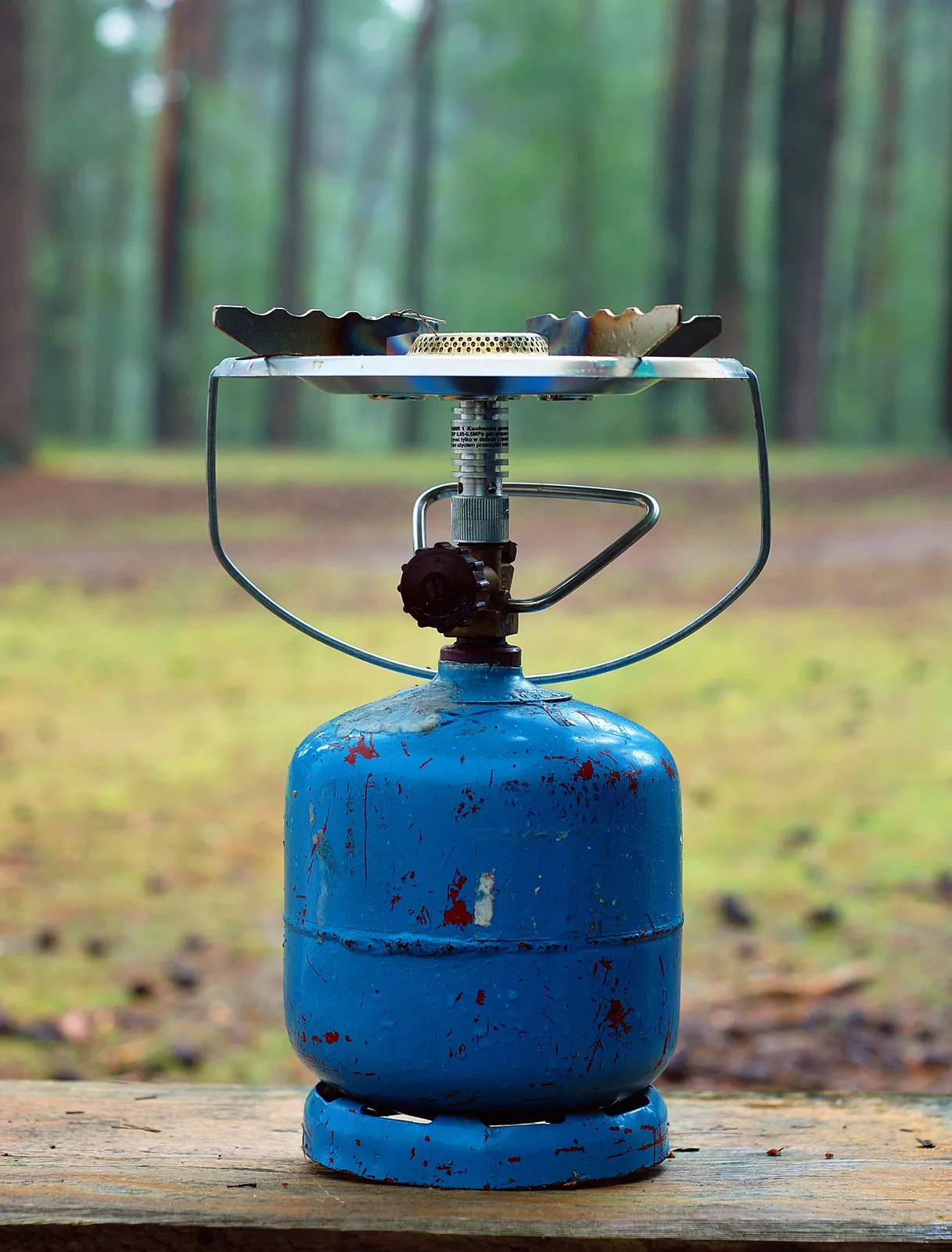
A 6kg Calor gas bottle gives you roughly 40 hours of full-power cooking on a typical camping stove, and far longer if you cook in short bursts. The exact figure depends on the burner output and how hard you run it, but that number is the one most campers want, so let us start there and then show you how to work it out for your own kit.
Calor is the LPG (liquefied petroleum gas) that fuels most camping stoves, caravan hobs and patio heaters in Britain. Getting the most from it comes down to three things: picking butane or propane for the season, choosing the right bottle size, and knowing how to check the level before a trip. This guide is part of our advice on campfire cooking essentials, and it sits alongside the campsite guides and listings at Camping Sites in Britain.
Get the basics right and one bottle will happily see a family through a long weekend of cooking with gas to spare. Get them wrong, usually by taking a butane bottle into a frosty field, and you will be eating cold beans wondering why the flame has died.
Butane or propane: which bottle for camping?
Propane is the safe year-round choice, and butane is fine only in warm weather. The two gases behave differently in the cold, and that single fact decides which bottle you should pack.
Butane comes in Calor's blue bottles. It burns cleanly and is a little cheaper per unit of energy, but it has a boiling point of about -2C, so it stops vaporising as the temperature drops near freezing. On a cold morning the liquid inside simply will not turn to gas, and your stove starves. That makes butane a summer and shoulder-season fuel.
Propane comes in Calor's red bottles. It keeps working down to roughly -42C, so it copes with a British winter, a frosty spring dawn or an autumn trip to the hills without complaint. If you camp outside the warmest months, or you just want one fuel that always works, choose propane. Patio gas, sold in green bottles, is also propane and is aimed at barbecues and patio heaters.
| Feature | Butane (blue) | Propane (red) |
|---|---|---|
| Works down to | About -2C | About -42C |
| Best for | Summer camping, indoor-rated heaters | Winter and year-round use, outdoor cooking |
| Regulator pressure | 28 to 30 mbar | 37 mbar |
| Bottle colour | Blue | Red (patio gas is green) |
Calor confirms these figures on its own guide to the difference between butane and propane. The short rule: if there is any chance of frost, take red.
Common Calor bottle sizes
Calor sells a small range of exchange bottles, and only the lighter ones make sense for camping. Here are the sizes you will actually meet.
- Butane 4.5kg and 7kg, the classic blue camping and caravan bottles for warm-weather trips.
- Propane 3.9kg and 6kg, compact red bottles that are easy to lift and ideal for stoves and small heaters.
- Propane 13kg, the larger red bottle favoured by caravans and motorhomes for cooking and heating.
- Patio gas 5kg and 13kg, green propane bottles designed for barbecues and patio heaters.
- Butane 15kg, a bigger blue bottle for general and longer-stay use.
For a weekend or a week away, a 3.9kg or 6kg propane bottle is usually the sweet spot: enough gas for plenty of cooking, light enough to carry from the car to the pitch. Full technical details are on the Calor gas bottles range.
How long will a bottle really last?
Bottle life is just gas weight divided by how fast your burner drinks it. To work it out you need the burner output in kilowatts (kW), which is printed in the appliance handbook, and a rough gas use figure.
A typical single-burner camping stove runs at about 2kW on full power and uses roughly 145g of gas an hour at that setting. So a full 6kg bottle gives you about 6000 ÷ 145, which is very roughly 40 hours of flat-out cooking. In real life you rarely cook on full for long, so a bottle stretches much further: a family cooking breakfast and an evening meal each day might run a 6kg bottle for well over a fortnight.
| Bottle | Gas weight | Approx. hours at 2kW (about 145g/hr) |
|---|---|---|
| Propane 3.9kg | 3.9kg | About 27 hours |
| Butane 4.5kg | 4.5kg | About 31 hours |
| Propane 6kg | 6kg | About 40 hours |
Bigger burners empty a bottle faster. A twin-hob unit or a 4kW wok burner will roughly halve those hours, while a low simmer will double them. Use the sum above with your own appliance's kW rating for a proper estimate. If you are choosing kit, our guide to the best camping stoves for families covers burner sizes and output.
How to check how much gas is left
The only reliable way to know how much gas remains is to weigh the bottle. LPG is stored as a liquid, so the pressure stays high until the bottle is nearly empty, which means you cannot judge the level by feel or by a gauge on the regulator.
Every bottle has its empty, or tare, weight stamped into the metal collar, usually marked T.W. Put the bottle on the bathroom scales, subtract the tare weight, and what is left is the weight of gas inside. A 6kg bottle reading 3kg of gas above its tare is half full.
The warm-water trick works in a pinch. Pour a jug of warm (not boiling) water down one side of the bottle, then run your hand down the metal. The liquid gas absorbs heat, so the bottle feels cool below the fuel line and warmer above it. You will feel the level as a faint temperature change. It is rough, but it tells you whether you need a spare before a big trip.
Regulators, hoses and checking for leaks
Match the regulator to the gas: 28 to 30 mbar for butane, 37 mbar for propane, or a 30 mbar bulkhead regulator on modern caravans and motorhomes. Fitting the wrong one, or forcing a propane bottle onto butane fittings, is unsafe, so check the appliance handbook and the bottle valve type before you connect anything.
Inspect the rubber hose every season and replace it if it is cracked, perished or past its printed expiry date. Keep runs short, clip them clear of hot surfaces and use the correct jubilee clips or crimped fittings.
To test for leaks, brush soapy water over every joint with the gas turned on, then watch for bubbles growing at a connection. Never use a flame or a lit match to hunt for a leak. If you smell gas, turn off the bottle valve, do not light anything and move the bottle to open air.
Staying safe with gas at camp
Always use gas appliances outside or in a genuinely well-ventilated space, and never inside a closed tent. Burning gas produces carbon monoxide, a gas you cannot see or smell that can kill in an enclosed space, and every year people are harmed cooking or heating inside zipped-up tents and awnings.
Store bottles upright, outdoors and away from drains, cellars and heat, because LPG is heavier than air and pools at low points if it leaks. Turn the bottle off at the valve when you finish cooking rather than only at the appliance, and let a hot stove cool before you pack it. For the full picture read our guide to the dangers of cooking in a tent, and pack the right kit with our list of essential tools for campsite cooking.
Calor sets out its own handling advice on the Calor website. When in doubt, cook outside and keep the air moving.
Frequently asked questions
How long does a Calor gas bottle last?
A 6kg propane bottle gives about 40 hours of cooking on a 2kW burner run at full power, using roughly 145g of gas an hour. Simmering and short cooking sessions make it last far longer, often a fortnight or more of normal family use.
Should I use butane or propane for camping?
Use propane (red bottle) for winter and year-round camping, as it works down to about -42C. Butane (blue bottle) is cheaper and fine in warm weather but stops vaporising near freezing, around -2C, so it fails on frosty mornings.
Can you use a gas stove inside a tent?
No. Gas appliances produce carbon monoxide and must be used outside or in a well-ventilated space, never inside a closed tent or awning. Carbon monoxide has no smell and can be fatal in an enclosed space.
How do I check how much gas is left in the bottle?
Weigh it. Find the tare (empty) weight stamped on the collar as T.W., put the bottle on scales and subtract that figure to get the weight of gas remaining. The warm-water trick gives a rough level in the field.
Which Calor bottle size is best for camping?
A 3.9kg or 6kg propane bottle suits most camping trips. Both are light enough to carry to the pitch and hold plenty of gas for a weekend or a week, while working reliably in cold weather.
Can I refill a Calor bottle myself?
No. Calor bottles are exchanged, not refilled at home. Swap an empty for a full one at an authorised Calor stockist, which is safer and keeps the bottle within its inspection and testing regime.
The short version
Take propane (red) if there is any chance of frost, butane (blue) only in warm weather, and a 3.9kg or 6kg bottle for easy carrying. Weigh the bottle to check the level, test joints with soapy water not a flame, and always cook outside or in fresh air. For more on cooking with gas at camp, head back to our guide to campfire cooking essentials or find your next pitch on Camping Sites in Britain.