Essential Tools for Campsite Cooking: The Complete Kit Checklist
· Updated
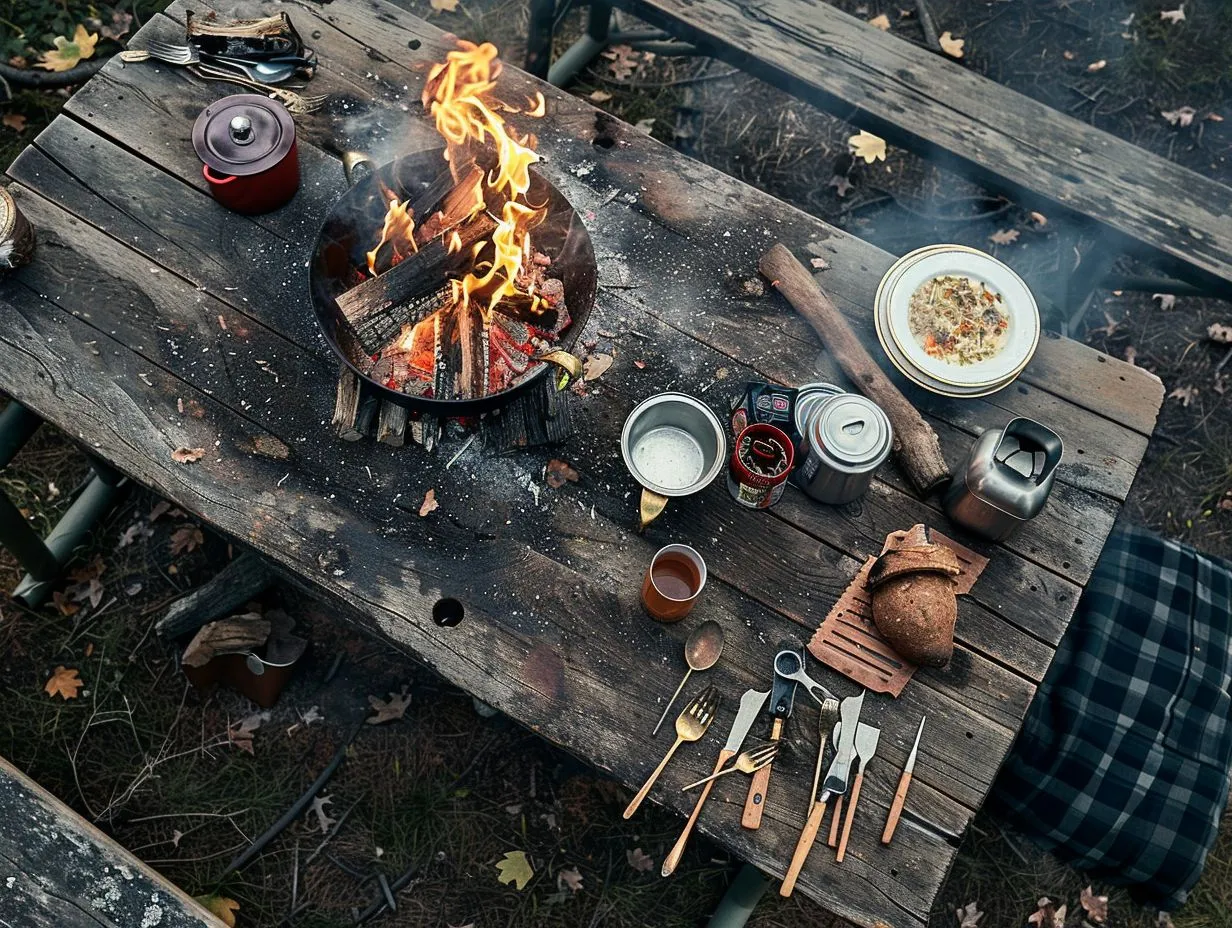
You can cook properly at a campsite with about a dozen items. A gas stove, one pot, one pan, a sharp knife, a way to eat and a way to wash up covers almost every meal you will make in a field. Everything else is comfort, and comfort is worth packing when you are driving rather than carrying.
This is the full kit list, grouped by the job each item does, with a bare minimum set for anyone starting out and a car camping luxury set for people who like to eat well. It is a companion to our guide to campfire cooking essentials, so this page concentrates on the gear rather than the technique.
It is the campsite kitchen guide from Camping Sites in Britain, where you can find and compare campsites, caravan parks and glamping across the UK.
Heat source
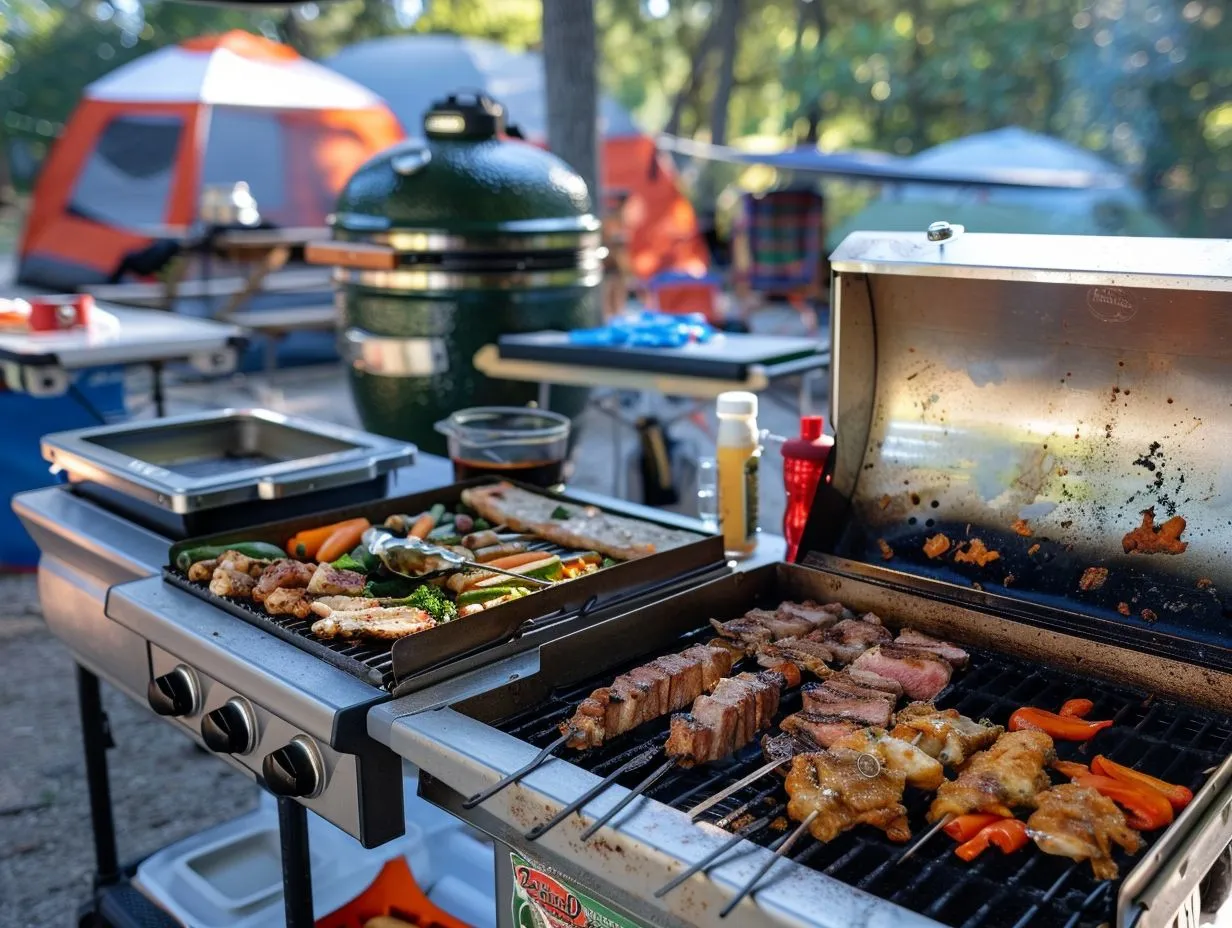
A gas stove is the heart of a campsite kitchen and the one thing worth buying well. A single burner is enough for one or two people making simple meals. A double burner is the sensible choice for a family, because boiling pasta on one ring while a sauce warms on the other is the difference between eating together and eating in shifts.
Most UK campsite stoves run on butane, propane or a butane and propane mix, either from a screw-on canister or a larger refillable gas bottle. Butane struggles in the cold, so if you camp outside summer, pick a stove that takes propane or a mix. Add a windshield. Even a light breeze wastes gas and doubles your boil time, and a folding aluminium screen costs little and packs flat.
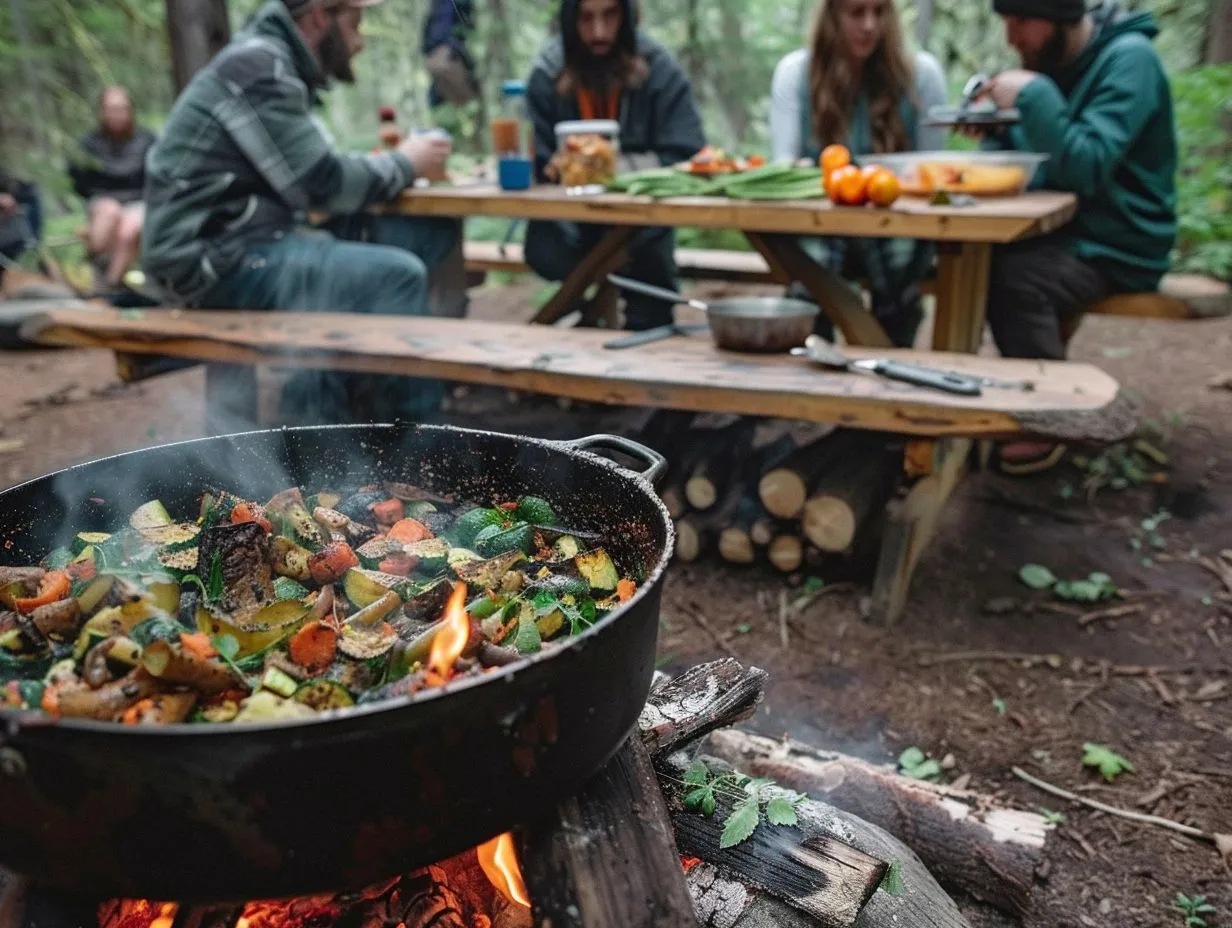
A fire pit or the site's fire ring is a lovely second heat source for slow cooking and toasting, but treat it as a bonus rather than your main hob. Many sites ban open fires or allow them only in a raised pit off the grass, so check the rules before you rely on one. If you want a stove built around family cooking, our guide to the best camping stoves for families covers the burners, stands and windshields worth the money.
Pots and pans
A nesting cook set does most of the work and packs down to almost nothing. Look for two pots of different sizes with lids, ideally with a detachable or folding handle so they stack inside each other with your mugs and utensils tucked in the middle. That one purchase covers boiling, simmering and serving.
Add a non-stick frying pan for eggs, bacon, pancakes and anything that catches. A separate pan is worth the space because scrambled egg welded to a bare pot is the worst washing-up job on any site. A dedicated kettle is the final piece. You can boil water in a pot, but a kettle is faster, safer to pour and means your brew does not taste of last night's chilli.
If you also backpack, your camping cookware needs to be far lighter and more compact, and titanium starts to earn its price. Our guide to the best lightweight cookware covers the sets built for carrying rather than car boots.
Prep tools
Good prep tools are small, cheap and the first things people forget. A sharp kitchen knife and a board turn a bag of vegetables into dinner, and a blunt knife is more dangerous than a sharp one. A folding or flexible chopping board saves space and doubles as a funnel for tipping chopped food into the pot.
The rest of the prep kit is a short list of things you will miss the moment they are absent. Pack them together in one bag so nothing gets left in a drawer at home.
- A sharp knife and a chopping board, folding or flexible to save space
- A can opener and a bottle opener, or one tool that does both
- Tongs for turning food and lifting things off the heat
- A spatula for frying and a wooden spoon for stirring
- A pair of kitchen scissors, which cut herbs, open packets and snip bacon straight into the pan
- A small cutting glove or a tea towel to steady hot handles
Eating
Pick plates, bowls and cutlery you can pack, drop and wash easily. Enamel or hard plastic plates and bowls survive being trodden on and stacked in a crate, which melamine and ceramic do not. Take one of each per person, plus one spare, because someone always drops theirs in the grass.
Sporks or a light cutlery set cover eating, and an insulated mug is the quiet hero of the kit. It keeps tea hot on a cold morning, doubles as a bowl for cereal or soup, and holds your wine after dark. One insulated mug per person earns its place more than almost anything else on this list.
Cleaning
Washing up in a field is easy with the right four items and miserable without them. A collapsible washing-up bowl gives you a basin at any pitch and folds flat when empty. Fill it from the tap, heat a pot of water on the stove to warm it, and wash away from the water point so you are not splashing the next person's drinking supply.
Pair the bowl with biodegradable washing-up liquid, a scourer or sponge and a couple of tea towels. Biodegradable soap matters because grey water often ends up on the grass or in a soakaway rather than the mains. Finish with bin bags. Sealed rubbish keeps wasps, ants and foxes out of your pitch, and you want it walked to the site bins before bed rather than left in the porch.
Storage
Storage keeps your food fresh, your kit organised and the wildlife out. Airtight plastic tubs stop ants and mice getting into dry food and stop everything smelling of everything else. A few different sizes double as bowls, lunch boxes and leftover containers.
A cool box keeps meat, milk and butter safe for a weekend, and a couple of frozen ice packs will hold it cold for two to three days if you keep the lid shut and the box out of direct sun. For a longer trip, a larger roto-moulded cool box or a powered cool box run from the car or a hook-up holds temperature for far longer. Keep raw meat sealed and at the bottom so nothing drips onto food you will eat cold.
Extras that earn their space
These are the items that turn feeding yourself into eating well, and every one of them justifies the room it takes. A moka pot or a cafetiere makes proper coffee instead of instant, which for a lot of campers is the whole point of the morning.
- A moka pot or cafetiere for real coffee, and a small milk pan if you take it white
- A roll of foil for wrapping potatoes, lining a pan or making a quick lid
- A grill plate or griddle that sits over the burner or fire ring for sausages and toast
- Oven gloves, because pot handles and fire pits get hotter than you expect
- A lighter and a box of matches, kept dry in a tub, so you always have a backup way to light the stove
- A refillable water container with a tap if the nearest supply is a walk from your pitch
Bare minimum starter kit
If you are buying your first setup or keeping weight and cost down, this is everything you actually need to cook and eat for a weekend.
- A single or double burner gas stove with a canister and a windshield
- A nesting cook set with two pots, plus a non-stick frying pan
- A sharp knife and a folding chopping board
- A spatula, a wooden spoon and a combined can and bottle opener
- A plate, a bowl, a spork and an insulated mug per person
- A collapsible washing-up bowl, biodegradable soap, a scourer and a tea towel
- A cool box with ice packs and a couple of airtight tubs
- A lighter, matches and a roll of bin bags
Car camping luxury kit
When you are driving to the pitch and space is not the enemy, these additions make cooking a pleasure rather than a chore.
- A double burner stove with a proper stand and a grill
- A dedicated kettle and a moka pot or cafetiere
- A full cutlery set, decent enamel plates and real glasses
- A griddle plate, a sharp chef's knife and a large chopping board
- Tongs, scissors, a ladle, a whisk and a set of oven gloves
- A large roto-moulded or powered cool box for longer stays
- A folding table and a washing-up station with two bowls, one to wash and one to rinse
- A spice tin, oil, and airtight tubs for everything dry
Packing it into one crate
The trick that keeps a campsite kitchen sane is to store the whole lot in one sturdy crate that lives packed and ready. A single lidded plastic box, roughly 40 to 60 litres, holds a full family kitchen and stops you rediscovering at the site that the tin opener is still in the kitchen drawer at home.
Nest the pots inside each other with mugs, utensils and tubs tucked in the gaps, so no space is wasted. Keep the stove, gas and lighter together at one end and the cleaning kit at the other, with plates and cutlery flat on top. Slide the windshield down the side. Between trips, restock the soap, matches and foil so the crate is always ready to lift straight into the boot. The cool box travels separately because it only gets packed with cold food on the morning you leave.
Frequently asked questions
What is the most essential item for campsite cooking?
A reliable gas stove. It is the one piece of kit that works in any weather, needs no fire pit and boils water for food, drinks and washing up. Buy a good one, add a windshield, and the rest of the kitchen is cheap by comparison.
How many pots and pans do I need for camping?
Two pots and one frying pan cover almost everything. A nesting set of two different sized pots handles boiling and simmering, and a separate non-stick pan deals with eggs and anything that sticks. Add a kettle if you drink a lot of tea or coffee.
Do I need a cool box for a weekend camping trip?
Yes, if you are taking meat, milk or butter. A basic cool box with two frozen ice packs holds food safely cold for two to three days if you keep the lid shut and the box out of the sun. Keep raw meat sealed at the bottom.
What is the best way to wash up at a campsite?
Use a collapsible washing-up bowl with biodegradable soap and warm water heated on the stove. Wash away from the tap so you do not contaminate the drinking supply, and tip grey water into the site's waste point rather than onto the grass.
Can I cook at a campsite without a campfire?
Easily. Most UK campsites expect you to cook on a gas stove, and many ban open fires on the grass. A double burner stove with a grill will make everything a fire can, from a fry-up to sausages, without needing a fire pit at all.
How do I keep camping cooking kit organised?
Store the whole kitchen in one lidded crate that lives packed and ready. Nest pots and mugs to save space, group the stove, cleaning and eating kit into zones, and restock consumables like soap and matches after every trip so nothing gets forgotten.
The short version
Start with a gas stove, a nesting cook set, a frying pan, a sharp knife and a way to eat and wash up, and you can cook properly anywhere. Add the coffee maker, the griddle and the second burner when you are driving rather than carrying, and keep the lot in one crate so it is always ready to go.
Once the kitchen is sorted, the meals are the fun part. See how to make your own camping meals for what to actually cook, then find your next pitch across our campsite listings.