3-Season vs 4-Season Tents: Which Do You Need?
· Updated
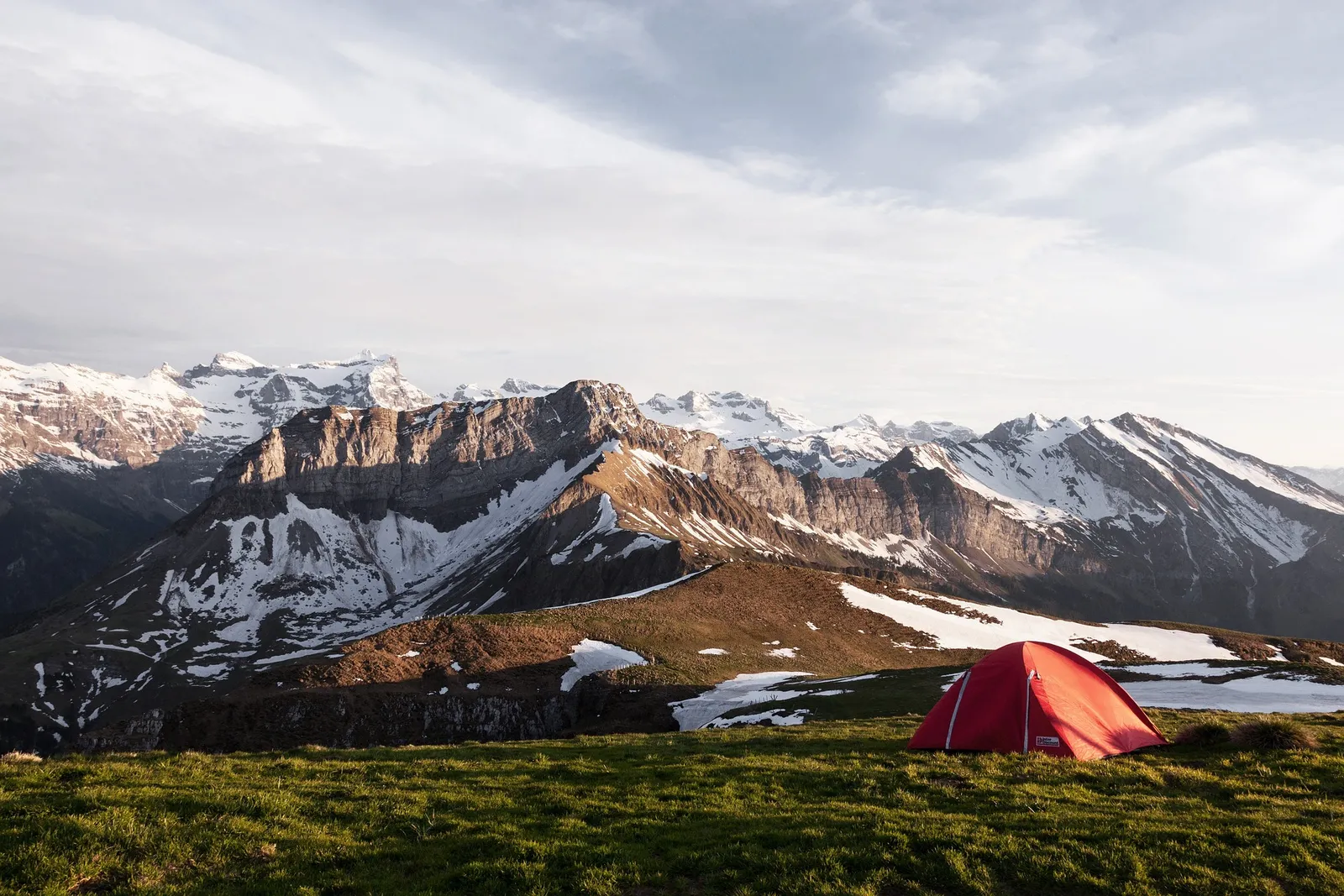
For almost all camping in Britain, a 3-season tent is the right choice. A tent's season rating tells you what weather it is built to handle, not how many seasons it will last, and a good 3-season model covers spring, summer and autumn plus the odd cold snap and gust that Britain throws in for free.
You only need a 4-season tent if you genuinely camp in snow, on exposed mountains, or through winter storms. For everyone else, paying for one means carrying extra weight and sweating in a stuffier tent for protection you will rarely use. This is part of the complete UK camping gear guide from Camping Sites in Britain, where you can find and compare campsites across the country once you have your kit sorted.
What tent season ratings actually mean
Season ratings describe the conditions a tent is designed for, not its durability. A 3-season tent is not one that falls apart after three years; it is one built to keep you comfortable across three seasons of British weather. The scale runs from 2-season summer shelters up to 4-season expedition tents, with a 3-4 season middle ground for people who push into the shoulder months.
The rating is set by the balance of three things: how much mesh versus solid fabric the tent uses, how strong the poles are, and how the shape sheds wind and snow. More mesh means better airflow but less warmth and weather protection. Stronger poles and a lower, rounder profile mean it stands up to wind and snow load but weighs more.
| Rating | Built for | Typical flysheet HH | Typical 2-person weight | Ventilation |
|---|---|---|---|---|
| 2-season | Summer only, sheltered sites, still nights | 1,000 to 2,000mm | 1.5 to 2.5kg | Very high |
| 3-season | Spring to autumn, most UK camping | 2,000 to 5,000mm | 2 to 3kg | Good |
| 3-4 season | Shoulder months, hills, light snow | 3,000 to 5,000mm | 3 to 4kg | Moderate |
| 4-season | Winter, snow, exposed mountains, storms | 3,000 to 6,000mm | 3.5 to 6kg | Low |
2-season tents: summer and sheltered only
A 2-season tent is a fair-weather shelter, best kept for warm, dry, still nights on a sheltered site. These are the cheap festival and pop-up tents you see from around £30 to £60, built with thin fibreglass poles, lots of mesh and a thin flysheet rated around 1,000 to 2,000mm hydrostatic head.
They pitch fast and pack small, which is their whole appeal. The trade-off is that a stiff breeze and a night of proper rain will find every weakness. For a booked-in summer weekend at a calm site they are fine. For anything unpredictable, which in Britain is most things, they are a gamble.
3-season tents: the right choice for almost all UK camping
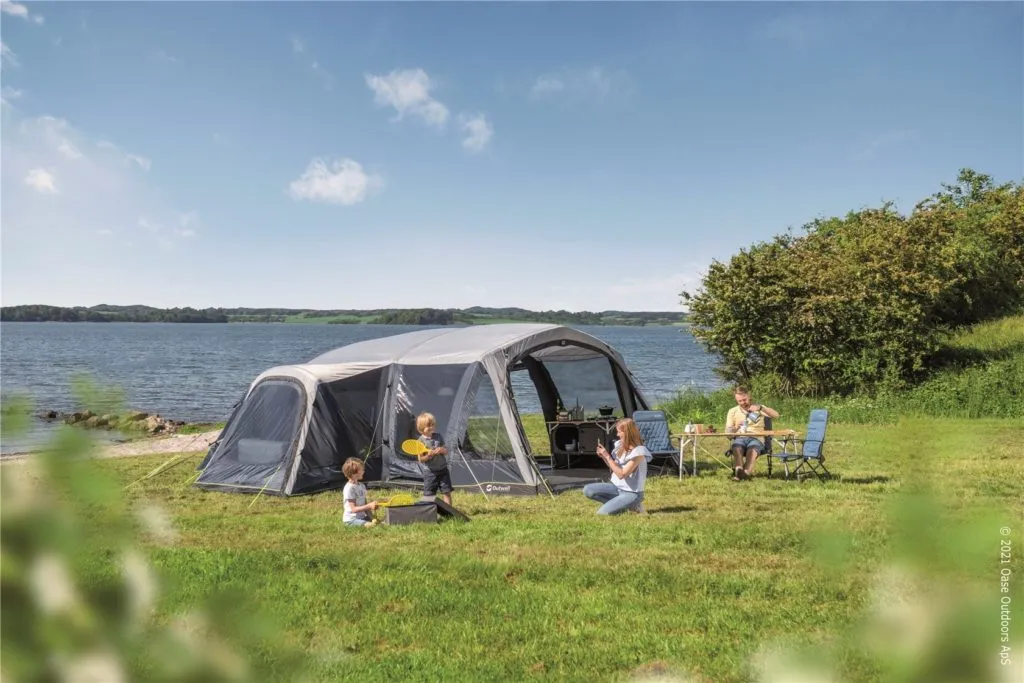
A 3-season tent is what most British campers should buy and the only tent many will ever need. It is designed for spring through to autumn, with enough mesh to stay breathable on warm nights and enough solid fabric and pole strength to shrug off rain, wind and the occasional light snow flurry.
Expect an aluminium alloy pole set, a flysheet rated from 2,000mm up to 5,000mm hydrostatic head, and a groundsheet rated higher still, often 5,000 to 10,000mm, because you kneel and lie on it and press water through. Weights range from around 2kg for a two-person backpacking model up to 15kg or more for a big family tunnel tent. This is the category where a lighter option makes sense if you carry your kit any distance; our guide to the best lightweight tents for backpacking covers models that keep the 3-season protection without the bulk.
3-4 season tents: for the shoulder months
A 3-4 season tent is a beefed-up 3-season model for people who camp into late autumn, early spring and the odd winter night. It uses stronger poles, a bit less mesh and often a flysheet that reaches closer to the ground, so it holds heat and stands firmer in wind than a standard 3-season tent.
This is the sensible step up if you camp in the hills or want to keep going through the colder shoulder weeks without committing to a full expedition tent. It weighs more and vents less than a summer-leaning 3-season, so do not buy one if your camping is mostly warm-weekend stuff.
4-season tents: expedition kit for real winter
A 4-season tent is expedition kit built to survive snow load and mountain storms, and it is overkill for ordinary UK camping. It swaps mesh for solid fabric, runs on thick alloy poles in a geodesic or semi-geodesic frame with multiple crossing points, and uses a steep, low profile so snow slides off rather than piling up.
That strength costs you. A two-person 4-season tent typically weighs 3.5 to 6kg, costs from around £300 into four figures, and ventilates poorly, so in mild weather you wake up to condensation running down the inner. Buy one only if you camp in genuine winter conditions: Highland winters, snow-line mountain trips or sustained gales. If that is your camping, pair it with the right sleep system and clothing, and read our guides to the best sleeping mats for comfort and the best thermal clothing for cold weather camping before you go.
What actually matters for British weather
In Britain, wind resistance and a good hydrostatic head matter far more than a cold-weather rating. The thing that wrecks trips here is rarely deep cold. It is sideways rain and wind, and most of the country almost never sees the sustained snow a 4-season tent is designed for. A tough 3-season tent that is pitched well beats a heavy expedition tent for nearly everyone.
Hydrostatic head is the measure of how much water pressure a fabric holds before it leaks, given in millimetres. A fabric is generally considered waterproof once it passes 1,000mm under the standard test (BS EN ISO 811), so a 2,000 to 3,000mm flysheet has real margin for a wet British night, and a 5,000mm one has plenty. Aim for 3,000mm or more on the flysheet and 5,000mm or more on the groundsheet.
For wind, the shape and poles do the work. A well-pitched tunnel or dome 3-season tent, pegged and guyed properly, copes with the 30 to 40mph gusts a normal UK trip might see. A geodesic 4-season tent can take 50 to 70mph and more, which matters on a Cairngorm plateau and nowhere near a sheltered valley pitch. Whatever you buy, learn to secure your tent in high winds, because a badly pitched good tent fails before a well-pitched cheap one.
How to choose the right tent
Match the tent to the worst weather you will realistically camp in, not the worst weather imaginable. Be honest about where and when you actually go. Weekend campers on booked sites from April to October are served by a 3-season tent every time. Someone heading to the Highlands in February needs the 4-season.
- Where and when you camp: lowland sites in the warmer half of the year point to 3-season; winter mountains point to 4-season.
- How far you carry it: backpacking rewards a light 3-season tent; a car-camping base can carry the weight of something sturdier.
- Weather protection: prioritise a 3,000mm-plus flysheet, a bathtub groundsheet and a strong pole set over a high season number.
- Ventilation: more mesh keeps a summer tent comfortable; too little and you fight condensation on mild nights.
Once the tent is sorted, the rest is finding somewhere to pitch it. Browse campsites across Britain, or go straight to the mountains and lakes with our Lake District and Cumbria campsites.
Frequently asked questions
Is a 3-season tent warm enough for UK winter?
A good 3-season tent handles cold, dry winter nights and light snow at low levels, but not sustained snow load or exposed mountain storms. For genuine winter or high ground, use a 3-4 or 4-season tent and a warm sleep system.
Can you use a 4-season tent in summer?
You can, but you probably should not. A 4-season tent has less mesh and holds heat, so it runs hot and gathers condensation on warm nights. It is also heavier and pricier than you need for summer camping.
What hydrostatic head do I need for a tent in Britain?
Aim for at least 3,000mm on the flysheet and 5,000mm or more on the groundsheet. Anything above 1,000mm counts as waterproof under the standard test, but the extra margin matters through a long, wet British night.
What is a 3-4 season tent?
It is a strengthened 3-season tent for the shoulder months and light winter use. It has stronger poles and less mesh than a standard 3-season model, so it holds heat and wind better, at the cost of a little more weight and less airflow.
Do I need a 4-season tent for the Scottish Highlands?
Only in winter or on exposed high ground. Summer camping in the Highlands is fine in a robust 3-season tent, but winter trips, snow and plateau camping need a 4-season tent built to shed snow and take strong wind.
The short version
Buy a 3-season tent unless you genuinely camp in snow or on winter mountains. Put your money into a strong pole set, a 3,000mm-plus flysheet and a proper groundsheet rather than a higher season number, because in Britain wind and rain beat cold nearly every time. When your tent is chosen, read the rest of the complete UK camping gear guide and find your next pitch across Britain's campsites.