The best walks in the North York Moors
· Updated
The best walks in the North York Moors take you across the largest expanse of heather moorland in England, over a lone volcanic-looking peak, down into a giant natural amphitheatre and out along one of the finest stretches of coast in the country. The place to note first is the name: it is the North York Moors, not the "North Yorkshire Moors", and it has been a National Park since 1952.
The park sits in the north east of Yorkshire, between the Vale of York and the North Sea, and packs an enormous variety into a compact area. You can climb Roseberry Topping in a morning, walk the Cleveland Way along the cliffs in the afternoon and still be back at the tent for tea. It is proper walking country, and it rewards a bit of planning.
This guide is part of our wider advice on camping along the UK's national trails, and it comes from Camping Sites in Britain, where you can find and compare campsites across the moors and the Yorkshire coast. When you are ready to pitch up, browse our North Yorkshire campsites.
The best walks in the North York Moors at a glance
There is a walk here for every level, from a flat riverside daffodil stroll to a 40-mile moorland endurance test. The table sorts the highlights by effort so you can match a route to your day.
| Walk | Rough distance | Best for |
|---|---|---|
| Farndale daffodil walk | 3 to 4 miles | Families, spring colour |
| Mallyan Spout and Goathland | 3 to 4 miles | Waterfall and film-set villages |
| Rievaulx Abbey and terrace | 2 to 5 miles | History and easy walking |
| Roseberry Topping | 2 to 3 miles | A short, sharp summit |
| Hole of Horcum circuit | 7 miles | Big moorland scenery |
| Robin Hood's Bay to Ravenscar | 7 miles | Coastal cliffs |
| Cleveland Way | 109 miles | Long-distance walkers |
| Lyke Wake Walk | 40 miles | A serious challenge |
Roseberry Topping, the Yorkshire Matterhorn
Roseberry Topping is the single most recognisable hill on the moors, a distinctive half-cone that earns its nickname of the "Yorkshire Matterhorn". At 320m it is not high, but its lopsided profile, the result of a geological fault and an old mine collapse, makes it look far more dramatic than the number suggests.
The usual route starts from Newton-under-Roseberry and is a short but steep two to three miles there and back. The reward at the top is a wide view over the Cleveland plain, the Pennines and, on a clear day, out towards the coast. It is an ideal first walk of a trip: enough of a climb to feel earned, over quickly enough to leave the afternoon free.
The Cleveland Way, the trail that rings the park
The Cleveland Way is a 109-mile National Trail that loops around the edge of the National Park in a giant horseshoe, from Helmsley in the south west, north across the moorland escarpment, then down the coast from Saltburn to Filey. It is one of the most varied of Britain's National Trails, giving you high heather moor and dramatic sea cliffs on the same route.
You do not have to walk the whole thing. Many of the best day walks in this guide, including Roseberry Topping and the Robin Hood's Bay coast, use sections of the Cleveland Way, so you can sample it in bites. If you fancy the full trip, most walkers take nine or ten days and the official route is well waymarked throughout. The Cleveland Way National Trail site has stage-by-stage planning and up-to-date path conditions.
The Hole of Horcum, a giant in the moor
The Hole of Horcum is a huge natural amphitheatre scooped out of the moorland beside the A169 Pickering to Whitby road, roughly 120m deep and three quarters of a mile across. Local legend says a giant called Wade dug it out by hand; geologists credit spring water slowly eating away the hillside over thousands of years, a process called spring-sapping.
The classic circuit is about seven miles from the Saltergate car park, dropping into the bowl and climbing back out around the rim, with sweeping views the whole way. It is exposed moorland walking, so save it for decent weather and take the wind into account.
Mallyan Spout, Goathland and the Heartbeat village
Mallyan Spout is the tallest waterfall in the North York Moors, a 21m ribbon of water tumbling down a mossy cliff in a wooded gorge below the village of Goathland. A short but rocky and often slippery path from the Mallyan Spout Hotel leads down to it, and it is best after rain when the flow is full.
Goathland itself is worth the trip on its own. It stood in for Aidensfield in the television series Heartbeat and its station played Hogsmeade in the Harry Potter films. Combine the waterfall with a wander round the village and you have a gentle half-day. If you enjoy chasing waterfalls, our guide to visiting UK waterfalls has more to add to the list.
The coast: Robin Hood's Bay, Whitby and Ravenscar
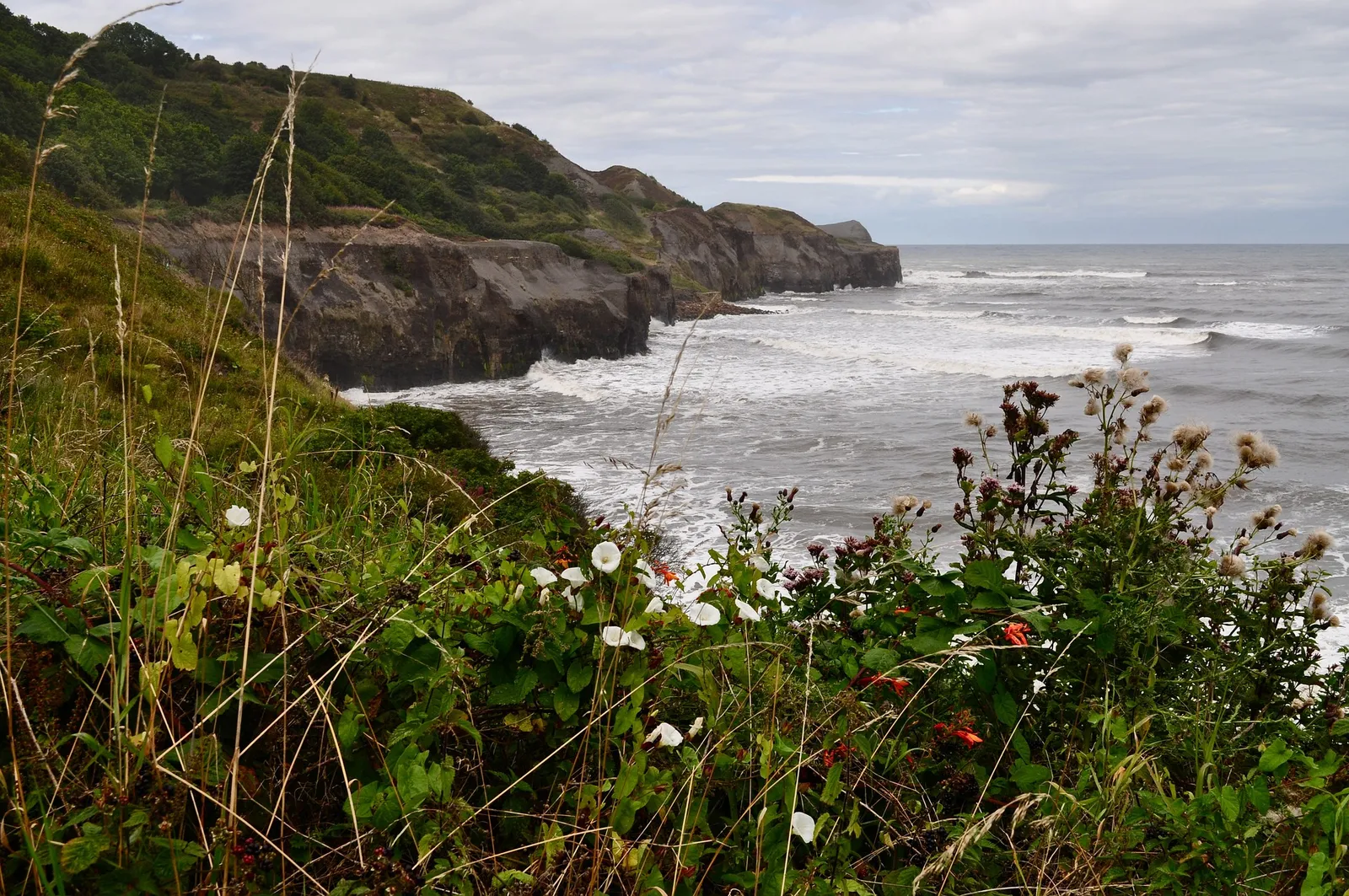
The North York Moors coast is where the moorland meets the sea in a run of cliffs, smugglers' villages and fossil-strewn beaches. The pick of the day walks is the seven-mile stretch of the Cleveland Way from Robin Hood's Bay to Ravenscar, climbing the old alum-works cliffs with the North Sea below you and returning along the beach at low tide.
To the north, Whitby adds its ruined abbey, its Dracula connections and a harbour full of fish and chips, while Ravenscar is known as "the town that never was" after a Victorian resort that was planned but never built. It is a brilliant coastline for combining a walk with a proper day out.
Farndale in spring and Rievaulx all year
For gentler walking, two spots stand out. The Farndale daffodil walk is a flat riverside path, three to four miles there and back, lined in late March and April with wild daffodils by the thousand. It is one of the loveliest short spring walks in the north of England and popular with families.
Rievaulx, near Helmsley, pairs the romantic ruins of a 12th-century Cistercian abbey with the Rievaulx Terrace above it, a curving grass walkway with classical temples and framed views down the valley. You can keep it to an easy stroll around the abbey and terrace or link it into a longer loop through the woods and fields. It is history and easy walking in one, and a good fallback on a grey day.
The Lyke Wake Walk, the serious one
The Lyke Wake Walk is a tough 40-mile crossing of the highest, boggiest moorland in the park, running west to east from Osmotherley to Ravenscar. The tradition is to complete it in a single push within 24 hours, which makes it a genuine endurance challenge rather than a day walk.
It is not to be taken lightly. The route crosses remote, exposed and often waterlogged ground with few escape points, and it needs navigation skills, the right kit and a sensible weather window. Attempt it only if you are experienced and prepared, and ideally with company.
What makes the moors special
Beyond the named walks, a few things set the North York Moors apart. It holds the largest continuous expanse of heather moorland in England, which turns a spectacular purple in August when the ling is in flower. The North Yorkshire Moors Railway runs restored steam trains through the heart of the park between Pickering and Whitby, calling at Goathland, so you can walk one way and ride back. And because the moors are so sparsely populated, they have some of the darkest skies in the country, protected as a Dark Sky Reserve and superb for stargazing on a clear night.
Staying safe on the moors
The moorland is beautiful but it is open, high and unforgiving, so a little preparation goes a long way. Keep these in mind before you set off.
- Expect boggy ground. Much of the high moor is peat, which stays wet long after rain. Wear proper waterproof boots, stick to paths where you can and keep well clear of the wettest, blackest ground.
- Respect the weather. The tops are exposed and conditions change fast, with hill fog rolling in with little warning. Carry waterproofs and warm layers even in summer, and take a map and compass on the bigger routes rather than trusting a phone alone.
- Follow the Countryside Code. Close gates, keep dogs under close control near livestock and ground-nesting birds, take all your litter home and leave no trace. The official North York Moors National Park website has current advice on access, parking and any path closures.
If you like this kind of open, rewarding walking, you will also enjoy our guides to walks in Lincolnshire and walking the Cotswolds.
Frequently asked questions
Is it the North York Moors or the North Yorkshire Moors?
It is the North York Moors. That is the correct name of the National Park, designated in 1952, and the name used by the North York Moors National Park Authority. "North Yorkshire Moors" is a common mistake, though the heritage railway does use "North Yorkshire Moors Railway".
How long is the Cleveland Way?
The Cleveland Way is a 109-mile National Trail. It runs in a horseshoe from Helmsley, north across the moors and then down the coast to Filey. Most walkers complete the full route in nine or ten days, but many of the best day walks use short sections of it.
What is the best walk in the North York Moors for families?
The Farndale daffodil walk is the pick in spring, a flat three to four mile riverside path lined with wild daffodils. Out of season, Mallyan Spout with the village of Goathland, or an easy loop around Rievaulx Abbey, both suit younger legs well.
When do the moors turn purple?
In August. The North York Moors hold the largest expanse of heather moorland in England, and the ling heather flowers in mid to late August, covering the hills in purple. It is the most striking time of year to visit, so expect the honeypot spots to be busy.
Is Roseberry Topping a hard walk?
It is short but steep. The usual route from Newton-under-Roseberry is only two to three miles there and back, but the final pull to the 320m summit is a stiff climb. Most reasonably fit walkers manage it comfortably in a couple of hours.
Do I need to worry about the weather on the moors?
Yes. The high moorland is exposed and conditions change quickly, with hill fog and wind common even in summer. Carry waterproofs and warm layers, wear boots for boggy peat ground, and take a map and compass on longer or higher routes.
The short version
Climb Roseberry Topping for the view, walk a slice of the Cleveland Way for the coast, drop into the Hole of Horcum for the drama and save Farndale for spring. Pack for bog and weather, follow the Countryside Code, and you have some of the finest and most varied walking in England.
When you have picked your route, sort where to stay with our guide to camping along the UK's national trails and browse campsites in North Yorkshire.