The best castles to visit in Somerset
· Updated
Somerset packs a proper spread of castles into one county: a lived-in National Trust house above a medieval village, a moated French-style tower, the courtroom that held the Bloody Assizes, and a scatter of ruins and earthworks tucked into the hills. Dunster, Nunney, Taunton and Farleigh Hungerford are the four you should not miss, and every one of them sits within easy reach of a campsite.
Base yourself between Exmoor, the Mendips and the Quantocks and you can string several together over a long weekend. This guide names the castles worth your time, tells you who runs each one and what to actually see, and points you at where to pitch up nearby.
It is part of our wider guide to camping near Britain's castles, from Camping Sites in Britain, where you can find and compare campsites, caravan parks and glamping right across the UK.
The Somerset castles worth your time
Four castles carry the county: Dunster for a complete house and garden, Nunney for a picture-book moated ruin, Taunton for its museum and grim history, and Farleigh Hungerford for its chapel and crypt. The table sorts them by who runs each site and what you get for the visit.
| Castle | Custodian | Nearest town | Best for |
|---|---|---|---|
| Dunster Castle | National Trust | Dunster, near Minehead | Furnished house, subtropical garden, Exmoor views |
| Nunney Castle | English Heritage | Frome | Moated ruin, free entry, quick stop |
| Taunton Castle | Museum of Somerset | Taunton | County museum, Monmouth Rebellion history |
| Farleigh Hungerford Castle | English Heritage | Bath and Frome | Chapel wall paintings, crypt coffins |
| Montacute House | National Trust | Yeovil | Elizabethan mansion and gardens |
| Stogursey Castle | Landmark Trust | Bridgwater, near the Quantocks | Moated gatehouse ruin |
Dunster Castle
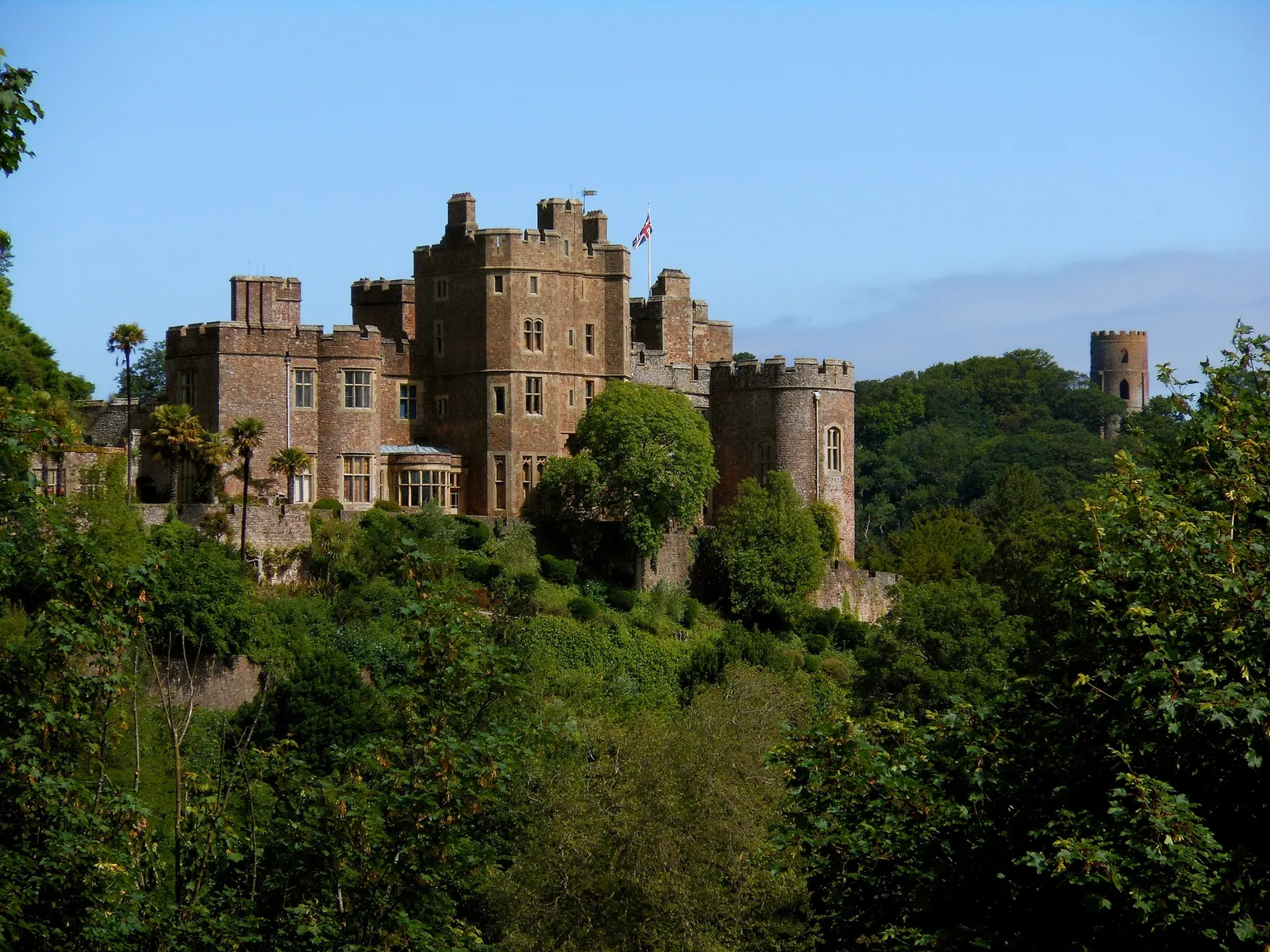
Dunster is the one to build a day around. Run by the National Trust, it sits on a wooded hill above the medieval village of Dunster on the edge of Exmoor, and it has grown from a Norman fortress into a fully furnished family home you can walk through room by room.
The terraced gardens are the surprise. A mild, sheltered microclimate lets subtropical and Mediterranean plants thrive here, and the National Collection of strawberry trees grows on the slopes below the keep. Below the castle you will find a Victorian watermill and riverside walks, and the village itself carries more than 200 listed buildings, including a working medieval yarn market. Give it a full half day at least.
Nunney Castle
Nunney is the prettiest ruin in the county and it costs nothing to see. Built from the 1370s by Sir John de la Mare, this tall, moated tower was modelled on French castles of the period, with four round corner towers rising straight out of the water in the middle of the village near Frome.
The Civil War did for it: a Parliamentary bombardment in 1645 cracked the north wall, which finally collapsed in 1910. What remains is dramatic and easy to visit, managed by English Heritage with free entry and open access. Pair it with the village pub and the walk up to Nunney's church across the road.
Taunton Castle
Taunton Castle now houses the Museum of Somerset, and its walls have seen some of the darkest hours in the county's story. In the great hall in 1685, Judge Jeffreys presided over the Bloody Assizes, the trials that followed the failed Monmouth Rebellion, sending hundreds of West Country rebels to execution or transportation.
Inside, the museum runs free entry and covers Somerset from the Ice Age to the present, taking in the Frome Hoard of Roman coins and the county's role in the Civil War. It stands in the heart of the county town, so it is an easy stop on a wet day or between other visits. Check current opening days before you travel, as the museum closes on some weekdays.
Farleigh Hungerford Castle
Farleigh Hungerford rewards anyone who likes a story with their stonework. This late 14th-century fortified mansion between Bath and Frome was home to the Hungerford family for more than 300 years, a run marked by murder, imprisonment and one wife locked in the tower for years.
The chapel is the highlight. It holds rare medieval wall paintings, including a large Saint George, and its crypt contains a set of human-shaped lead "anthropoid" coffins, among the best surviving collection of their kind in Britain. English Heritage runs the site; you can read the family's tangled history at english-heritage.org.uk.
Montacute House and the Elizabethan option
If you want a great house rather than a keep, Montacute House is the pick. This honey-coloured Elizabethan mansion near Yeovil, built in the 1590s and cared for by the National Trust, is famous for its long gallery, its formal gardens and a wall of Tudor and Elizabethan portraits on loan from the National Portrait Gallery.
It is not a castle in the fortress sense, but it sits naturally on any Somerset heritage trip, and the surrounding parkland and the climb up nearby St Michael's Hill make an easy afternoon.
The ruins and earthworks
Beyond the big four, Somerset hides several smaller sites for anyone who likes a quiet ruin. None charge admission and most take under an hour.
- Stogursey Castle: a moated Norman ruin near the Quantocks, with a restored gatehouse now let as a holiday cottage by the Landmark Trust. The surrounding earthworks and moat are freely accessible.
- Nether Stowey Castle: grassy earthworks of a motte-and-bailey castle on a hill above the village, at the foot of the Quantocks and a short step from Coleridge Cottage.
- Daws Castle: a clifftop earthwork near Watchet, thought to have been refortified under Alfred the Great, with wide views over the Bristol Channel.
For a different sort of landmark, Glastonbury Tor and the ruined Glastonbury Abbey pair well with a Mendips trip, and English Heritage's Cleeve Abbey near Washford holds one of the finest monastic gatehouses and cloisters in England.
Where to camp near Somerset's castles
You can cover most of these castles from a single base, thanks to Somerset's compact geography. Exmoor and the west coast put Dunster on your doorstep, the Mendips sit between Wells, Frome and Nunney, and the Quantocks cover Nether Stowey, Stogursey and Taunton.
Browse and compare pitches across the county on the Camping Sites in Britain directory, then match your site to the castles you most want to see. If you are touring the wider region, our castle guides for neighbouring counties are worth a look too: castles in Dorset, the top castles in Devon, and Gloucestershire's medieval castles.
Frequently asked questions
What is the best castle to visit in Somerset?
Dunster Castle is the standout. Run by the National Trust above the medieval village of Dunster on the edge of Exmoor, it combines a fully furnished house, a subtropical terraced garden and Norman origins, making it the most complete castle visit in the county.
Are any Somerset castles free to visit?
Yes. Nunney Castle near Frome is managed by English Heritage with free open access, and the earthworks at Nether Stowey, Stogursey and Daws Castle are all free. Taunton Castle's Museum of Somerset also runs free general entry.
How many castles are there in Somerset?
Somerset has around a dozen castle sites worth visiting, from complete houses like Dunster and standing ruins like Nunney and Farleigh Hungerford to earthworks such as Nether Stowey and Daws Castle. Four of them are properly furnished or substantial ruins.
Which Somerset castle has the Bloody Assizes connection?
Taunton Castle. Its great hall hosted the Bloody Assizes of 1685, when Judge Jeffreys tried hundreds of rebels after the failed Monmouth Rebellion. The castle now houses the Museum of Somerset.
Can you visit Dunster Castle and Exmoor in one trip?
Easily. Dunster sits on the eastern edge of Exmoor National Park near Minehead, so you can pair the castle and its gardens with a walk or drive across Exmoor and the coast in a single day out.
Is Montacute House a castle?
No. Montacute House near Yeovil is an Elizabethan mansion from the 1590s, cared for by the National Trust, not a fortress. It is grouped with Somerset's castles because it belongs on any heritage trip through the county.
The short version
Make Dunster your main event, add Nunney and Farleigh Hungerford for atmospheric ruins, and use Taunton Castle for the history and a rainy day. With Exmoor, the Mendips and the Quantocks all in reach, one campsite can cover the lot. Find your pitch through the Camping Sites in Britain directory or read more in our guide to camping near Britain's castles.