The best castles to visit in Devon
· Updated
Devon packs a proper spread of castles into one county, from a lived-in stately home on the Exe estuary to the last castle ever built in England, high above a Dartmoor gorge. The pick of the bunch are Powderham Castle, Castle Drogo, Dartmouth Castle, Okehampton Castle, Totnes Castle, Compton Castle and Berry Pomeroy Castle, with Tiverton Castle a strong eighth if you have the time.
Most sit within an hour or so of each other, which makes castle-hopping easy on a camping trip. Pitch up somewhere central and you can do coast one day and moor the next, with a ruin or two along the way. This guide is part of our wider round-up of camping near Britain's castles, and at Camping Sites in Britain we tie every castle in Devon to somewhere brilliant to sleep.
Below you will find what each castle is, who looks after it and why it earns a visit. We have leaned on the two big custodians, English Heritage and the National Trust, so opening times and tickets are easy to check before you set off.
The best castles to visit in Devon at a glance
Devon's castles split neatly between the coast and Dartmoor, with a couple of stately homes in the middle. Here is the shortlist and what makes each one worth the drive.
| Castle | Who runs it | Where | Why go |
|---|---|---|---|
| Powderham Castle | Privately owned (Earl of Devon) | Kenton, near Exeter, on the Exe estuary | Lived-in family home with a deer park |
| Castle Drogo | National Trust | Drewsteignton, above the Teign gorge | The last castle built in England |
| Dartmouth Castle | English Heritage | Mouth of the Dart estuary | Coastal artillery fort with estuary views |
| Okehampton Castle | English Heritage | Edge of Dartmoor, above the Okement | The largest castle in Devon, now ruined |
| Totnes Castle | English Heritage | Above the town of Totnes | Classic Norman motte and bailey |
| Compton Castle | National Trust | Near Torbay | Fortified medieval manor house |
| Berry Pomeroy Castle | English Heritage | Near Totnes | Romantic ruin, famously haunted |
| Tiverton Castle | Privately owned | Tiverton, mid Devon | Medieval castle turned family home |
Powderham Castle
Powderham is the one castle here you can still call a family home. It sits beside the Exe estuary at Kenton, a short hop south of Exeter, and the Courtenay family, the Earls of Devon, have lived on the site for around 700 years. Building began in 1391, and the house has been added to and reshaped in every century since.
Come for the guided tours of the state rooms, the walled gardens and the deer park, where fallow deer graze under old oaks. The estuary setting is a bonus, and it puts you within easy reach of Exeter and the south Devon coast.
Castle Drogo
Castle Drogo is the last castle built in England, and it is younger than you might think. The architect Sir Edwin Lutyens designed it for the retail magnate Julius Drewe, and work ran from 1911 until it was finished in 1930. The National Trust looks after it today. Details are on the National Trust site.
The granite house stands high above the Teign gorge near Drewsteignton, on the northern edge of Dartmoor. The formal gardens are lovely, but the real draw is the position, with walks straight from the door down into the gorge and along the river. It is austere, dramatic and quite unlike any medieval keep.
Dartmouth Castle
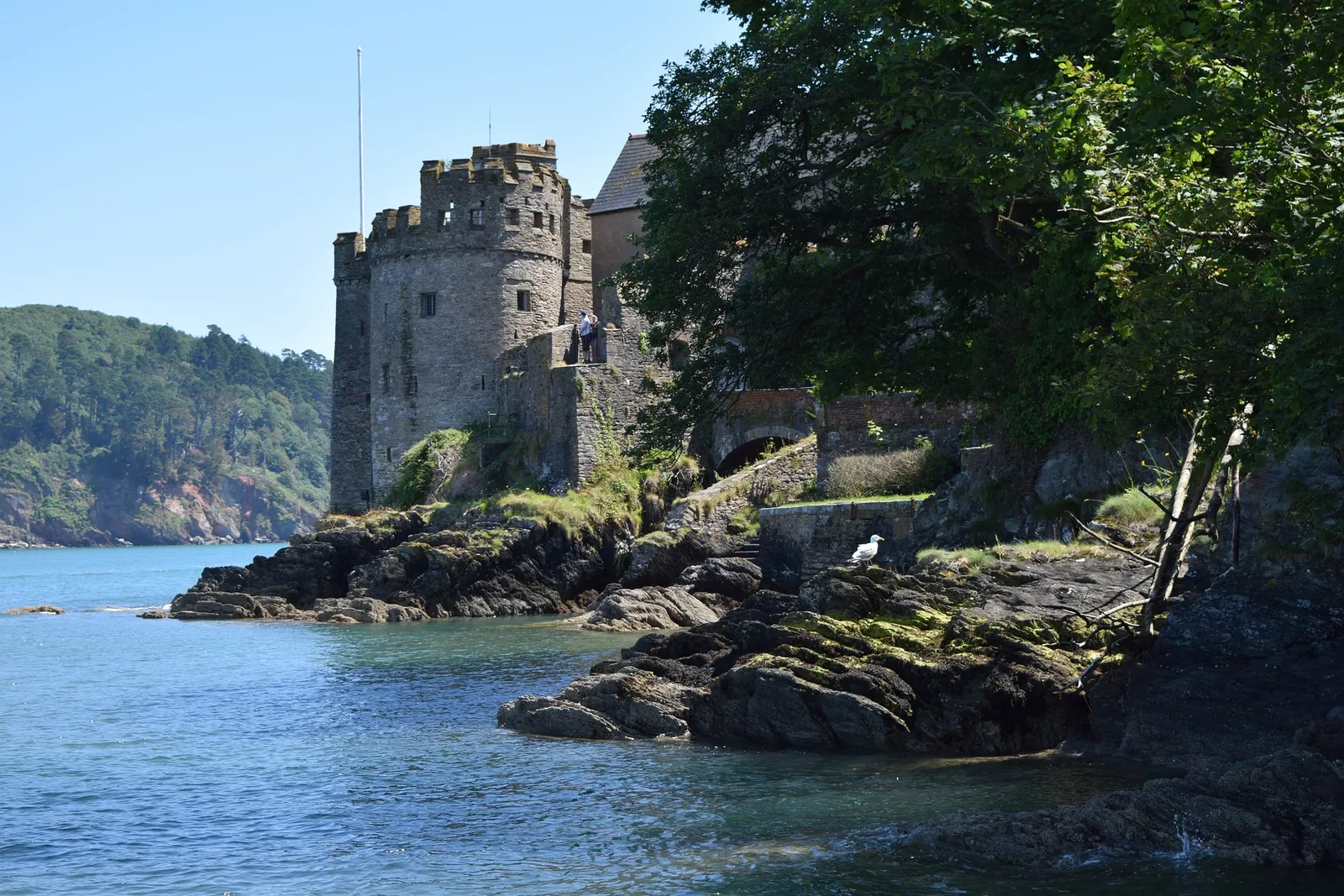
Dartmouth Castle guards the narrow mouth of the Dart estuary, and it has done so since the late 14th century. Run by English Heritage, it was one of the first English castles built with artillery in mind, and a chain could once be stretched across the water to Kingswear to block enemy ships.
The setting is the star. The castle sits right at the water's edge, with the little church of St Petroc beside it and boats slipping past into the harbour. Combine it with a wander round Dartmouth itself, one of the prettiest towns on the south coast. See English Heritage for opening times.
Okehampton Castle
Okehampton is the largest castle in Devon, and today it is a romantic ruin on the northern edge of Dartmoor. English Heritage cares for it. The remains of the Norman motte and bailey rise above the River Okement, wrapped in woodland, with the keep still standing tall on its mound.
It is a fine spot to pair castle history with moorland walking, as the paths onto Dartmoor start close by. Bring a picnic, let the kids explore the ruins and follow the riverside trail through the trees.
Totnes Castle
Totnes Castle is the textbook Norman motte and bailey, and one of the best preserved of its kind in the country. English Heritage runs it. The circular stone keep sits on a steep grassy mound above the town, built by the Normans to keep watch over the Saxon burgh of Totnes and the River Dart beyond.
Climb the keep for a panorama over the rooftops, the river and the rolling south Devon countryside. It is compact, so it works well as a quick stop before or after a mooch round Totnes, which is a brilliant town in its own right.
Compton Castle
Compton Castle is a fortified manor house rather than a fighting fortress, and it is a rare survivor. Tucked into a fold of countryside near Torbay, it was the home of the Gilbert family, including the Elizabethan explorer Sir Humphrey Gilbert. The National Trust looks after it now.
The high battlemented front and great hall show how a wealthy medieval family fortified its home against raiders from the sea. Opening is seasonal and limited, so check ahead, but the mix of defence and domestic life makes it a memorable stop.
Berry Pomeroy Castle
Berry Pomeroy is Devon's most atmospheric ruin, and reputedly its most haunted. Managed by English Heritage, it hides in a wooded valley near Totnes, where the shell of a grand Elizabethan mansion sits inside the walls of an older medieval castle that was never finished.
The ghost stories, most famously the White Lady and the Blue Lady, have followed the place for centuries and only add to the mood. Whether or not you believe them, the ivy-clad ruins and steep woodland setting make this one of the most photogenic castles in the county.
Tiverton Castle
Tiverton Castle rounds out the list in mid Devon. Founded in 1106 and later held by the Courtenay Earls of Devon, it saw action in the Civil War before becoming a private home. Parts are open to visitors on selected days through the season.
It is off the usual tourist trail, which is part of the charm, and it sits handily between the coast and Exmoor if you are heading that way.
Dartmoor and the coast: how to plan your castle trip
Devon's castles line up along two natural routes, so a little planning goes a long way. On the coast you have Dartmouth, Compton and Powderham on the estuaries and shore, ideal for a trip that mixes castles with beaches and harbour towns. Inland, Castle Drogo, Okehampton, Totnes and Berry Pomeroy cluster around Dartmoor, so you can fold castle visits into days of moorland walking.
If you fancy the wilder side of a Devon trip, Dartmoor is the one place in England where wild camping is a legal right on foot, confirmed by the UK Supreme Court on 21 May 2025. Stick to the designated areas shown on the Dartmoor National Park Authority map, camp away from roads and follow Leave No Trace. Everywhere else in Devon you need the landowner's permission, which in practice means a proper campsite.
Camping near Devon's castles
You are never far from a good pitch in Devon, whichever castles you choose. Browse our Devon campsites to find a base near the coast or the moor, then build your castle days around it. A site near Exeter or Newton Abbot keeps most of the eight within a comfortable drive.
Devon is far from the only county with a castle trail worth chasing. If you are touring the West Country, our guides to the castles in Dorset and the best castles in Somerset pair neatly with a Devon trip. Heading north instead? See our guide to Cumbria's best castles for Lake District camping.
Frequently asked questions
How many castles are there in Devon?
Devon has dozens of castle sites, from grand houses to buried earthworks, but around eight are properly worth a visit. The main ones are Powderham, Castle Drogo, Dartmouth, Okehampton, Totnes, Compton, Berry Pomeroy and Tiverton.
What is the largest castle in Devon?
Okehampton Castle is the largest in Devon. It stands as a ruined Norman motte and bailey above the River Okement, on the northern edge of Dartmoor, and is cared for by English Heritage.
Which Devon castle is haunted?
Berry Pomeroy Castle near Totnes is Devon's most famously haunted castle. Its ghost stories include the White Lady and the Blue Lady, and its ruined Elizabethan mansion sits in an atmospheric wooded valley.
What is the last castle built in England?
Castle Drogo, above the Teign gorge near Drewsteignton, is the last castle built in England. Designed by Sir Edwin Lutyens, it was constructed between 1911 and 1930 and is now owned by the National Trust.
Can you visit Powderham Castle?
Yes. Powderham Castle near Exeter is open to visitors for guided tours, gardens and its deer park. It remains the family home of the Courtenay family, the Earls of Devon, so opening is seasonal.
Are Devon's castles good for children?
Very. Okehampton and Totnes have ruins to explore and grassy grounds for picnics, Dartmouth sits right by the water, and Powderham's deer park is a hit with younger visitors.
The short version
Start with Powderham and Castle Drogo for the big set pieces, add Dartmouth for the coast and Okehampton or Berry Pomeroy for the ruins, and you have a proper Devon castle trip. Sort your base first, then let the castles fall into place. Browse our Devon campsites or read more on camping near Britain's castles.