Camping near the UK's dark sky places: where to pitch for real stars
· Updated
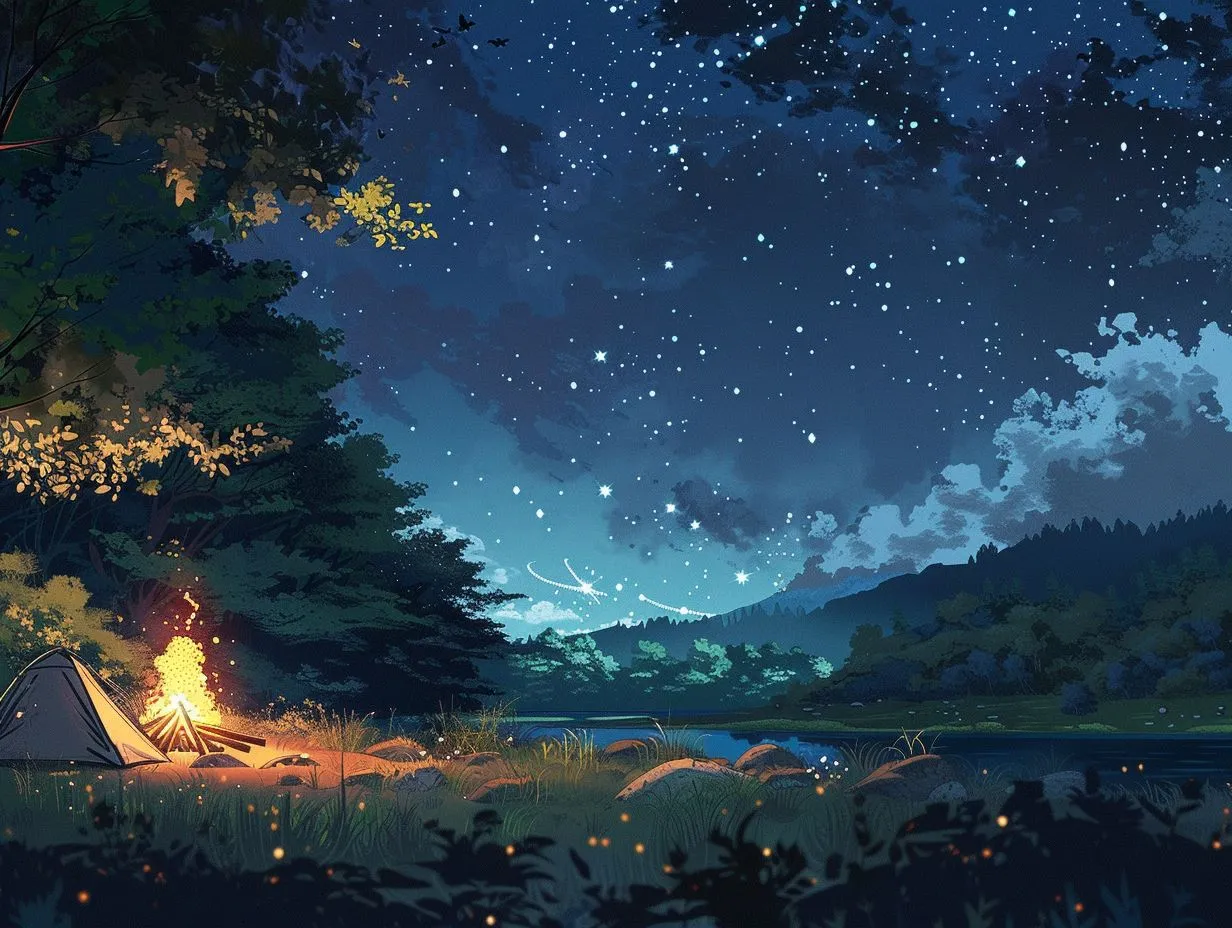
The UK has more than a dozen officially protected dark sky places, and camping is the best way to use them. Northumberland holds the largest area of protected dark sky in Europe, Galloway Forest was the UK's first Dark Sky Park, and Exmoor was the first Dark Sky Reserve in Europe. Pitch a tent inside or beside one of these areas on a clear, moonless night and you will see the Milky Way arch overhead with the naked eye.
This guide names every major UK dark sky place, explains what the designations actually mean, and tells you how to set up a stargazing camp that works. It sits alongside our round-up of the best campsites for stargazing, and you can find and compare pitches near any of these areas through Camping Sites in Britain.
Stargazing camping is cheap, needs almost no kit, and pays off best in autumn and winter when nights are long and the air is clear. The one thing you cannot buy is a truly dark horizon, which is exactly what these protected places give you.
What the dark sky designations mean
The designations are awarded by DarkSky International, the body formerly known as the International Dark-Sky Association (IDA). A place earns accreditation by proving it has genuinely dark night skies and by committing to responsible lighting rules that keep it that way. There are three you will see across the UK.
- Dark Sky Reserve. A large area with an exceptionally dark core, surrounded by a populated buffer zone that agrees to control its lighting. Exmoor, Bannau Brycheiniog and the South Downs are reserves.
- Dark Sky Park. Public or private land with excellent starry nights and a strong commitment to protecting them for education and enjoyment. Galloway Forest and Northumberland are parks.
- Dark Sky Community. A town, village or island that has changed its street and public lighting to cut light pollution. Moffat in Scotland was the first in Europe.
A few UK sites, such as Bodmin Moor, carry a Dark Sky Landscape status instead. The practical point for campers is simple: any of these labels means someone has measured the darkness and it is genuinely good.
The UK's dark sky places and where to camp
Below are the main protected areas, north to south, with the camping angle for each. All of them have campsites, caravan parks and glamping either inside the boundary or a short drive away, which you can browse in our campsite listings.
| Place | Type and status | Best for |
|---|---|---|
| Galloway Forest, Scotland | Dark Sky Park, UK's first (2009) | Milky Way, deep quiet |
| Northumberland and Kielder | Dark Sky Park, largest in Europe | Observatory events, aurora chance |
| North Pennines | National Landscape with dark skies | Remote high moorland pitches |
| Yorkshire Dales and North York Moors | Joint Dark Sky Reserve (2020) | Family stargazing, festivals |
| Eryri (Snowdonia), Wales | Dark Sky Reserve (2015) | Mountain skies, the Milky Way |
| Bannau Brycheiniog (Brecon Beacons) | Dark Sky Reserve (2013) | Accessible dark sites, meteor showers |
| Exmoor | Dark Sky Reserve, Europe's first (2011) | Horizon-to-horizon darkness |
| Cranborne Chase | Dark Sky Reserve (2019) | Chalk downland, southern England |
| South Downs | Dark Sky Reserve (2016) | Easy access from the south east |
| Bodmin Moor, Cornwall | Dark Sky Landscape (2017) | Granite tors, dark western skies |
Galloway Forest, Northumberland and the far north
Galloway Forest Park in south west Scotland became the UK's first Dark Sky Park in 2009 (Forestry and Land Scotland), and its core is one of the darkest measured places in the country. You will find campsites and wild-ish pitches around Loch Trool and Clatteringshaws. Northumberland, covering the national park and Kielder Water and Forest Park, holds the largest area of protected dark sky in Europe (DarkSky International) and has the added draw of Kielder Observatory, which runs regular public astronomy events. Camp near Kielder and you can pair a pitch with a guided night under the stars.
The further north you go, the better your chance of catching the aurora on an active night. Scottish stargazers should look at pitches across the Highlands, where dark horizons and low population combine, though clear skies are never guaranteed. The North Pennines National Landscape, straddling Cumbria, Durham and Northumberland, adds more high, empty moorland with excellent dark skies just to the south.
Yorkshire, Wales and the Midlands
The Yorkshire Dales and North York Moors were designated together as a single International Dark Sky Reserve in 2020, one of the largest in the UK. Both national parks run popular dark skies festivals in February and around the October half term, so camping here can be built around an organised event. Browse pitches across North Yorkshire to be close to the action.
In Wales, Eryri (Snowdonia) became a Dark Sky Reserve in 2015 and gives you the Milky Way over a mountain skyline, while Bannau Brycheiniog (the Brecon Beacons) has been a reserve since 2013 and has a set of accessible, signposted dark sky viewing spots. For a fuller Welsh round-up, see our guide to stargazing campsites in Wales.
Southern England and the West Country
Exmoor led the way as Europe's first International Dark Sky Reserve in 2011 (Exmoor National Park), and its low, sea-facing horizons give a genuine horizon-to-horizon view on a clear night. Cranborne Chase, on the chalk downland where Dorset, Wiltshire and Hampshire meet, became a reserve in 2019, and the South Downs, a reserve since 2016, is the easiest truly dark sky to reach from London and the south east. Down in Cornwall, Bodmin Moor earned Dark Sky Landscape status in 2017, offering granite tors and dark western skies away from the coastal resorts.
What you can actually see
On a clear, moonless night in any of these places, the naked eye alone shows the Milky Way as a bright, mottled band across the sky. That is the view most people never get at home, where light pollution washes it out entirely. Add a pair of binoculars and you can pick out the Andromeda Galaxy, the star clusters of the Pleiades, and craters on the Moon when it is up.
Meteor showers are the other big draw, and dark skies dramatically increase how many you see. The Perseids peak in mid-August and the Geminids in mid-December, and both are worth planning a trip around. Our guide to planning around meteor showers covers the dates and how to time a camp. In the far north, an active aurora can turn the northern horizon green, though it is a bonus rather than something you can book.
How to set up a stargazing camp
Getting the stars is mostly about timing and small habits rather than expensive gear. Do these six things and an ordinary campsite becomes a proper observatory.
- Camp around a new moon. A full moon is bright enough to wipe out the faint sky. Check a moon-phase calendar and aim for the darkest week of the month.
- Get away from your own lights. Your tent, the toilet block and other campers' lanterns all ruin the view. Walk a short distance to a spot facing away from any lighting.
- Let your eyes adapt for 20 minutes. Full night vision takes around 20 minutes to build, and one glance at a white phone screen resets it. Be patient and the sky keeps getting deeper.
- Use a red torch. Red light lets you see your feet and your flask without destroying your night vision. Most head torches have a red mode, or you can tape red film over a normal one.
- Dress far warmer than you think. Clear nights are cold nights, because there is no cloud to hold the heat in. Layers, hat, gloves and a flask of something hot make the difference between an hour out and 10 minutes.
- Bring a star app or a planisphere. A phone app that maps the sky, or a simple rotating star chart, turns a field of dots into named constellations and planets.
Many dark sky areas also hold star festivals, most often in February and October when nights are long. Exmoor, the Yorkshire parks, Bannau Brycheiniog and the South Downs all run them, with telescopes, expert talks and guided sessions. Booking a camp around one is the easiest way in for a first-timer.
Frequently asked questions
Where is the darkest sky in the UK?
Galloway Forest in Scotland and the core of Northumberland's Dark Sky Park are among the darkest measured skies in the country. Northumberland holds the largest area of protected dark sky in Europe, so it combines darkness with sheer scale.
Do I need a telescope to enjoy a dark sky park?
No. The Milky Way, meteor showers and thousands of stars are all visible to the naked eye once your eyes adapt. A pair of binoculars adds a lot for little money and is easier to carry than a telescope.
When is the best time of year to go stargazing camping?
Autumn and winter give the longest, clearest nights, roughly September to March. Time your trip to a new moon for the darkest sky, and to a meteor shower peak such as the August Perseids or December Geminids for the most to see.
Can you see the Northern Lights while camping in the UK?
Sometimes, mainly in the far north of Scotland and Northumberland during strong solar activity. It is never guaranteed, so treat the aurora as a bonus and go for the reliable Milky Way and meteors instead.
What is the difference between a Dark Sky Reserve and a Dark Sky Park?
A reserve is a large dark core surrounded by a populated buffer zone that controls its lighting, such as Exmoor. A park is a single area of public or private land with excellent dark skies, such as Galloway Forest. Both are protected by DarkSky International.
Is camping allowed inside dark sky areas?
Yes, through campsites, caravan parks and glamping within or near every UK dark sky place. Wild camping rules still apply, so you need the landowner's permission in England and Wales, while Scotland allows responsible wild camping under its access code.
The short version
The UK's dark sky places, led by Northumberland, Galloway Forest and Exmoor, give you the Milky Way and meteor showers that light-polluted skies hide. Pick a new moon, dress warm, protect your night vision with a red torch, and let your eyes adapt. Find a pitch near your chosen sky through our best campsites for stargazing guide or straight from the campsite listings, and for the photography side see our tips on night sky photography.