The Best Campsites for Stargazing in Wales: Where to Camp Under Dark Skies
· Updated
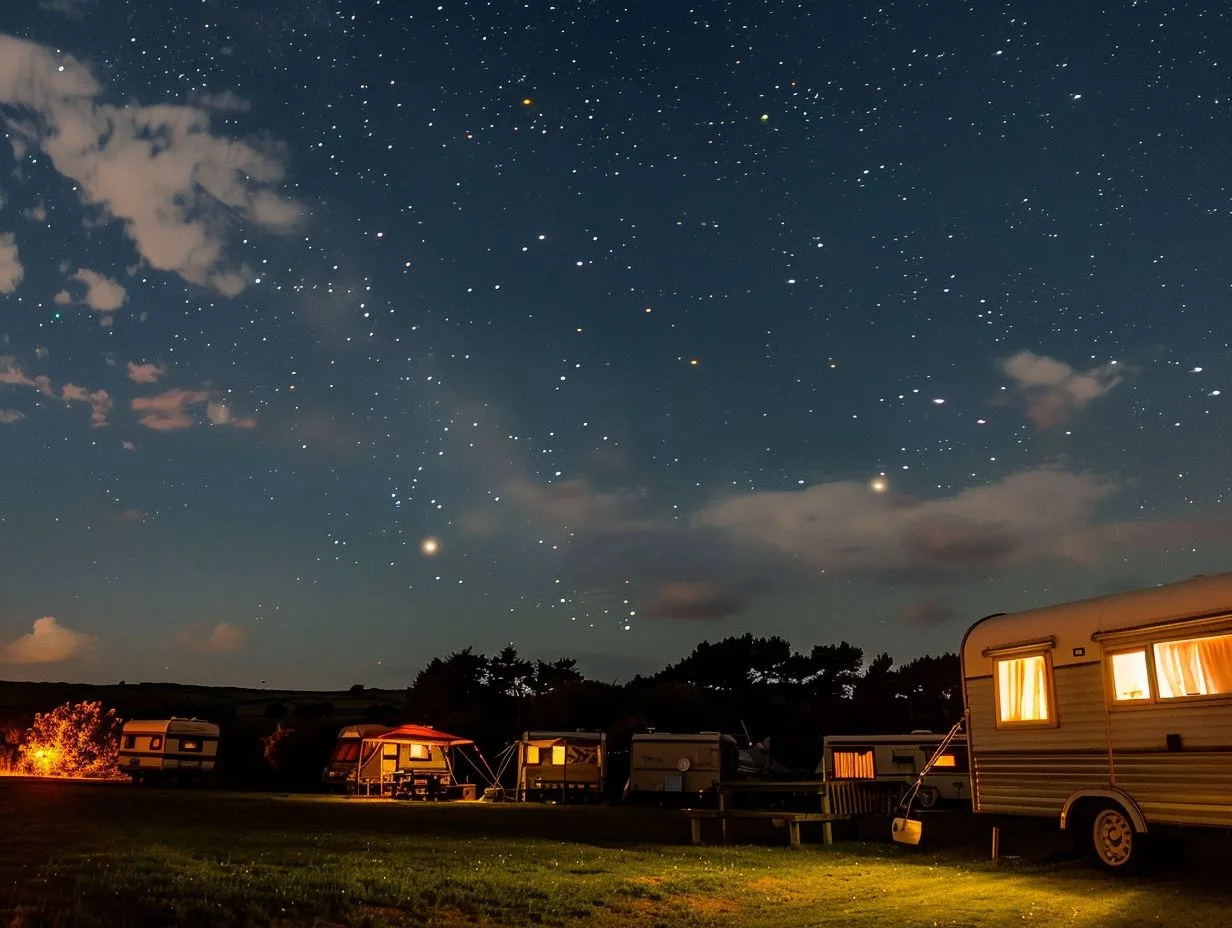
Wales has some of the darkest skies in the UK, and you can camp right underneath them. Bannau Brycheiniog (the Brecon Beacons) became an International Dark Sky Reserve in 2013, Eryri (Snowdonia) followed as a Reserve in 2015, and the Elan Valley in mid Wales is an International Dark Sky Park. On a clear, moonless night in any of these places, the Milky Way is not a faint smudge but a bright band arching across the whole sky.
The trick is pitching your tent close enough to the darkest ground to walk out and look up without getting in the car. This guide names the real stargazing areas across Wales and the camping near each one, so you can plan a trip around the sky rather than hope for the best.
It is part of our guide to the best campsites for stargazing, from Camping Sites in Britain, where you can find and compare campsites, caravan parks and glamping right across the UK.
Why Wales has such dark skies
Wales protects three of the best dark sky areas in Britain, and a few more that are nearly as good without the official label. Low population, high ground and very little industry across mid and north Wales mean whole valleys sit far from any town glow, which is exactly what you need to see faint objects like the Milky Way and meteor trails.
The three designated areas are the ones to build a trip around:
- Bannau Brycheiniog (Brecon Beacons) became an International Dark Sky Reserve in February 2013, one of the first in the world, covering the whole national park across south and mid Wales.
- Eryri (Snowdonia) was designated an International Dark Sky Reserve in 2015, protecting the dark skies over the mountains and valleys of the north west.
- The Elan Valley in mid Wales became the first privately owned International Dark Sky Park in the world, thanks to the reservoirs and estate run by Welsh Water.
Beyond the designations, the Cambrian Mountains in mid Wales and long stretches of the Pembrokeshire coast are genuinely dark too, so you are not limited to the three official areas. You can verify the Bannau Brycheiniog reserve status on the DarkSky International page for the park, and the Elan Valley designation on the DarkSky International announcement.
Bannau Brycheiniog (Brecon Beacons): the central Beacons
The darkest, most accessible skies in south Wales sit in the central Beacons around Libanus, and there is plenty of camping within a short drive. The National Park Visitor Centre near Libanus (Canolfan Ymwelwyr) is a Dark Sky Discovery Site and one of the easiest places in Wales to walk from a car park straight into proper darkness.
The reserve runs a Dark Sky Festival in February each year, with guided sessions, talks and telescope evenings that are worth timing a trip around. Away from the festival, the open moorland above the Usk Reservoir, to the west near Trecastle, is a favourite dark spot with room to set up a chair and let your eyes adjust. Look south from here in summer and the Milky Way runs right down towards the horizon.
Campsites cluster around Brecon, Libanus and the reservoir valleys, from working farm fields to sites with proper facilities. Pick one on the higher, southern side of the park for the darkest horizon, and you can be looking at Saturn or a meteor shower within minutes of finishing your dinner.
Llyn y Fan Fach and the western Beacons
The western half of the reserve, around Llyn y Fan Fach beneath the Carmarthen Fans, is darker still and far quieter. This glacial lake sits at the end of a long single track road with no settlements beyond it, so the light pollution effectively stops. It is a walk in to the lake itself, but camping in the valley below at Llanddeusant puts you under an exceptional sky with the added bonus of almost no passing traffic.
The Elan Valley: mid Wales at its darkest
The Elan Valley reservoirs offer some of the most reliably dark skies in Wales, protected as an International Dark Sky Park. The chain of Victorian dams and reservoirs west of Rhayader sits in a large, empty estate, and the visitor centre area is set up for stargazers with a dedicated dark sky viewing point.
The estate runs regular stargazing events and holds Dark Sky Discovery Site status at several points along the reservoirs. The water gives you a clear, open horizon in several directions, which is ideal for catching a low meteor shower or watching the Milky Way rise. Camping in and around Rhayader and the Elan Valley puts you within easy reach, and the drive up to the reservoirs after dark takes only a few minutes.
This whole corner of mid Wales, running into the Cambrian Mountains, is one of the best places in Britain for a dedicated stargazing camp. There is very little competing light for miles in any direction. If you want more options like this across the UK, our guide to campsites near dark sky parks covers the designated reserves and parks worth planning around.
Eryri (Snowdonia): the northern valleys
Eryri gives you dark skies framed by mountains, which makes for dramatic stargazing even if the horizon is higher than on the coast. The valleys around Betws-y-Coed and the shore of Llyn Geirionydd are among the most popular dark spots, both within the reserve and both with camping close by. Llyn Geirionydd in particular has an open lakeside aspect that opens up a good stretch of sky.
The national park promotes a network of Dark Sky Discovery Sites across Eryri and holds events through the darker months. Because the park is in Gwynedd and Conwy, you have a huge choice of campsites, from valley farms to larger holiday parks. You can browse options in the area on our Gwynedd campsite listings, then pick a pitch away from the busier valley floors for the darkest sky.
The Llyn Peninsula and Pembrokeshire coast
For dark skies with a sea horizon, head to the coast. The Llyn Peninsula, reaching west from Eryri, has stretches of very dark sky and campsites near the tip around Aberdaron where the only light is the occasional lighthouse. A flat sea horizon is brilliant for watching objects rise and for meteor showers, because you can see all the way down to the water.
The Pembrokeshire coast in the south west is similarly dark once you are away from the towns, especially around the St Davids peninsula and the northern coast near Newport and the Preseli Hills. Coastal camping here pairs dark nights with a proper beach day, so it suits families who want more than just the stargazing. Both areas are far enough from big towns to keep the sky genuinely black on a clear night.
What you can see under a Welsh dark sky
On a clear, moonless night in a Welsh dark sky area, the headline sight is the Milky Way, our own galaxy seen edge on as a bright band of stars and dust. It is at its best on summer and autumn evenings and is invisible from most towns, so seeing it clearly is the single biggest reason to camp somewhere this dark.
The other big draw is meteor showers. The Perseids in mid August and the Geminids in mid December are the two strongest of the year, and a dark Welsh sky can show dozens of meteors an hour at their peak. You can also pick out planets, the Andromeda galaxy with the naked eye, star clusters and, if you are lucky and far enough north, the occasional aurora. If you want to build a trip around a shower, read our guide to planning around meteor showers.
How to camp and stargaze well: practical tips
Good stargazing is mostly about planning the night, not buying kit. Get these basics right and even a modest sky will look spectacular.
| Tip | Why it matters |
|---|---|
| Camp near a new moon | A bright moon washes out faint stars and the Milky Way. Check the lunar calendar and aim for the darkest week of the month. |
| Let your eyes adapt | Full night vision takes 20 to 30 minutes in the dark. Stay off your phone screen and be patient, and far more stars appear. |
| Use a red torch | Red light preserves your night vision where white light destroys it. A head torch with a red mode is ideal around the pitch. |
| Wear warm layers | Standing still at night gets cold fast, even in summer. Hat, gloves and an extra layer keep you out longer. |
| Bring a star app | A phone app that points out constellations and planets makes sense of the sky quickly. Set it to night or red mode. |
Check the weather too. A clear forecast matters more than anything else, so keep your dates flexible if you can and be ready to move a night either way. A reclining chair or a rug to lie on saves your neck, and binoculars will show you far more than you expect, including the moons of Jupiter and dozens of star clusters. If you want to photograph what you see, our guide to night sky photography covers the settings and kit that work from a campsite.
Frequently asked questions
Where are the darkest skies in Wales for camping?
The three designated dark sky areas are Bannau Brycheiniog (Brecon Beacons), Eryri (Snowdonia) and the Elan Valley. The Elan Valley and the western Beacons around Llyn y Fan Fach are among the very darkest, with camping within a short drive of all three.
When is the best time of year to stargaze in Wales?
Autumn and winter give the longest, darkest nights, and the Milky Way is high on summer and early autumn evenings. Whatever the season, aim for a clear, moonless night near the new moon for the darkest sky.
Can you see the Milky Way from Welsh campsites?
Yes. On a clear, moonless night in any of the Welsh dark sky areas, the Milky Way is easily visible to the naked eye as a bright band across the sky. It is one of the main reasons to camp somewhere this dark.
Do I need a telescope to stargaze in Wales?
No. The Milky Way, meteor showers, constellations and the brighter planets are all naked-eye sights under a dark sky. A pair of binoculars will show you far more, including star clusters and the moons of Jupiter, and costs a fraction of a telescope.
What are Dark Sky Discovery Sites?
They are accessible spots, often with parking, chosen for good dark skies and an open horizon. Bannau Brycheiniog, Eryri and the Elan Valley all have several, including the Brecon Beacons National Park Visitor Centre near Libanus.
Are there stargazing events in the Welsh national parks?
Yes. Bannau Brycheiniog runs an annual Dark Sky Festival in February, and Eryri and the Elan Valley hold regular guided stargazing evenings and talks through the darker months. They are a good way to learn the sky with expert help.
The short version
Wales gives you three protected dark sky areas and several more nearly as good, all with camping close enough to walk out and look up. Pick the central Beacons, the Elan Valley or an Eryri valley, camp near a new moon, wrap up warm and let your eyes adapt.
Do that on a clear night and the Milky Way will do the rest. Find a pitch to start from in our full guide to the best campsites for stargazing, or browse campsites across Britain to build your trip.