How to Plan a Camping Trip Around a Meteor Shower
· Updated
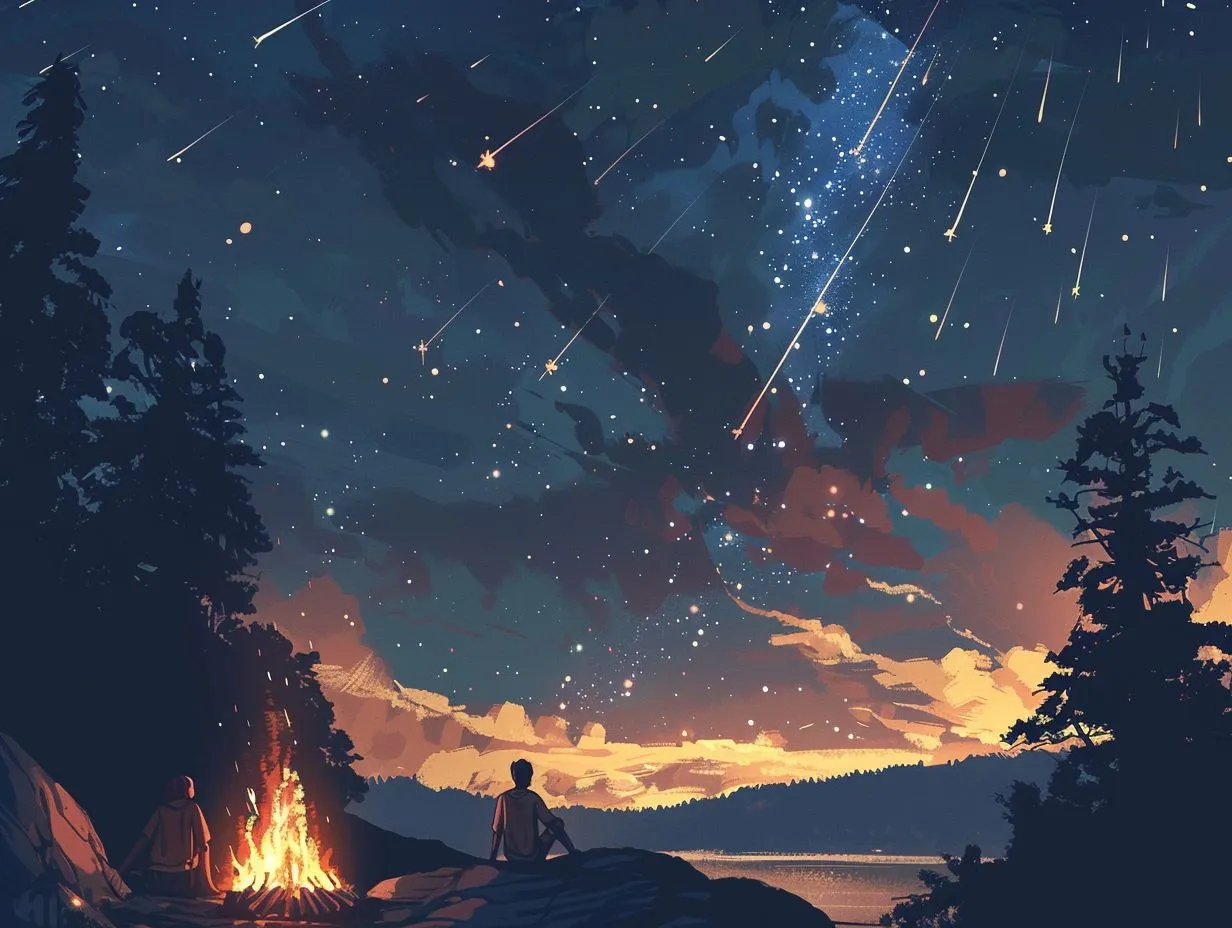
To plan a camping trip around a meteor shower, pick a shower whose peak falls near a new moon, book a dark sky site well away from town lights, check the weather for clear skies, and stay up past midnight when the meteors come thickest. Get those four things right and you can see dozens of shooting stars an hour with nothing but your own eyes.
A meteor shower happens when the Earth ploughs through a trail of dust and grit left behind by a comet. Those specks hit the atmosphere at tens of thousands of miles an hour and burn up as bright streaks. Because the debris trail sits at a fixed angle, the meteors all appear to fan out from one point in the sky, called the radiant, which is how each shower gets its name.
This is part of our guide to the best campsites for stargazing, from Camping Sites in Britain, where you can find and compare sites with proper dark skies overhead.
The main meteor showers and when they peak
There are around eight reliable showers a year, and the peak dates barely move, so you can plan a trip months ahead. The two big ones for campers are the Perseids in August, warm and forgiving, and the Geminids in December, the richest of the lot but bitterly cold.
| Shower | Approximate peak | Rate at peak | Notes |
|---|---|---|---|
| Quadrantids | 3 to 4 January | Up to 100 per hour | Very sharp, narrow peak of a few hours |
| Lyrids | 22 to 23 April | Around 15 to 18 per hour | First good shower of spring |
| Eta Aquariids | Early May | Around 40 per hour | Best low on the horizon before dawn |
| Perseids | 12 to 13 August | Up to 100+ per hour | The summer favourite, warm nights |
| Orionids | 21 October | Around 20 to 25 per hour | Fast, faint meteors from Halley's Comet |
| Leonids | Mid November | Around 15 per hour | Occasional storm years, decades apart |
| Geminids | 13 to 14 December | Up to 120+ per hour | The best of the year, but cold |
The Perseids peak overnight on 12 to 13 August and can deliver up to 100 meteors an hour under a dark sky, according to the Royal Observatory Greenwich. The Geminids peak on 13 to 14 December with an even higher rate, up to 120 or more an hour, as listed by timeanddate.com. These dates shift by a day or so each year, so check a current almanac or the Royal Observatory calendar before you book.
Match the peak to a new moon
The single biggest factor in a good night is the moon, not the shower itself. A bright moon washes out all but the brightest meteors, so a shower that peaks near a full moon can be a disappointment even at its busiest. Aim for a peak that lands within a few days of a new moon and you keep the sky properly dark.
Check the moon phase for the peak date before you commit. If the moon is up and bright, you still get something, but you will see a fraction of what a dark sky delivers. Some years the Perseids or Geminids fall near a new moon and it is worth building a whole weekend around, other years the moon spoils the party and a lesser shower on a darker night beats it.
Get to a genuinely dark sky site
Light pollution is the difference between a handful of meteors and a proper show. From a town garden you might catch the odd bright fireball, but the fainter meteors, which make up most of the count, simply vanish in the glow. You need to be well out of the orange dome that sits over every settlement.
Britain has several International Dark Sky Reserves and Parks where the skies are protected, including the Brecon Beacons, Northumberland, Exmoor and Galloway Forest. Our guide to campsites near dark sky parks lists sites inside or beside these areas, and Wales in particular is spoiled for choice, as you will see in our roundup of stargazing campsites in Wales. Browse and compare pitches across the country in the Camping Sites in Britain directory.
Check the weather for clear skies
Clear skies trump everything else on the night. A textbook peak under thick cloud shows you nothing at all, so watch the forecast in the days before and be ready to go a night either side of the peak if the cloud breaks then. Most showers are active for several nights around the peak, so a bit of flexibility pays off.
Look at cloud cover forecasts rather than just rain, and favour high pressure, which usually brings the clear, settled nights you want. Upland and coastal dark sky areas can make their own weather, so check a local mountain or regional forecast as well as the national one.
Time it right and let your eyes adapt
The best viewing is almost always after midnight, and often in the couple of hours before dawn. That is when your side of the Earth turns to face the direction of travel, the radiant climbs highest, and the meteors come both faster and more numerous. An evening session before midnight will still show you plenty, but the pre-dawn window is the one to aim for.
Once you are settled, give your eyes at least 20 minutes to adapt to the dark, and protect that adaptation carefully. A single glance at a white phone screen resets it and you start again. Use a red torch for finding gear or the tent, since red light spares your night vision.
You do not need a telescope or binoculars. Meteors flash across large parts of the sky in an instant, so a narrow magnified view only works against you. The naked eye, taking in as much sky as possible, is exactly the right tool. If you want to record the night rather than just watch it, our tips on night sky photography cover the camera settings that actually work.
What to pack for a cold night under the stars
Lying still for hours in the small hours gets cold fast, even in August, so warmth is the thing people underestimate most. You are not moving around to generate heat, so dress as if it is several degrees colder than the forecast and bring more layers than you think you need.
- A reclining chair or a foam mat so you can lie back and watch the sky without craning your neck.
- A sleeping bag or thick blanket to get inside or wrap up in, on top of your clothing layers.
- A flask of something hot, which does more for morale at 2am than almost anything else.
- A red torch or a head torch with a red mode to protect your night vision.
- Hat, gloves and warm socks, since heat leaves through your head, hands and feet first.
- Snacks and water to keep you going through a long, still session.
Frequently asked questions
What time of night is best to see a meteor shower?
After midnight, and often best in the two hours before dawn. That is when the sky's radiant point sits highest and your side of the Earth faces into the debris stream, so meteors appear faster and more frequently than in the evening.
Do I need a telescope to watch a meteor shower?
No. Meteors streak across wide areas of sky in an instant, so the naked eye is the right tool. A telescope or binoculars only narrow your view and make you miss them. Just lie back and take in as much sky as you can.
Why does the moon matter for meteor showers?
Moonlight brightens the whole sky and washes out the fainter meteors, which make up most of the count. A shower peaking near a full moon underwhelms even at its busiest, so aim for a peak close to a new moon for the darkest sky.
Which meteor shower is the best to plan a trip around?
The Perseids in mid August are the most popular, thanks to warm nights and up to 100 meteors an hour. The Geminids in mid December are richer still, over 120 an hour, but you will need serious cold-weather kit.
How long should I stay out to see meteors?
Allow at least an hour once your eyes have adapted, which itself takes about 20 minutes in the dark. Meteors come in bursts and lulls, so patience pays. Many campers settle in for two or three hours around the peak.
Do I need to book a special site to see a meteor shower?
Not special, just dark. Any campsite well away from town lights will do, and sites in or near a Dark Sky Reserve are ideal. Check the moon phase and the weather forecast for your dates before you book.
The short version
Pick a shower peaking near a new moon, get to a dark sky site, check for clear skies, and stay out after midnight with a chair, a sleeping bag and a flask. Leave the telescope at home and let your eyes do the work. Start with our guide to the best campsites for stargazing and find your pitch in the Camping Sites in Britain directory.