The Best Beaches on the Isle of Wight for Campers
· Updated
The best beaches on the Isle of Wight for campers are Compton Bay for surf and fossils, Steephill Cove for peace and seafood, and the wide family sands of Sandown, Shanklin and Ryde. In one compact island roughly 23 miles wide you get proper Atlantic-style rollers on the south west coast, sheltered swimming bays facing the mainland, and cliffs that still turn up dinosaur footprints after a storm.
The island sits a short ferry hop off the Hampshire coast, so you can pitch up on a Friday night and be barefoot on the sand by Saturday morning. This guide is part of our wider guide to coastal camping in the UK, and here at Camping Sites in Britain we have picked the beaches that actually reward a camping trip, with the practical detail on getting there, surfing, fossil hunting and where to stay.
Getting to the Isle of Wight
Two operators run every ferry to the island, and there is no bridge or tunnel. Wightlink runs three routes: Portsmouth to Fishbourne (car ferry, about 45 minutes), Portsmouth Harbour to Ryde Pier Head (the FastCat, foot passengers only, about 22 minutes) and Lymington to Yarmouth (car ferry, about 40 minutes). Red Funnel runs from Southampton, with the vehicle ferry to East Cowes in roughly 55 to 60 minutes and the Red Jet hi-speed foot service to West Cowes in about 25 minutes.
Book the car ferry well ahead for school holidays and August weekends, as crossings sell out and turn-up-and-go fares are dear. If you are camping light and travelling on foot or by bike, the FastCat and Red Jet are cheaper and the island's bus and train network will get you close to most beaches. Check live times and prices with Wightlink and Red Funnel before you set off.
Compton Bay: surf, fossils and dinosaur footprints
Compton Bay is the island's best all-round beach and the one most worth building a trip around. This long, west-facing stretch of sand below crumbling coloured cliffs is owned by the National Trust, catches the cleanest swell on the island and is the go-to spot for surfers, bodyboarders and windsurfers.
It is also one of the finest fossil sites in Britain. At low tide you can see genuine dinosaur footprint casts in the ledges below Hanover Point, and the cliffs regularly shed fossils after winter storms. The National Trust runs guided fossil walks here, which are the safe way to hunt with children. Park in the National Trust car park on the Military Road (free for members), and take care near the cliffs, as they are soft and prone to slips. See the National Trust geology guide for current advice. If fossils are your thing, our guide to the best campsites for dinosaur fossil hunting pairs well with a Compton trip.
Sandown and Shanklin: the classic resort beaches
Sandown and Shanklin are the two big family beaches and the reason most people first come to the island. Both sit on Sandown Bay on the sheltered south east coast, with long runs of soft golden sand, gentle shelving water, a promenade of cafes and amusements, and lifeguards in the main summer season.
Sandown is the busier of the pair, with a pier and the Dinosaur Isle museum a short walk along the front, which is a brilliant rainy-day backup. Shanklin is a little quieter and prettier, its beach reached from the old town by a lift down the cliff or through the wooded Shanklin Chine. These are the safest bets if you are camping with young children.
Ventnor and Steephill Cove: the sunny south
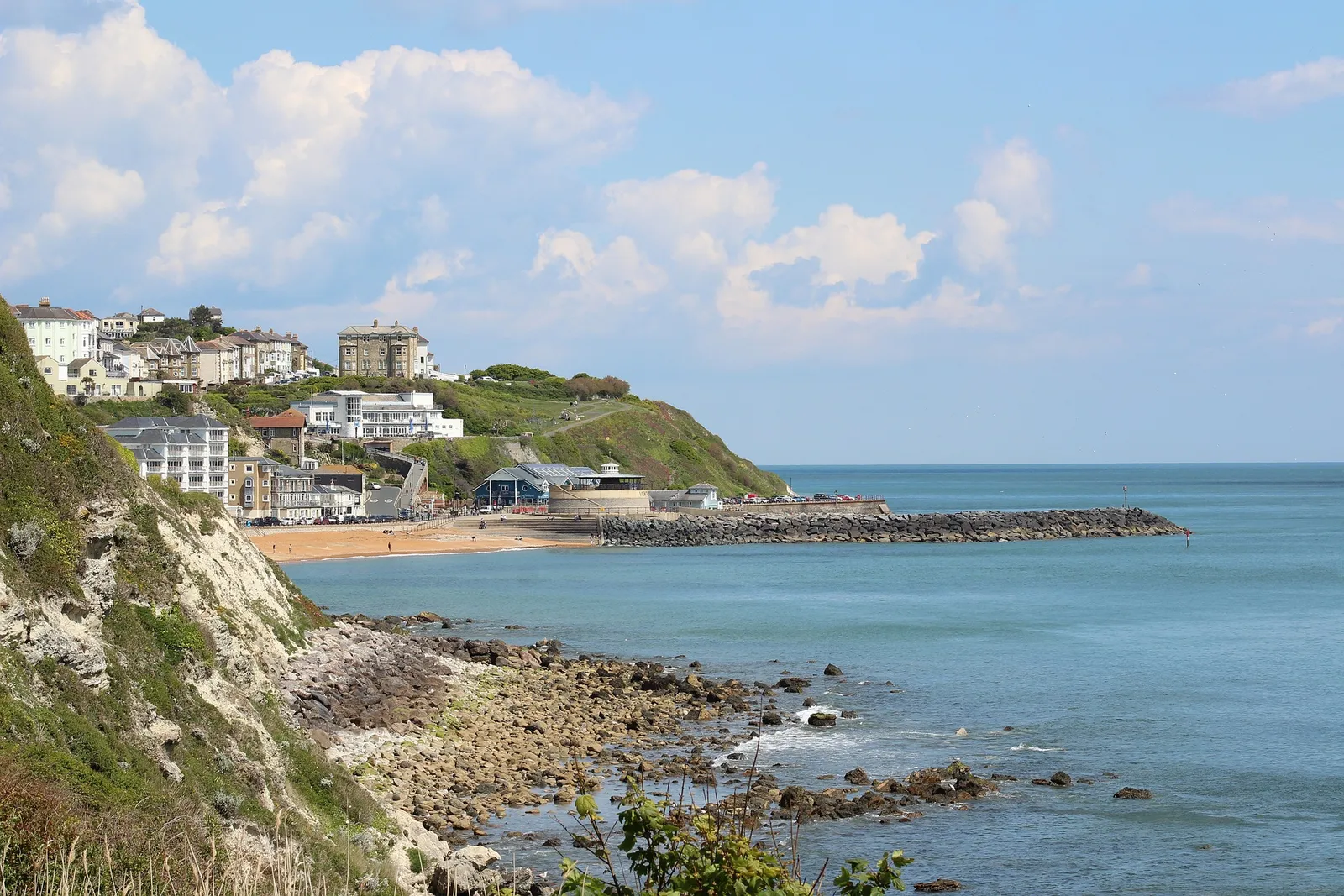
Ventnor has the warmest microclimate on the island and a sandy town beach that feels almost Mediterranean on a good day. Backed by a steep Victorian town built into the cliff, it has good cafes, safe swimming and the excellent Ventnor Botanic Garden nearby.
A 15-minute clifftop walk west brings you to Steephill Cove, the island's hidden classic. There is no road in and no car park, so you arrive on foot along the coast path from Ventnor or the Botanic Garden. The reward is a tiny, car-free cove of sand and rock pools, a huddle of fishermen's cottages, and two seafood shacks selling crab pasties and fresh lobster. It gets busy on summer afternoons precisely because it is so hard to reach, so go early. For more places like this, see our guide to Britain's secret beaches and cove campsites.
Colwell Bay and Totland Bay: sheltered west coast swimming
Colwell Bay and Totland Bay sit next to each other at the quiet west end of the island, facing the mainland across the Solent. Both are gently shelving, sheltered from the prevailing wind and among the best swimming beaches on the Isle of Wight, with calm, shallow water that suits young families and nervous paddlers.
Colwell has a row of colourful beach huts and a good beach cafe, and you can walk the sea wall between the two bays in a few minutes. Sunsets here are the finest on the island, looking out over Hurst Castle and the Needles. Both are within easy reach of the Yarmouth ferry, which makes them handy for a foot-passenger trip from Lymington.
Ryde, Priory Bay and Whitecliff Bay
The east of the island holds three more beaches worth your time. Ryde has the largest expanse of sand on the island, an enormous shallow beach revealed at low tide that is perfect for kites, cricket and long walks, with the town, the pier and the Portsmouth FastCat right there.
Priory Bay, near Seaview, is a quiet, wooded, low-cliff beach that feels private and is best reached on foot at low tide from St Helens Duver. Whitecliff Bay, tucked under Culver Down near Bembridge, is a sheltered sandy bay with dramatic chalk cliffs and a large holiday park behind it, making it one of the easiest beaches to combine with camping. Both are calm, south-east-facing and good for families who want sand without the resort crowds.
Isle of Wight beaches at a glance
| Beach | Best for | Sand or shingle | Access |
|---|---|---|---|
| Compton Bay | Surf, fossils, footprints | Sand at low tide | National Trust car park, cliff steps |
| Sandown | Families, amusements | Sand | Level, from town |
| Shanklin | Families, quieter resort | Sand | Cliff lift or Chine |
| Ventnor | Warm microclimate, cafes | Sand and shingle | From town |
| Steephill Cove | Seclusion, seafood | Sand and rock | On foot only, no cars |
| Colwell and Totland | Sheltered swimming, sunsets | Sand and shingle | Level, near Yarmouth |
| Ryde | Wide sands, kites | Sand | Level, from town |
| Priory Bay | Quiet, wooded | Sand | On foot at low tide |
| Whitecliff Bay | Sheltered, near camping | Sand | Steps from holiday park |
Surfing on the Isle of Wight
Compton Bay is the island's main surf spot, and the south west coast around Freshwater and Brook picks up the same westerly and south westerly swell. It is not Cornwall, but on the right day you get clean, rideable waves that suit beginners and intermediates, and there are surf hire and lesson operators based near Compton in the season.
The water is coldest from December to April, so a decent wetsuit is essential outside high summer. Always check tide times and surf reports before you paddle out, and stick to lifeguarded beaches such as Sandown, Shanklin and Ventnor if you are learning to swim in the sea rather than surf.
Fossil hunting done safely
The Isle of Wight is one of the richest dinosaur fossil sites in Europe, and Compton Bay, Brook Bay and Yaverland near Sandown are the best beaches for finding them. The best time to hunt is after winter storms and on a falling tide, when fresh material washes out of the cliffs onto the foreshore.
Collect only loose fossils from the beach and never dig or hammer into the cliffs, which are unstable and dangerous. Keep well back from cliff bases, watch the incoming tide, and if you want to learn what you are looking at, book onto a National Trust or Dinosaur Isle guided walk. Children love it, and you will come home with far more than you would on your own.
Camping on the island
The Isle of Wight is packed with campsites, from clifftop pitches near the Needles to family holiday parks behind Whitecliff Bay and quiet farm sites in the West Wight. Because the island is small, no campsite is more than a short drive from a good beach, so you can base yourself once and reach the whole coast.
Book early for July, August and the Isle of Wight Festival period, when sites fill fast and ferries are at their busiest. To find and compare places to pitch across the country, browse the Camping Sites in Britain directory, and read our advice on how to choose a site for beach camping before you book near the coast.
Frequently asked questions
Which is the best beach on the Isle of Wight?
Compton Bay is the best all-round beach, with surf, fossils and dinosaur footprints below National Trust cliffs. For families the sheltered sands of Sandown and Shanklin are the safest choice, and Steephill Cove is the best hidden spot.
How do you get to the Isle of Wight?
By ferry only. Wightlink sails from Portsmouth (to Fishbourne and Ryde) and Lymington (to Yarmouth), and Red Funnel sails from Southampton to Cowes. There is no bridge or tunnel, so book vehicle crossings ahead in summer.
Can you surf on the Isle of Wight?
Yes. Compton Bay on the south west coast is the main surf spot and picks up clean westerly swell. It suits beginners and intermediates, with hire and lessons available in season. Wear a wetsuit outside high summer, as the water is cold.
Where can you find dinosaur footprints on the Isle of Wight?
At Compton Bay, below Hanover Point, where fossilised dinosaur footprint casts are visible in the rock ledges at low tide. Yaverland and Brook are also good fossil beaches. Collect only loose material and stay clear of the crumbling cliffs.
Is there a car-free beach on the Isle of Wight?
Yes, Steephill Cove near Ventnor has no road access and no car park. You reach it on foot along the coast path from Ventnor or the Botanic Garden, which is why it stays quiet and unspoilt.
When is the best time to visit Isle of Wight beaches?
June to September for warm water and lifeguard cover on the main beaches. Winter and early spring, just after storms, are best for fossil hunting at Compton Bay. Book ferries and campsites early for the summer school holidays.
The short version
Go to Compton Bay for surf, fossils and dinosaur footprints, Sandown and Shanklin for easy family sands, and Steephill Cove for a car-free seafood hideaway. Get there on the Wightlink or Red Funnel ferry, book early in summer, and pitch up close to the coast. Start your search in our guide to coastal camping in the UK or browse pitches now in the Camping Sites in Britain directory.