Secret Beaches in Britain: Hidden Coves and Where to Camp Nearby
· Updated
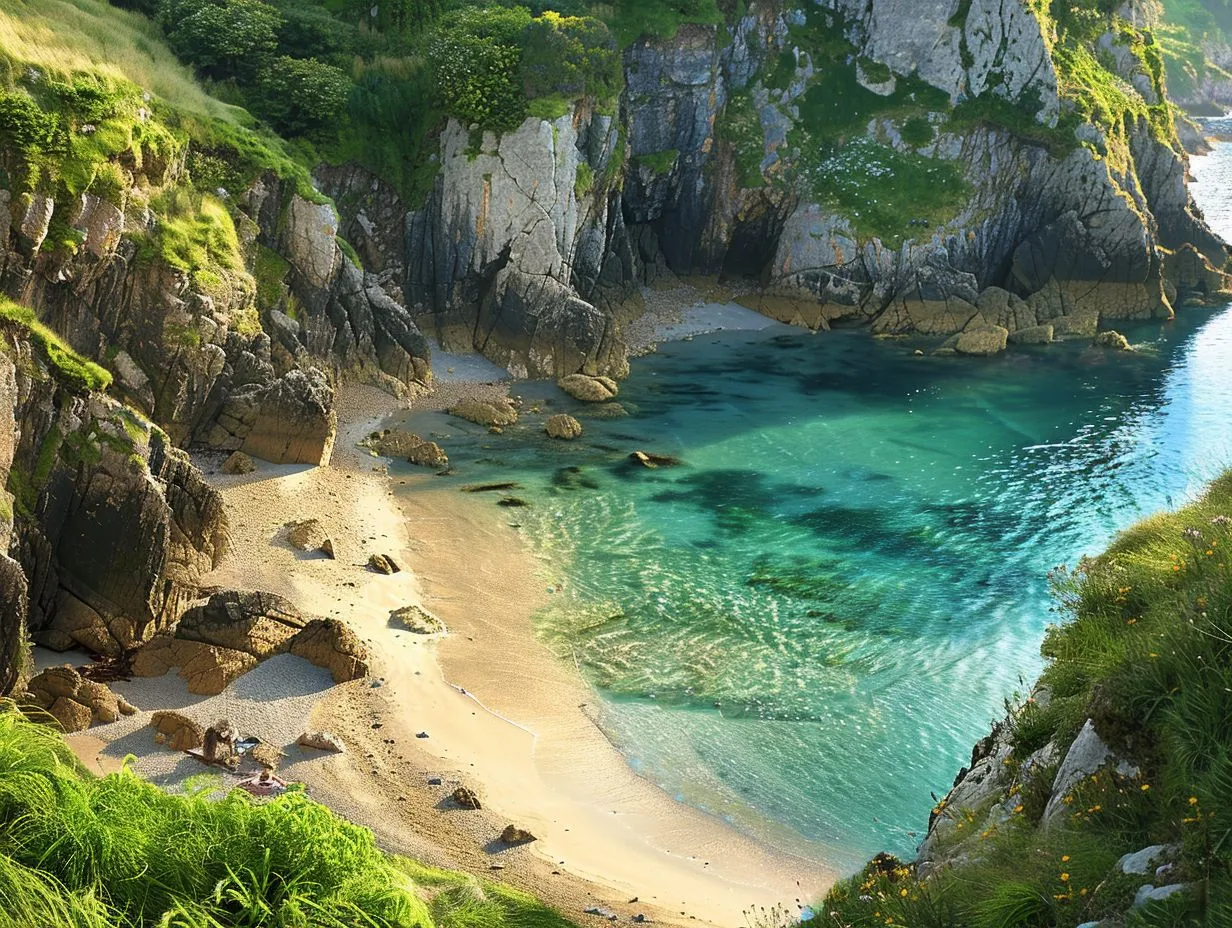
Britain's quietest beaches stay quiet for one reason: you have to work a little to reach them. The coves worth the trip sit at the bottom of a cliff path, a mile or more from the nearest car park, or behind a headland that keeps the crowds on the popular sands next door. Barafundle Bay in Pembrokeshire, Sandwood Bay in Sutherland and Ceibwr Bay near Moylgrove are the sort of places we mean: real beaches, named and on the map, just awkward enough to stay empty.
This is a guide to the hidden beaches and coves worth pitching up for, how to get to each one, and what to know about tides and safety before you go. It is part of our guide to coastal camping in the UK, and it comes from Camping Sites in Britain, where you can find and compare campsites, caravan parks and glamping right along the coast.
The best secret beaches and coves in Britain
The finest quiet beaches share a common trait: no road runs down to them. That walk in is exactly what keeps them peaceful, so treat the access notes below as part of the appeal rather than a chore.
Barafundle Bay, Pembrokeshire
Barafundle is the one most people mean by a secret beach, even though it is well loved. It has no car park, no ice cream van and no road: you park at Stackpole Quay and walk about half a mile over a headland, steps and all, before the sand appears below you. The National Trust owns it, there are no facilities on the beach itself, and the walk is what keeps the numbers down. Bring what you need and take it all home.
Cwm-yr-Eglwys and Ceibwr Bay, Pembrokeshire
These two small coves on the north Pembrokeshire coast are quieter still. Cwm-yr-Eglwys is a sheltered sandy inlet guarded by the ruins of St Brynach's church, wrecked in the great storm of 1859, with parking tight in the tiny village. Ceibwr Bay, near Moylgrove, is a rocky National Trust cove on the Coast Path with a small roadside parking area and no facilities at all. Both reward campers who want a swim and a scramble without a soul in sight.
Sandwood Bay, Sutherland
Sandwood Bay is the wildest beach on this list and the hardest to reach. A mile of pink sand backed by dunes and a sea stack, it lies at the end of a four-mile walk from the car park at Blairmore, near Kinlochbervie in the far north west. There is no road, no shop and no lifeguard, and mobile signal is patchy at best. Carry everything in and out, allow a good half day for the round trip, and check the forecast before you set off.
Lunan Bay, Angus
Lunan Bay gives you two miles of red sand between Arbroath and Montrose, watched over by the ruins of Red Castle, and it rarely fills up even in August. Access is easy by the standards of this list, with a small car park and a short walk down, which makes it a gentle introduction to Scotland's quieter coast. The surf can pick up here, so read the water before you swim.
Kynance Cove and Porthcurno, Cornwall
These two are stunning but no secret, so plan around the crowds rather than expecting solitude. Kynance Cove on the Lizard is a National Trust classic of white sand and serpentine rock stacks, and crucially it is tidal: much of the beach and its caves disappear at high water, so check the tide table before you walk down. Porthcurno, beneath the open-air Minack Theatre, is at its best early morning or out of season. Come at dawn or in the shoulder months and you get the postcard without the queue.
Getting to a hidden beach: access and what to carry
Assume no facilities and a walk at both ends of your day. The beaches worth having are rarely a step from the car, so pack as though you are heading into the hills rather than to a seaside resort.
- Footwear and a bag: cliff paths are steep, muddy after rain and often stepped. Walking shoes and a rucksack beat flip-flops and a cool box every time.
- Water and food: there is no shop at the bottom of the path. Carry your own, and carry every scrap of rubbish back out.
- A tide table: essential for any cove that cuts off, which is most of them. A free tide time from the Met Office or a local harbour board is enough.
- Weather layers: exposed beaches feel colder and windier than the car park. A windproof layer and a warm top earn their place even in summer.
For choosing the pitch itself once you have found your beach, our guide to how to choose a site for beach camping covers the ground in detail, and if you fancy linking several coves into a longer route, see exploring Britain's coastal pathways.
Tides and safety on remote beaches
The single most important rule is that remote beaches have no lifeguard, so you are your own safety cover. RNLI lifeguards patrol only a selection of popular beaches in summer, and none of the hidden coves above are among them. That changes how you use the water.
The RNLI's core advice for anyone who gets into trouble in the sea is Float to Live: lean back, spread your arms and legs, gently move them to stay afloat, and let the cold water shock pass before you try to swim or call for help. If you see someone else in danger, do not go in after them. Call 999 and ask for the Coastguard. You can read the full method on the RNLI Float to Live page.
Two coastal hazards catch campers out more than any other. Rip currents pull you away from shore fast, and the answer is never to swim against them: swim parallel to the beach until you are free, then head in. Cut-off is the other, where a rising tide traps you against the cliff on a beach that was dry an hour ago. Check the tide before you walk down, note the time of the next high water, and keep an eye on the sea as it comes in. On a beach with no phone signal, tell someone your plan and your expected return time before you leave.
Where to camp near Britain's secret beaches
The trick is to base yourself in the right region and treat the beach as a day trip, because campsites almost never sit directly on a protected cove. Pitch within a short drive and walk the last stretch in.
| Beach or cove | Region to base in | Rough access |
|---|---|---|
| Barafundle Bay, Cwm-yr-Eglwys, Ceibwr Bay | Pembrokeshire | Half-mile walk or tight village parking |
| Kynance Cove, Porthcurno | Cornwall (the Lizard and Penwith) | Steep path, tidal, busy in season |
| Sandwood Bay | Sutherland, Scottish Highlands | Four-mile walk each way, no facilities |
| Lunan Bay | Angus | Small car park and short walk |
For Pembrokeshire, browse our Pembrokeshire campsites, many of them within a few miles of the Coast Path. For the Cornish coves, our Cornwall campsites cover the Lizard and Penwith. For Sandwood Bay and the far north, start with campsites in the Scottish Highlands. You can also search the whole coast through our full campsite directory. If you would rather a proper resort with the beach on the doorstep, our guide to Britain's seaside towns for camping takes the opposite approach.
Frequently asked questions
What is the most secret beach in Britain?
Sandwood Bay in Sutherland is as close as it gets. A mile of pink sand at the end of a four-mile walk from Blairmore near Kinlochbervie, with no road, no facilities and no lifeguard. The walk in keeps it all but empty even in summer.
Can you camp on the beach at these coves?
Not usually. Most are National Trust land or have no facilities, and camping directly on the sand is generally not allowed without permission. Base yourself at a nearby campsite and treat the cove as a day trip instead.
Are remote beaches safe to swim at?
They can be, but there is no lifeguard, so you carry the risk yourself. Check the tide, avoid swimming alone, and learn the RNLI's Float to Live method before you go. If someone is in trouble, call 999 and ask for the Coastguard.
How do I find hidden beaches near a campsite?
Look for a stretch of coast with no road access, then work backwards to the nearest car park and campsite. The National Trust, the England Coast Path and local Coast Path maps mark coves that road maps miss. Our county campsite pages let you base yourself close by.
Do I need to check the tide before visiting a cove?
Yes, always. Many coves, including Kynance Cove, lose most of their beach at high water and can cut you off against the cliff. Check the time of the next high tide before you walk down and keep watching the sea as it rises.
The short version
Britain's secret beaches are secret because they take a walk to reach, from Barafundle's half-mile headland to Sandwood Bay's four miles of moor. Pack as if for a short hike, check the tide, and remember that no hidden cove has a lifeguard. Find your base on our coastal camping in the UK guide or search the campsite directory and pick your quiet corner of the coast.