The best castles to visit in Norfolk
· Updated
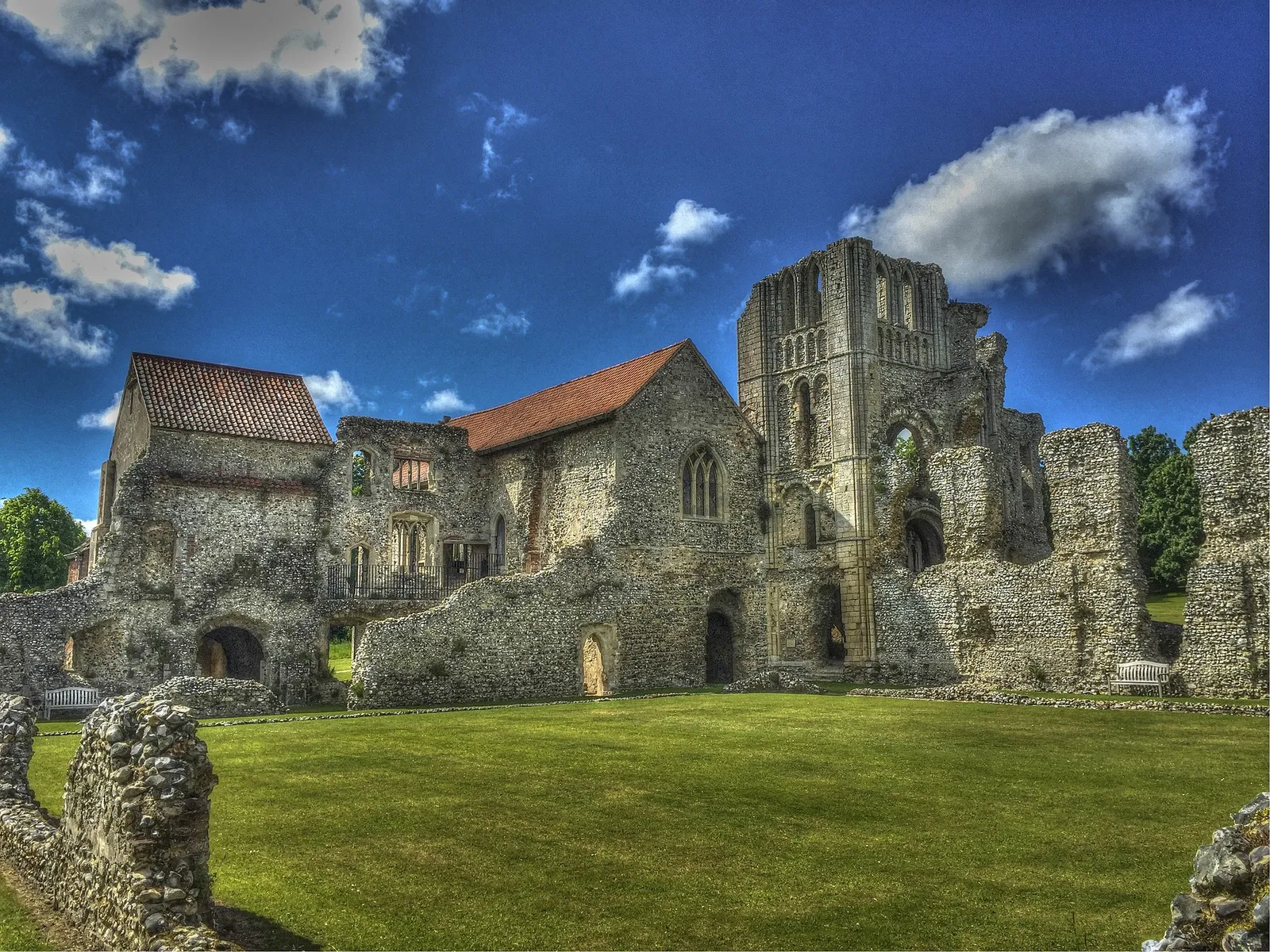
Norfolk holds five castles worth a proper day out: Norwich Castle, Castle Rising, Caister Castle, Baconsthorpe Castle and Castle Acre. Between them they span nine centuries, from a Norman royal palace built to overawe a conquered city to a 15th-century brick tower raised on the profits of the Hundred Years War. Three are looked after by English Heritage, one is a museum and art gallery, and one keeps a motor museum in its grounds.
They are also close together and easy to string into a camping trip. The Norfolk Broads sit in the east, the north Norfolk coast Area of Outstanding Natural Beauty runs along the top, and most of these castles are a short drive from one or the other. This guide covers what to see at each, and it is part of our wider guide to camping near Britain's castles.
It comes from Camping Sites in Britain, where you can find and compare campsites, caravan parks and glamping across the county before you set off.
The five castles at a glance
Here is how the five compare, so you can plan a route around where you are pitched.
| Castle | Nearest town | Custodian | Best for |
|---|---|---|---|
| Norwich Castle | Norwich | Norfolk Museums Service | Norman keep, museum and art gallery |
| Castle Rising | King's Lynn | English Heritage | One of the finest Norman keeps in England |
| Caister Castle | Great Yarmouth | Privately owned | Moated brick tower and a motor museum |
| Baconsthorpe Castle | Holt | English Heritage | Moated fortified manor ruin, free entry |
| Castle Acre | Swaffham | English Heritage | Castle, priory and a planned Norman village |
Norwich Castle
Norwich Castle is the headline, a Norman royal palace keep that has stood over the city for more than 900 years. William the Conqueror ordered it after 1066, and its great stone keep is one of the most important Norman buildings in England. It has served as a royal palace, a county gaol and, since 1894, the city's museum and art gallery.
The keep reopened in August 2025 after a £27 million project called Royal Palace Reborn, which rebuilt the medieval floors and rooms so you can walk the great hall, chapel and chambers as they would have looked in the 12th century. Alongside the keep, the museum holds a Viking gallery, an Egyptian collection, the Norwich Civic Regalia and a major collection of Norwich School paintings. Set aside half a day.
Castle Rising
Castle Rising, near King's Lynn, is one of the finest surviving Norman keeps in England and the pick of the group for anyone who wants a proper castle rather than a ruin. William d'Albini built it around 1138, and it later housed Queen Isabella, widow of Edward II, in comfortable retirement. The keep still stands close to its full height, and you can climb through its rooms and stairways.
What sets Castle Rising apart is the earthworks. The stone keep sits inside a vast ring of banks and ditches that dwarf the building itself, giving a real sense of how much labour a Norman lord could command. It is cared for by English Heritage, so check current opening times and prices on the English Heritage Castle Rising page before you go. It is a 10-minute drive from King's Lynn and handy for the north Norfolk coast.
Caister Castle
Caister Castle is a 15th-century moated brick castle near Great Yarmouth, and its tall tower is the tallest of its kind in the country. Sir John Fastolf built it between 1432 and 1446 with the ransom money and plunder from his campaigns in the Hundred Years War, and it is one of the earliest large brick buildings in England. The round tower rises roughly 30 metres, and you can climb it for a long view over the marshes towards the coast.
The castle is privately owned and opens seasonally, usually from spring into autumn. The grounds also hold a motor museum with a large collection of vintage and classic cars, which makes it an easy choice if you are camping near the Broads or Great Yarmouth with children who need more than ruins. Check the current season and entry details with the castle directly before travelling.
Baconsthorpe Castle
Baconsthorpe Castle, near Holt, is a moated fortified manor ruin and the quietest visit on this list. The Heydon family built it over the 15th and 16th centuries, and it grew from a defended house into a comfortable country seat before the family's fortunes collapsed and much of the stone was sold off. What remains is an atmospheric shell of gatehouses and walls reflected in its moat.
It is free to visit and open during daylight hours, cared for by English Heritage, with the ruined inner gatehouse and the later Elizabethan outer gateway both still standing. It sits just inland from the north Norfolk coast Area of Outstanding Natural Beauty, so pair it with a walk at Cley or Blakeney. See the English Heritage Baconsthorpe Castle page for access details.
Castle Acre
Castle Acre is not one site but three, and that is what makes it special: a Norman castle, a Cluniac priory and a planned village, all laid out together after the Conquest. William de Warenne, one of William the Conqueror's leading barons, founded it in the 1070s. The castle survives as huge earthworks and flint walls, the priory as a striking ruin with a carved west front, and the village still runs through the original medieval gateway.
The castle and village are free and open access, while the priory is an English Heritage site with an admission charge, so check the English Heritage Castle Acre Priory page for opening times and prices. It sits near Swaffham in the west of the county, roughly an hour from the Broads, and it is the most complete picture of Norman planning you will find in Norfolk.
Making a camping trip of it
These castles split neatly into two clusters. Norwich Castle, Caister Castle and the Broads sit in the east, while Castle Rising, Baconsthorpe, Castle Acre and the north Norfolk coast sit in the west and north. Base yourself near the Broads for the first pair, or near the coast for the rest, and you can reach any of them in under an hour.
You can find and compare places to stay across the county in our campsite directory, from Broads-side pitches to sites tucked behind the north Norfolk dunes. If you are touring the wider region, we have companion guides to castles in Suffolk, castles in Lincolnshire and Essex stately homes and castles just across the county lines.
Frequently asked questions
What is the best castle to visit in Norfolk?
Norwich Castle for the full day out, with its restored Norman keep, museum and art gallery in the centre of the city. Castle Rising near King's Lynn is the best if you want a well-preserved Norman keep set in dramatic earthworks.
Which Norfolk castles are run by English Heritage?
Castle Rising, Baconsthorpe Castle and Castle Acre Priory are all cared for by English Heritage. Baconsthorpe Castle and the Castle Acre castle earthworks are free to visit, while Castle Rising and Castle Acre Priory charge admission.
Can you climb the tower at Caister Castle?
Yes. Caister Castle's brick tower, near Great Yarmouth, is the tallest of its kind in the country at around 30 metres, and visitors can climb it for views over the marshes. The castle opens seasonally and also has a motor museum in the grounds.
How old is Norwich Castle?
Norwich Castle dates from soon after the Norman Conquest of 1066, and its stone keep is more than 900 years old. The keep reopened in August 2025 after a £27 million project that rebuilt its medieval floors and rooms.
Are Norfolk's castles good for children?
Yes. Norwich Castle has hands-on museum galleries, Caister Castle pairs its tower with a motor museum, and the open ruins at Baconsthorpe and Castle Acre give children space to explore. The Broads and north Norfolk coast add plenty to fill the rest of the day.
The short version
Norwich Castle and Castle Rising are the two unmissable stops, one a restored museum keep in the city and the other a towering Norman keep near King's Lynn. Add Caister, Baconsthorpe or Castle Acre depending on which corner of Norfolk you are camping in.
Sort your base first, then build the days around it. Start with our campsite directory or head back to the full guide to camping near Britain's castles.