Essential Wild Camping Skills: Navigation, Pitching, Water and Safety
· Updated
Six skills carry a wild camping trip: navigating with a map and compass, choosing and pitching on the right spot, sourcing and purifying water, cooking and managing fire safely, reading the mountain weather, and leaving no trace. Get those right and you can pitch up almost anywhere the law allows and come home warm, fed and unnoticed. Get them wrong and a good forecast can turn into a cold, wet, lost night very quickly.
This is the practical guide to each of the six, with the specific UK tools, organisations and methods that actually work in British hills. It sits inside our wider guide to wild camping in the UK, and it comes from Camping Sites in Britain, where you can find and compare campsites across the country when you want a pitch with facilities instead.
One point before the skills, because it decides where you can use them. Wild camping is only a public right in two parts of Britain. Since the UK Supreme Court ruling of 21 May 2025, backpack camping is a legal right on much of Dartmoor's commons (British Mountaineering Council). Scotland allows it across most unenclosed land under the Land Reform (Scotland) Act 2003 and the Scottish Outdoor Access Code, though the Loch Lomond and Trossachs National Park requires a camping permit in its management zones from 1 March to 30 September. Everywhere else you need the landowner's permission.
Map and compass navigation
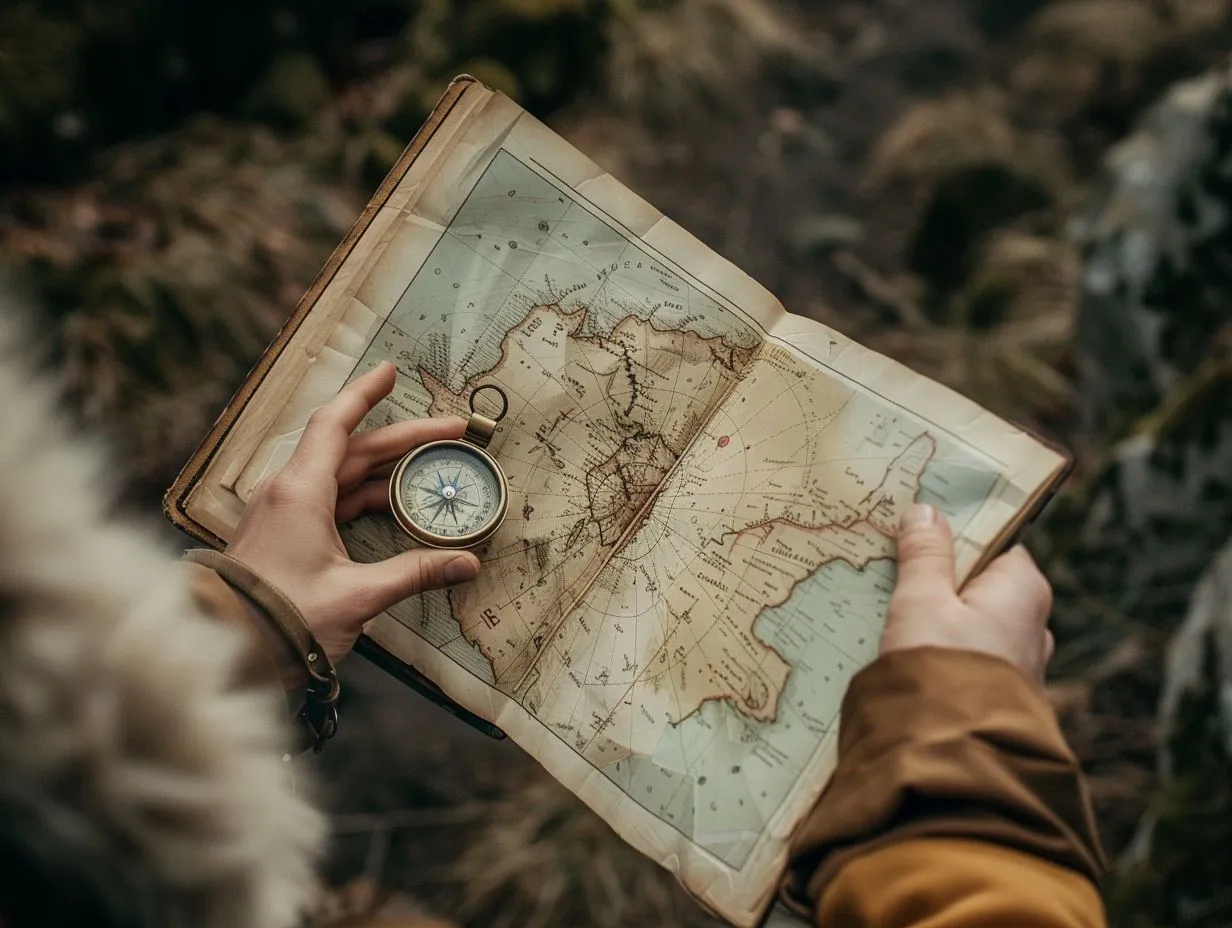
A phone is a convenience, but a paper map and a baseplate compass are the tools you can rely on when the battery dies and the cloud drops. Learn to use an Ordnance Survey map at 1:25,000 (the Explorer series, orange covers) because the detail, field boundaries, crags and access land shading are what keep you safe off the main paths.
Reading an OS map
Everything on an OS map is scaled and gridded, so you can measure real distance and give a precise location. On a 1:25,000 map, 4cm on paper equals 1km on the ground, and the blue grid squares are 1km across. Contour lines show height and steepness: the closer they sit together, the steeper the slope, and tightly packed brown lines mean ground you do not want to descend in the dark. Learn to give a six-figure grid reference too, because it pins your position to within 100 metres and it is the location a 999 call handler or mountain rescue team will ask for.
Taking a bearing
A bearing lets you walk an accurate line to a target you cannot see, which is the whole point of a compass in poor visibility. The method is fixed:
- Lay the compass edge on the map so it joins where you are to where you want to go, with the direction of travel arrow pointing at your target.
- Turn the compass housing until its orienting lines run parallel to the map's north to south grid lines, with the orienting arrow pointing to the top of the map.
- Read the number at the index line. That is your grid bearing.
- Adjust for magnetic variation. Across Britain the difference between grid north and magnetic north is currently small, within a degree or two in most areas, but always check the figure printed in the map's margin.
- Hold the compass flat in front of you and turn your whole body until the red needle sits inside the orienting arrow, then walk in the direction of the travel arrow.
Practise this in daylight on easy ground before you ever need it in a whiteout. If you would rather learn hands on, our roundup of outdoor survival courses in the UK lists providers who teach navigation properly.
Choosing and pitching a good spot
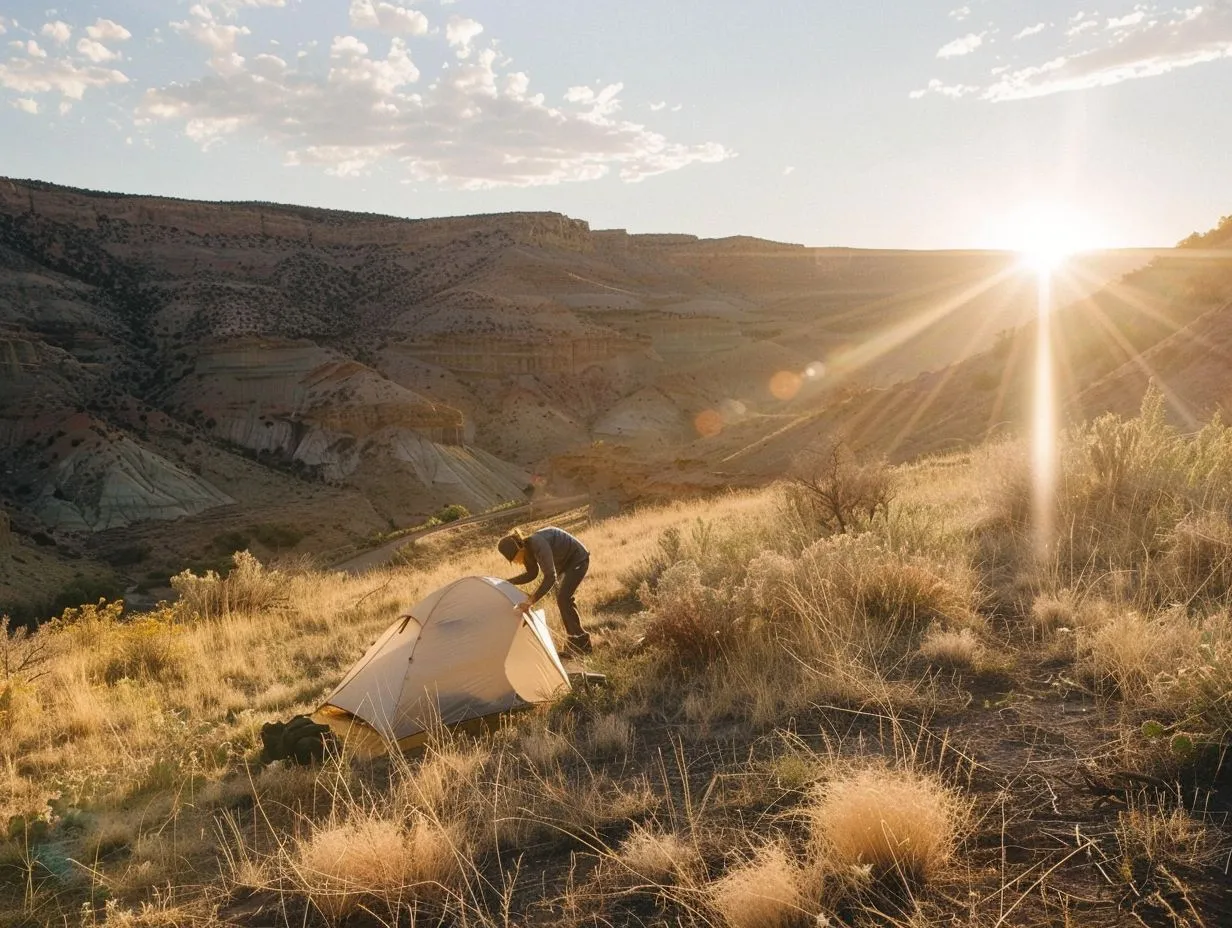
A good wild pitch is flat, sheltered, well drained and out of sight, and finding one is a skill you develop by reading the ground. The Scottish Outdoor Access Code sums up the etiquette in three words: small, light and unobtrusive. Camp in small numbers, stay one or two nights, and pitch late and leave early.
Work through this checklist when you scout a spot:
- Height and access. On Dartmoor and in most of upland Britain, the convention is to pitch above the intake wall, on open ground, away from roads, houses and farmland.
- Drainage. Avoid hollows and valley bottoms where water pools and cold air sinks. A gentle slope or a slight rise drains better and stays warmer.
- Water and distance. Camp near a running water source but not on top of it. Keep at least 30 metres from streams and lochs so you do not foul them, and never pitch in a dry riverbed.
- Ground hazards. Look up before you look down. Avoid dead branches, loose crags above you and lone trees on exposed ground in a storm.
- Wind. Use a wall, a boulder or a fold in the hillside for shelter, and pitch the low, narrow end of the tent into the prevailing wind.
Pitch with the tent taut so it sheds wind and rain, peg every guy line, and use a groundsheet or footprint to protect the floor. For choosing ground in a legal-access context, our guide to choosing a wild camping site in Scotland covers the terrain and access rules in more depth, and off-grid camping in Britain goes further on staying self-sufficient for several nights.
Sourcing and purifying water
Treat every water source in the British hills as if it needs purifying, because you cannot see the bacteria, viruses or parasites that cause illness, and a dead sheep upstream is a real possibility. Take moving water over still, collect above any sign of livestock or habitation, and always treat it before drinking.
Four methods work, and most campers carry two:
| Method | How it works | Best for |
|---|---|---|
| Boiling | Bring to a rolling boil for one minute, then let it cool | The failsafe, kills everything, no extra kit if you are already cooking |
| Pump or squeeze filter | Forces water through a hollow-fibre membrane down to around 0.1 micron | Fast, no wait, removes bacteria and parasites |
| Chemical tablets | Chlorine dioxide or iodine, left to work for the stated time | Lightweight backup, kills viruses, adds a slight taste |
| UV steriliser pen | Ultraviolet light scrambles microbe DNA | Clear water and small volumes, needs batteries |
Boiling is the one method that never fails, and one minute at a genuine rolling boil is enough to make water safe to drink (US Centers for Disease Control and Prevention). A filter handles cloudy water and gives you a drink straight away, while tablets and a UV pen make light, sensible backups for when a filter clogs or freezes.
Cooking and fire safety
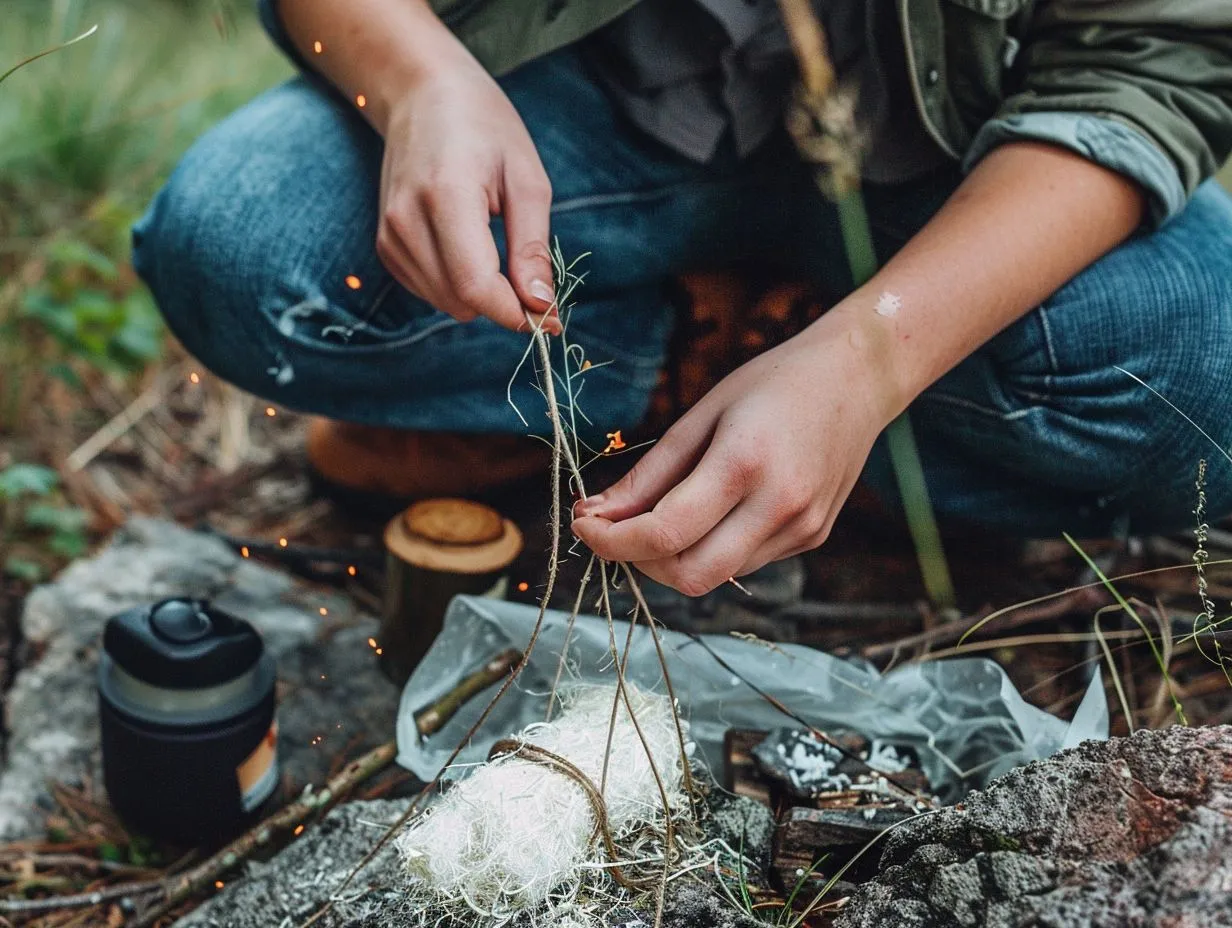
Cook on a stove, not an open fire, because open fires are banned or heavily restricted across most wild camping ground in Britain and they scar the land for years. A lightweight gas or meths stove is faster, safer and leaves nothing behind, which is exactly what a good wild pitch demands.
Run your stove on stable, bare ground a few metres from the tent, never inside the porch, because camping stoves give off carbon monoxide and a tent fills with it fast. Keep a windshield handy, keep a filled water bottle within reach for a flare-up, and pack a lighter plus a backup. Store food in a sealed bag away from where you sleep so you do not attract foxes or rodents overnight.
Open fires deserve a hard line. Even in Scotland, where the Access Code permits small fires with care, they are discouraged in dry conditions and forbidden on peat, which smoulders underground and can reignite. During a wildfire warning, no fire is the only safe answer.
Weather awareness
Check a dedicated mountain forecast the night before and again on the morning you set off, because the weather at 800 metres bears little resemblance to the forecast for the nearest town. Wind speed and the freezing level matter more than rain for a wild camper, since a 30mph valley wind can be 60mph on a ridge, and a night below freezing changes what you need to survive it.
Two free UK services are built for exactly this. The Mountain Weather Information Service publishes plain-language forecasts for every British upland area, with a clear steer on how likely the forecast is to hold. The Met Office mountain forecast adds detailed wind, temperature and freezing-level figures by height band. Read both, note the wind direction so you can pitch in shelter, and be honest about turning back if the picture worsens.
Leave no trace
Leave your pitch so that nobody can tell you were there, because that invisible footprint is what keeps wild camping tolerated and, on Dartmoor, legal. The principle is simple: take everything out, disturb nothing, and leave the ground as you found it.
In practice that means the following:
- Pack out all rubbish, including food scraps, peel and tea bags. Nothing biodegrades quickly in a cold British hill.
- Toilet at least 30 metres from water, paths and your pitch. Dig a hole 15 to 20cm deep with a trowel, bury the waste, and carry out your toilet paper in a bag.
- Use a stove rather than a fire, and never cut vegetation or move rocks to build one.
- Keep groups small and noise down, and give livestock and wildlife a wide berth.
- Leave gates as you found them and stick to the guidance in the official Countryside Code.
If you want to practise these skills somewhere quieter first, our guide to camping off the beaten path points you at the sort of low-traffic ground where wild camping etiquette matters most.
Frequently asked questions
What skills do I need for wild camping?
The core skills are map and compass navigation, choosing and pitching a sheltered spot, sourcing and purifying water, cooking safely on a stove, reading a mountain weather forecast, and leaving no trace. Navigation and weather awareness are the two that keep you safe.
How do I purify water when wild camping?
Boil it at a rolling boil for one minute, or use a hollow-fibre filter, chlorine dioxide tablets or a UV steriliser pen. Boiling never fails. Most campers carry a filter for speed and tablets as a lightweight backup. Never drink untreated hill water.
Can I have a campfire while wild camping in the UK?
Almost never. Open fires are banned or restricted across most wild camping ground in England, Wales and Northern Ireland, and discouraged in dry conditions in Scotland. Use a gas or meths stove instead. It is safer, faster and leaves no scar.
How do I choose a wild camping pitch?
Look for flat, well-drained ground above the intake wall, sheltered from the prevailing wind and out of sight of roads and houses. Keep at least 30 metres from water, avoid hollows and dead trees, and pitch late, leaving early.
Where can I check the mountain weather?
Use the Mountain Weather Information Service and the Met Office mountain forecast, both free. Check wind speed, wind direction and the freezing level rather than just rain, and read the forecast the night before and again on the morning you set off.
Do I need a compass if I have a phone?
Yes. A phone battery dies in the cold and apps fail, so a paper OS 1:25,000 map and a baseplate compass are your reliable backup. Learn to take a bearing and give a six-figure grid reference before you rely on them in poor visibility.
The short version
Wild camping comes down to six skills: navigate with a map and compass, pitch on flat, sheltered, well-drained ground, purify every drop of water, cook on a stove rather than a fire, read the mountain weather from MWIS and the Met Office, and leave no trace. Practise them close to home before you head for the hills. When you want a pitch with facilities instead, browse campsites in the Scottish Highlands and the Lake District, or start with our full guide to wild camping in the UK.