The Best Campervan Sites in Scotland: NC500 Campsites and Where to Park Up
· Updated
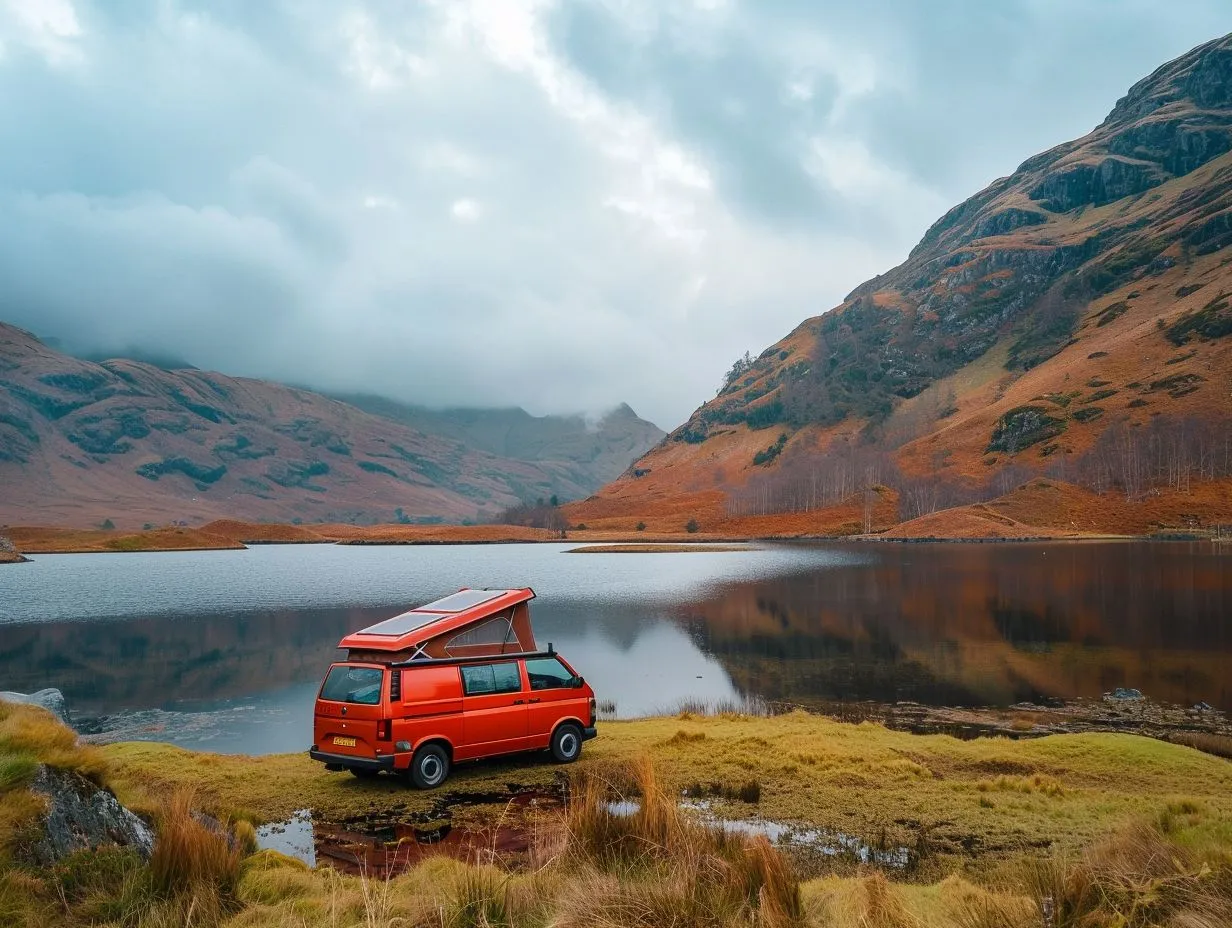
The best campervan sites in Scotland sit along the North Coast 500, the 516-mile loop that starts and ends at Inverness Castle. Book proper pitches at places like Sango Sands Oasis in Durness, the John o' Groats Caravan and Camping Site and Applecross Campsite, and you get level ground, electric hook-ups and somewhere to empty your waste tanks. Those three things matter more than a view when you are living out of a van for a week.
Here is the fact that trips up most first-timers. Scotland's famous right to wild camp does not cover motorhomes. Under the Land Reform (Scotland) Act 2003 and the Scottish Outdoor Access Code, the right applies to lightweight, non-motorised camping, so a tent and a rucksack, not a van parked up overnight. Park a campervan on private land or a passing place without permission and you have no legal right to be there. So the plan is simple: book campsites, use recognised aires, and ask the landowner if you want to stop anywhere else.
This is part of our guide to camping in the UK's national parks, and it comes from Camping Sites in Britain, where you can find and compare campsites, caravan parks and motorhome stopovers across the country.
Campervan sites along the North Coast 500
The NC500 is the reason most people bring a van to the Highlands, and it has enough proper campsites that you never need to park illegally. The route runs clockwise or anticlockwise from Inverness through Applecross, Torridon, Ullapool, Durness, Thurso and John o' Groats before dropping back down the east coast. Pace it over seven to ten nights rather than trying to blitz it, because the single-track sections are slow going.
| Campsite | Where | Good for |
|---|---|---|
| Applecross Campsite | Applecross peninsula, west coast | Reached over the Bealach na Bà pass, on-site cafe, hook-ups |
| Sango Sands Oasis | Durness, north coast | Clifftop pitches above Sango Bay, hook-ups, waste disposal |
| John o' Groats Caravan and Camping Site | John o' Groats, north east tip | Next to the famous signpost, ferry to Orkney nearby |
| Broomfield Holiday Park | Ullapool, west coast | Harbour-side pitches, walk into town, hook-ups |
Applecross Campsite is worth the effort, but the effort is real. You reach it over the Bealach na Bà, a single-track pass that climbs to 626 metres in a run of tight hairpins. It is not the road for a nervous driver or a long, low motorhome, and there is a signposted alternative route round the coast if the pass looks too much. Sango Sands Oasis at Durness gives you pitches right on the cliff above the beach, which is as good as roadside camping gets in Scotland when it is done legally. For more on picking a base up here, read our guide to how to choose a campsite in the Highlands.
What counts as a campervan aire in Scotland
An aire is a low-cost, no-frills overnight stop designed for motorhomes, and Scotland has a growing network of them. They are cheaper than a full touring pitch and usually offer the essentials: a level surface, fresh water, and a point to empty your tanks. Some are run by community trusts or pubs, others by the Highland Council, and a fair few are simply a marked corner of a harbour or car park where staying the night is allowed.
The reliable way to find them is the CAMpRA network, the Campaign for Real Aires, which maps recognised motorhome stopovers across the UK and tells you what each one offers before you turn up. Use it alongside campsite listings so you always know your next legal, serviced stop. Never assume a scenic layby is fair game, because on the popular stretches of the NC500 local frustration with overnight parking is real and some spots now carry no-overnight-parking signs.
Where you can legally park up overnight
You can legally stay overnight in a campervan on a campsite, at a recognised aire, or anywhere a landowner has given you permission. Everywhere else is a grey area at best. The Scottish Outdoor Access Code, managed by NatureScot, is clear that the statutory access rights do not extend to motorised vehicles, so your van does not carry the same freedoms as a walker with a tent.
Some car parks and pub car parks welcome an overnight motorhome, especially if you buy a meal or ask first. A quiet nod from a landowner turns an illegal stop into a legal one in seconds, so it is always worth asking. If you want the freedom of a tent alongside the van, our guide to preparing for a camping trip in Scotland covers the access rules for lightweight camping in full.
Loch Lomond and The Trossachs permit zones
In Loch Lomond and The Trossachs National Park, camping byelaws apply in designated management zones from 1 March to 30 September every year. Inside these zones you cannot camp or stay overnight in a motorhome without either a permit or a booked pitch at a campsite. The park runs the permit system online through its own booking site, and rangers do check.
The rules exist because the loch shores were being wrecked by overnight numbers, so they are enforced, not decorative. Camping outside the zones and outside those dates falls back under the normal access code, but if you are touring the park in summer, plan on booking a campsite or a motorhome-friendly stopover rather than pulling in at the water's edge.
Services: water, waste and chemical disposal
The single job that decides where you sleep is emptying your tanks, so build your route around chemical disposal points. A chemical disposal point, often marked CDP on site maps, is where you empty the toilet cassette safely into the foul drainage. Grey water from the sink and shower goes into a separate drain, never into a ditch or a burn. Most touring campsites have both, and some Highland Council facilities and aires provide a CDP for a small charge.
A workable rhythm on the NC500 is to fill fresh water and empty everything each time you stop at a serviced site, so you are never caught short between the long gaps in the far north west. Carry a spare water container and a folding waste carrier, and treat a full site with a CDP as a reason to stop even if you were tempted to push on.
Single-track roads and passing-place etiquette
Most of the NC500 west and north coast is single-track road with passing places, and using them properly is the difference between a relaxed trip and a queue of angry locals behind you. Passing places are marked with a white diamond sign or a black-and-white pole. The rule is simple: pull into a passing place on your left to let an oncoming vehicle through, or wait opposite one on your right if the space is on the other side.
Two things campervanners get wrong. First, never park in a passing place, not even for a photo, because they are there to keep traffic moving. Second, always let faster traffic overtake. A local heading to work or a delivery van has every right to get past your holiday pace, so pull in and wave them through. For more scenic routes worth driving slowly, see our roundup of the best scenic drives to campsites.
Find a Highland campsite
You can browse serviced campsites and motorhome stopovers across the north of Scotland in our directory of campsites in the Scottish Highlands. Filter for hook-ups, waste disposal and the facilities your van needs, then book ahead for July and August when the NC500 is at its busiest. Booking a pitch a night or two in advance beats arriving at 6pm to a full site with nowhere legal to go.
Frequently asked questions
Can you wild camp in a campervan in Scotland?
No. Scotland's right to wild camp under the Land Reform (Scotland) Act 2003 covers tents and lightweight, non-motorised camping only. A campervan or motorhome parked overnight needs the landowner's permission, or you must use a campsite or a recognised aire.
How long does the North Coast 500 take in a campervan?
Allow seven to ten nights. The full loop is 516 miles from Inverness, but much of the west and north coast is slow single-track road, so trying to do it in three or four days means you spend the whole trip driving rather than stopping.
Where can I empty a chemical toilet on the NC500?
Use the chemical disposal point, marked CDP, at touring campsites and many aires. Some Highland Council facilities also provide one for a small charge. Empty grey water into a proper drain too, never into a ditch, a burn or the sea.
Do I need a permit to camp at Loch Lomond?
Yes, inside the national park's management zones between 1 March and 30 September. You need either a camping permit or a booked campsite pitch to stay overnight in those zones. Outside the zones and dates, the normal access rules apply.
Can you drive a large motorhome over the Bealach na Bà?
It is not advised for long or low vehicles. The pass to Applecross climbs to 626 metres on tight single-track hairpins. A signposted coastal route offers a longer but far easier way round, and it is the sensible choice for bigger vans.
Are there rules for using passing places?
Pull into a passing place on your left to let oncoming traffic through, or wait opposite one on your right. Never park in a passing place, and always let faster local traffic overtake. Good etiquette keeps single-track roads flowing for everyone.
The short version
Book campsites and use CAMpRA-listed aires, because your van does not get the wild camping rights a tent does. Plan the NC500 around chemical disposal points, respect the passing places, and check the Loch Lomond permit zones if you are heading there between March and September. Start by browsing Highland campsites or read more about camping in the UK's national parks.